
8 Easy Brick Edging Ideas to Give Your Garden a Cottage Charm
There’s something undeniably magical about a cottage garden where flowers spill over pathways and charm meets practicality at every turn. If you’re looking to define your garden beds while preserving that romantic, lived-in feel, cottage brick garden edging ideas offer the perfect solution.
I’ve noticed that well-placed brick borders can completely change how a garden feels—they add structure without rigidity and create visual interest that lasts through every season.
8 Cottage Brick Garden Edging Ideas
Whether you’re working with weathered reclaimed bricks or fresh terracotta tones, the right edging approach brings out the character your space deserves. These ideas blend function with beauty, keeping soil in place while guiding the eye through your outdoor sanctuary. You’ll discover simple techniques that add cottage-style elegance, protect your plantings, and create those picture-perfect garden moments worth sharing. Each approach celebrates the timeless appeal of brick while honoring the effortless beauty that makes cottage gardens so beloved.
1. Herringbone Pattern Border 
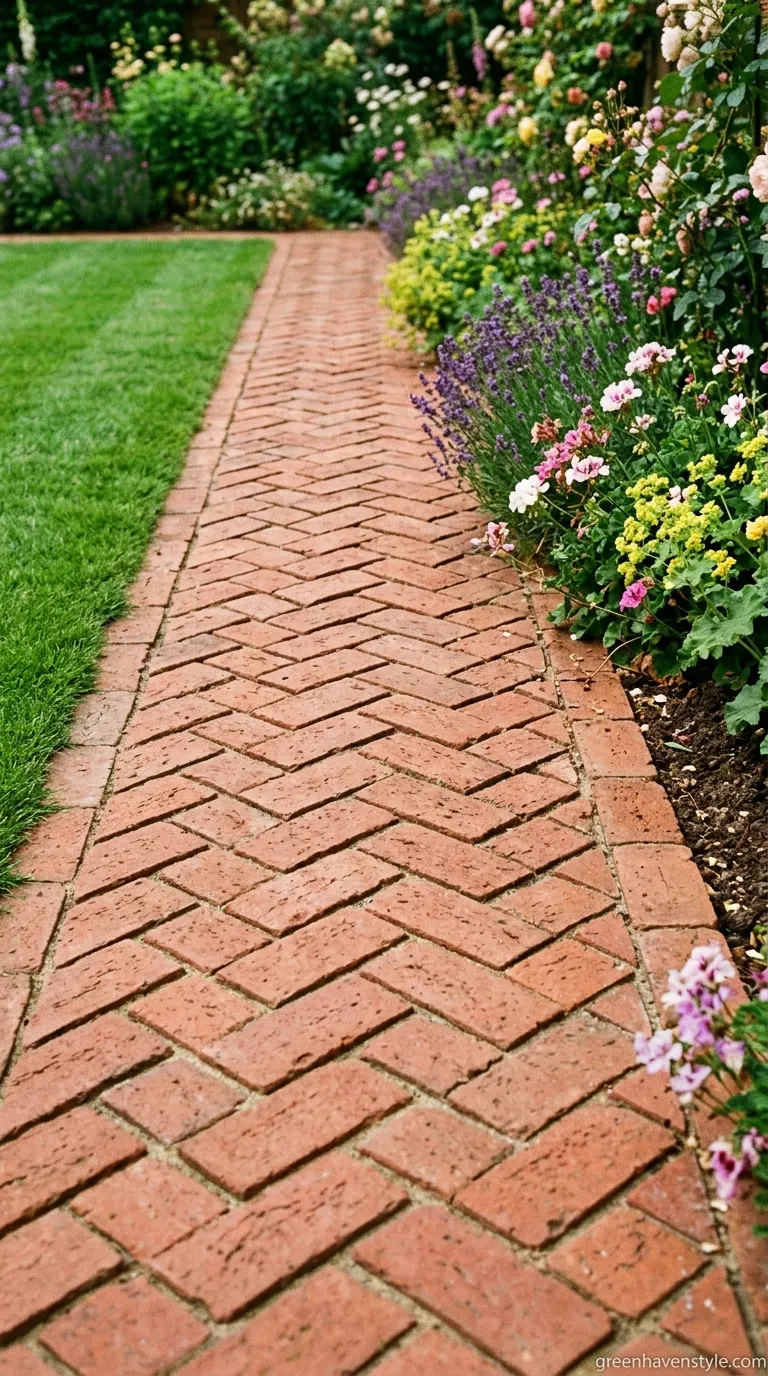
Arranging bricks in a classic herringbone pattern instantly elevates your garden’s sophistication while maintaining cottage charm. This diagonal weave creates visual movement that draws visitors along pathways and highlights planting beds beautifully.
The angled placement provides exceptional stability, keeping bricks locked together naturally without extensive mortar work. I’ve found that this technique works wonderfully along curved borders where the pattern adapts gracefully to flowing lines.
The interlocking design also prevents shifting during freeze-thaw cycles, making it ideal for climates with seasonal changes. Your garden gains a timeless quality that balances structure with the relaxed abundance of cottage plantings, creating borders that look intentional yet effortless.
2. Stacked Double-Layer Edging
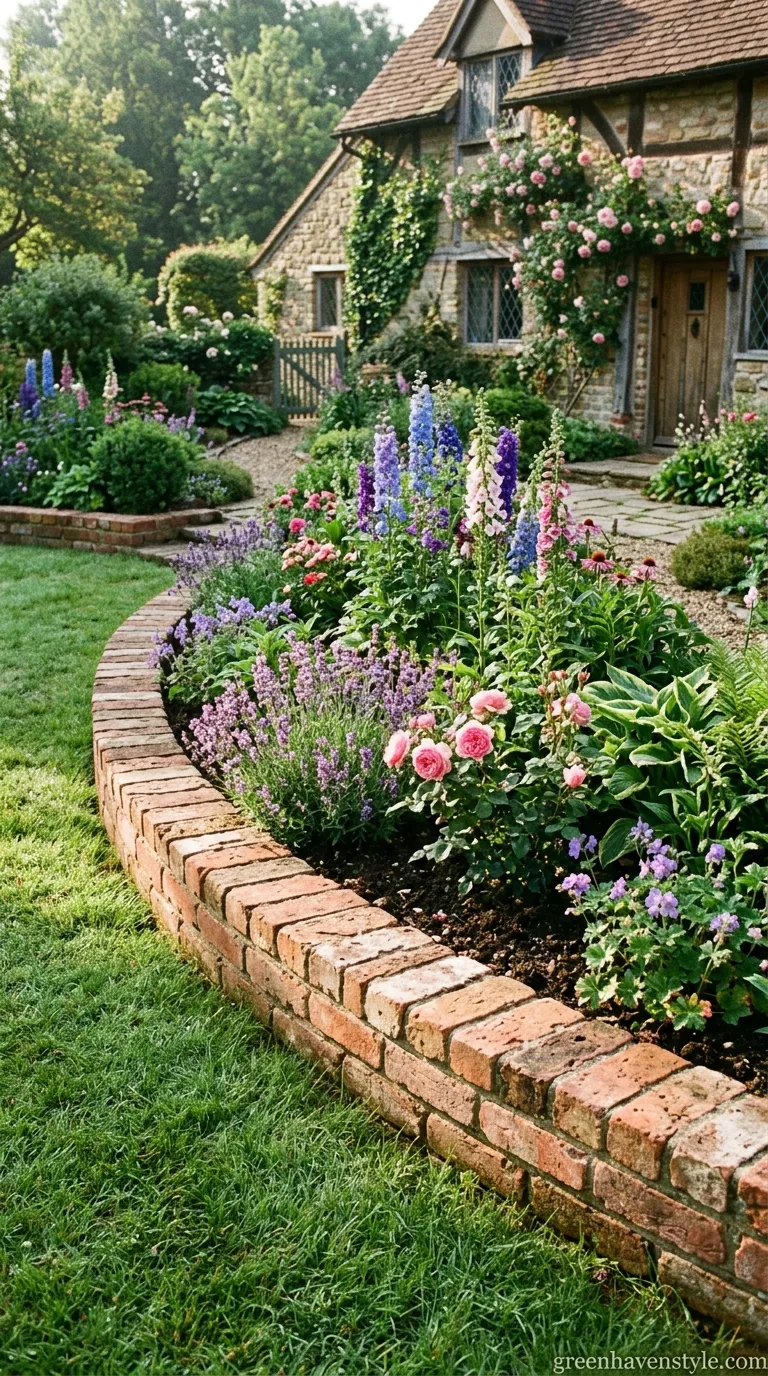
Creating height with two stacked brick layers defines garden boundaries more prominently while adding dimensional interest to flat landscapes. This raised approach keeps mulch contained and prevents grass from creeping into flower beds effectively.
The double height creates a miniature retaining wall effect that’s perfect for slight grade changes or establishing terraced planting areas. From what I’ve seen, this method particularly suits gardens where you want stronger visual separation between lawn and cultivated spaces.
The vertical emphasis draws attention to your prized perennials and allows trailing plants to cascade beautifully over the upper edge. Installation requires careful leveling of the base layer, but the substantial presence and improved functionality make the extra effort worthwhile for lasting garden definition.
3. Basket Weave Brick Layout
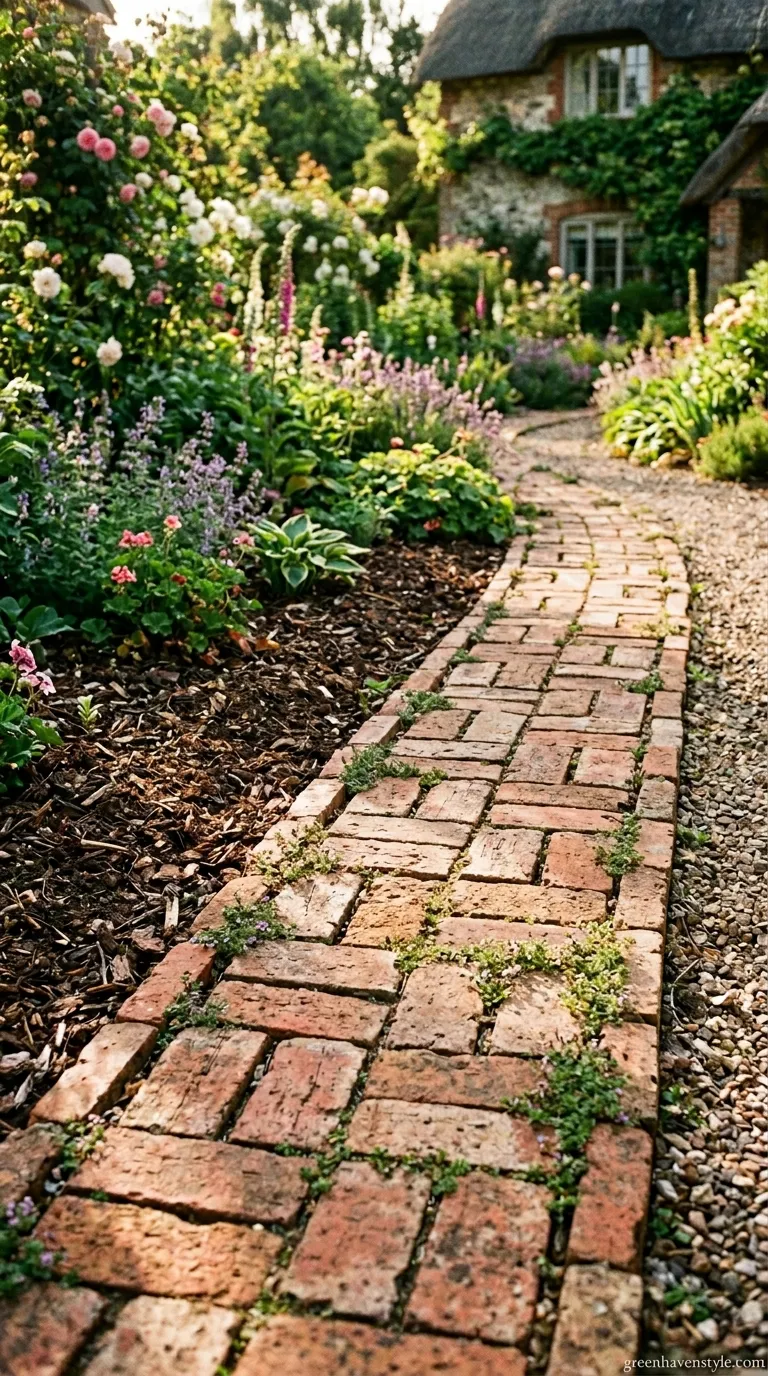
The basket weave pattern brings textural richness to garden edges through its woven appearance created by alternating brick orientations. This traditional technique adds cottage authenticity while providing a flat, stable surface that’s easy to maintain.
Pairs of horizontal bricks alternate with vertical pairs, creating a checkerboard effect that catches light differently throughout the day. In my experience, this layout works exceptionally well for wider edging strips where the pattern has room to repeat and establish rhythm.
The classic design complements both formal herb gardens and wildflower beds, bridging structured and naturalistic styles seamlessly. Your pathway edges gain visual weight without feeling heavy, and the pattern’s familiarity creates a welcoming, established atmosphere that makes spaces feel like they’ve been lovingly tended for years.
4. Angled Sawtooth Edge
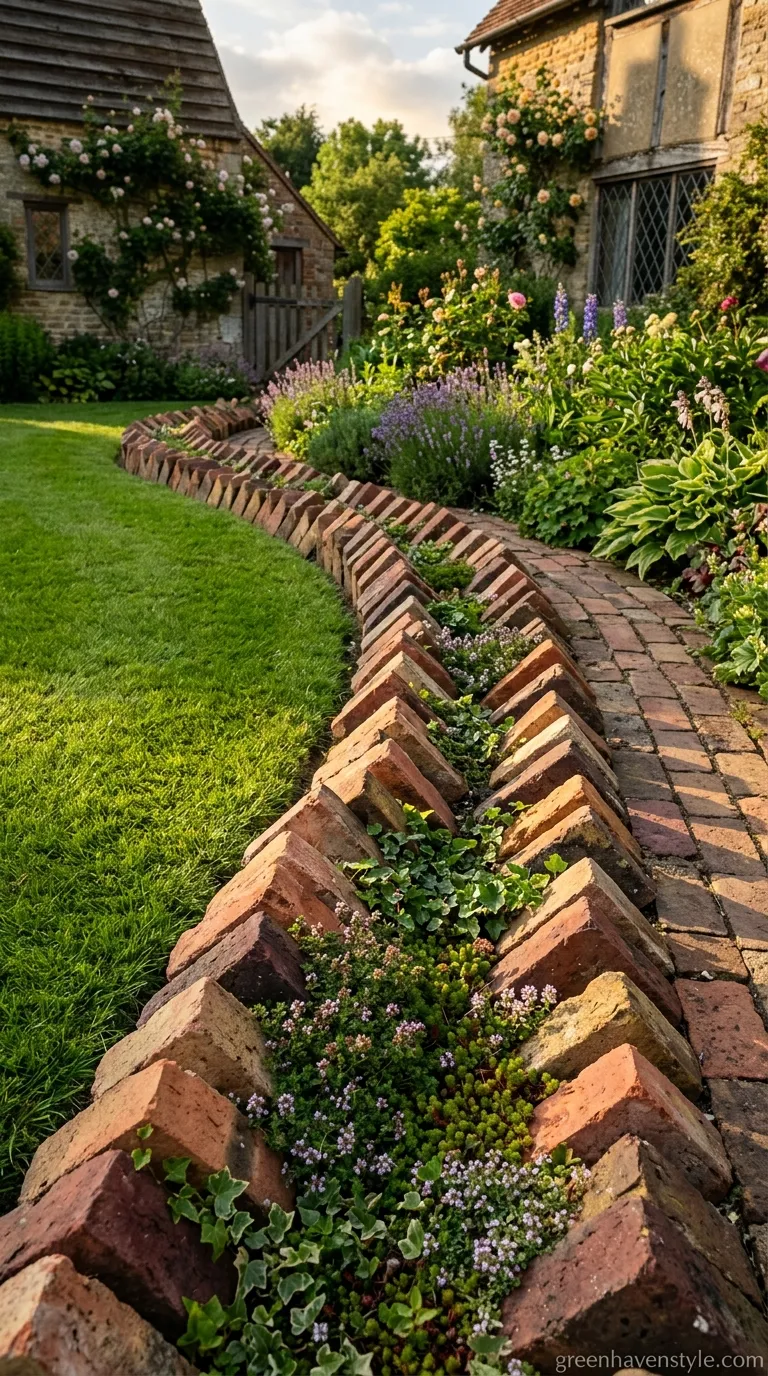
Setting bricks at a diagonal angle creates a distinctive sawtooth profile that adds playful dimension to otherwise straight borders. This technique introduces shadow lines and geometric interest while using standard materials in unexpected ways.
The triangular points add a decorative element that feels slightly formal yet perfectly at home in cottage settings. I’ve observed that this approach particularly shines when sunlight hits the angled surfaces, creating changing patterns of light and shadow throughout the day.
The installation allows for excellent drainage since gaps between angled bricks let water flow freely rather than pooling. Your garden benefits from both aesthetic appeal and practical function, as the raised points also help deter slugs and create microclimates for small groundcover plants to nestle into naturally.
5. Curved Serpentine Border
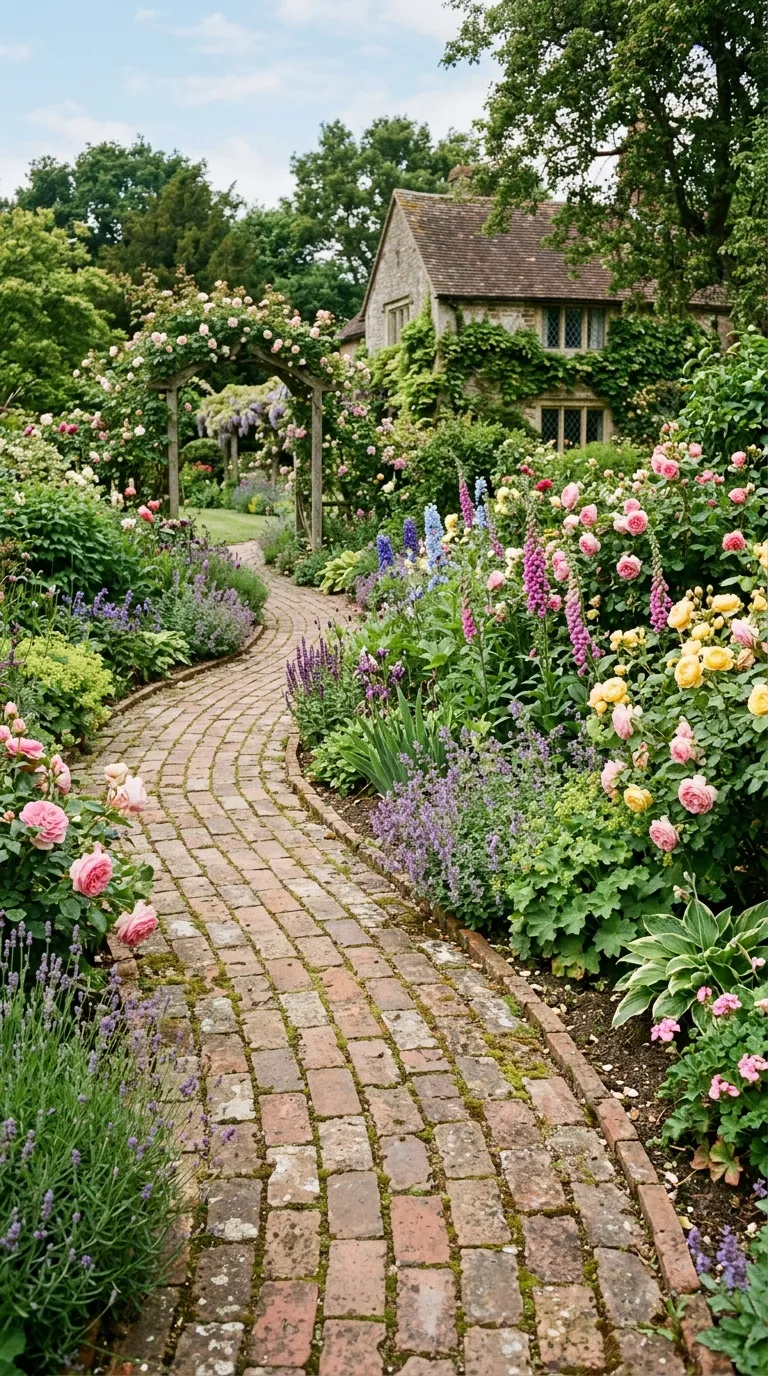
Flowing curved lines created with carefully laid bricks soften garden boundaries and echo the organic shapes found throughout cottage landscapes. This gentle meandering approach guides movement through spaces while creating planting pockets with varied sun exposure.
The sinuous edge works beautifully to transition between different garden rooms or separate functional areas without harsh divisions. I’ve found that curves require more planning and cutting than straight runs, but the graceful result brings a sense of maturity and thoughtful design.
Brick’s modularity allows surprisingly smooth curves when pieces are carefully spaced, creating flowing lines that complement rather than compete with plantings. Your pathways gain a storybook quality, inviting exploration and creating the impression of a garden that evolved naturally over time rather than being rigidly planned.
6. Soldier Course Upright Edging
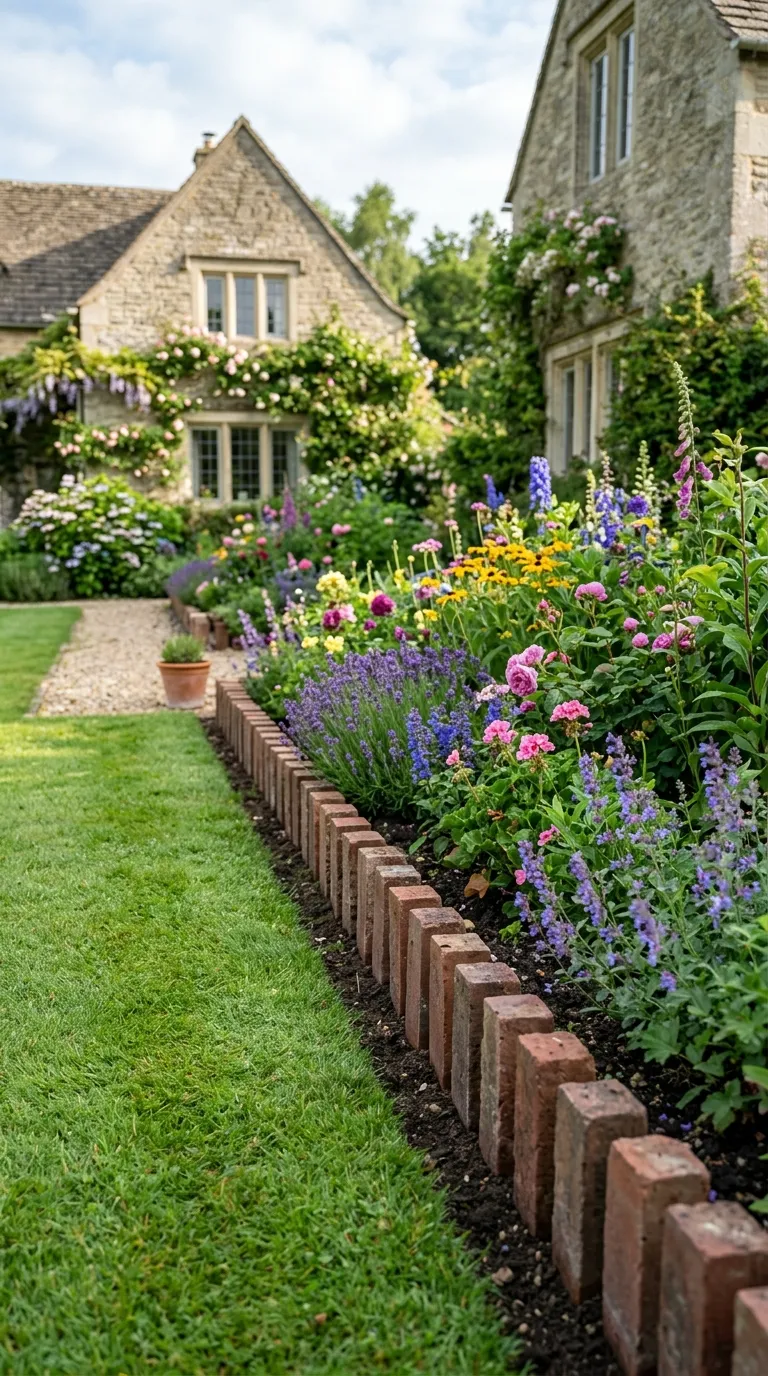
Standing bricks vertically in a soldier course creates crisp, clean lines with minimal material while maximizing visual height. This space-efficient method provides clear definition without consuming precious planting area along bed edges.
The upright orientation shows off the narrow brick edge, creating a refined look that suits both traditional and contemporary cottage styles. In my experience, this technique excels in smaller gardens where every inch matters and you want strong boundaries without bulk.
Stability comes from burying approximately half the brick depth, which also helps with frost heaving in colder regions. Your beds gain a tailored appearance that frames plantings like artwork, making even modest flower collections appear more intentional and curated while maintaining the approachable warmth cottage gardens are known for.
7. Aged Reclaimed Brick Mix
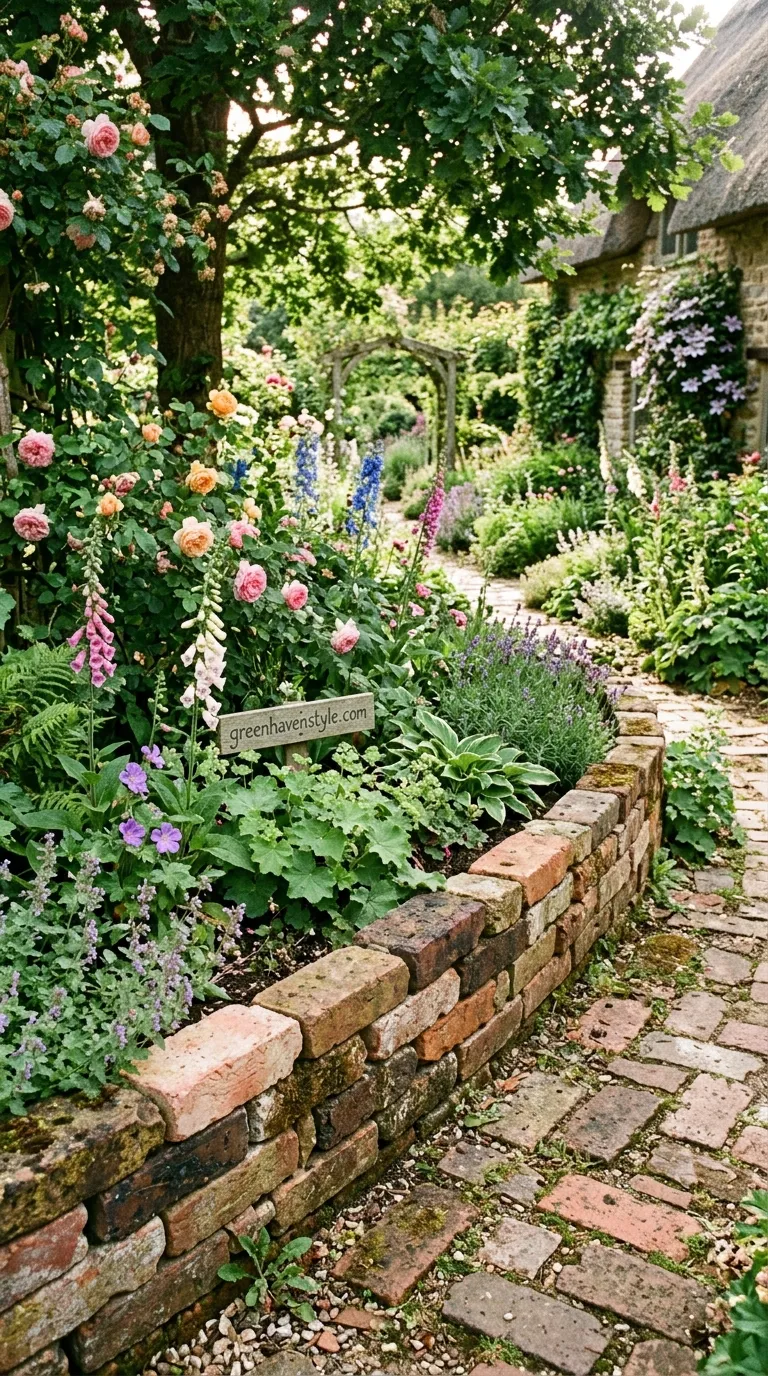
Using weathered bricks with varied patinas and colors creates authentic cottage character that feels collected over time rather than newly installed. The mix of warm terracotta, faded salmon, and earthy browns adds depth and visual richness to garden borders.
Reclaimed materials bring sustainability alongside beauty, giving salvaged bricks new purpose while reducing environmental impact. I’ve noticed that the irregular coloring and worn edges blend seamlessly with established plantings, creating a sense of history and continuity in the landscape.
Slight size variations add to the handcrafted appeal rather than detracting from it, celebrating imperfection as part of cottage aesthetics. Your garden immediately gains a lived-in quality that new materials simply can’t replicate, with edges that look like they’ve quietly defined these beds through decades of seasonal cycles.
8. Low-Profile Flush Edging
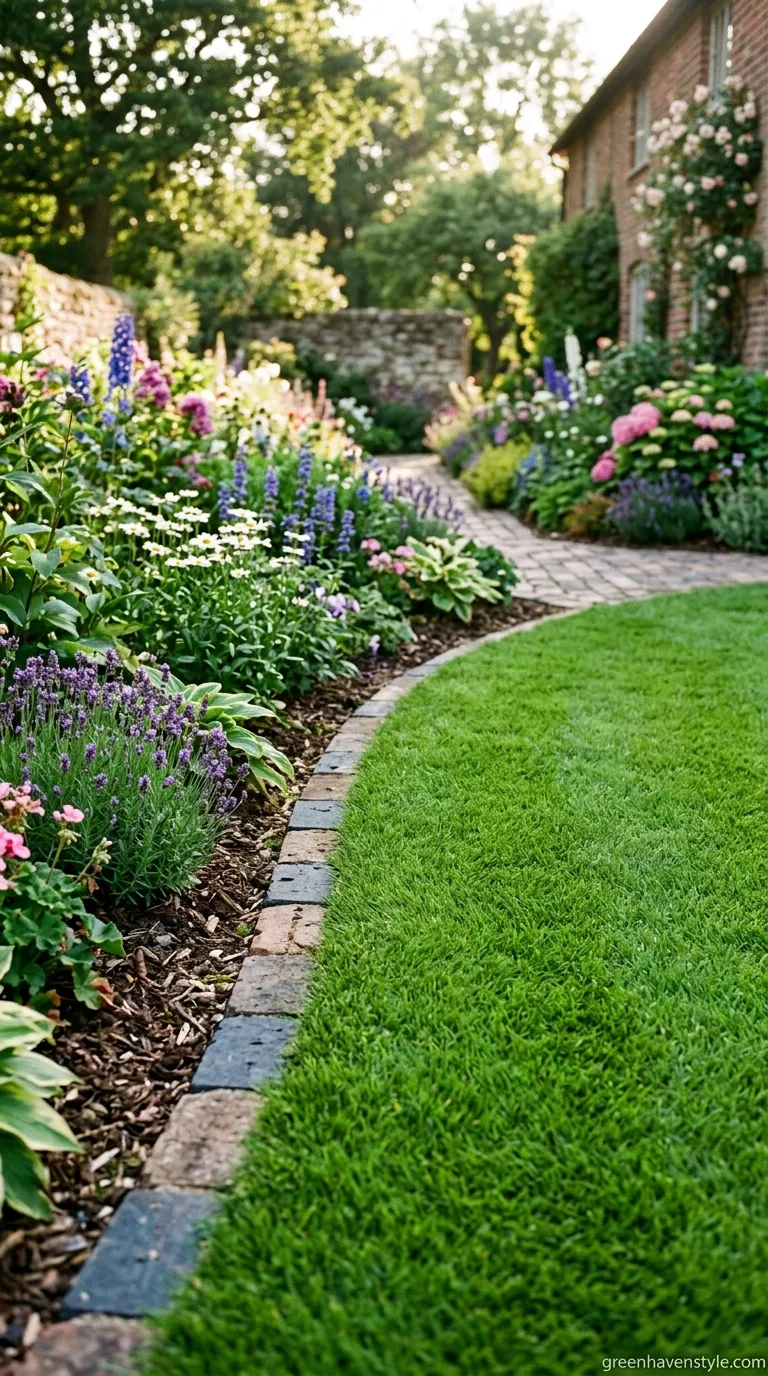
Installing bricks level with the surrounding lawn creates nearly invisible barriers that define spaces while allowing mowers to pass over smoothly. This practical approach maintains clean lines without interrupting the visual flow between lawn and garden areas.
The flush installation eliminates tripping hazards along pathways and simplifies maintenance by removing obstacles during mowing and edging tasks. From what I’ve seen, this method particularly suits informal cottage gardens where you want gentle suggestions of boundaries rather than obvious separations.
Careful excavation ensures bricks sit stable and level, preventing settling that could create uneven surfaces over time. Your garden maintains an open, continuous feel while still benefiting from defined planting zones, proving that brick garden borders can be both functional and beautifully understated when thoughtfully installed.
Conclusion
These cottage brick garden edging ideas prove that classic materials can create timeless beauty while solving practical landscaping challenges. From the elegant geometry of herringbone patterns to the gentle curves of serpentine borders, each approach brings unique character to your outdoor space.
I’ve seen how the right edging transforms gardens from scattered plantings into cohesive, inviting landscapes that feel intentional yet effortless. Whether you choose weathered reclaimed bricks for vintage appeal or crisp soldier courses for clean definition, these techniques honor cottage gardening traditions while fitting modern lifestyles.
The beauty lies in selecting approaches that reflect your personal style and complement your existing plantings. Save your favorite ideas to Pinterest, gather your materials, and start creating those charming boundaries that will frame your garden’s seasonal transformations for years to come.


