
12 Fairy Garden Ideas for a Magical Mini Outdoor Space
There’s something undeniably magical about creating a tiny world where imagination comes to life among miniature houses, winding pathways, and lush moss-covered landscapes. These fairy garden ideas transform simple containers, forgotten garden corners, and outdoor spaces into enchanting displays that captivate children and adults alike. Whether you’re crafting your first miniature garden or adding to an existing collection, the joy lies in designing tiny scenes that spark wonder and creativity.
I’ve noticed that fairy gardens become beloved features that people visit repeatedly, discovering new details with each look. The beauty of these miniature landscapes is their flexibility—you can create elaborate designs or simple setups using materials you already have at home. From teacup gardens to woodland scenes, each project offers opportunities for personal expression and storytelling through tiny accessories and living plants.
12 Fairy Garden Ideas for a Magical Mini Outdoor Space
This collection shares 12 inspiring approaches to building magical miniature worlds that bring delight to patios, porches, and garden beds. Each idea helps you create charming displays that feel like secret hideaways for tiny inhabitants.
1.Teacup Miniature Garden
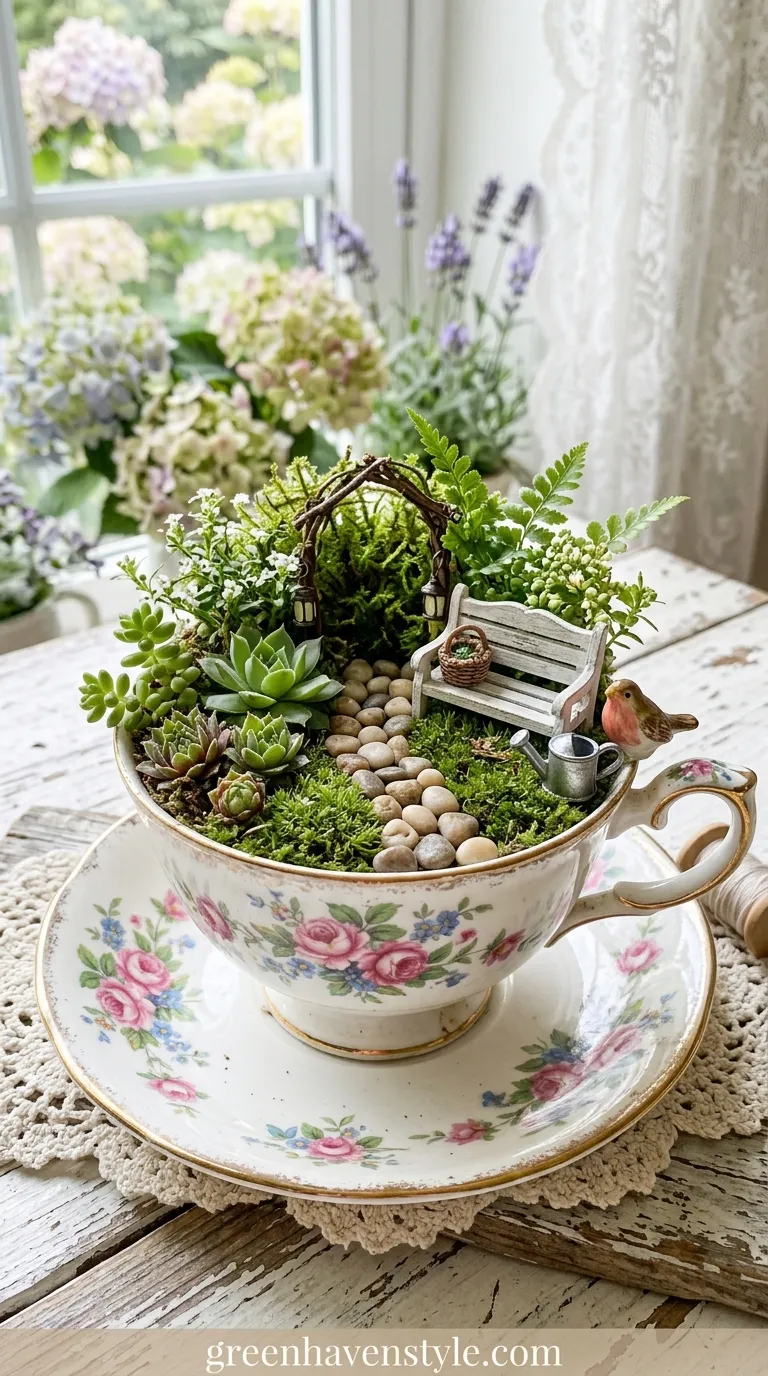
Transform a vintage teacup and saucer into a tiny planted scene with succulents, a miniature bench, and tiny accessories that create an entire world in one charming container.
I’ve found that teacup gardens work beautifully as tabletop displays or tucked into garden beds where they surprise visitors with their delicate scale. The contained size makes them perfect beginner projects that require minimal materials yet deliver maximum charm and visual impact.
Choose drought-tolerant plants like sedum or small succulents that thrive in shallow containers. Add a tiny path made from pebbles, a miniature fence, and perhaps a small mushroom or toadstool accessory to complete the magical scene that fits in your palm.
2.Broken Pot Cascade Design
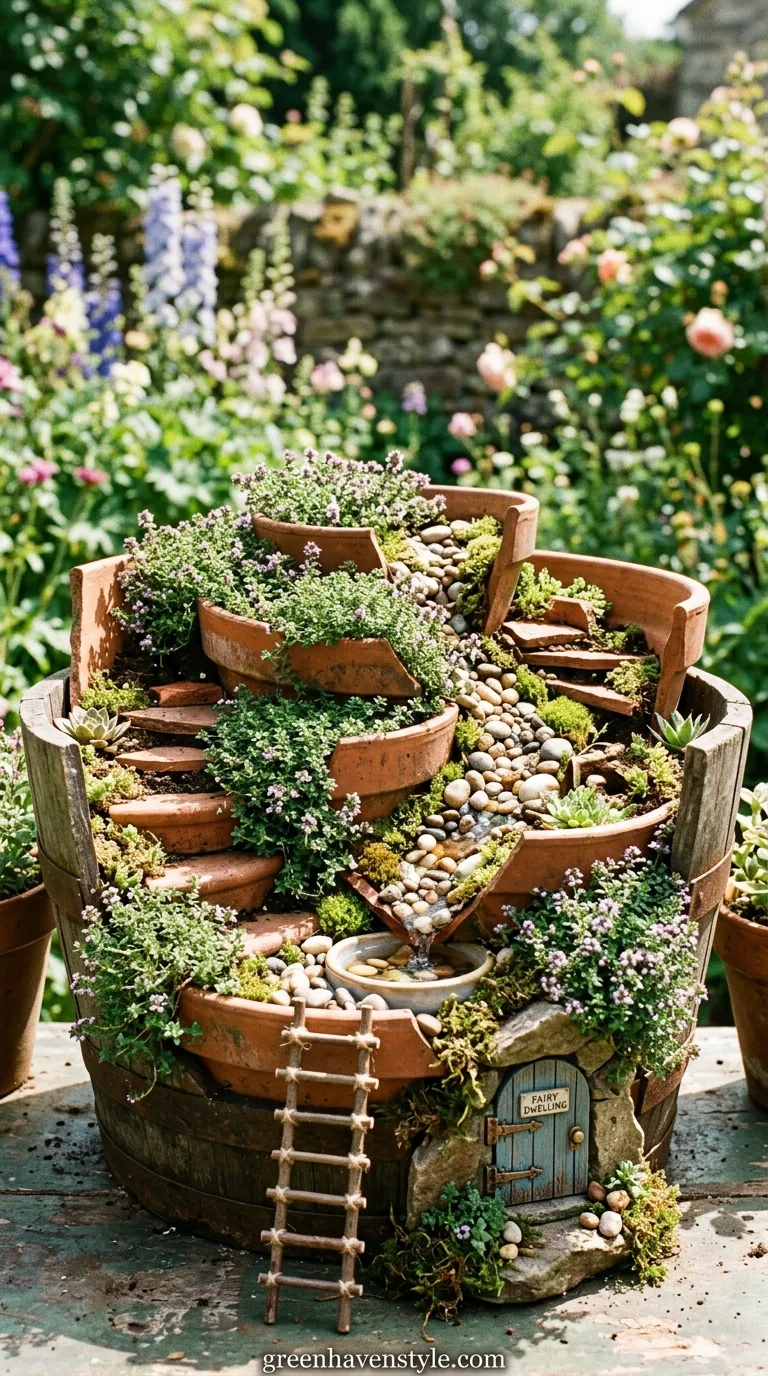
Layer pieces of a broken terra cotta pot to create multi-level terraces planted with creeping thyme, tiny ferns, and miniature accessories positioned at different heights throughout the cascading structure.
From what I’ve seen, these tiered designs add dramatic dimension to flat garden spaces while repurposing damaged pots into whimsical features. The broken pieces naturally create planting pockets and stairs that suggest a tiny hillside village or enchanted forest setting.
Position pot shards at angles, securing them with soil, then tuck plants between levels. Add a miniature ladder leaning against one level or a tiny door at the base to suggest entrances to underground fairy homes hidden beneath.
3. Tree Stump Dwelling
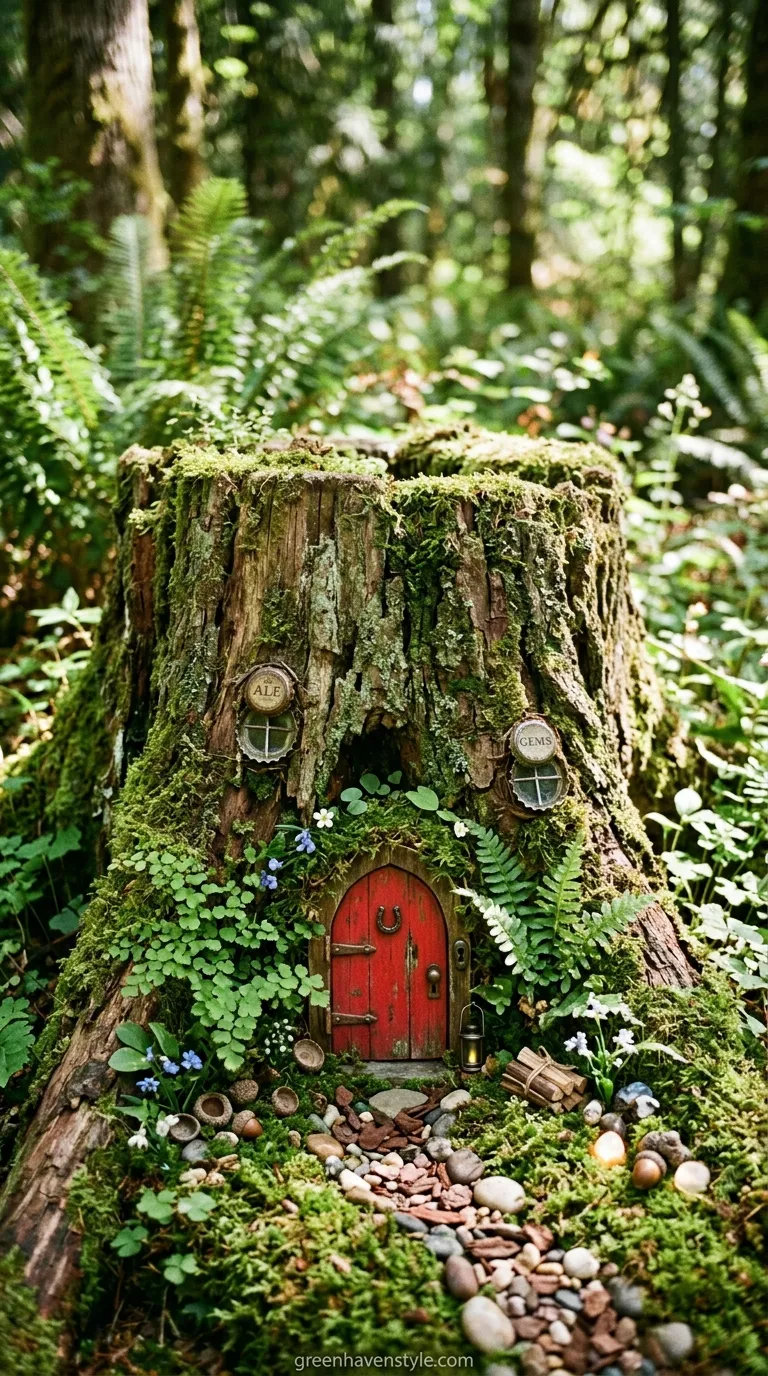
Hollow out a decaying tree stump slightly and fill it with soil, moss, and tiny plants, adding a miniature door at the base to suggest a cozy fairy home built into natural woodland architecture.
I’ve observed that stump gardens blend seamlessly into existing landscapes while creating focal points that feel discovered rather than constructed. The natural wood texture and organic shape provide authentic-looking fairy housing that complements any garden style beautifully.
Plant shade-loving specimens like small ferns or baby’s tears around the door area. Add tiny windows made from bottle caps, a pebble pathway leading to the entrance, and perhaps a miniature mailbox to complete this enchanting woodland dwelling scene.
4.Vertical Pallet Garden
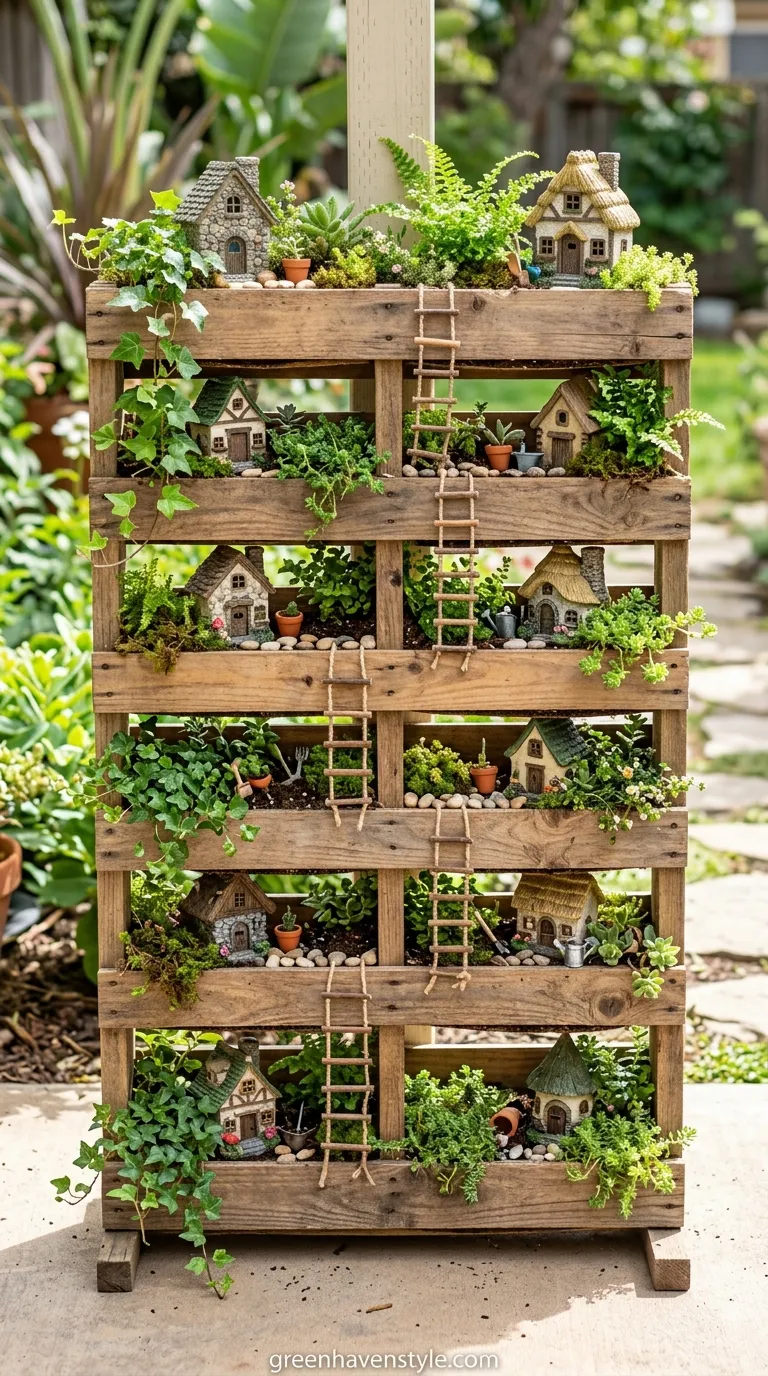
Convert a small wooden pallet into a vertical fairy village by filling spaces between slats with soil and creating multiple garden rooms at different levels, each with unique themes and tiny inhabitants.
In my experience, vertical designs maximize limited space while creating impressive displays that draw eyes upward. The compartmentalized structure naturally suggests separate areas—a tiny bakery here, a miniature library there—building an entire community in one compact footprint.
Secure landscape fabric behind slats to hold soil, then plant each pocket with appropriate greenery. Position miniature buildings, furniture, and accessories throughout levels, connecting them with tiny rope ladders or painted staircases for vertical movement between fairy neighborhoods.
5. Beach-Themed Fairy Retreat
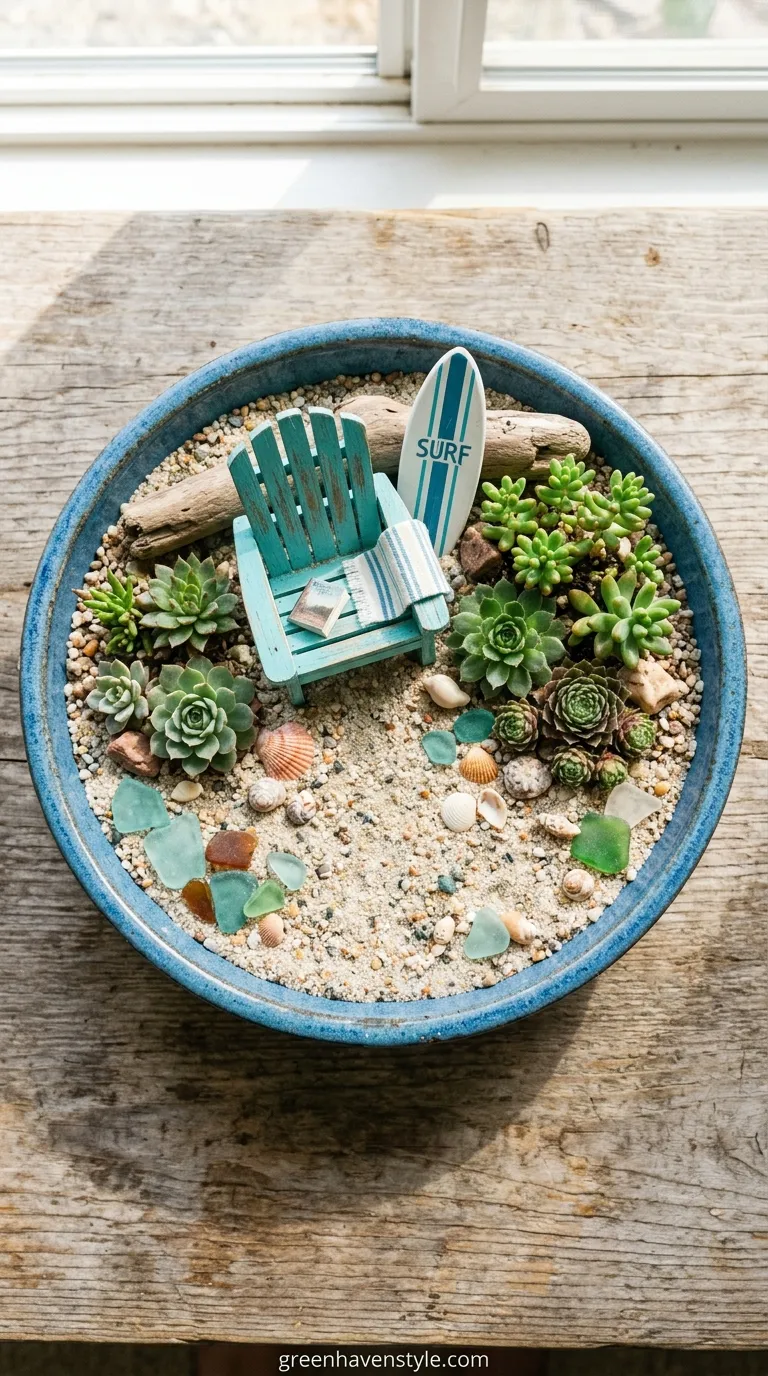
Create a coastal miniature scene using sand, small shells, beach glass, and drought-tolerant plants surrounding a tiny Adirondack chair and miniature surfboard leaning against driftwood pieces for seaside charm.
I’ve noticed that themed gardens tell stronger stories and spark more engagement than random collections of accessories. A beach setting feels especially fresh and different from typical woodland fairy gardens while offering unique decorating possibilities with coastal elements.
Use a shallow bowl or tray as your base, layering sand as ground cover. Add small succulents to represent coastal vegetation, arrange shells along a beach area, and position miniature beach accessories to suggest a fairy vacation spot by the sea.
6. Mason Jar Terrarium
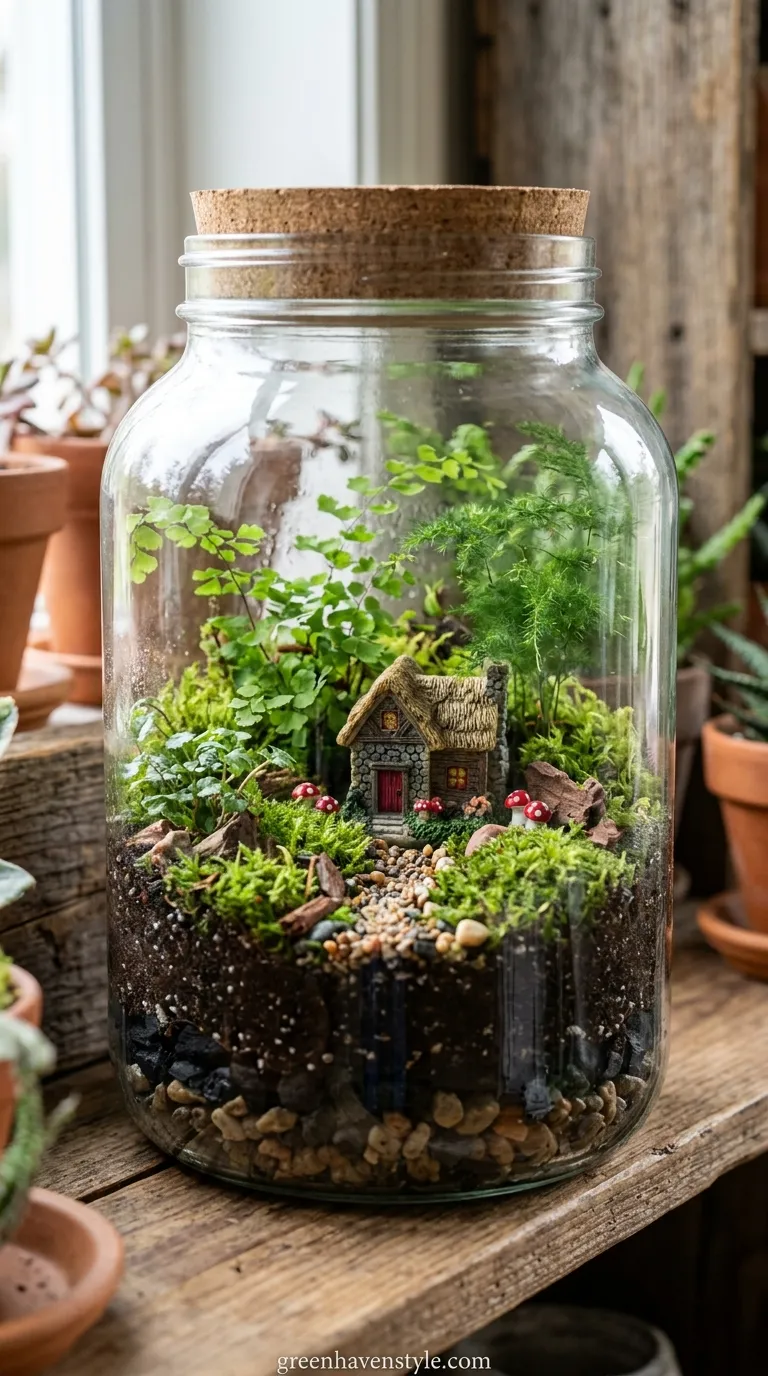
Layer pebbles, charcoal, soil, and tiny plants inside a large mason jar, adding miniature accessories visible through the glass to create a self-contained ecosystem and magical viewing experience from all angles.
From what I’ve seen, enclosed terrariums require less watering while creating humidity-loving environments perfect for moss and small ferns. The glass container protects delicate accessories from weather while magnifying the tiny scene inside, making details more visible and enchanting.
Choose small, slow-growing plants suited to terrarium conditions. Add your miniature house, tiny animals, and pathways before sealing, creating a low-maintenance fairy world that thrives with minimal intervention while providing endless viewing enjoyment.
7. Wheelbarrow Fairy Village
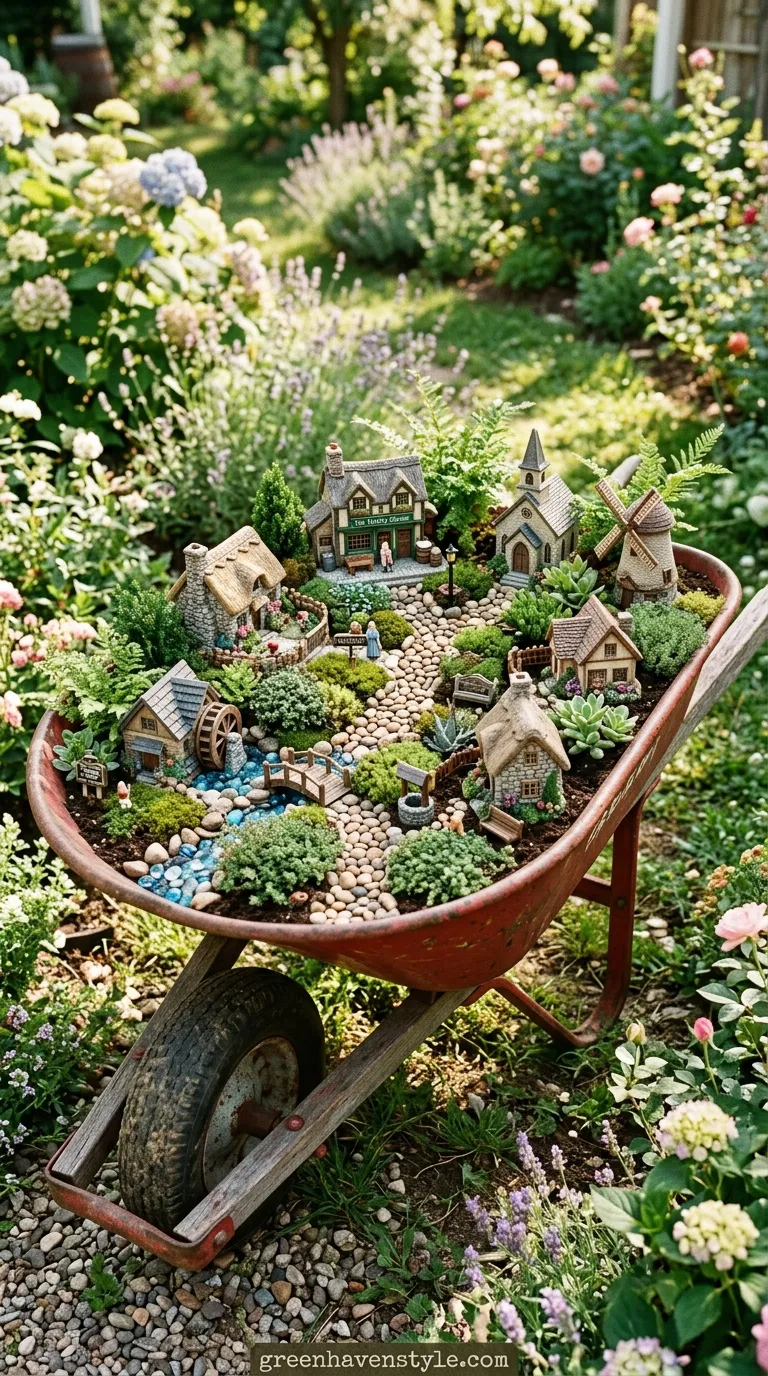
Transform an old wheelbarrow into a portable fairy garden by filling it with soil and creating multiple scenes throughout, using the curved shape to suggest winding paths through a miniature countryside.
I’ve found that wheelbarrows offer generous planting space while remaining movable, letting you reposition your fairy garden to follow sunlight or become a party centerpiece. The rustic container adds vintage charm that enhances the overall aesthetic beautifully.
Create elevation changes using rocks or soil mounds, then add plants, pathways, and tiny buildings throughout. The wheelbarrow’s depth accommodates larger plants as backdrop trees while leaving room for intricate foreground details and accessories at ground level.
8. Hanging Basket Enchantment
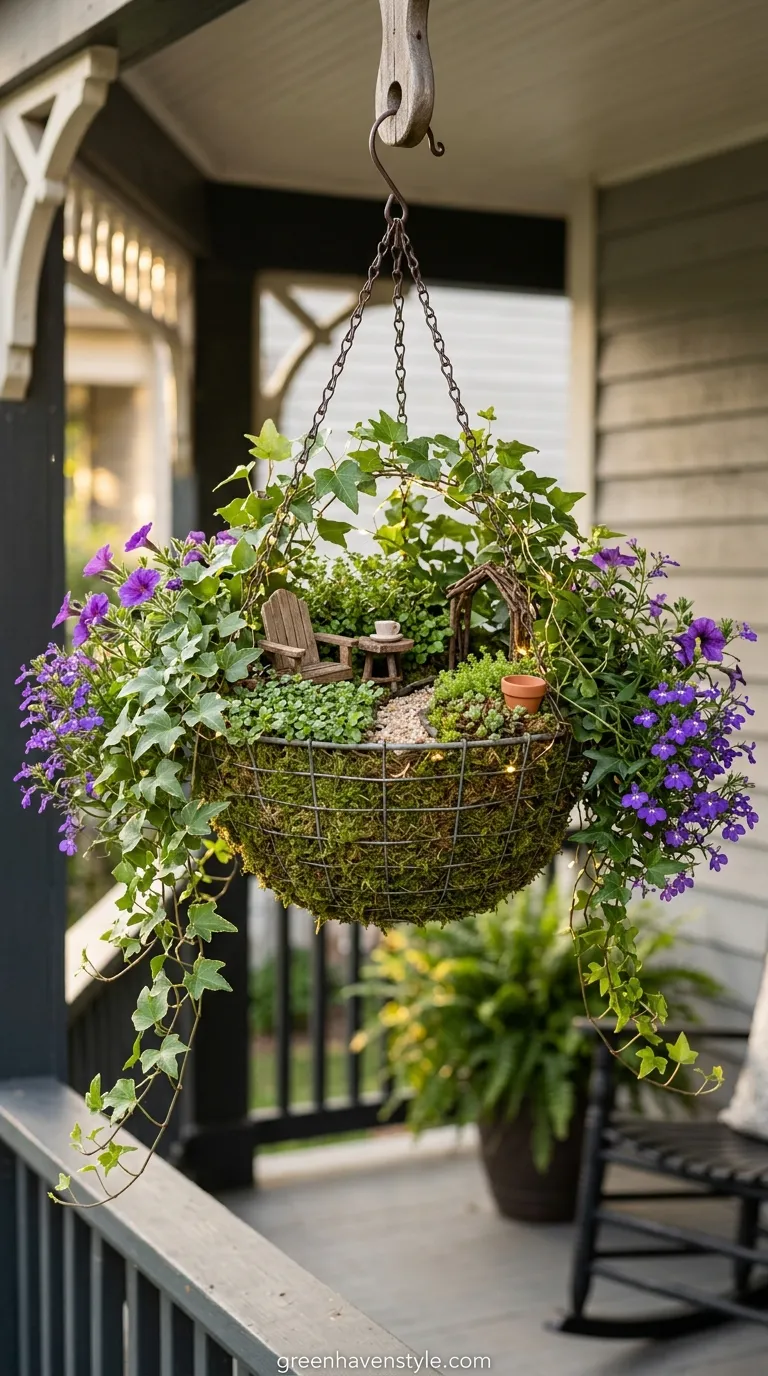
Design a suspended fairy garden in a hanging basket where trailing plants cascade downward while miniature scenes nestle among the greenery, creating an overhead magical display visible from below.
In my experience, elevated gardens offer new perspectives and solve ground-space limitations beautifully. Hanging designs keep delicate accessories away from pets or curious toddlers while creating eye-level displays on porches and patios that invite close inspection.
Line your basket well, add soil, then position trailing plants around edges. Create your fairy scene in the center using miniature furniture and accessories, allowing plants to grow and cascade around the tiny setting as the season progresses.
9. Woodland Forest Floor
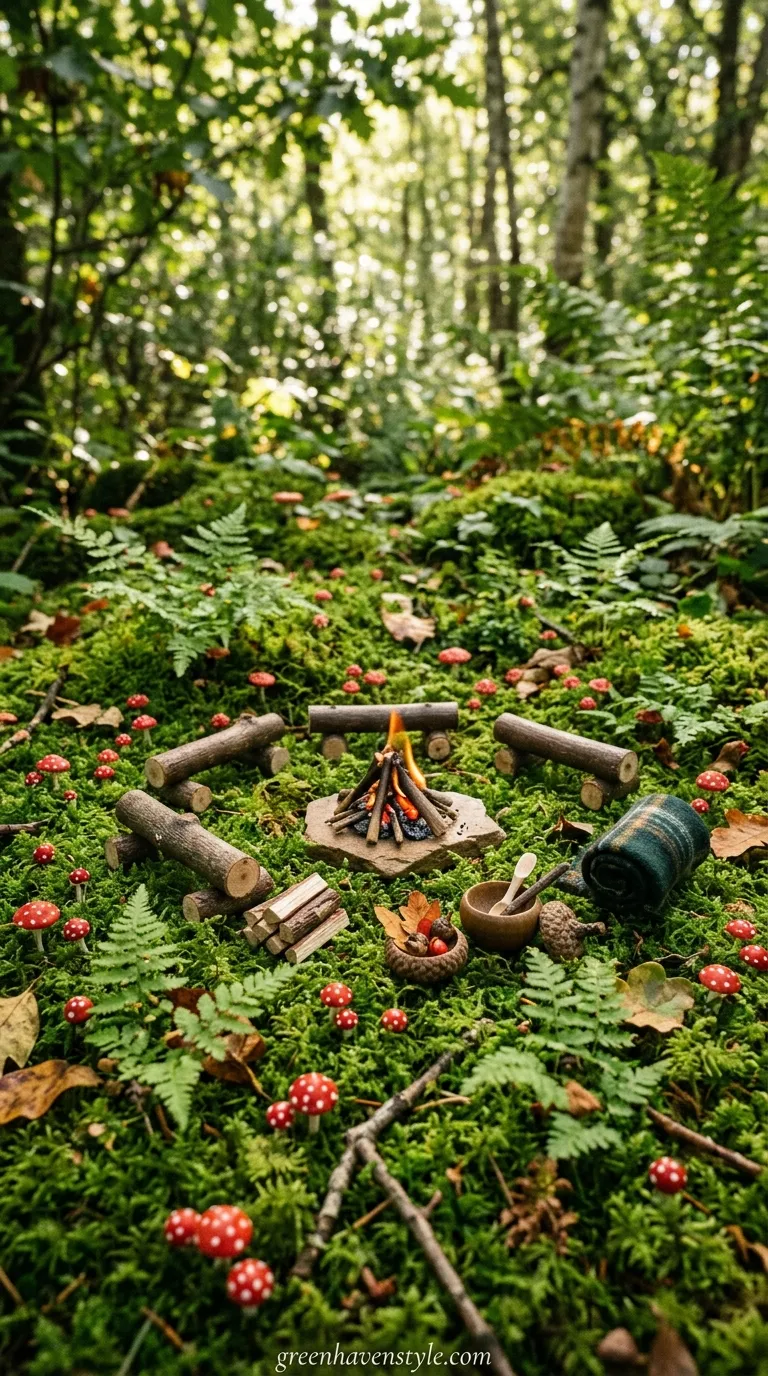
Recreate a miniature forest setting using moss as ground cover, tiny mushrooms, small ferns, and woodland accessories like a miniature campfire, log benches, and acorn caps repurposed as fairy bowls or planters.
I’ve observed that natural woodland themes feel especially cohesive because materials and plants already complement each other perfectly. The forest aesthetic works beautifully in shaded garden areas where sun-loving plants struggle but moss and ferns thrive naturally.
Collect moss, small stones, and twigs from your yard to build authentic-looking settings. Add purchased miniature camping or woodland accessories, positioning them to suggest a fairy gathering place or forest retreat hidden among the trees and undergrowth.
10. Succulent Desert Scene
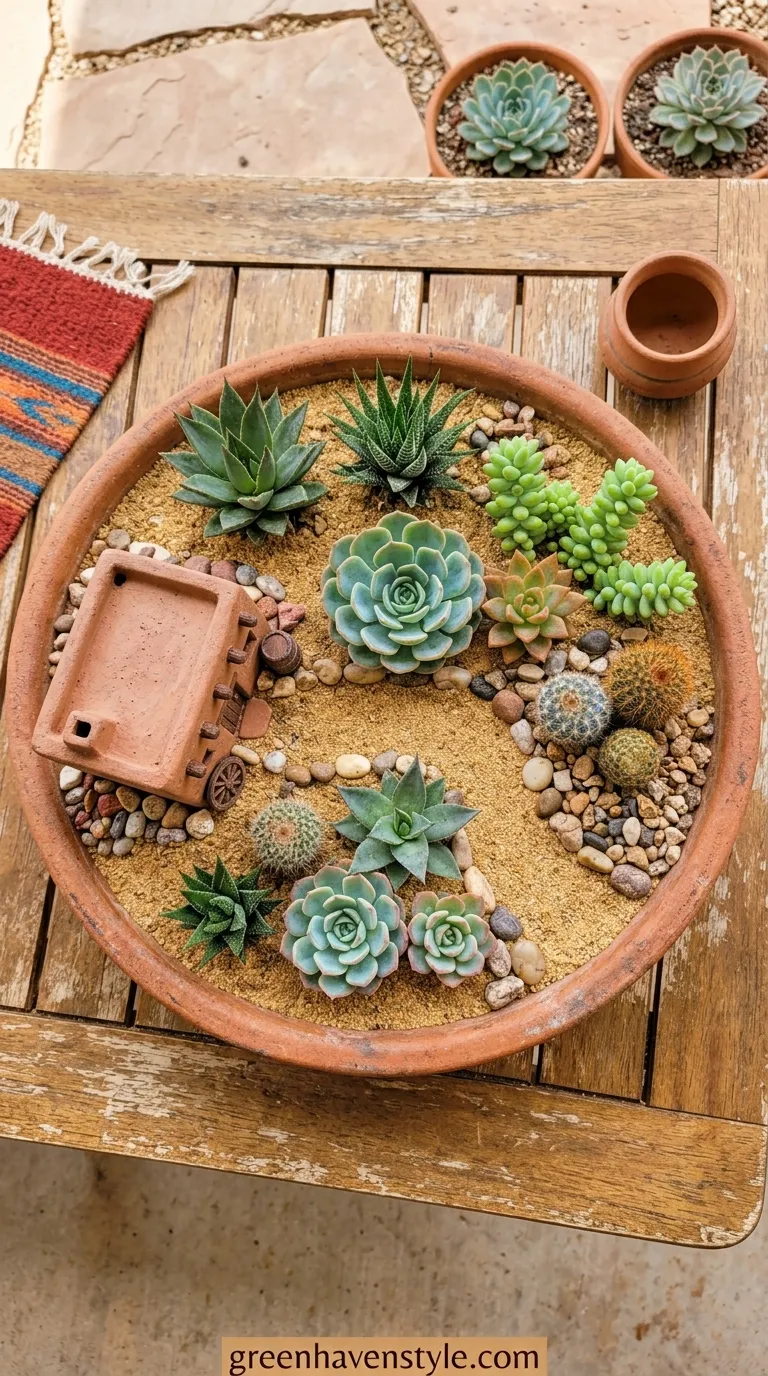
Build a miniature desert landscape using various succulents as cacti, sand or fine gravel as ground, and southwestern-themed miniature accessories like a tiny adobe house or miniature cactus decorations for arid charm.
From what I’ve seen, succulent gardens require minimal watering while offering incredible variety in shapes, colors, and textures. The desert theme feels fresh and modern compared to traditional woodland settings while providing easy-care options for busy gardeners or hot climates.
Choose a shallow, wide container for proper drainage. Arrange succulents of varying heights and forms, add decorative rocks, and position southwestern miniatures throughout. The low-maintenance nature makes this ideal for forgetful waterers or beginner gardeners.
11. Window Box Fairy Street
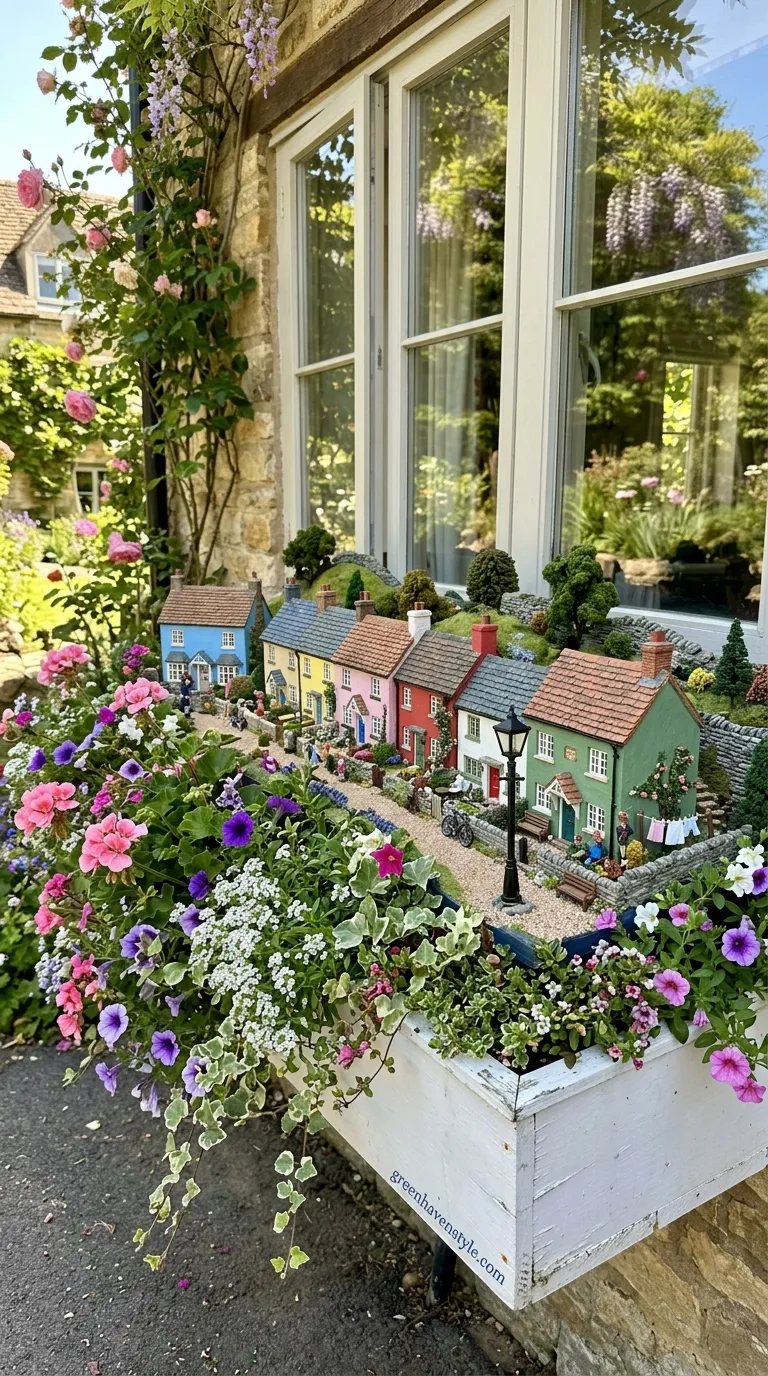
Transform a window box into a miniature village street by arranging small buildings in a row with tiny pathways between them and trailing plants spilling over edges like overgrown gardens surrounding the neighborhood.
I’ve noticed that linear arrangements in window boxes create natural flow that guides eyes along the entire display. The horizontal format suggests streets or lanes perfectly, making it easy to position multiple miniature structures as a connected community rather than isolated buildings.
Plant compact flowers or herbs between buildings, allowing them to soften the structures naturally. Add miniature streetlights, benches, and tiny garden accessories along the pathway, creating a cohesive village scene that evolves as plants grow throughout the season.
12. Birdbath Garden Island
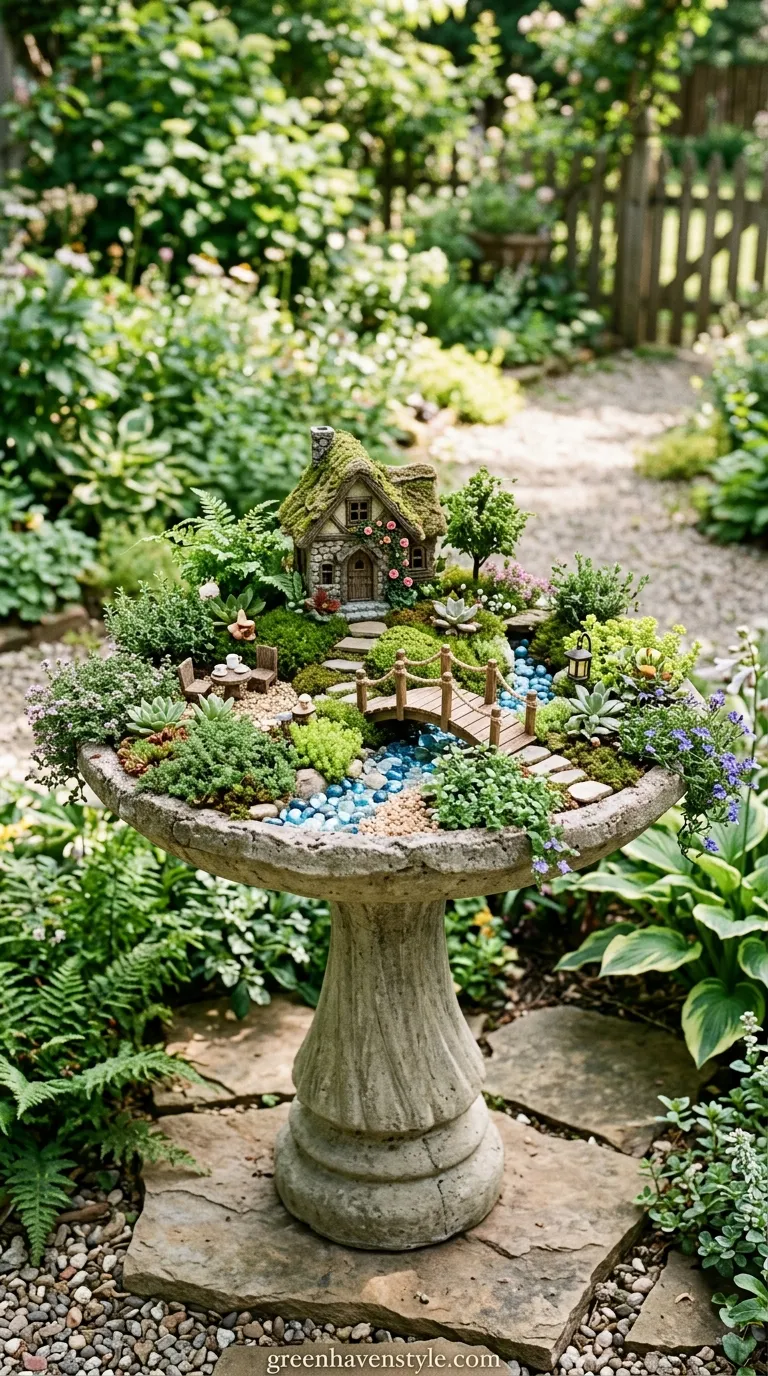
Repurpose a shallow birdbath as a raised fairy garden platform, creating an island scene surrounded by water with a tiny bridge connecting to miniature buildings and lush plantings in the elevated bowl.
In my experience, raising fairy gardens to tabletop height makes them more visible and protects them from ground-dwelling pets or pests. The birdbath’s height creates a focal point while the circular shape naturally suggests an island or contained world complete in itself.
Fill the bowl with soil, mounding it slightly for dimension. Plant around the edges, allowing growth to soften the rim naturally. Add your miniature accessories centrally, creating a tiny island paradise elevated to perfect viewing height for all ages to enjoy.
Conclusion
Creating magical miniature landscapes becomes an enchanting journey when you explore these fairy garden ideas that transform ordinary containers and spaces into extraordinary tiny worlds. Each approach offers unique opportunities for creativity, storytelling, and connection with nature through imaginative miniature design that delights everyone who discovers these hidden realms.
I’ve seen how building fairy gardens brings families together, encourages outdoor time, and sparks creativity in both children and adults. Whether you choose a simple teacup garden, an elaborate wheelbarrow village, or a suspended hanging basket display, each project creates special moments and lasting memories.
Save these ideas for your next creative afternoon, gather some miniature accessories and plants, then watch as your fairy garden takes shape and brings a touch of magic to your outdoor space.


