
12 Indoor Herb Garden Ideas for Fresh Herbs Year-Round
Growing fresh herbs indoors is one of the simplest ways to bring life, fragrance, and flavor into your kitchen or living space. Whether you’re a beginner or a seasoned gardener, creating an indoor herb garden doesn’t require a backyard or even a green thumb—just a little creativity and the right setup.
I’ve noticed that people often think they need expensive equipment or tons of space to grow herbs indoors, but that’s rarely the case. With just a sunny windowsill, a few containers, and some basic care, you can cultivate basil, mint, rosemary, and more year-round. These indoor herb garden ideas will show you how to design functional, beautiful spaces that fit any home style—from minimalist kitchens to cozy cottage vibes.
12 Indoor Herb Garden Ideas
You’ll discover fresh ways to arrange, display, and nurture your herbs while adding a touch of green to your everyday life.
1. Windowsill Mason Jar Setup 
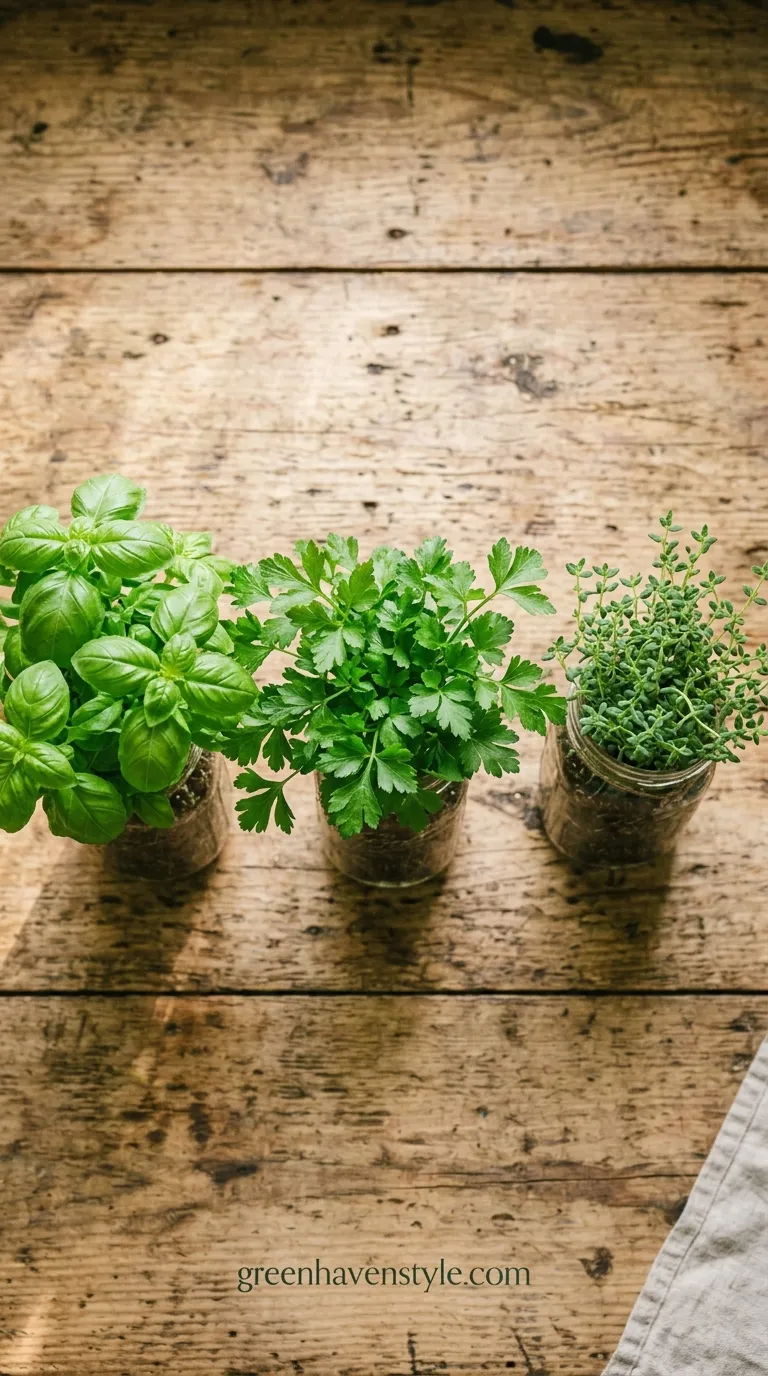
Starting with a simple windowsill arrangement is one of the easiest ways to grow herbs indoors without taking up counter space. Mason jars add a charming, rustic touch and allow you to see root growth, which is both functional and visually appealing.
I’ve found that this setup works especially well for beginners because it requires minimal materials and fits perfectly in small kitchens or apartments. Just make sure your window gets at least four to six hours of sunlight daily, and your herbs will thrive with consistent watering and occasional trimming.
2. Tiered Metal Plant Stand
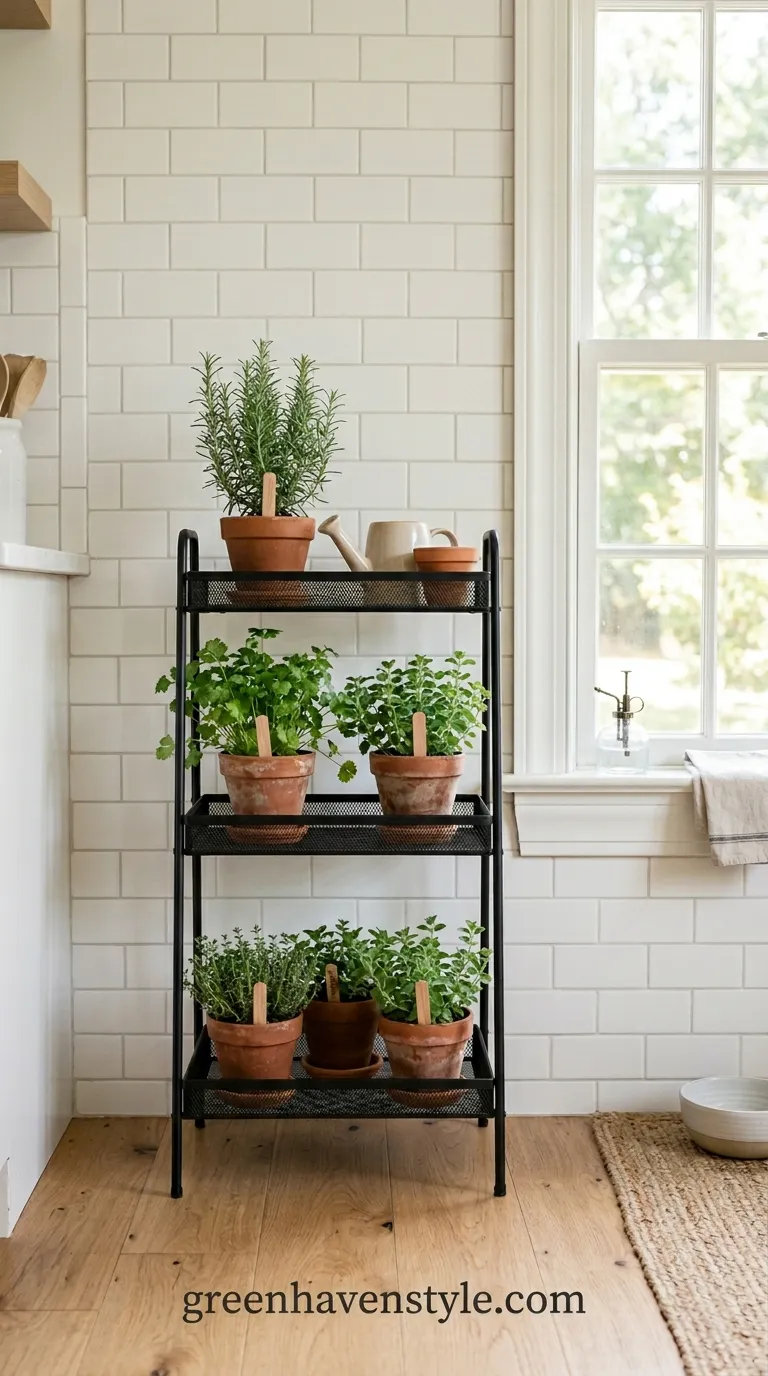
Using a tiered stand maximizes vertical space and keeps your herb collection organized and easy to access. This idea is perfect if you want to grow multiple varieties without cluttering your countertops or windowsills.
In my experience, tiered setups also make watering and pruning much easier since each plant is at a different height and clearly visible. Choose matching pots for a cohesive look, or mix terracotta with ceramic for added texture and personality that complements your kitchen decor beautifully.
3. Hanging Macrame Planter Wall
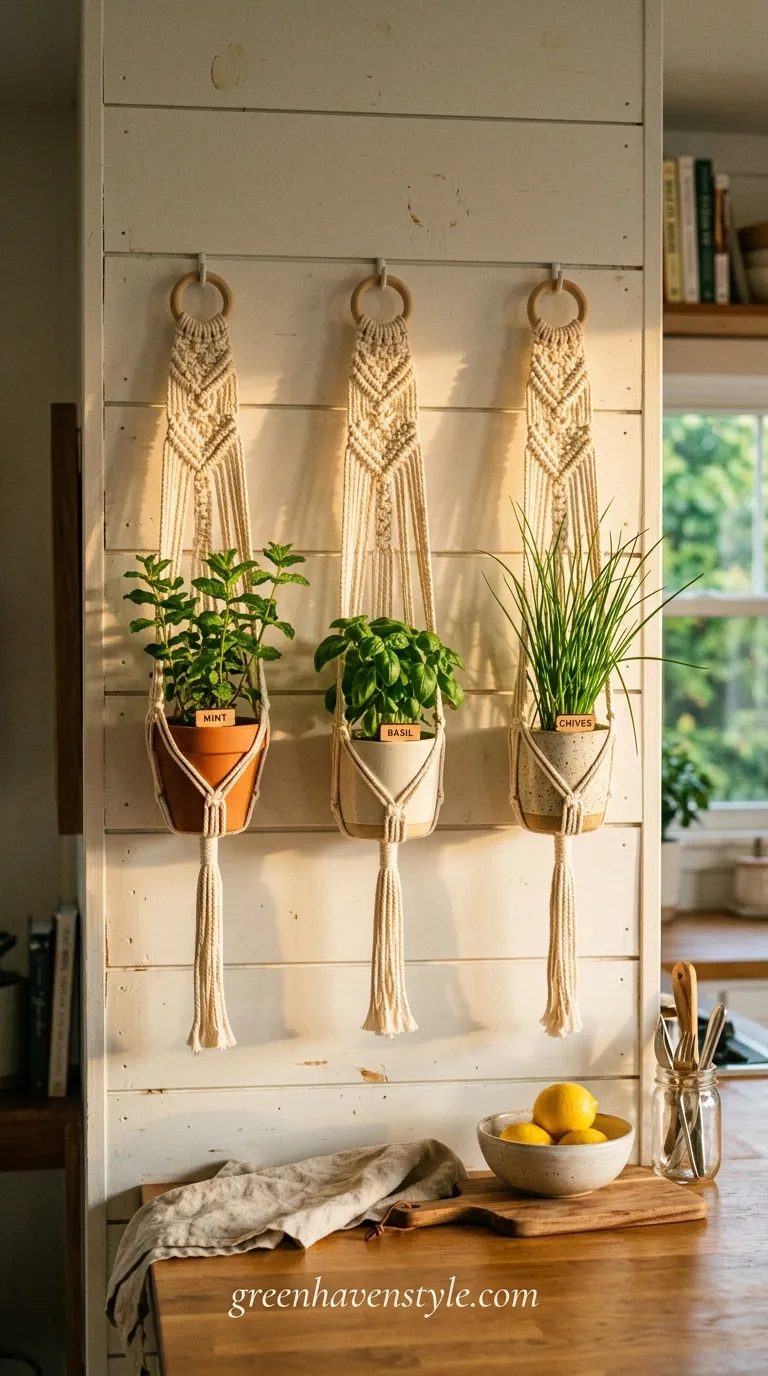
Hanging planters bring greenery to eye level and free up precious counter and shelf space, making them ideal for compact kitchens or studio apartments. Macrame adds a handmade, artisanal quality that feels warm and welcoming.
I’ve observed that this style works particularly well in spaces with high ceilings or blank walls that need visual interest. Suspend your planters near a window or under a skylight to ensure your herbs receive adequate light, and enjoy the cascading effect that brings life and movement into your cooking area.
4. Repurposed Wooden Crate Display
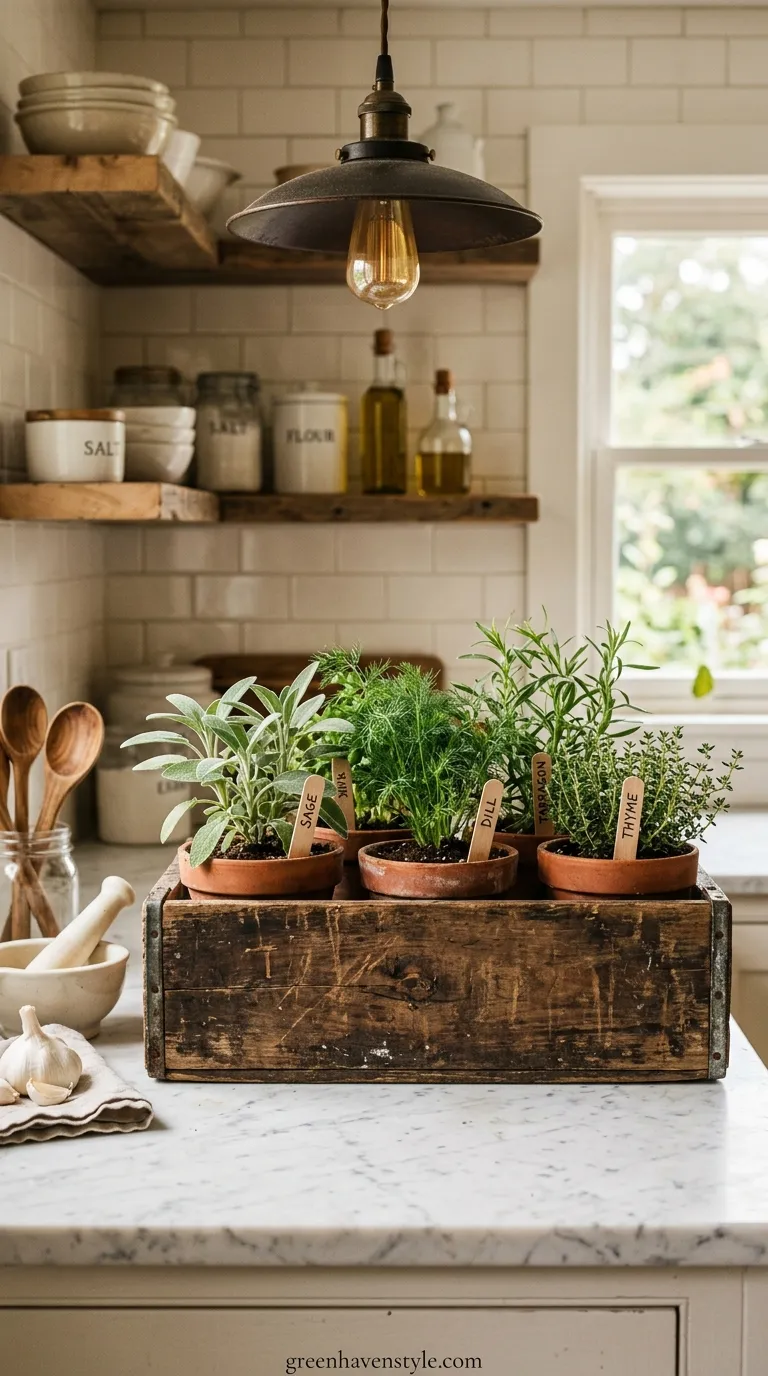
Repurposing a wooden crate as an herb planter adds instant character and a farmhouse feel to any kitchen or dining area. This approach is budget-friendly and allows you to group several herbs together in one cohesive display.
I’ve tried both stained and painted crates, and both work beautifully depending on your home’s style. Line the crate with plastic or use individual pots inside to prevent water damage, and place it near a window or under a grow light for healthy, vibrant growth throughout the year.
5. Countertop Hydroponic System
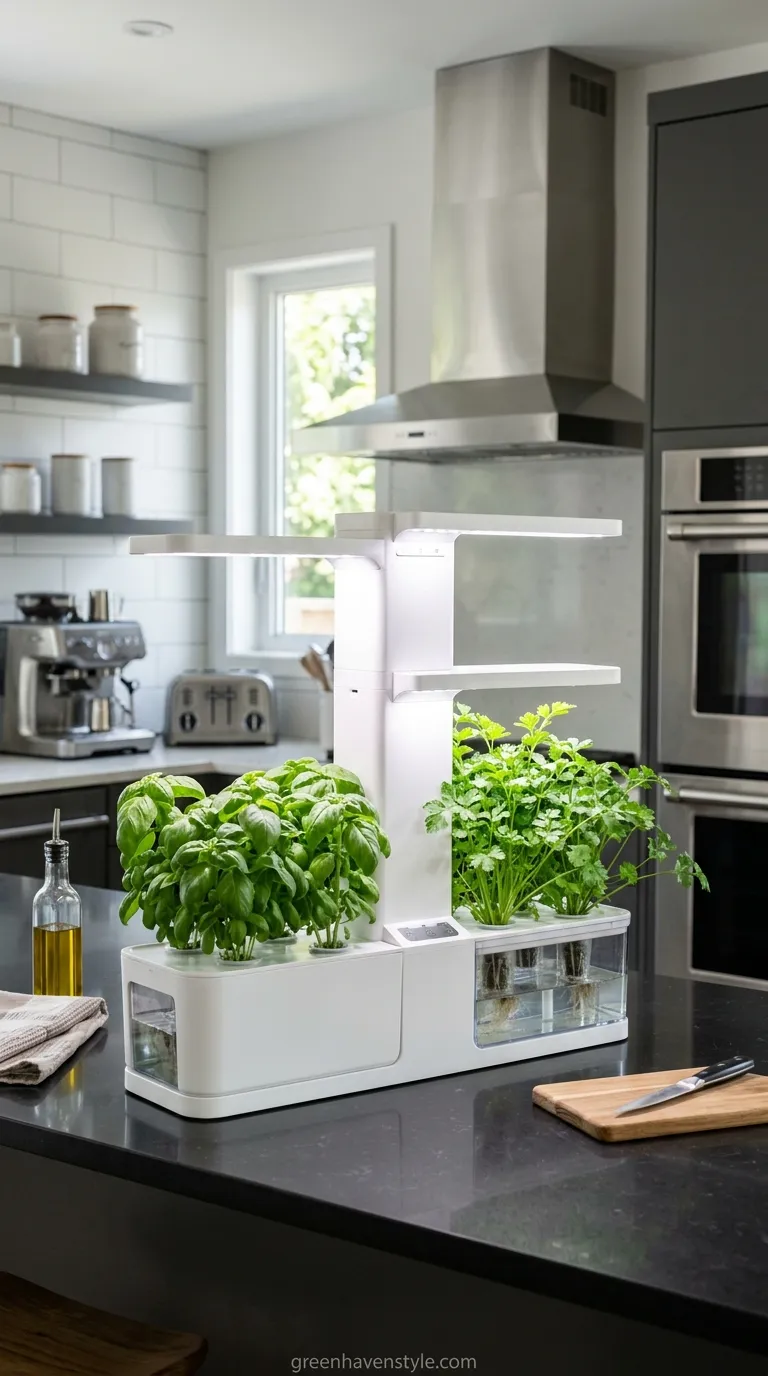
Hydroponic systems eliminate the need for soil and make growing herbs indoors incredibly clean and efficient. These setups use water and nutrients to feed plants directly, which often results in faster growth and higher yields.
From what I’ve seen, hydroponic gardens are ideal for tech-savvy home cooks who want fresh herbs on demand with minimal mess. Many units come with built-in timers and LED lights, so you don’t need to rely on natural sunlight, making them perfect for darker kitchens or apartments with limited window access.
6. Vintage Teacup Herb Garden
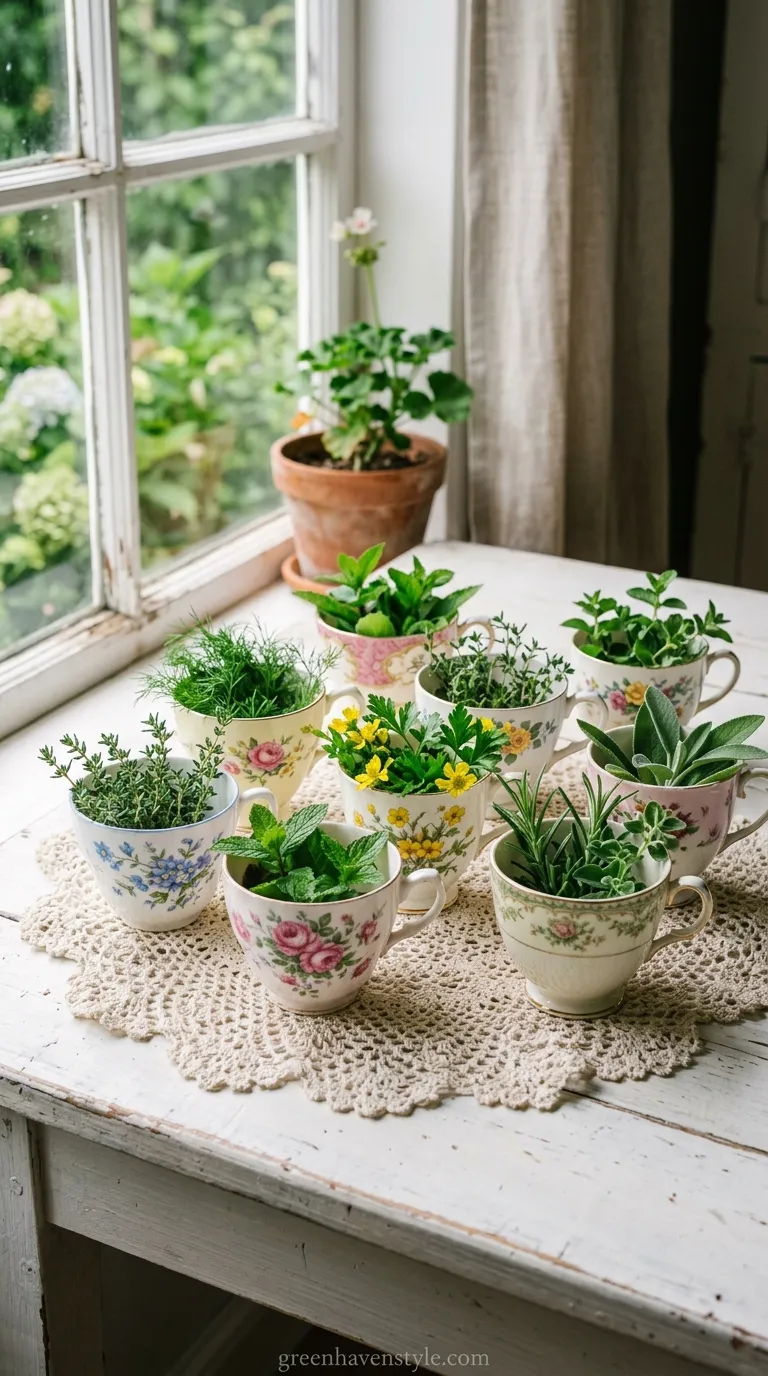
Using vintage teacups as planters is a whimsical and charming way to display your kitchen herbs while adding a touch of nostalgia and personality. This idea works especially well for smaller herbs or cuttings that don’t require deep root space.
I’ve noticed that teacup gardens make wonderful gifts and conversation starters, especially when arranged on open shelving or a breakfast nook windowsill. Just be sure to add small drainage holes or use a layer of pebbles at the bottom to prevent overwatering and root rot.
7. Ladder Shelf Garden Display
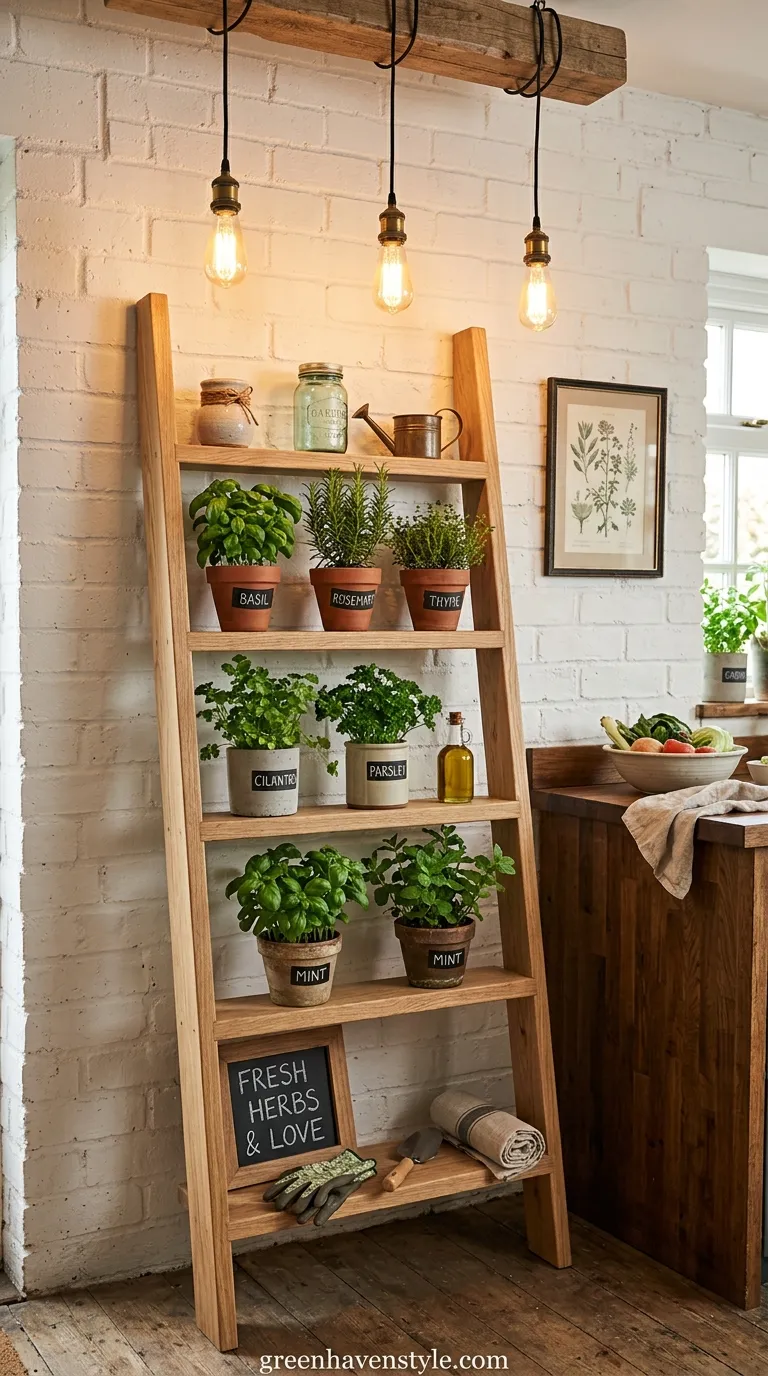
A ladder shelf offers a stylish and functional way to showcase your indoor plants while maximizing vertical space in tight quarters. Each rung becomes a shelf for different herb varieties, creating visual interest and easy accessibility.
In my experience, ladder displays work beautifully in kitchens with high ceilings or open floor plans where you want to add greenery without blocking sightlines. Rotate your pots weekly to ensure all sides receive equal light, and enjoy the cascading effect that brings warmth and life to your cooking space.
8. Magnetic Wall-Mounted Planters
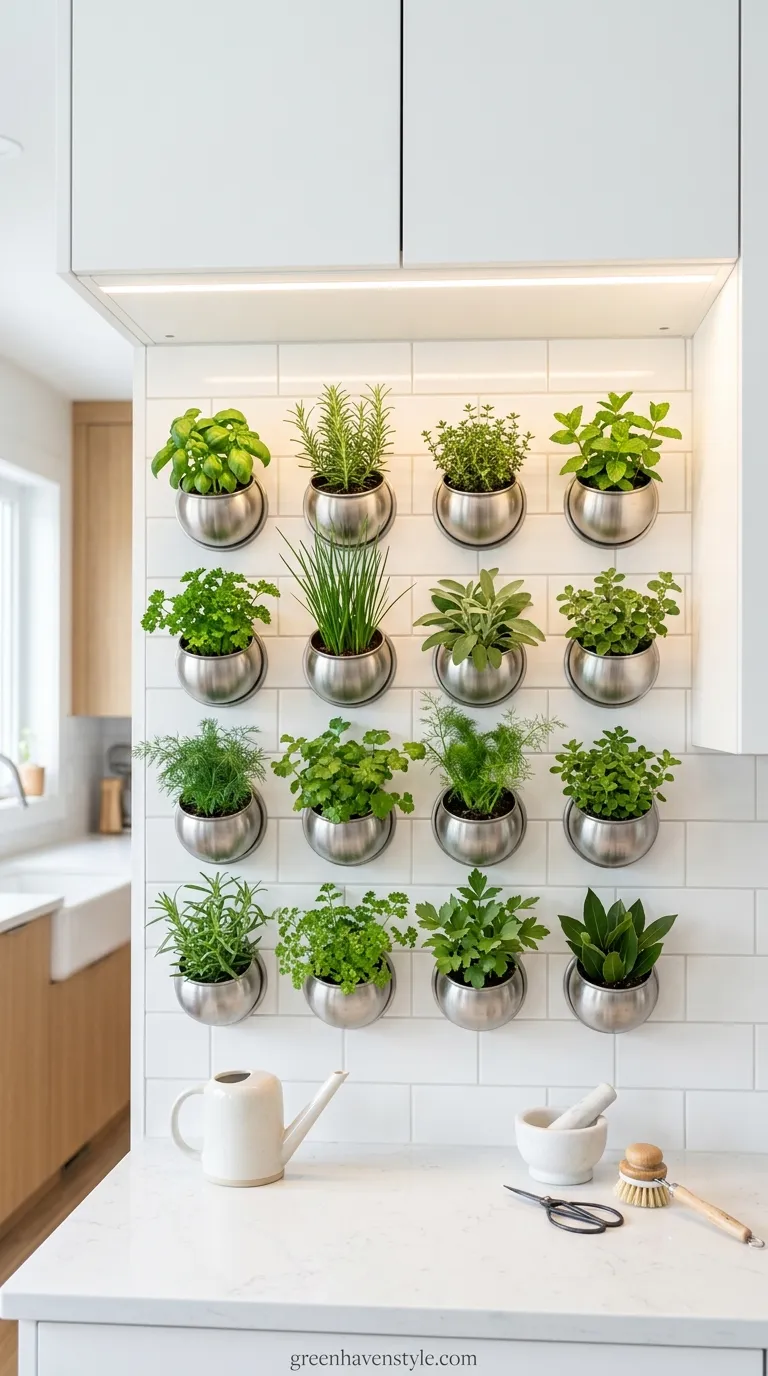
Magnetic planters attach directly to metal surfaces like refrigerators or magnetic boards, making them perfect for ultra-small kitchens where every inch counts. This space-saving solution keeps herbs within arm’s reach while cooking.
I’ve found that magnetic setups are especially popular in modern and minimalist homes where clean lines and smart storage are priorities. Choose shallow containers with good drainage, and group herbs you use most often—like basil, parsley, and cilantro—right where you prep meals for maximum convenience and freshness.
9. Rolling Cart Herb Station
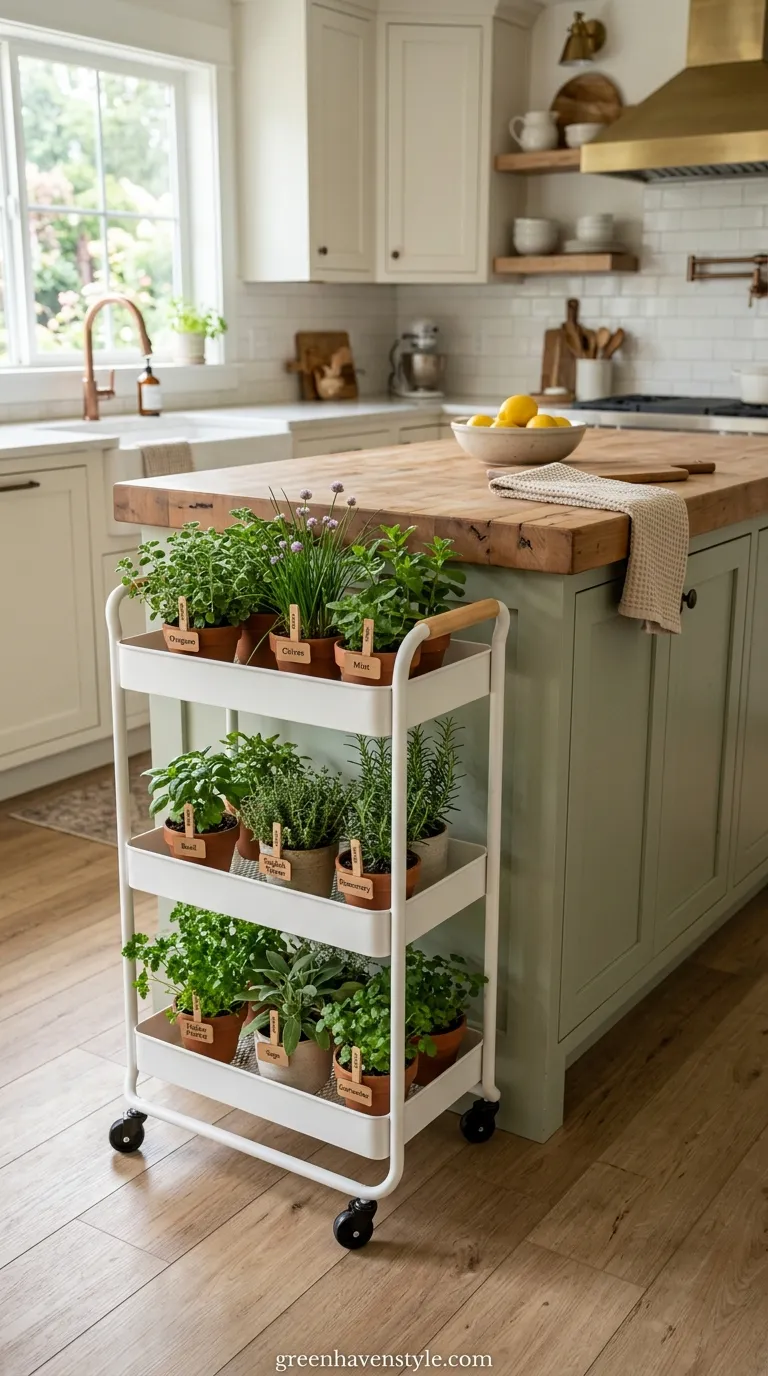
A rolling cart transforms your herb garden into a mobile station that can follow the sunlight or move out of the way when you need extra counter space. This flexibility is ideal for renters or anyone who rearranges their kitchen frequently.
I’ve seen this work especially well in open-concept homes where the cart can roll from kitchen to dining area to patio depending on the season or lighting conditions. Add a small watering can and scissors to one shelf for a complete, self-contained herb care station.
10. Under-Cabinet Grow Light Setup
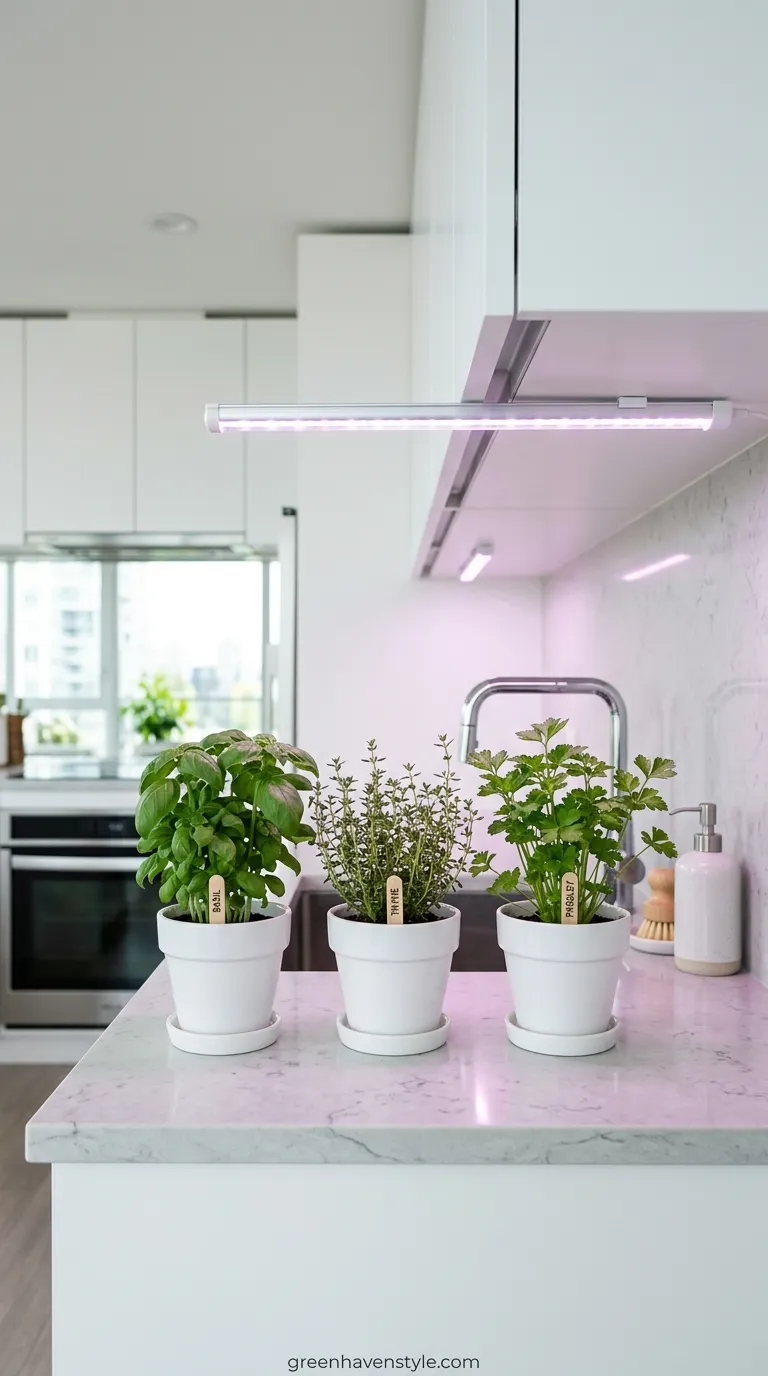
Installing grow lights under your cabinets ensures your herbs receive consistent light even in kitchens with limited natural sunlight. This indoor gardening solution is perfect for year-round growing in apartments or north-facing spaces.
In my experience, under-cabinet lighting not only supports plant health but also adds ambient lighting that makes your kitchen feel warmer and more inviting. Choose full-spectrum LED strips designed for plants, and set them on a timer to mimic natural daylight cycles for optimal growth and flavor.
11. Floating Shelf Herb Garden
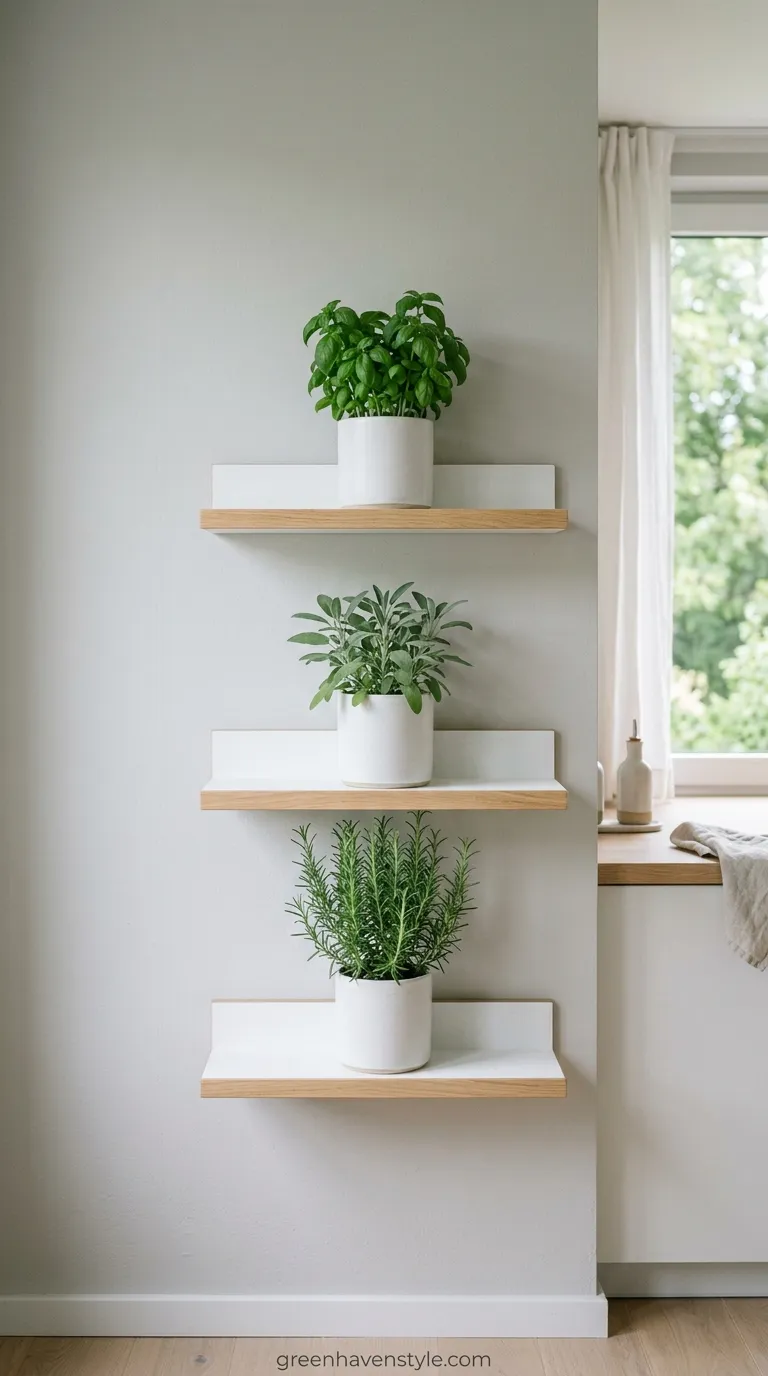
Floating shelves create a clean, modern display that keeps your herbs accessible and beautifully organized. This design works especially well in kitchens with limited floor space or where you want to highlight greenery as part of your decor.
I’ve observed that floating shelf gardens look best when pots match in color or material, creating a cohesive visual flow. Position your shelves near a window or pair them with clip-on grow lights to ensure your herbs stay healthy, lush, and ready to harvest whenever you’re cooking.
12. Windowbox Planter Indoors
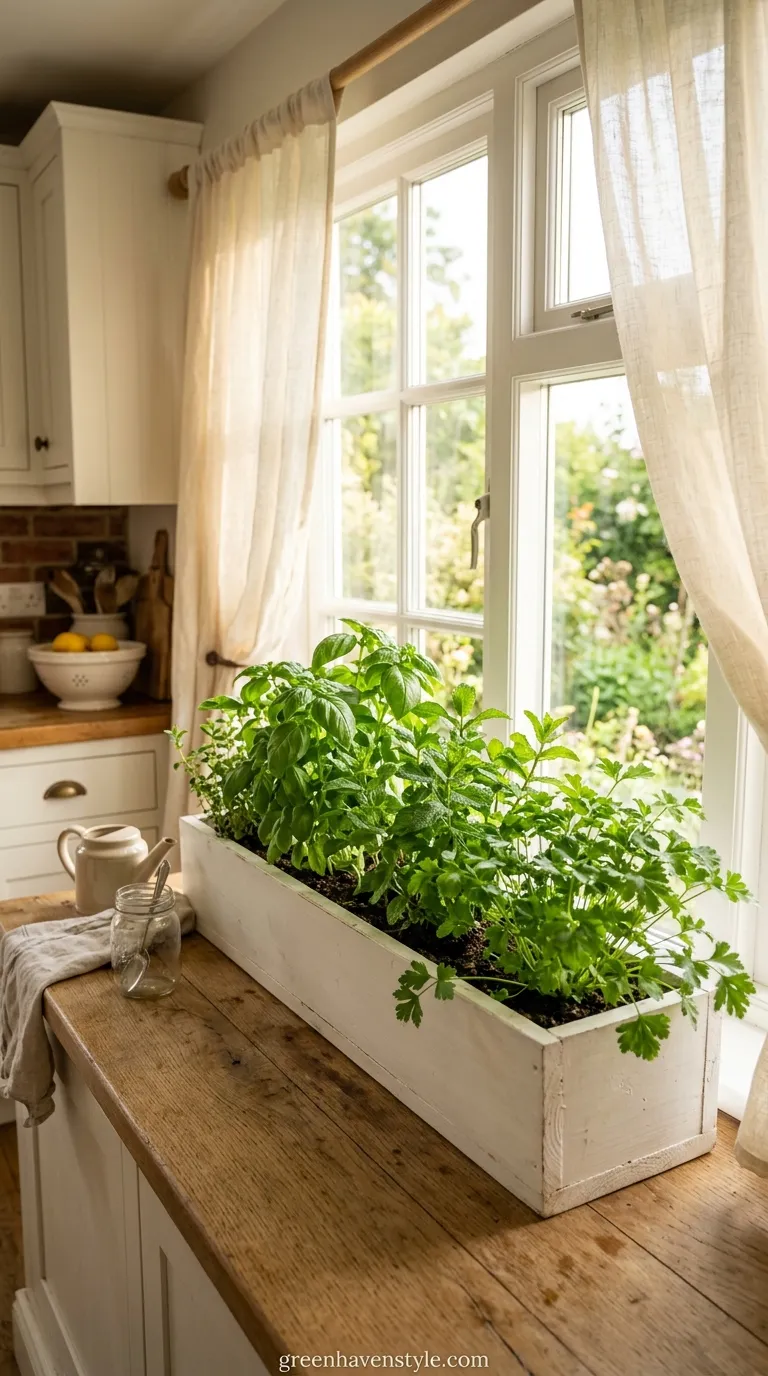
Bringing the classic windowbox indoors is a simple way to grow multiple herbs in one container while maintaining a clean, streamlined look. This setup maximizes your windowsill’s potential and creates a lush, garden-like atmosphere inside.
I’ve found that windowboxes work beautifully in kitchens with deep sills or bay windows where you have extra depth for planting. Choose a box with drainage holes or a removable liner, and plant herbs with similar water and light needs together for easier care and healthier, more abundant harvests.
Conclusion
Creating an indoor herb garden is one of the most rewarding ways to bring fresh flavors and natural beauty into your home, no matter how much space you have. From simple windowsill jars to sleek hydroponic systems, these ideas prove that you don’t need a backyard to enjoy homegrown basil, mint, rosemary, and more.
I’ve seen how even a small collection of herbs can completely transform a kitchen, adding fragrance, color, and a sense of accomplishment every time you snip fresh leaves for a recipe. Whether you’re working with a sunny window or experimenting with grow lights, there’s an approach here that fits your lifestyle and aesthetic.
Pick one idea that excites you, gather your supplies, and start growing. Save this post for inspiration, and share it with anyone who’s ready to bring a little green into their everyday cooking routine.


