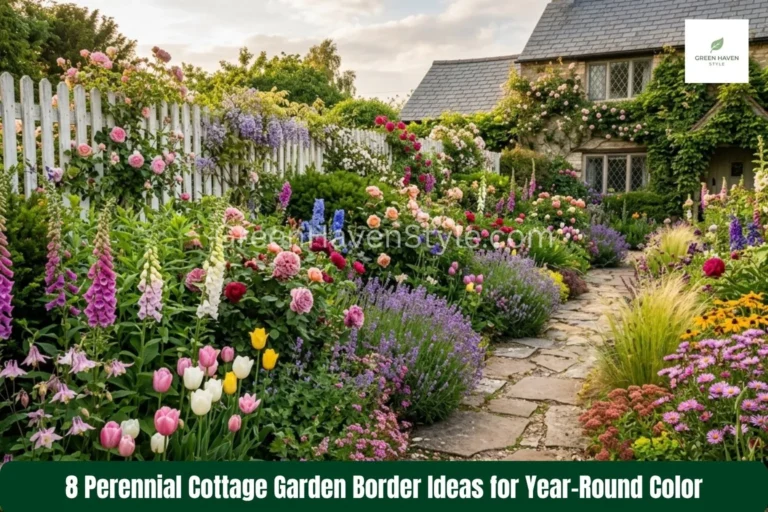
20 Cottage Garden Flower Ideas for a Lush, Romantic Look
Imagine stepping into a garden where blooms tumble freely, colors blend effortlessly, and every corner feels like a page from a storybook. That’s the magic of cottage garden flowers ideas that bring romance, charm, and natural beauty to any outdoor space. These gardens celebrate abundance over perfection, mixing heights, textures, and seasonal blooms in ways that feel both intentional and wonderfully wild.
Whether you’re planning your first cottage-style border or reimagining an existing bed, choosing the right flower combinations makes all the difference. In my experience, the best cottage gardens layer perennials with self-seeding annuals, creating evolving displays that surprise and delight season after season.
20 Cottage Garden Flower Ideas for a Lush, Romantic Look
This collection shares 20 inspiring ways to use flowers in your cottage garden, from traditional border favorites to creative planting schemes that maximize color and fragrance. Each idea helps you create outdoor spaces that feel welcoming, lived-in, and full of life.
1. Layered Border Planting
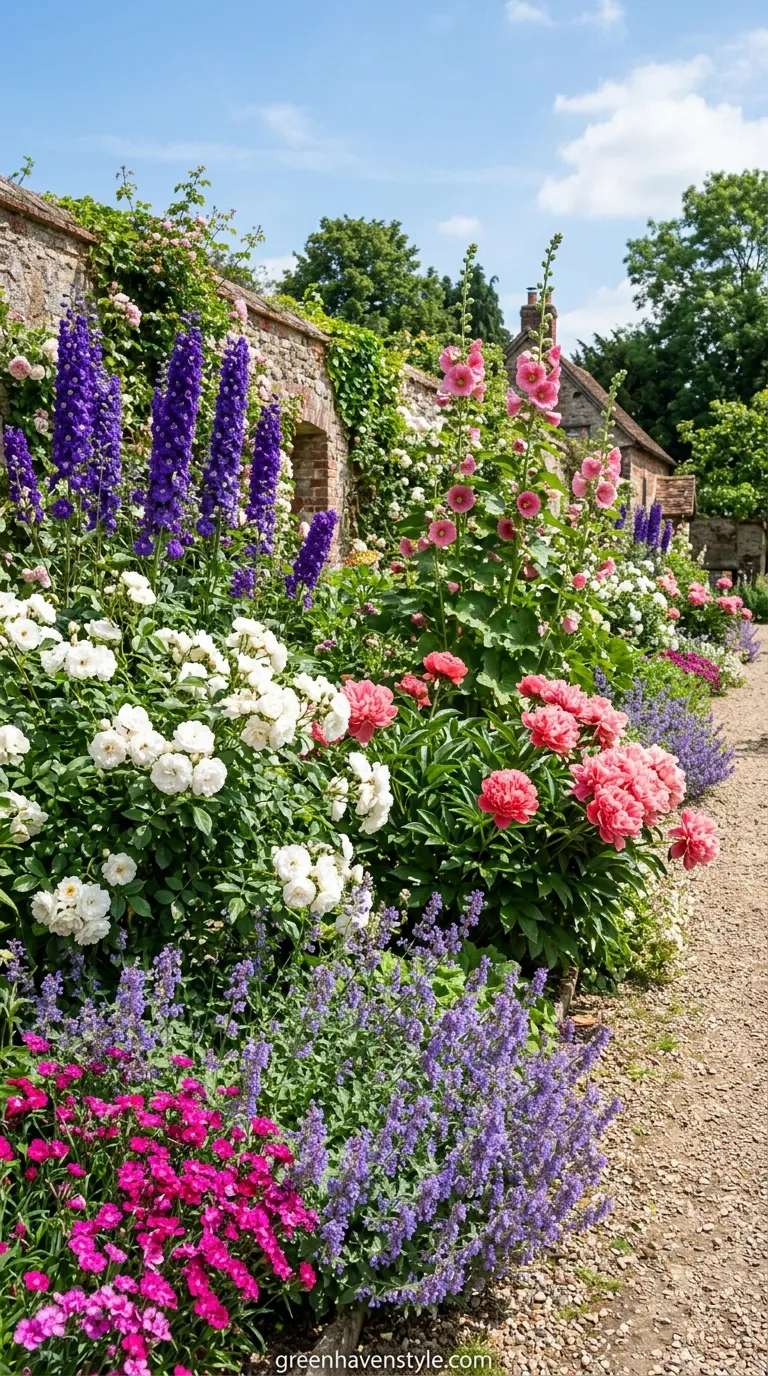
Start with tall delphiniums and hollyhocks at the back, mid-height roses and peonies in the center, and low catmint and dianthus at the front for depth and visual flow. This classic arrangement creates dimension while ensuring every plant gets noticed.
I’ve found that layering heights prevents taller flowers from hiding shorter ones while creating a lush, full appearance that feels abundant. The key is choosing plants with staggered bloom times so color moves through the border continuously from spring through fall, keeping the display interesting and dynamic.
2. Self-Seeding Flower Mix
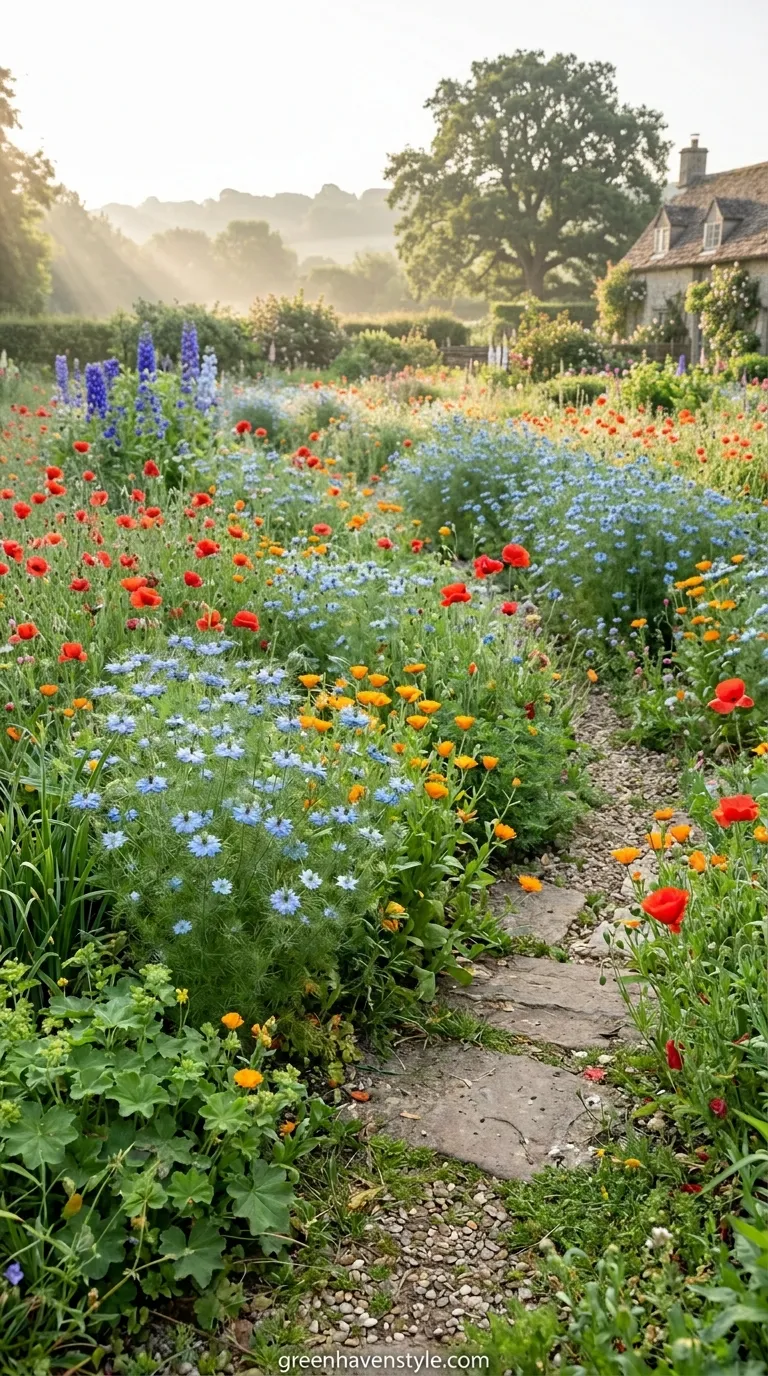
Combine love-in-a-mist, calendula, and poppies that drop seeds naturally, creating spontaneous drifts that fill gaps and soften hard edges year after year. This approach reduces replanting work while maintaining that effortless cottage aesthetic.
From what I’ve seen, self-seeders pop up in unexpected places, weaving through established plants and creating charming surprises. Allowing flowers to naturalize this way builds a garden that evolves organically, with each season bringing slightly different combinations and placements that feel authentic.
3. Climbing Rose Archway
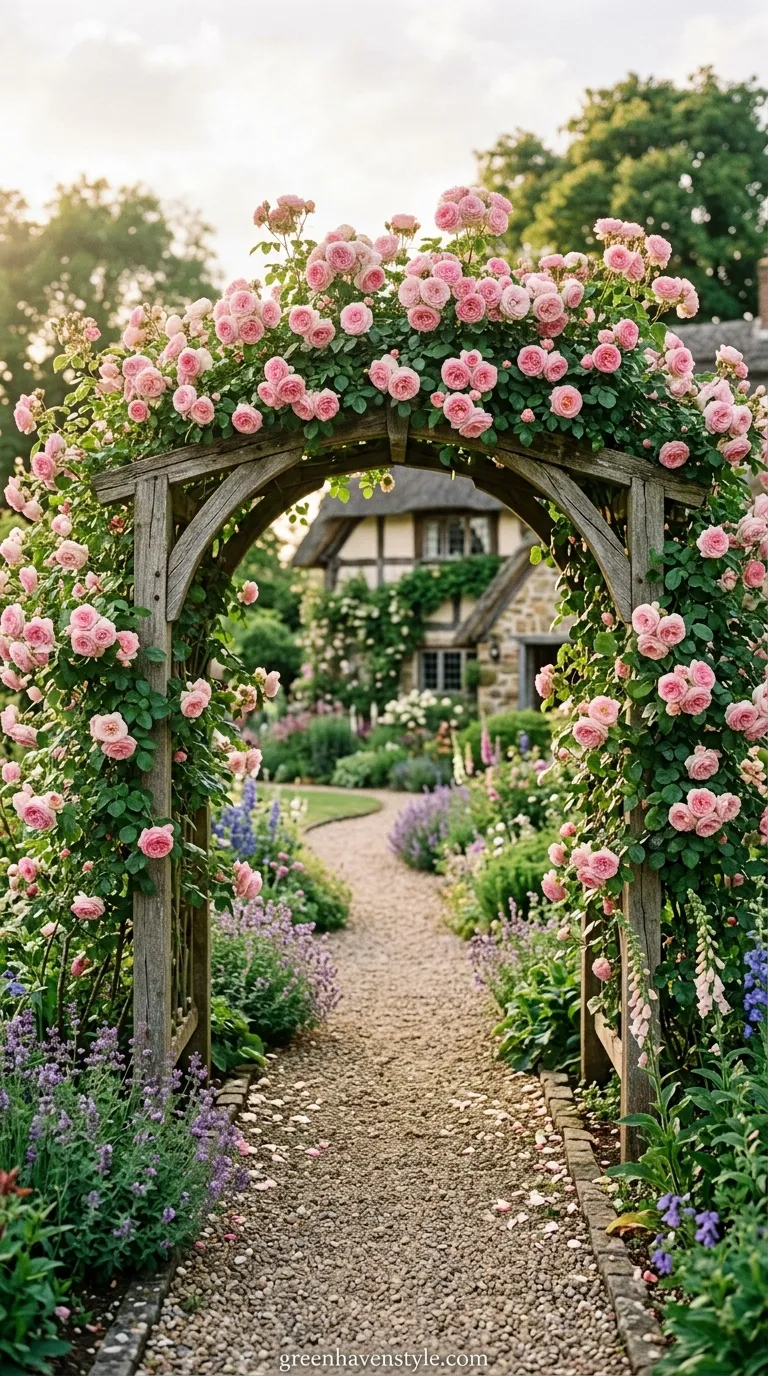
Train fragrant climbing roses over a wooden or metal archway to create a romantic garden entrance framed with cascading blooms and sweet scent. This vertical feature adds instant structure and focal interest to cottage spaces.
I’ve noticed that archways covered in roses transform ordinary pathways into special experiences, inviting visitors to slow down and enjoy the fragrance. Choosing repeat-blooming varieties ensures the archway stays colorful for months, while the structure itself provides support and visual appeal even in winter.
4. Cottage Herb Border
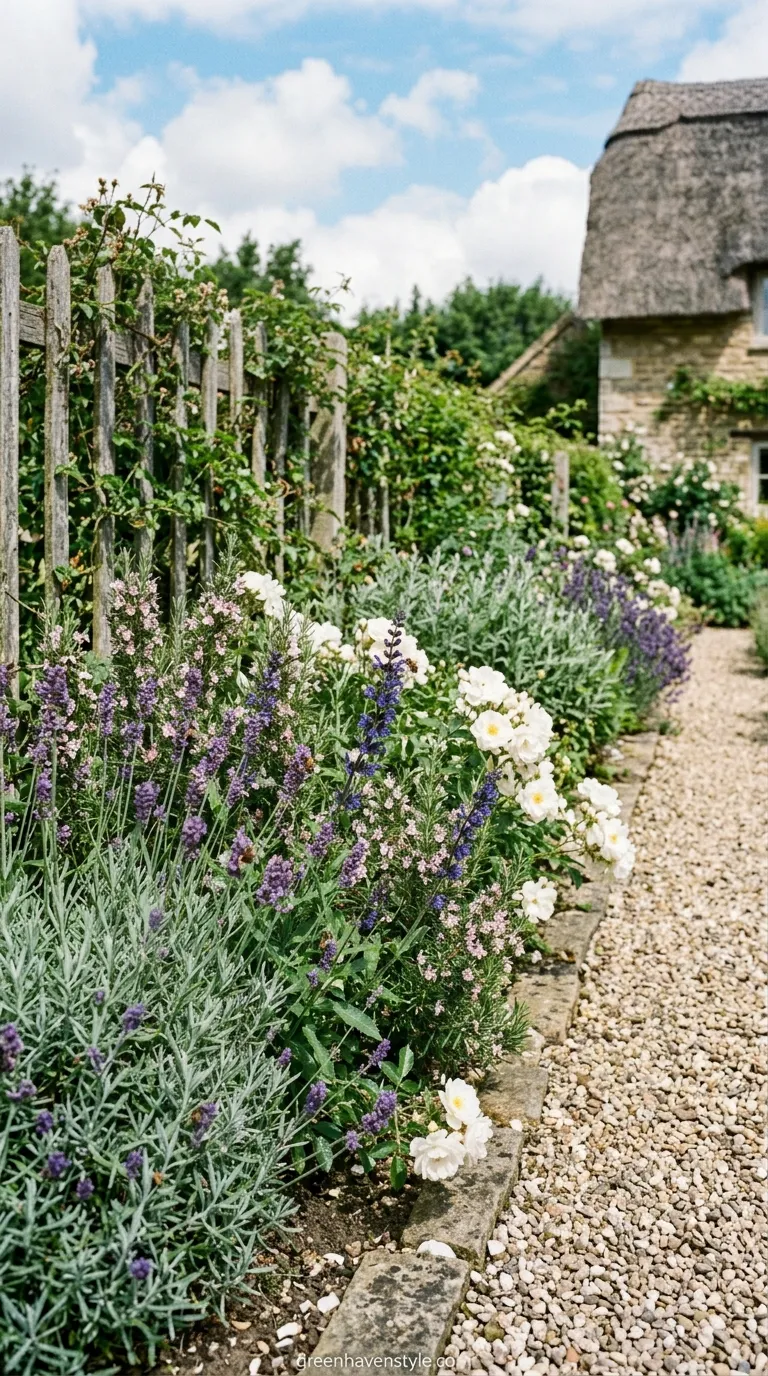
Mix flowering herbs like lavender, sage, and rosemary with traditional blooms to create borders that offer color, fragrance, and culinary value in one beautiful planting. This practical approach suits smaller spaces perfectly.
In my experience, herb and flower combinations attract pollinators constantly while providing fresh ingredients for cooking and crafts. The silvery foliage of many herbs contrasts beautifully with colorful petals, creating textural interest that remains attractive even when flowers fade between bloom cycles.
5. Pastel Color Palette
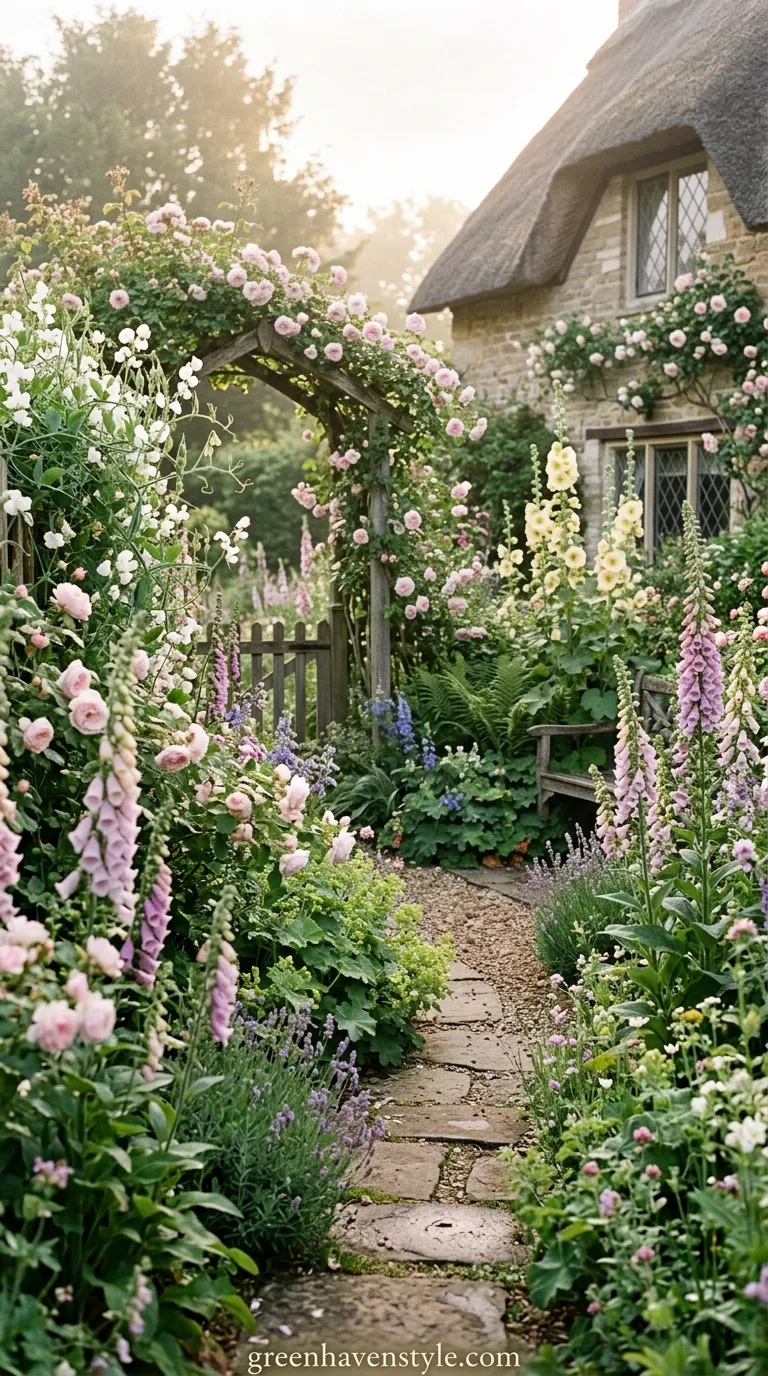
Focus on soft pinks, lavenders, whites, and pale yellows by choosing roses, foxgloves, sweet peas, and campanula for a dreamy, romantic atmosphere. This cohesive color scheme creates calm, elegant spaces that feel soothing and sophisticated.
I’ve observed that pastel gardens photograph beautifully and feel especially magical in early morning or evening light when soft colors seem to glow. Limiting your palette this way creates unity while still allowing plenty of variety in flower shapes, sizes, and bloom times throughout the season.
6. Cutting Garden Section
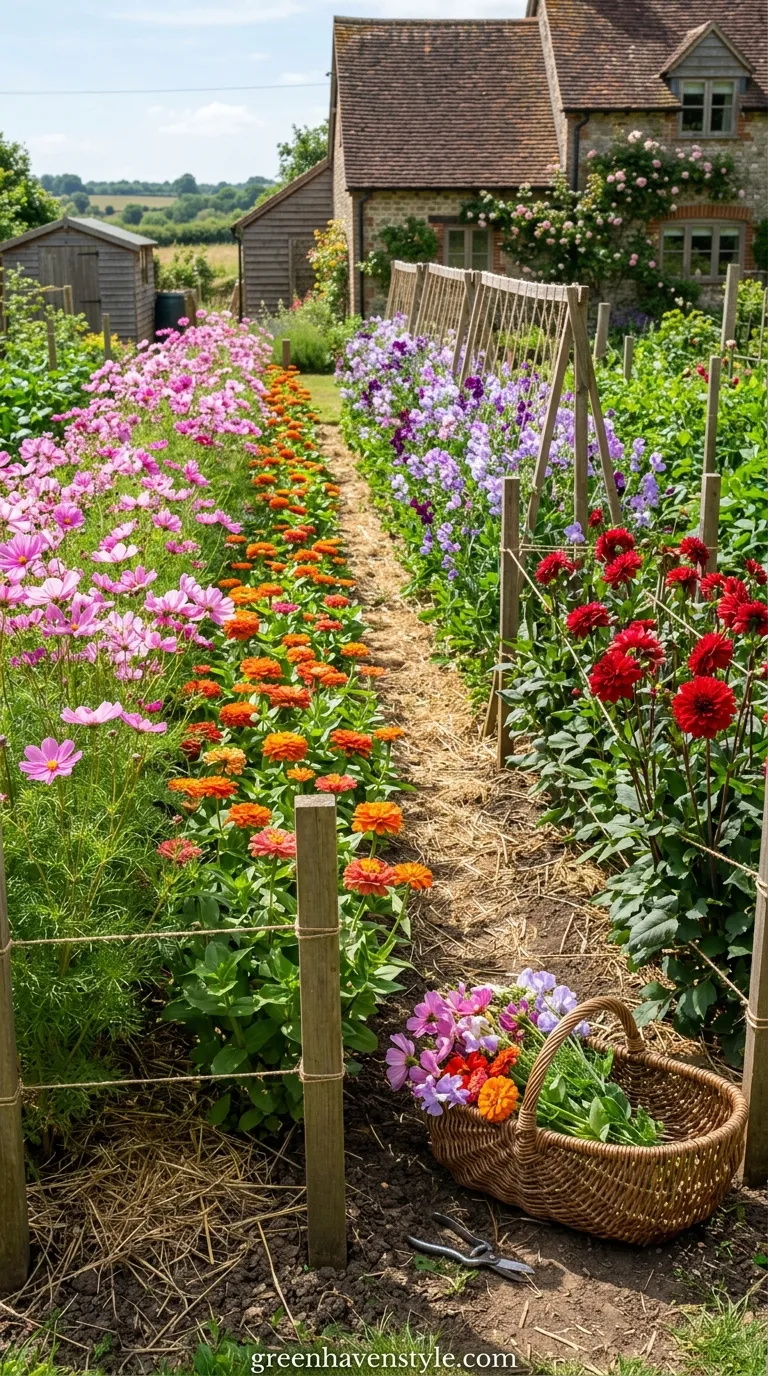
Dedicate a sunny bed to cosmos, zinnias, sweet peas, and dahlias specifically for harvesting, ensuring you always have fresh bouquets without depleting display borders. This practical idea lets you enjoy flowers both indoors and out.
From what I’ve seen, regular cutting actually encourages more blooms on many flowers, making this a win-win arrangement. Planting in rows makes harvesting easier while keeping your ornamental borders looking full and untouched for garden visitors and outdoor enjoyment year-round.
7. Shaded Woodland Corner
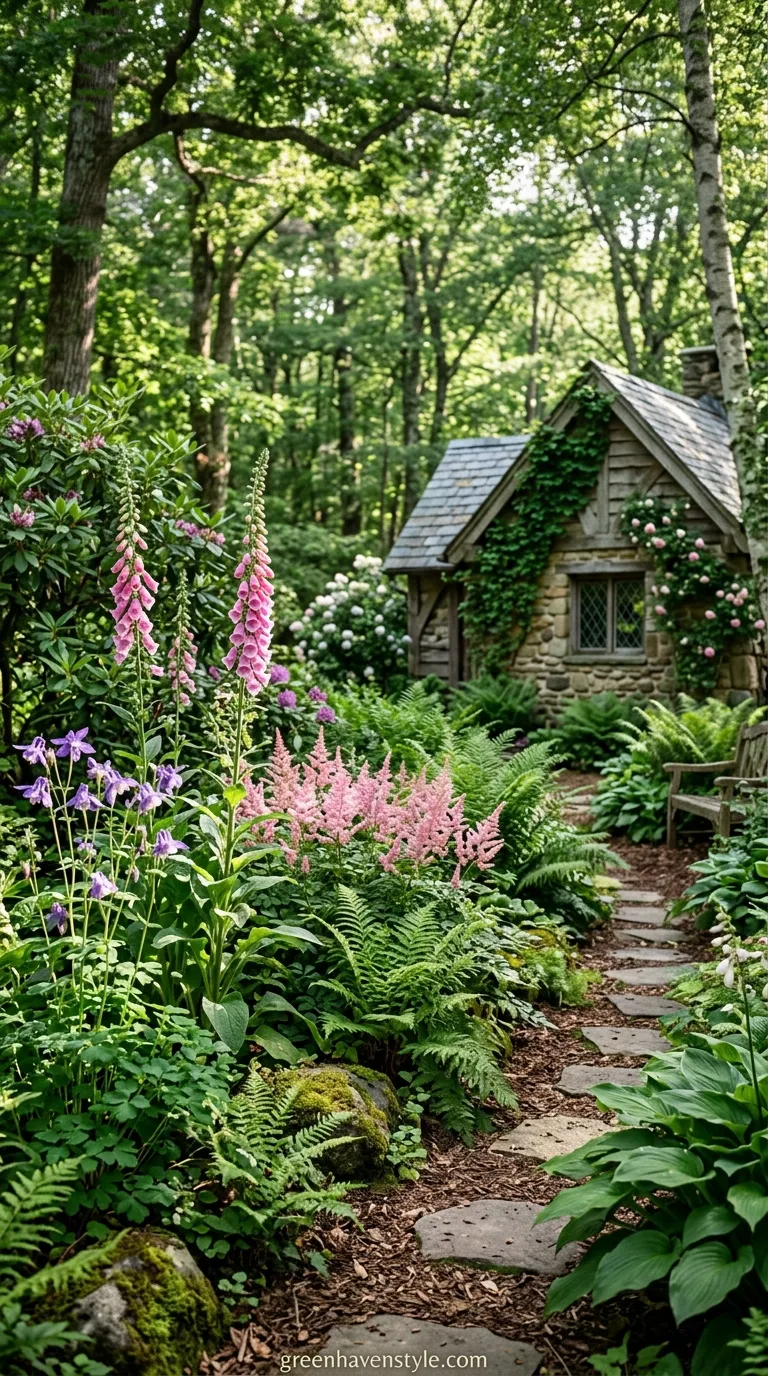
Use shade-loving foxgloves, columbine, astilbe, and ferns to transform dim corners into enchanting woodland-style retreats filled with delicate blooms and lush foliage. This approach maximizes every garden area, including challenging spots.
I’ve found that embracing shade rather than fighting it creates some of the most peaceful, magical garden spaces. These plants thrive in conditions where sun-lovers struggle, bringing color and interest to areas that might otherwise feel neglected or forgotten in the overall garden design.
8. Continuous Bloom Strategy
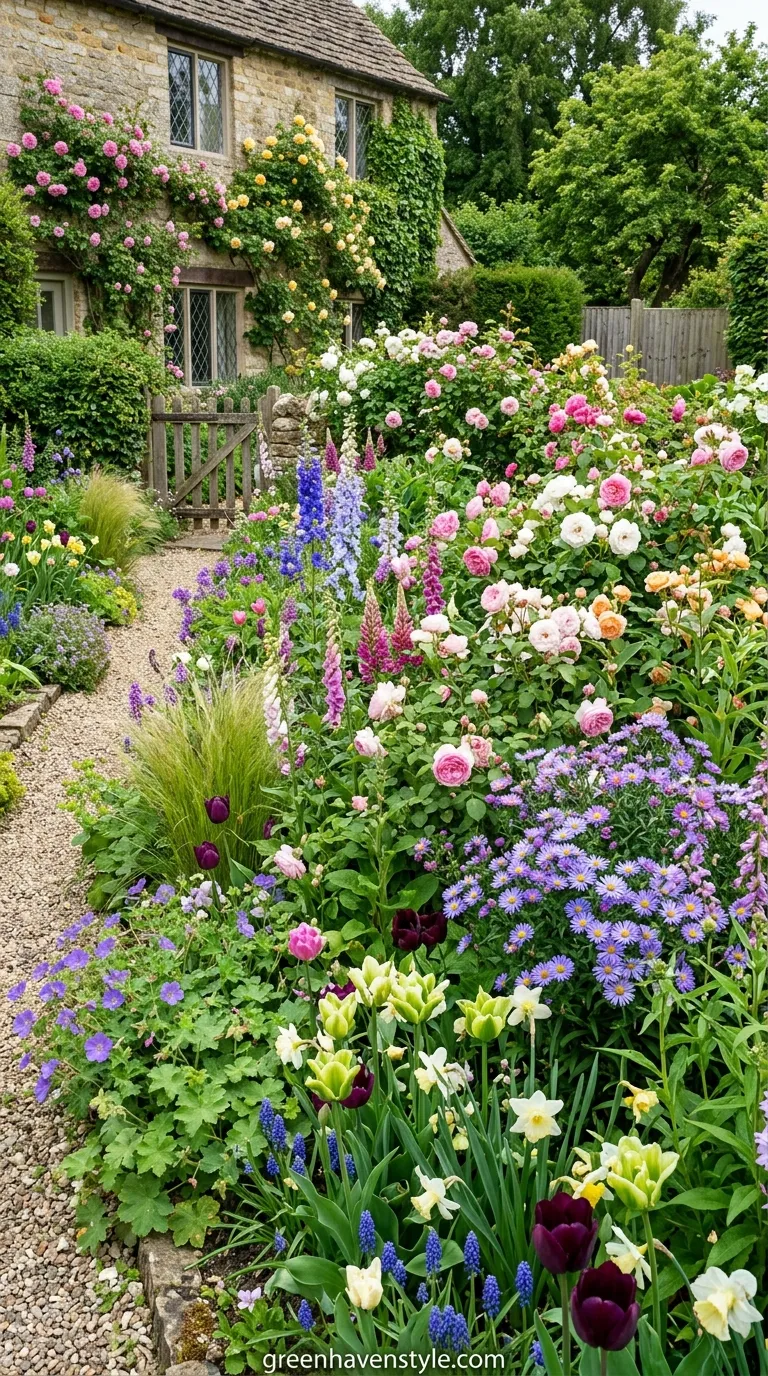
Select flowers with overlapping bloom times so something is always flowering, from early spring bulbs through late-season asters and Japanese anemones. This planning creates year-round interest and constant color changes.
In my experience, the tricky part is knowing each plant’s bloom window and choreographing transitions between seasons. Keeping a simple garden journal helps track what blooms when, making it easier to identify gaps and choose additions that extend the display into quieter months.
9. Billowing Edge Softeners
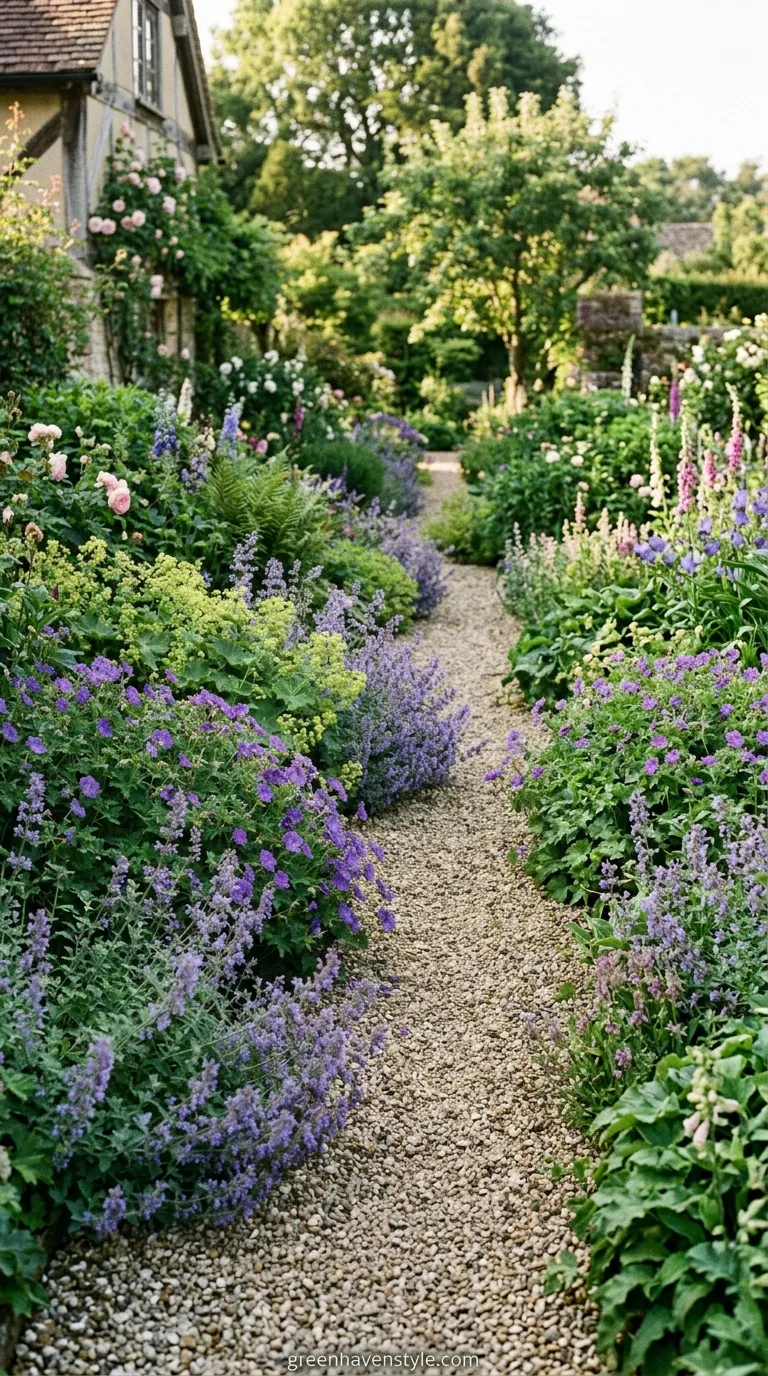
Plant sprawling catmint, hardy geraniums, and lady’s mantle along pathways and bed edges where they spill gently onto gravel or grass, softening boundaries. This technique creates that relaxed, overflowing cottage look everyone loves.
I’ve noticed that these soft edges make gardens feel generous and welcoming rather than rigid or formal. The plants blur the transition between beds and paths naturally, inviting visitors to brush against fragrant foliage and creating a sensory experience beyond just visual beauty.
10. Vertical Obelisk Features
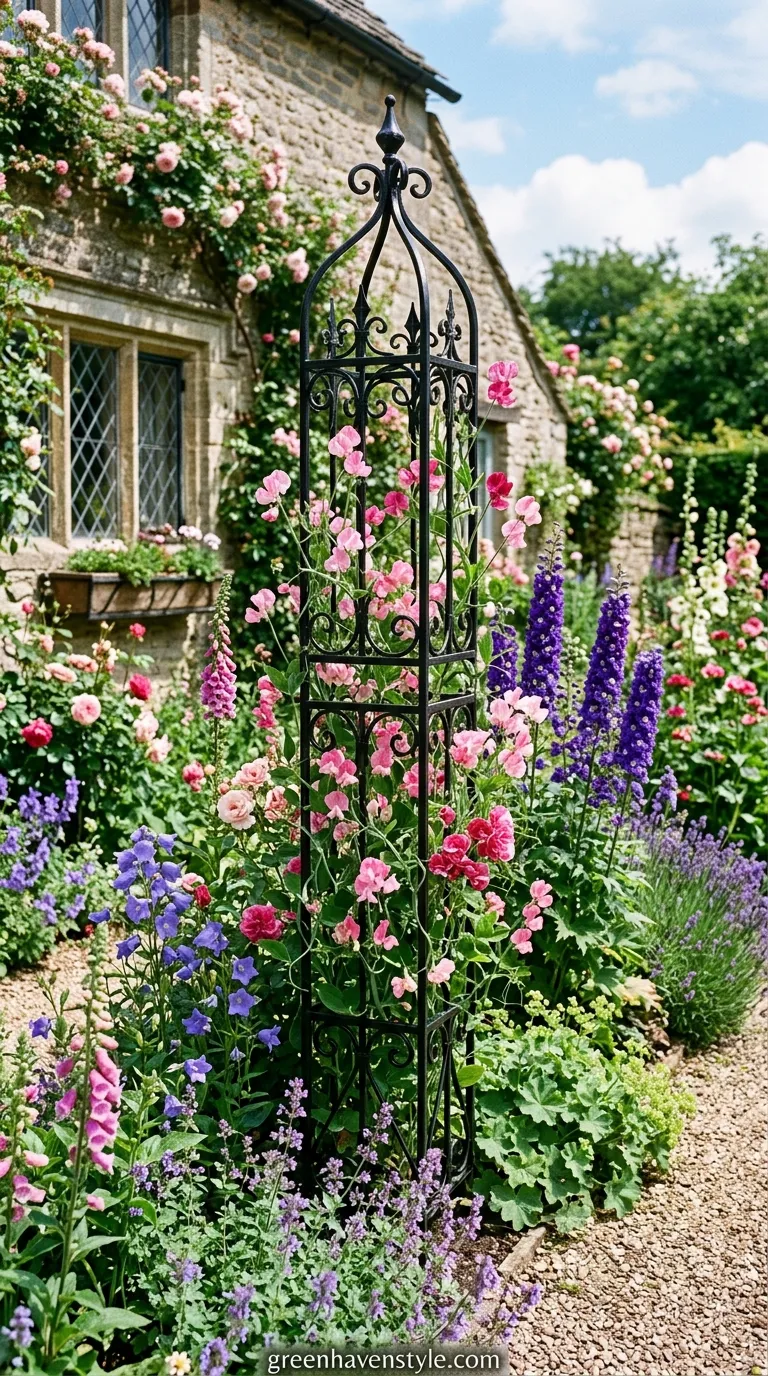
Add decorative obelisks throughout borders and train sweet peas, clematis, or climbing nasturtiums up them for height without taking ground space. These vertical elements create rhythm and draw the eye upward.
From what I’ve seen, obelisks work beautifully as focal points or repeated elements that give structure to informal plantings. They support delicate climbers perfectly while adding architectural interest that remains attractive in winter when plants die back and the garden enters its dormant phase.
11. Moon Garden Selection
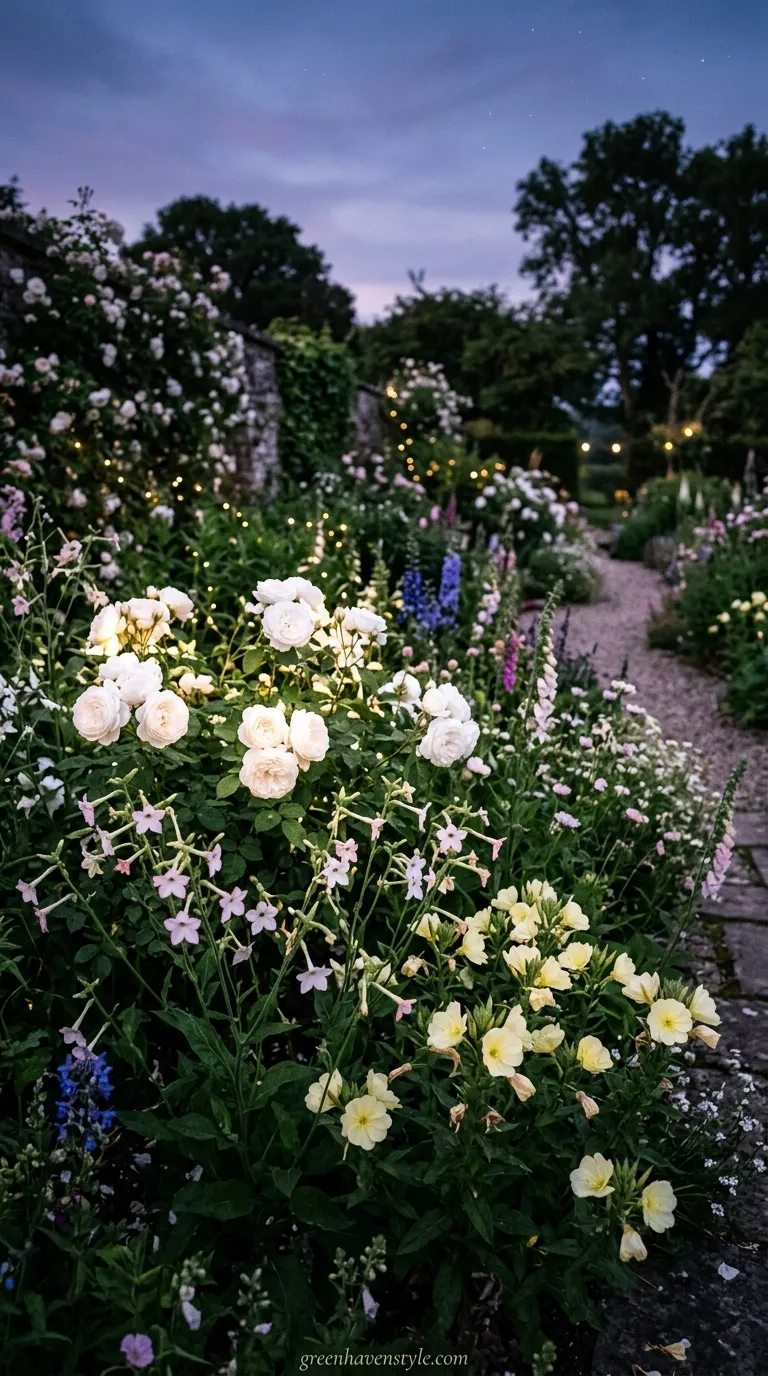
Choose white and pale-colored flowers like white roses, nicotiana, and evening primrose that glow at dusk and release fragrance in evening hours. This creates magical outdoor spaces for nighttime enjoyment and relaxation.
I’ve observed that moon gardens completely transform outdoor areas after dark, making patios and seating areas more inviting. The pale blooms catch moonlight and ambient lighting beautifully, while evening-scented flowers attract night-pollinating moths and create a completely different sensory experience than daytime gardens.
12. Pollinator-Friendly Planting
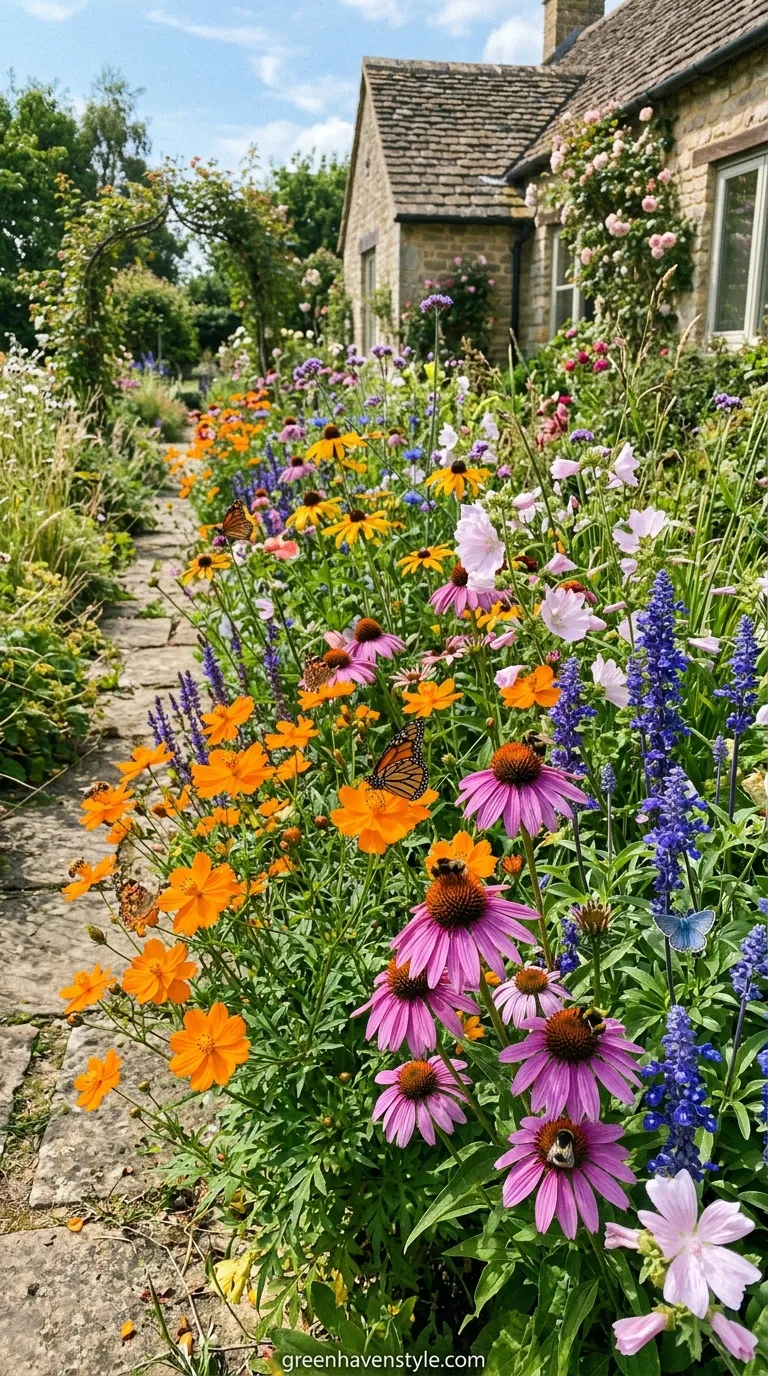
Focus on single-flowered varieties like cosmos, echinacea, and salvia that provide easy nectar access for bees, butterflies, and hummingbirds. This ecological approach supports local wildlife while creating vibrant, active garden spaces.
In my experience, watching pollinators visit flowers adds another layer of enjoyment to cottage gardens. Choosing native plants when possible and avoiding double-flowered cultivars ensures your garden provides real value to beneficial insects rather than just decorative blooms with limited ecological benefit.
13. Hot Color Scheme
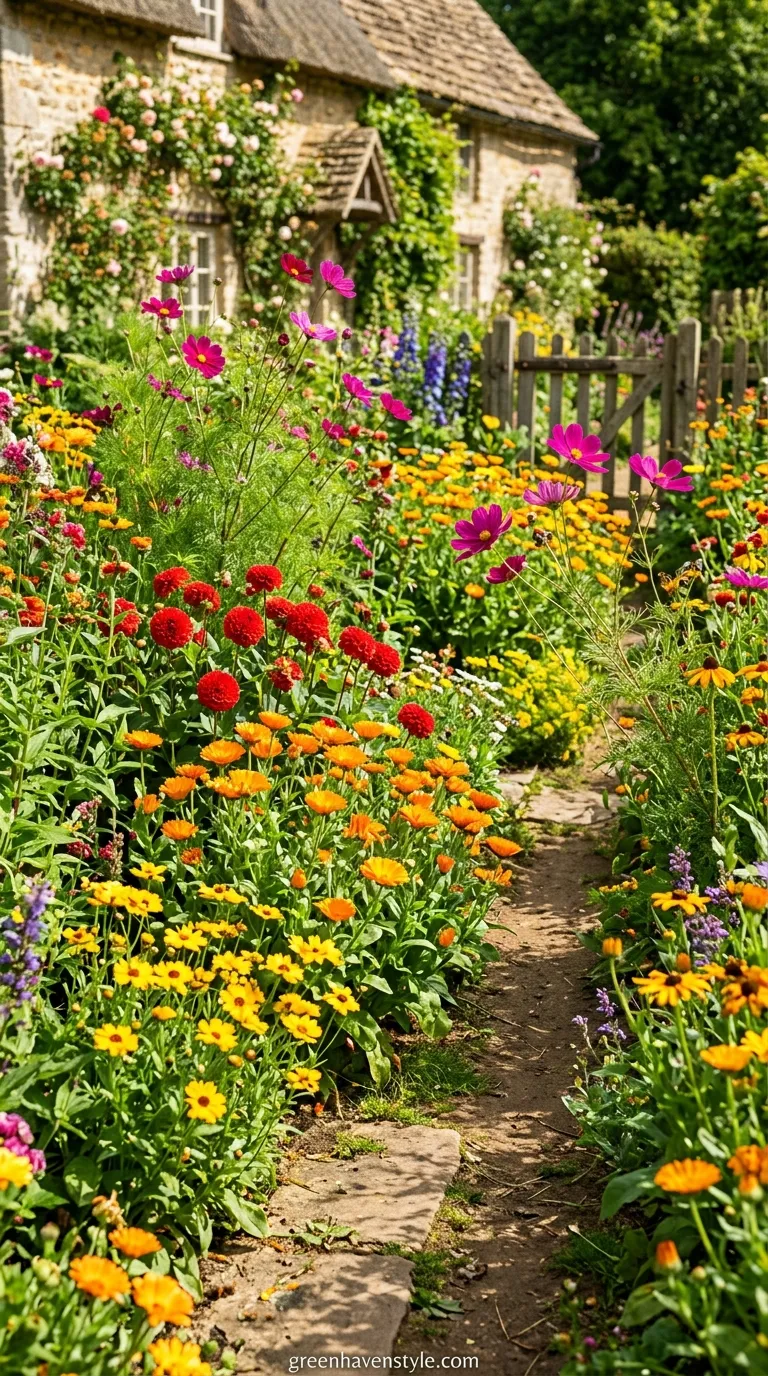
Create energetic borders with orange calendula, red dahlias, yellow coreopsis, and magenta cosmos for bold, cheerful displays that energize spaces. This vibrant approach suits sunny, casual cottage settings perfectly.
I’ve found that hot-colored gardens feel particularly joyful and uplifting, raising spirits on gray days. The bold palette photographs beautifully and creates focal areas that draw attention across larger properties, making even distant borders visible and impactful from house windows and main gathering areas.
14. Fragrance-Focused Design
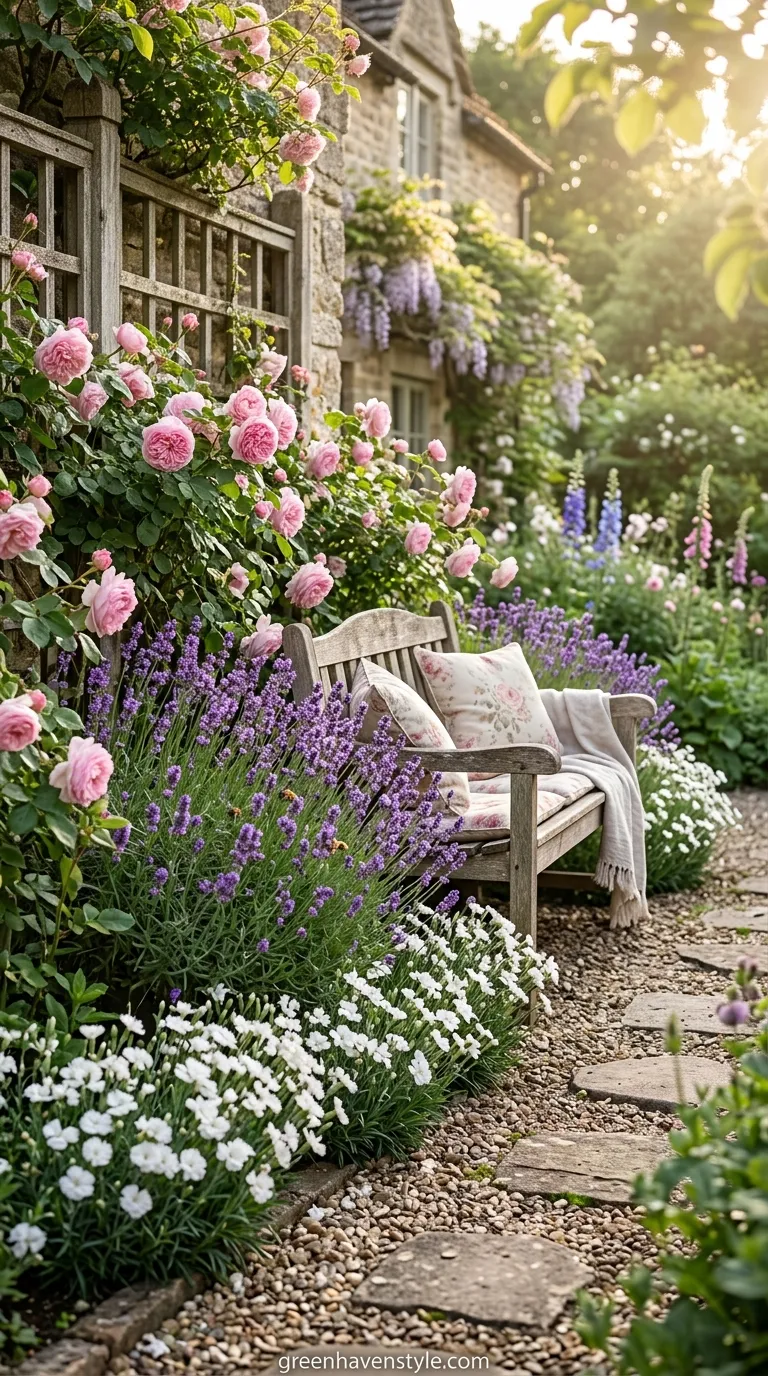
Prioritize scented flowers like roses, lavender, dianthus, and sweet peas near seating areas, pathways, and windows where their perfume enhances outdoor living spaces. This sensory approach makes gardens more immersive and memorable.
From what I’ve seen, fragrance creates emotional connections to gardens that purely visual beauty alone cannot achieve. Placing scented plants strategically means you experience their perfume naturally as you move through spaces rather than needing to seek it out deliberately or bend down.
15. Dry Garden Selection
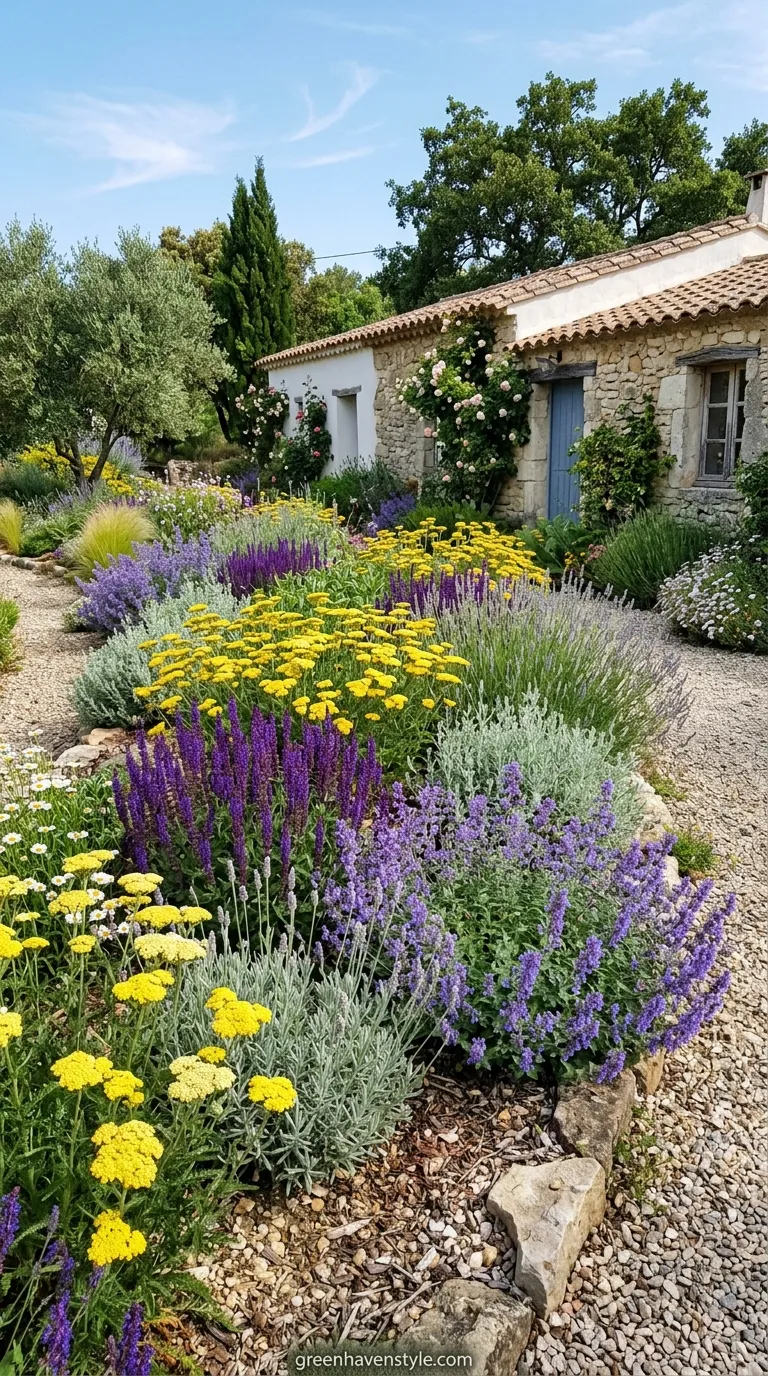
Choose drought-tolerant yarrow, salvia, catmint, and lavender for sunny beds with poor soil or limited water access. This sustainable approach reduces maintenance while creating beautiful, resilient displays that thrive despite challenging conditions.
I’ve noticed that these tough plants often bloom more prolifically when not pampered, making them perfect for busy gardeners or summer cottages. Their ability to withstand neglect means gardens still look attractive during vacations or dry spells without constant intervention or supplemental watering.
16. Naturalized Meadow Style
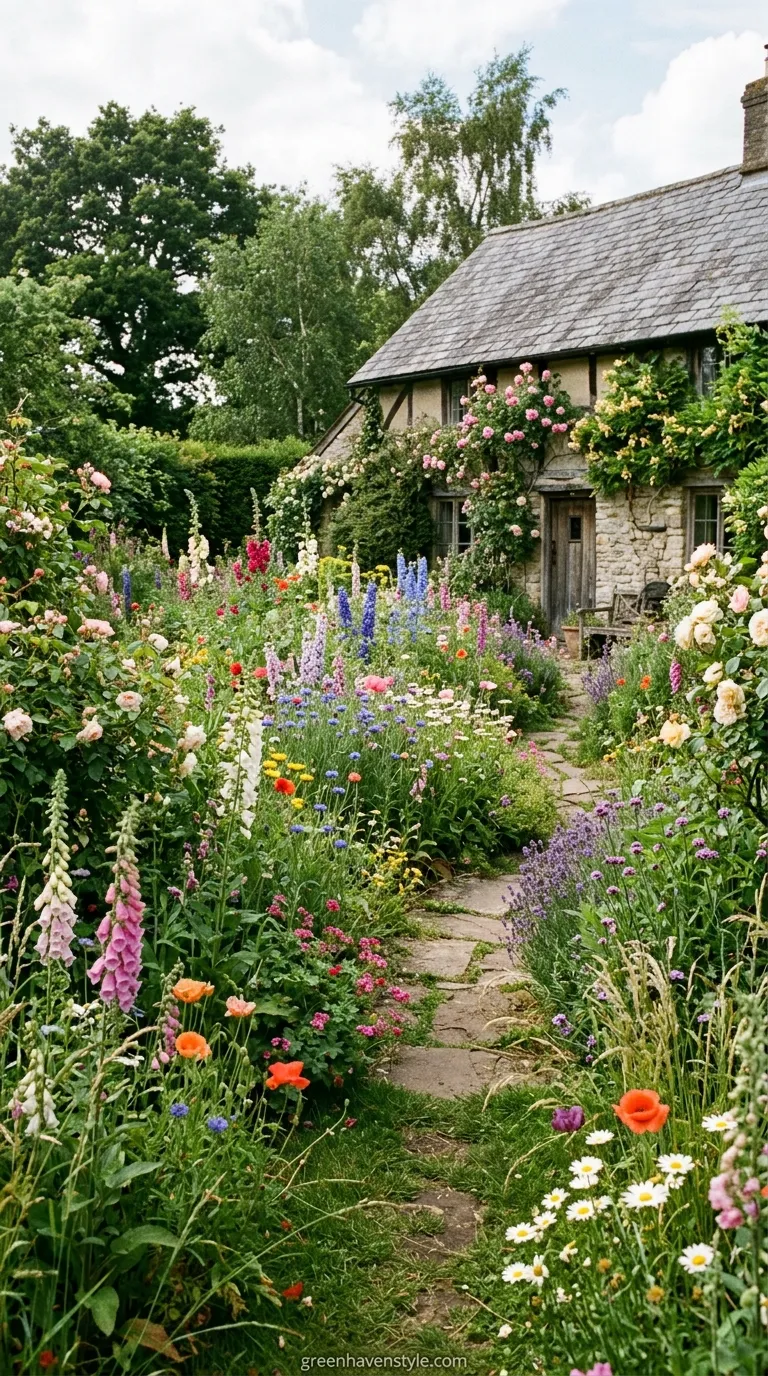
Allow flowers to self-seed freely and mingle informally, creating drifts that flow naturally like wildflower meadows rather than neat rows. This low-maintenance approach captures authentic cottage charm while reducing weeding and replanting work.
In my experience, embracing some chaos creates the most authentic cottage aesthetic. Letting plants choose their own spots often results in better combinations than rigid planning, as they naturally settle where conditions suit them best and create organic-looking arrangements.
17. Container Accent Points
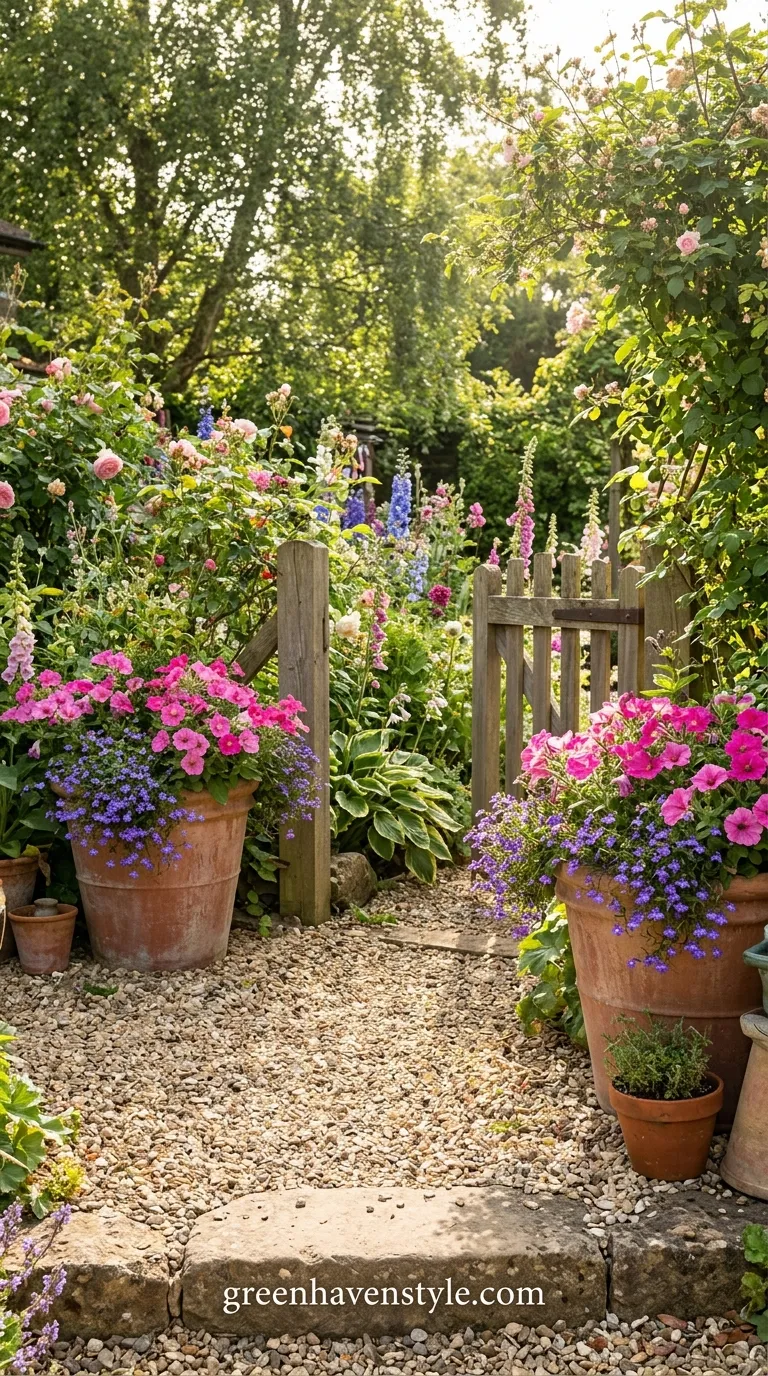
Place large pots filled with flowering annuals at garden entrances, path intersections, or seating areas for movable color that can be refreshed seasonally. This flexible approach adds versatility to permanent plantings.
I’ve found that containers let you experiment with bold colors or tender plants without committing entire beds. They’re perfect for filling gaps while young perennials mature or for adding instant impact before parties and gatherings when you want the garden looking its absolute best.
18. Foliage Texture Contrast
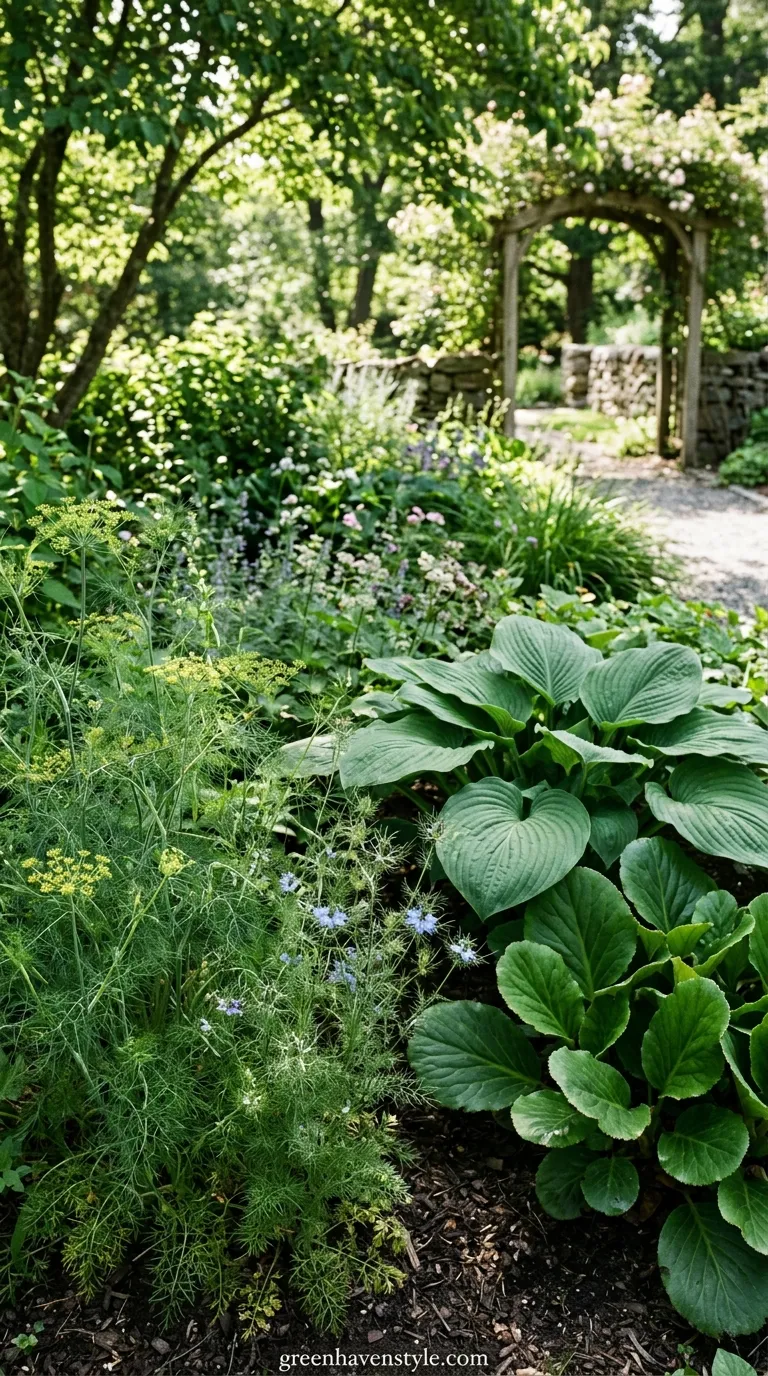
Mix fine-textured foliage like fennel and nigella with bold leaves such as hostas and bergenia to create visual interest even when flowers aren’t blooming. This layered approach ensures the garden remains attractive year-round.
From what I’ve seen, foliage provides the backbone that makes flower colors pop more dramatically. Contrasting leaf shapes and sizes creates depth and complexity that purely floral displays lack, making the garden feel professionally designed and thoughtfully composed rather than just colorful.
19. Succession Planting Technique
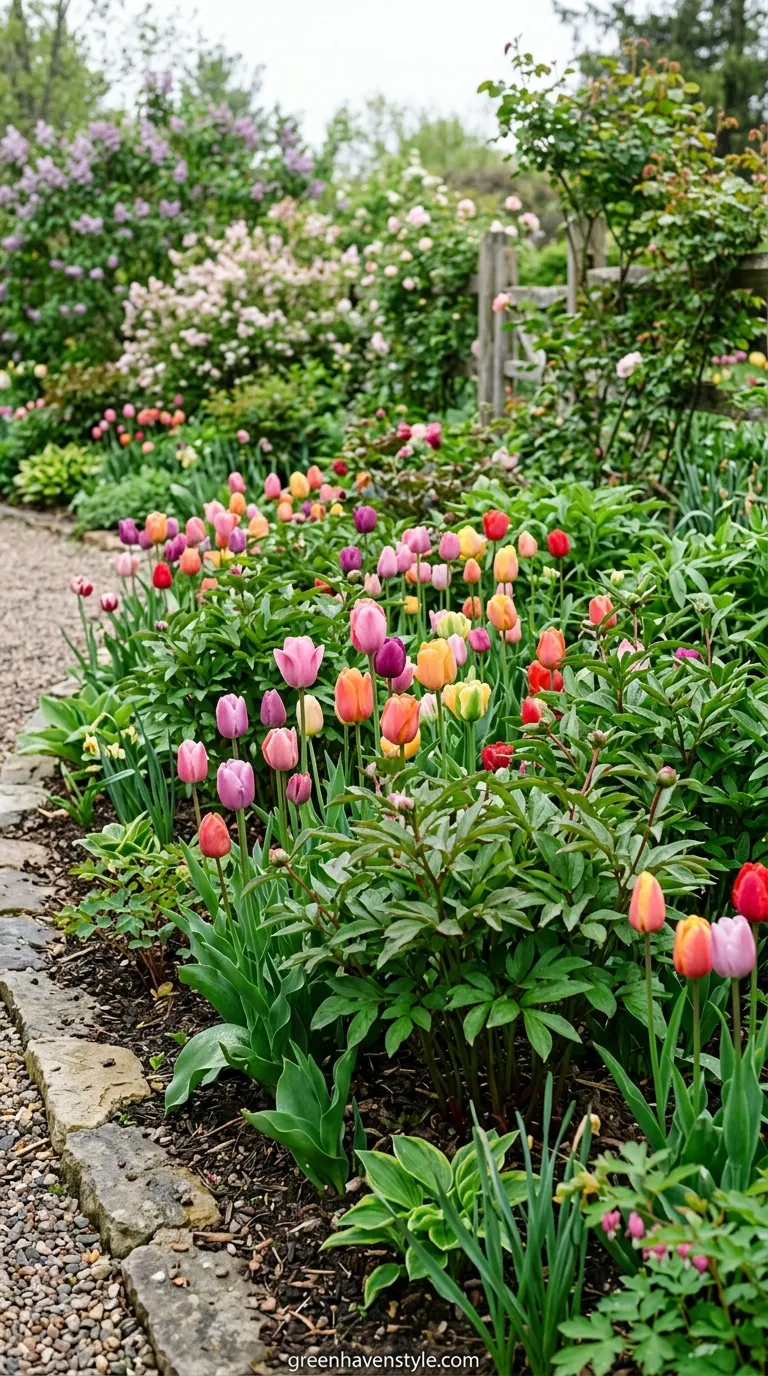
Plant spring bulbs beneath summer perennials so early tulips and daffodils bloom first, then die back as later plants emerge to cover fading foliage. This clever layering maximizes space and extends seasonal interest naturally.
I’ve observed that succession planting makes small gardens work harder, fitting more blooms into limited areas. The dying bulb foliage feeds next year’s flowers while being hidden by emerging perennials, solving the common problem of messy yellowing leaves that linger too long.
20. Romantic Path Edging
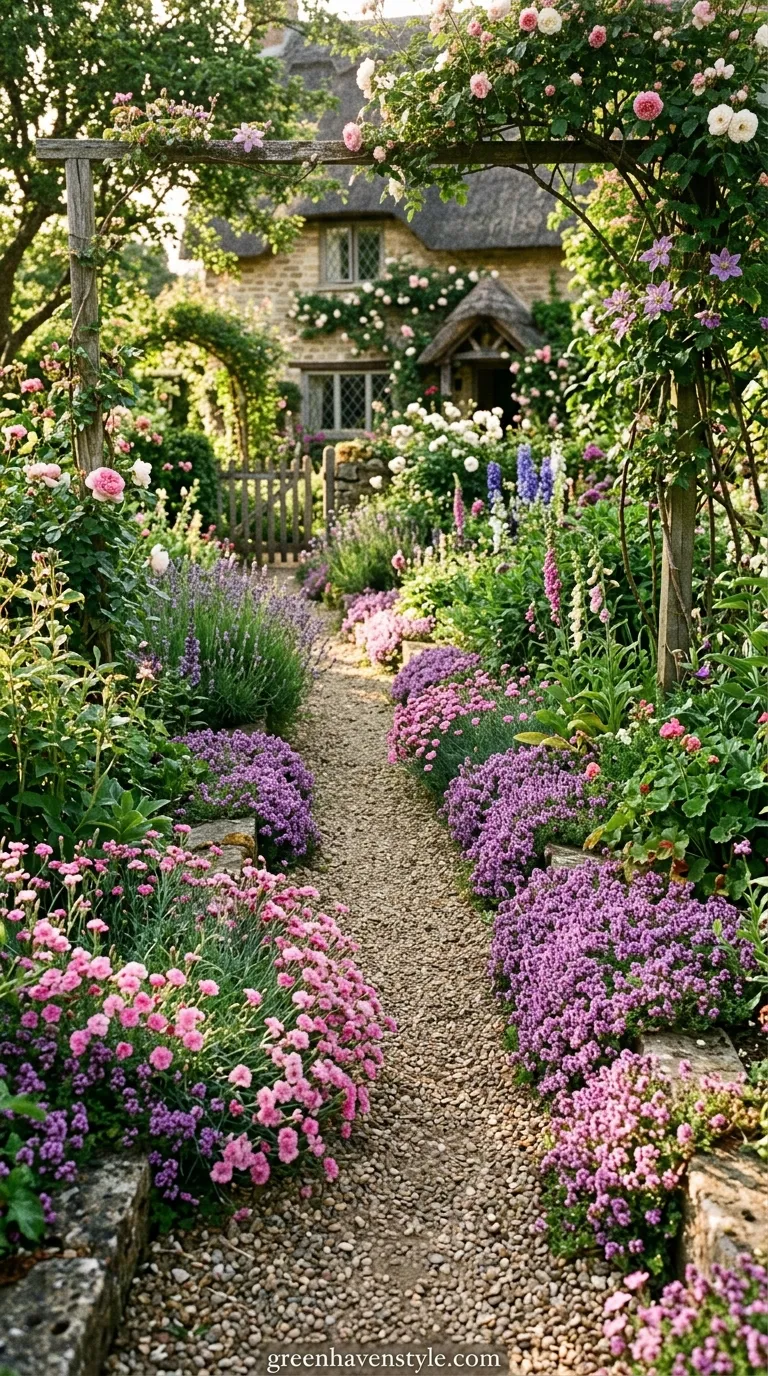
Line gravel or stone pathways with low, spreading flowers like dianthus, creeping thyme, and dwarf geraniums that soften edges and release fragrance underfoot. This finishing touch makes walking through the garden a multisensory experience.
In my experience, planted path edges complete the cottage garden look by blurring boundaries between circulation and planting areas. The soft overflow creates that generous, abundant feeling while the slight encroachment onto paths makes even wide walkways feel intimate and garden-focused rather than purely functional.
Conclusion
Creating a beautiful cottage garden becomes effortless when you embrace creative planting combinations, layered heights, and flowers that naturalize and self-seed freely. These 20 cottage garden flowers ideas offer practical inspiration for transforming outdoor spaces into romantic, colorful retreats that evolve and improve with each passing season.
I’ve seen how mixing structure with spontaneity, combining scent with color, and choosing plants suited to your specific conditions creates gardens that feel both intentional and wonderfully wild. Whether you’re drawn to pastel palettes, pollinator-friendly selections, or fragrant border designs, each approach brings its own charm and character.
Save this collection for future planting plans, experiment with a few ideas in your own space, and watch your garden transform into a blooming sanctuary that delights visitors and provides endless cut flowers all season long.