
12 Best Herbaceous Plants for a Cottage Garden Border
Picture a garden border overflowing with soft textures, romantic blooms, and colors that shift with every season—that’s the magic of a well-designed herbaceous planting. If you’ve been dreaming of creating that effortless English garden look where perennials mingle freely and flowers tumble together in beautiful chaos, these herbaceous cottage garden border ideas will show you exactly how to achieve it.
I’ve noticed that the most captivating borders blend height, texture, and bloom times to create interest from spring through fall.
12 Best Herbaceous Plants for a Cottage Garden Border
Whether you’re starting fresh or reimagining an existing bed, herbaceous perennials offer the perfect foundation for cottage-style planting schemes. You’ll discover how to layer plants for continuous color, create depth with varying heights, and combine complementary textures that make borders feel lush and abundant. Each idea celebrates the relaxed beauty of traditional cottage gardens while providing practical guidance for modern landscapes. These approaches transform ordinary garden edges into romantic destinations that evolve beautifully throughout the growing season.
1. Pastel Layered Heights 
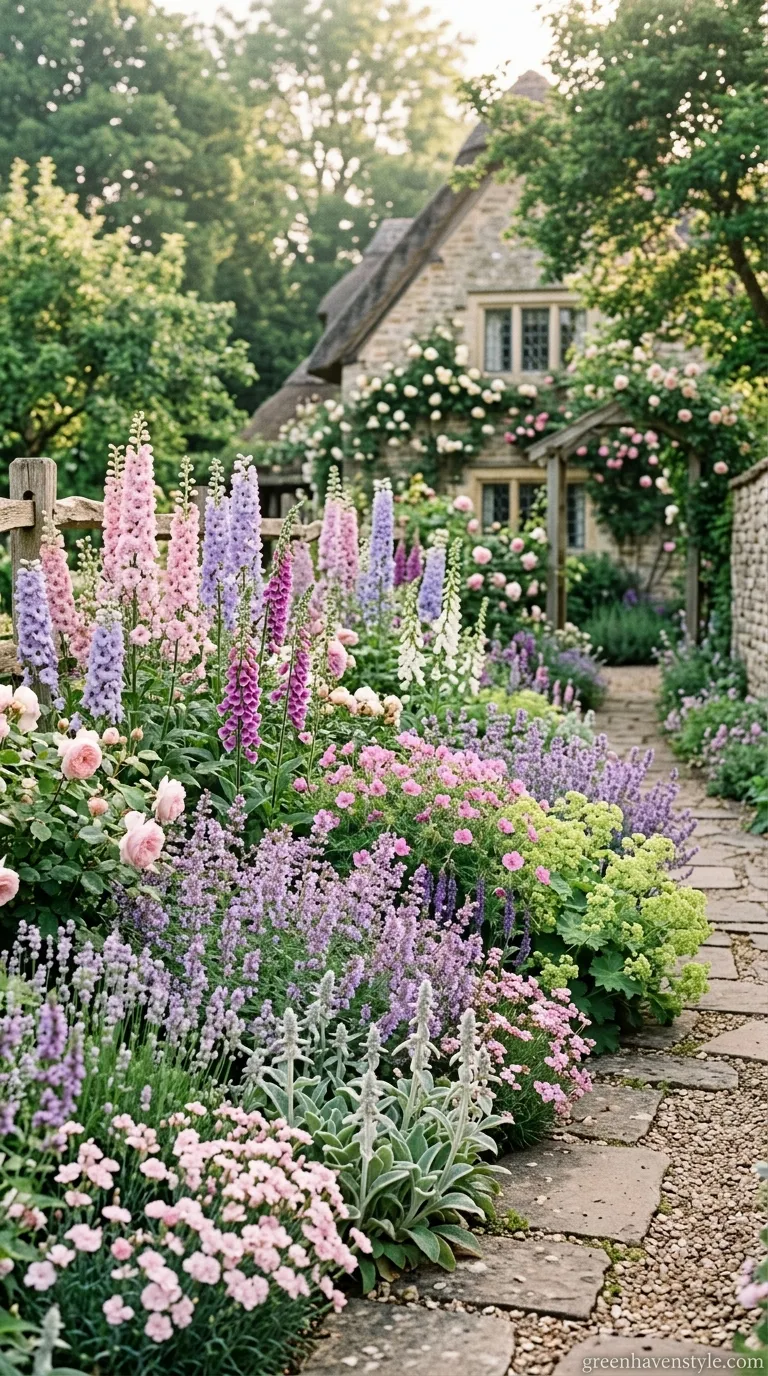
Arranging soft-hued perennials in graduated heights creates dreamy borders where pinks, lavenders, and whites blend seamlessly from front to back. This classic layering technique ensures every plant remains visible while creating depth that draws the eye through the entire composition.
Tall delphiniums and foxgloves anchor the back, mid-height catmint and geraniums fill the center, and low-growing dianthus edges the front. I’ve found that this height progression works beautifully along pathways and fences where you want impact without blocking views or creating visual barriers.
The pastel palette feels romantic and timeless, photographing beautifully in any light while maintaining a cohesive, intentional appearance. Your border gains dimension and sophistication as the layered structure creates natural frames for each plant grouping, and the soft colors harmonize effortlessly with traditional cottage architecture and surrounding landscapes.
2. Hot Color Gradient Scheme
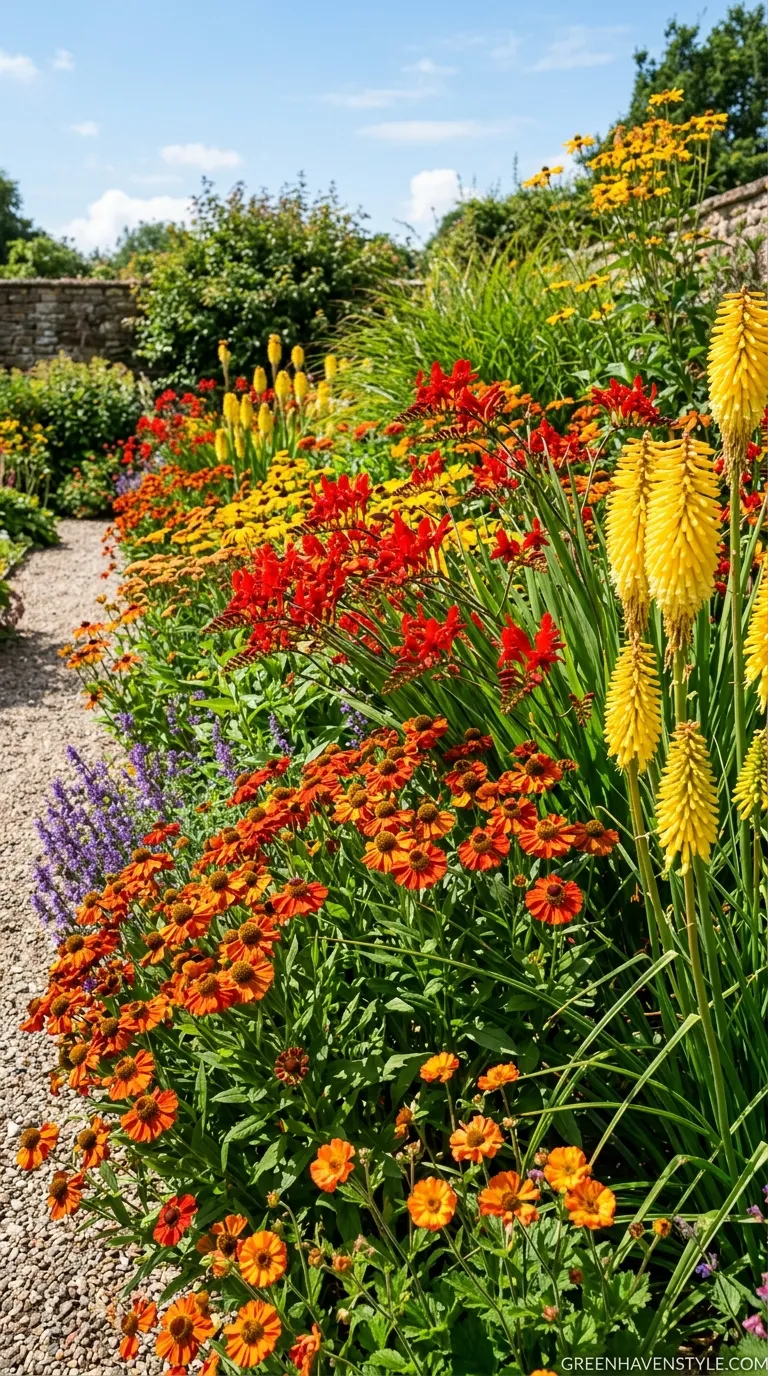
Building borders with warm-toned perennials in fiery reds, oranges, and yellows creates energetic displays that command attention and radiate warmth. This bold approach transforms garden edges into vibrant focal points that celebrate abundance and confident color combinations.
Crocosmia, helenium, and red hot pokers blend together in waves of sunset hues that intensify as summer progresses. In my experience, hot-colored schemes work exceptionally well in sunny exposures where the intense light enhances rather than washes out the saturated tones.
The energetic palette creates excitement and movement, making borders feel alive with warmth even on overcast days. Your garden gains dramatic presence as the bold colors attract both human admirers and pollinators, and the scheme photographs with incredible vibrancy that translates beautifully to social media and design inspiration boards.
3. Silver Foliage Accents
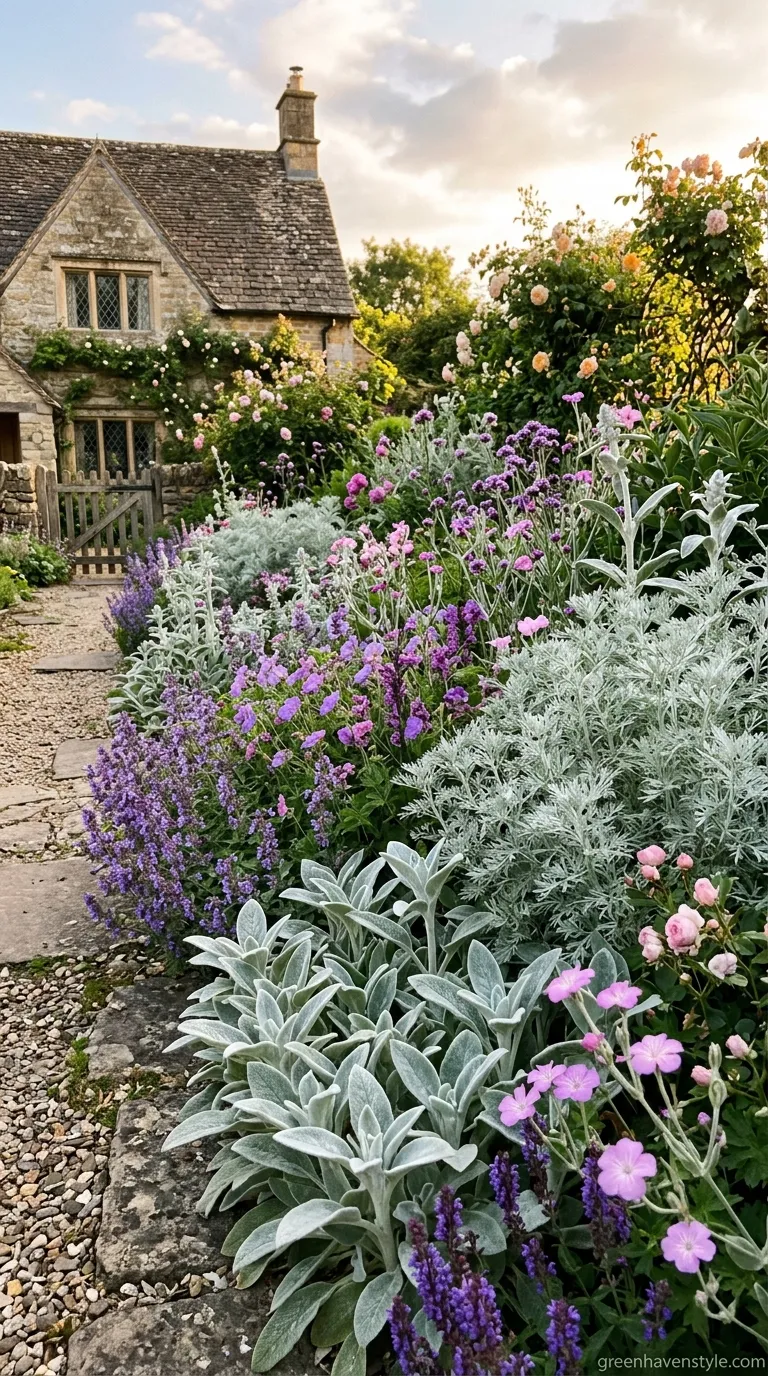
Incorporating plants with silvery-gray foliage throughout borders adds textural contrast and creates visual rest between colorful blooms. Lamb’s ear, artemisia, and stachys provide cooling tones that prevent busy plantings from feeling chaotic or overwhelming.
The soft, touchable textures invite interaction while the neutral tones harmonize disparate flower colors into cohesive compositions. I’ve observed that silver foliage particularly shines in evening gardens where fading light makes the pale leaves almost luminous against darker surroundings.
These plants often bring drought tolerance alongside their aesthetic contributions, thriving in sunny borders where water conservation matters. Your planting scheme gains sophistication and balance as the silver accents create breathing space, highlight neighboring blooms, and add a refined element that elevates cottage borders from charming to genuinely elegant.
4. Cottage Roses Integration
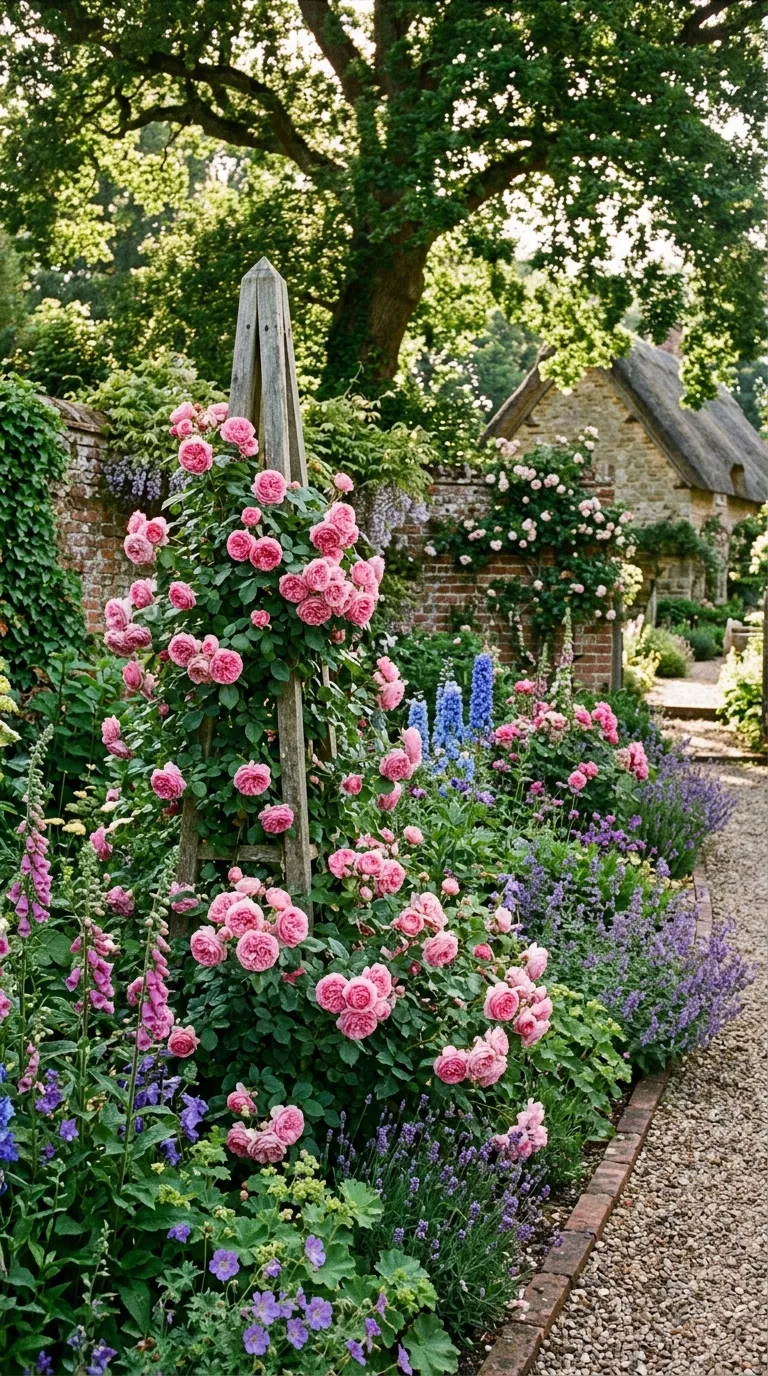
Weaving shrub roses into herbaceous borders creates romantic focal points that anchor planting schemes with vertical structure and fragrant blooms. English roses and old-fashioned varieties blend seamlessly with perennials, adding height variation and extending the flowering season.
The roses provide permanent framework that herbaceous plants fill around, creating partnerships where each element enhances the other. From what I’ve seen, positioning roses at intervals along the border creates rhythm and repetition that unifies diverse plantings into cohesive designs.
Climbing varieties trained on simple supports add dramatic height without consuming excessive ground space. Your border transforms into a classic cottage garden display as roses bloom alongside complementary perennials, and the layered fragrance from both woody and herbaceous plants creates sensory experiences that make garden time truly memorable.
5. Meadow-Style Grasses Mix
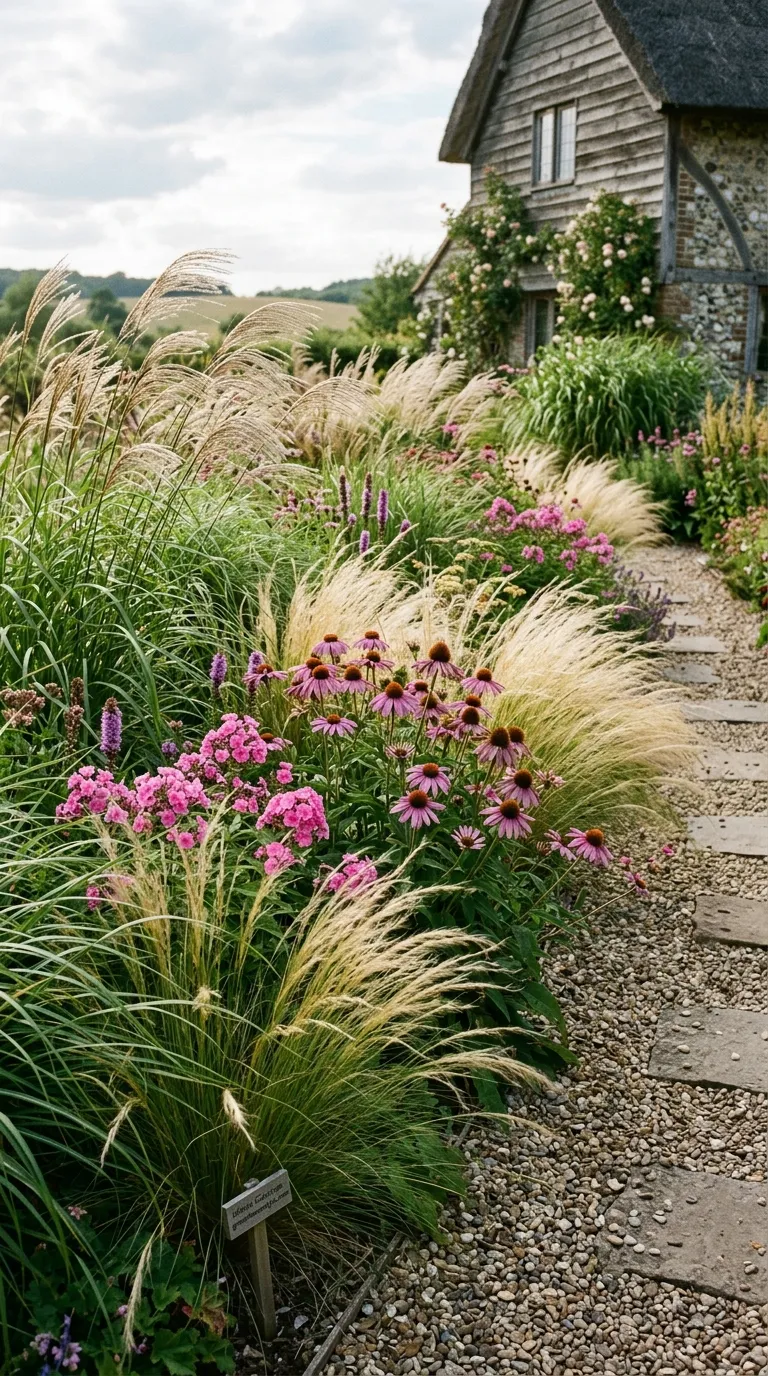
Incorporating ornamental grasses between flowering perennials creates movement and naturalistic beauty that bridges formal and wild garden aesthetics. Feathery plumes and arching blades add vertical interest while softening the overall composition with their gentle, swaying presence.
Grasses provide structure that remains attractive through winter when herbaceous plants die back to ground level. I’ve experimented with various grass-to-flower ratios and found that roughly one-third grasses creates beautiful balance without overwhelming the cottage garden character.
The texture contrast between solid flower forms and delicate grass blades adds dimensional interest that photographs beautifully in breezy conditions. Your border gains year-round appeal as grasses catch frost and snow, extend seasonal interest beyond typical perennial performance, and create habitat for beneficial insects seeking overwintering shelter.
6. Blue and White Harmony
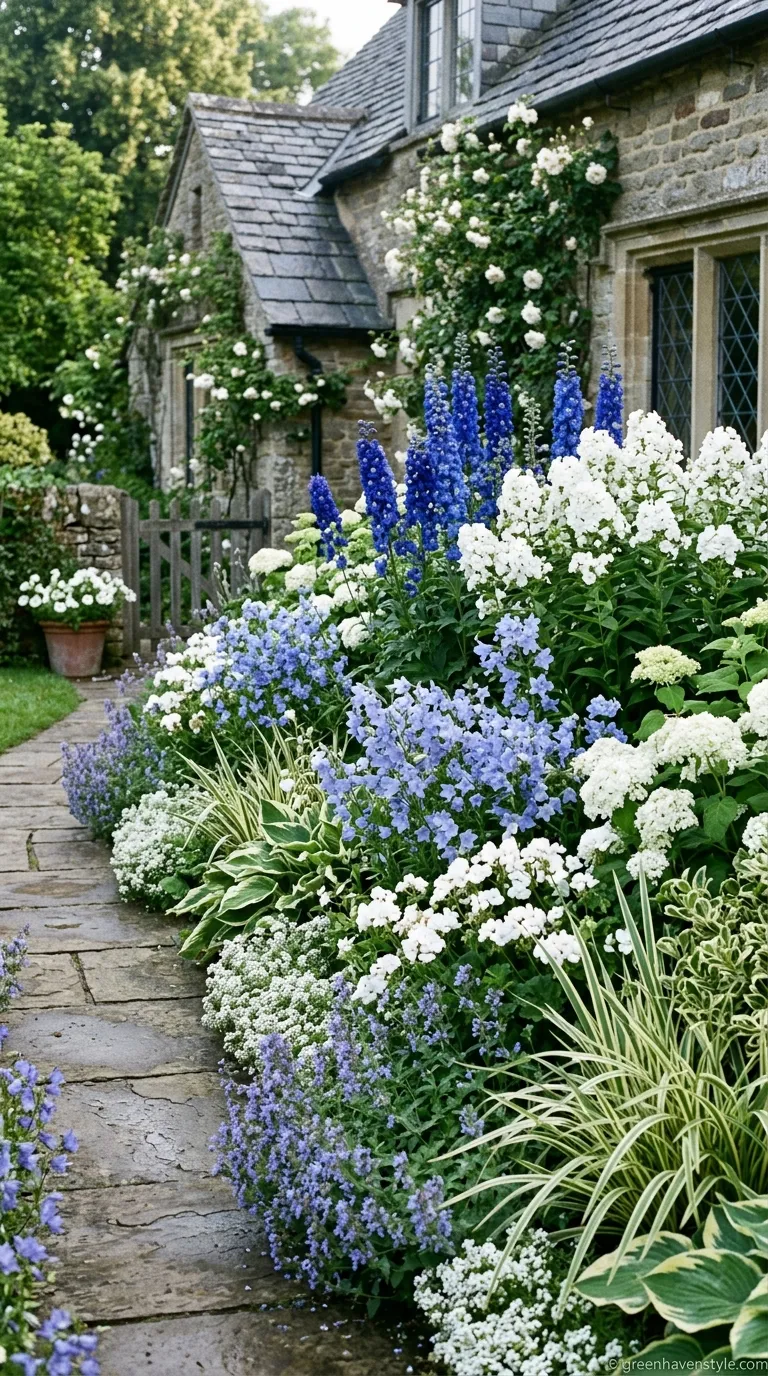
Creating borders limited to blue and white flowering plants establishes cool, serene palettes that feel refreshing and sophisticated. Delphiniums, campanulas, white phlox, and blue geraniums combine in combinations that evoke classic porcelain patterns and traditional cottage garden refinement.
The restricted color scheme creates unity across diverse plant forms and bloom times, making design decisions simpler while ensuring cohesive results. In my experience, blue and white gardens photograph with timeless elegance and adapt beautifully to both sunny and partially shaded locations.
Adding plants with variegated foliage in cream and green reinforces the palette while extending visual interest beyond bloom periods. Your border achieves a collected, curated appearance that feels intentional rather than haphazard, and the cooling tones create peaceful outdoor spaces perfect for relaxation and contemplation.
7. Fragrant Evening Border
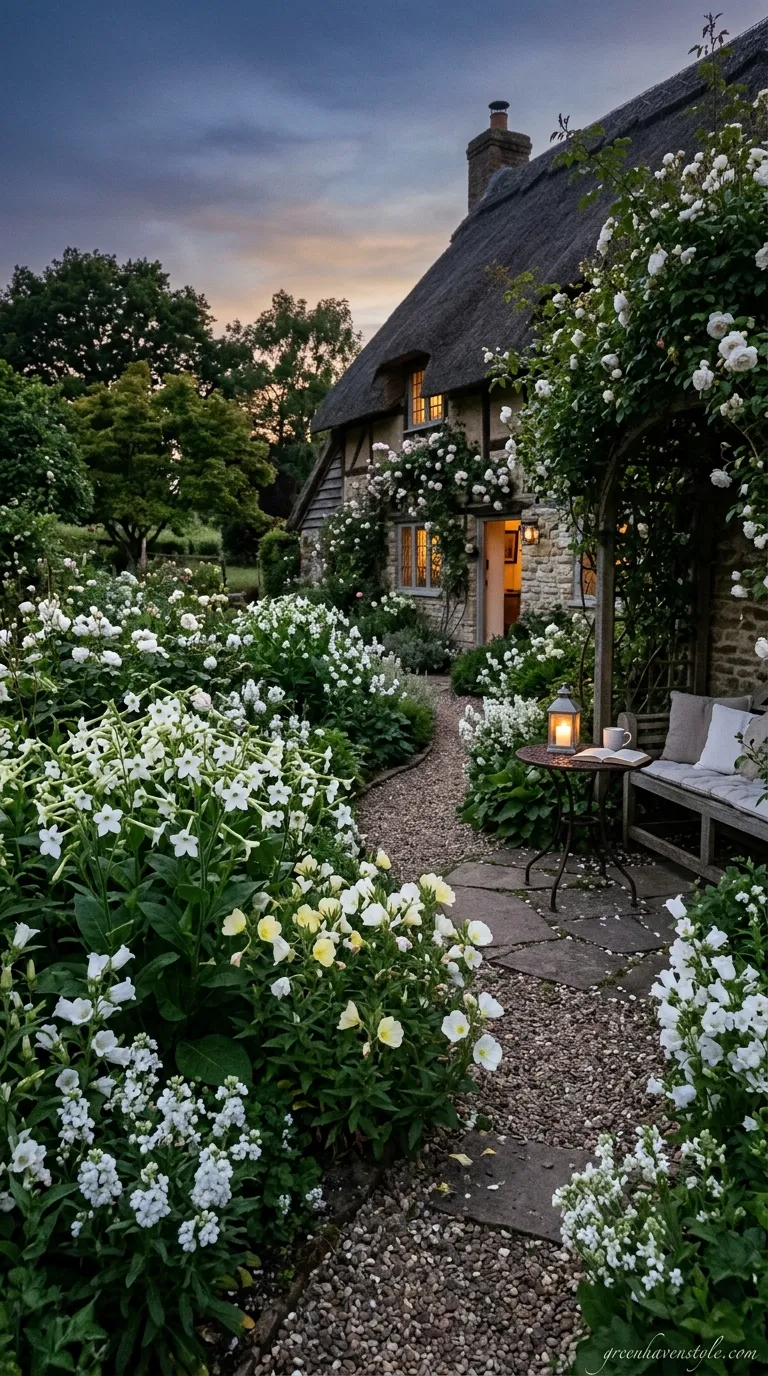
Selecting perennials specifically for their evening fragrance creates borders designed for twilight enjoyment when many scented flowers release their strongest perfumes. White and pale-colored blooms show beautifully in fading light while nicotiana, evening primrose, and night-scented stock perfume the air.
This specialized approach transforms borders into destinations for after-dinner strolls and evening entertaining. I’ve noticed that positioning fragrant borders near seating areas or along frequently traveled pathways maximizes the sensory experience and makes the garden feel more connected to daily life.
The combination of visual beauty and olfactory pleasure engages multiple senses simultaneously. Your outdoor space gains romantic atmosphere as dusk approaches, scent drifts through open windows into adjacent rooms, and the garden continues offering pleasure long after daytime flowers have closed for the night.
8. Pollinator-Friendly Succession
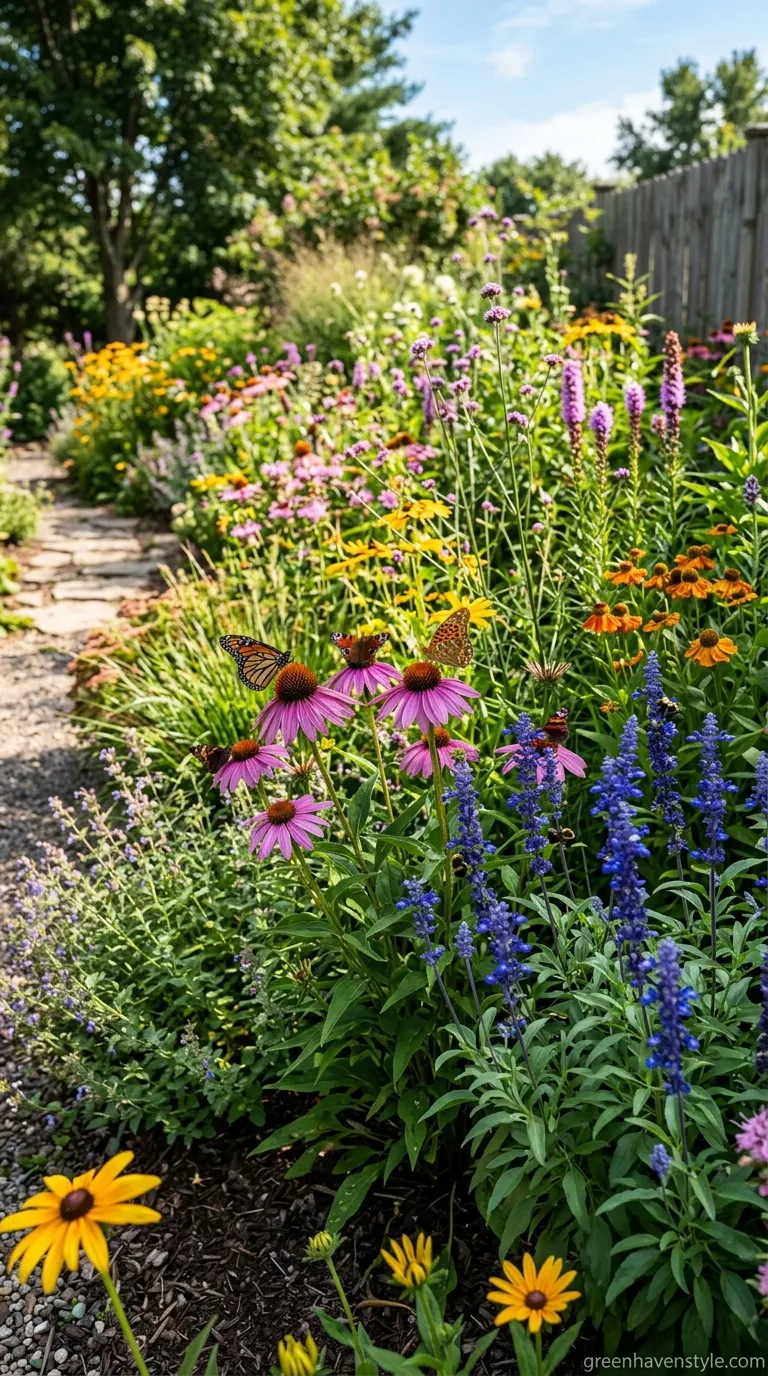
Designing borders with continuous bloom from early spring through hard frost ensures constant food sources for bees, butterflies, and beneficial insects. Sequential flowering perennials create overlapping waves of nectar and pollen availability that support pollinator populations throughout their active seasons.
Early bulbs transition to spring perennials, summer bloomers follow, and late-season asters and sedums finish the sequence. From what I’ve seen, observing which plants attract the most pollinator activity helps refine future planting decisions and increases wildlife viewing opportunities.
The ecological approach creates dynamic borders where something is always blooming and insects are constantly active. Your garden becomes a living ecosystem that supports local biodiversity while providing the abundant, changing color that makes cottage-style plantings so visually rewarding throughout the entire growing season.
9. Architectural Statement Plants
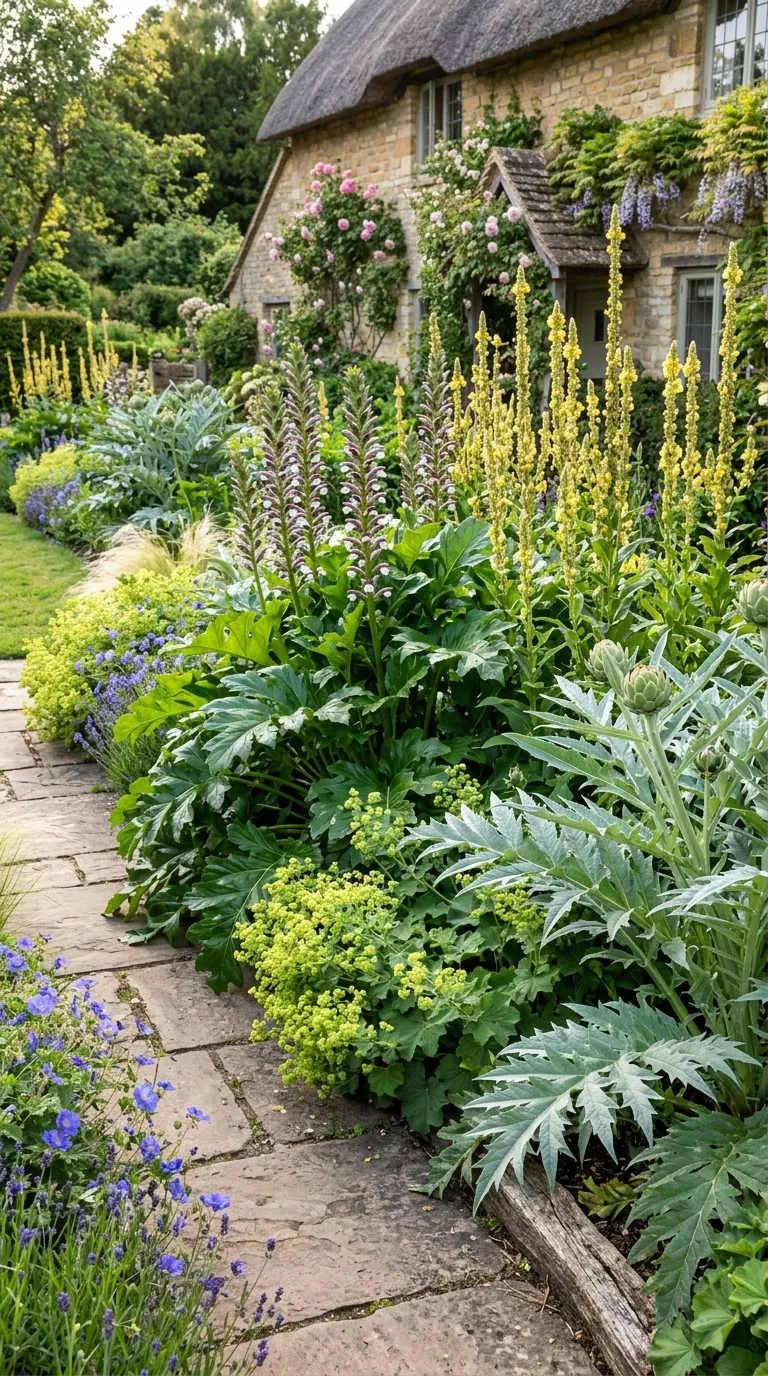
Incorporating bold perennials with dramatic foliage or flower forms creates focal points that anchor borders and prevent them from reading as undifferentiated masses. Acanthus, cardoons, and tall verbascums provide structural presence that contrasts beautifully with softer, billowing companions.
These statement plants create rhythm when repeated at intervals or serve as destination points that organize surrounding plantings. I’ve found that architectural elements work particularly well in larger borders where scale allows their substantial presence to shine without overwhelming the composition.
The strong forms photograph with graphic clarity and provide visual interest even when not in bloom. Your border gains professional design sophistication as the architectural plants create hierarchy, establish viewing landmarks, and demonstrate that cottage gardens can balance relaxed charm with thoughtful structural planning.
10. Shaded Woodland Edge
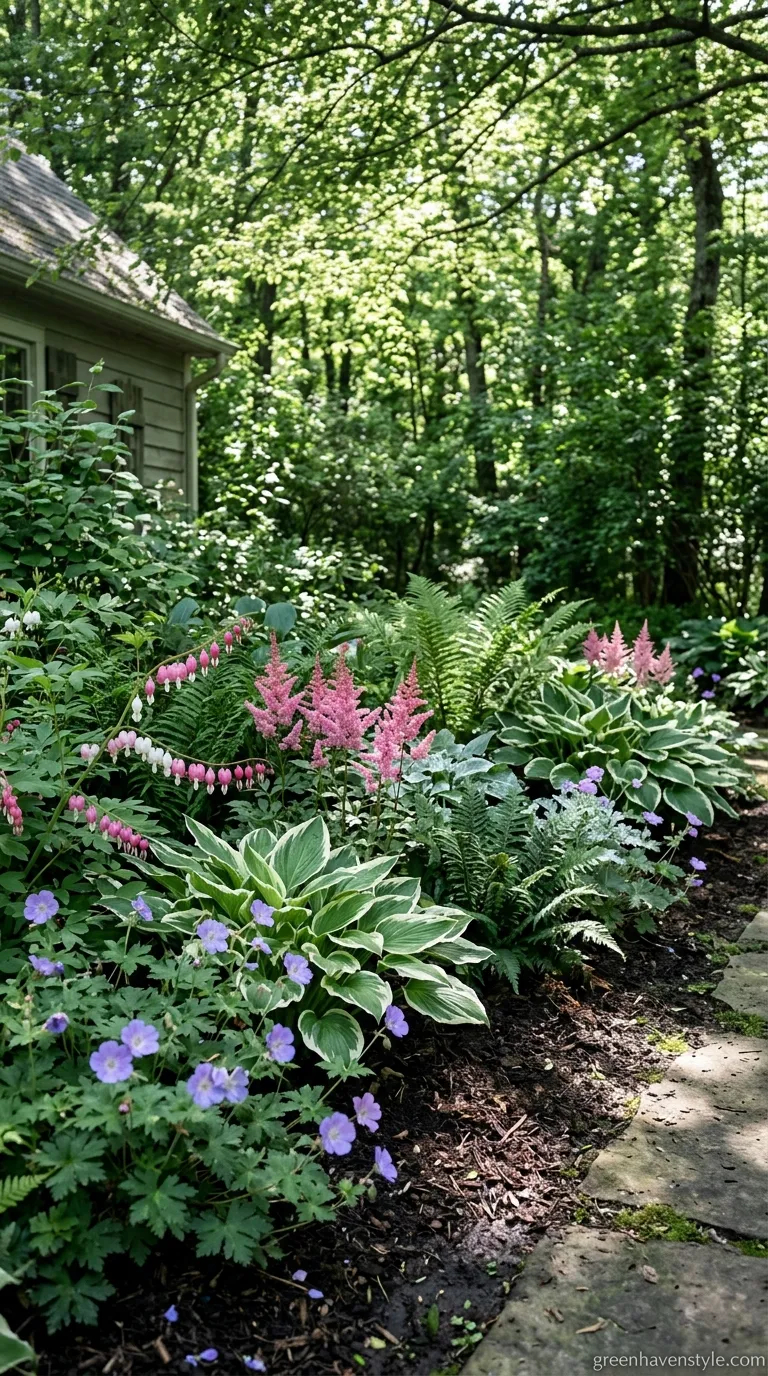
Adapting cottage border principles to partially shaded locations opens possibilities for woodland perennials that thrive without full sun. Hostas, astilbes, bleeding hearts, and shade-loving geraniums create lush borders in locations where traditional sun-lovers would struggle.
The cooler palette and different textures create peaceful, refreshing atmospheres distinct from sunny border exuberance. In my experience, the tricky part is ensuring adequate moisture since tree roots often compete aggressively, but mulching and occasional supplemental watering solve most challenges.
Ferns and shade-tolerant grasses add structural elements that complement flowering perennials beautifully. Your shaded areas transform from problematic planting zones into desirable garden destinations, proving that herbaceous borders adapt successfully to varied light conditions when plant selections match the available growing conditions.
11. Self-Seeding Naturalistic Style
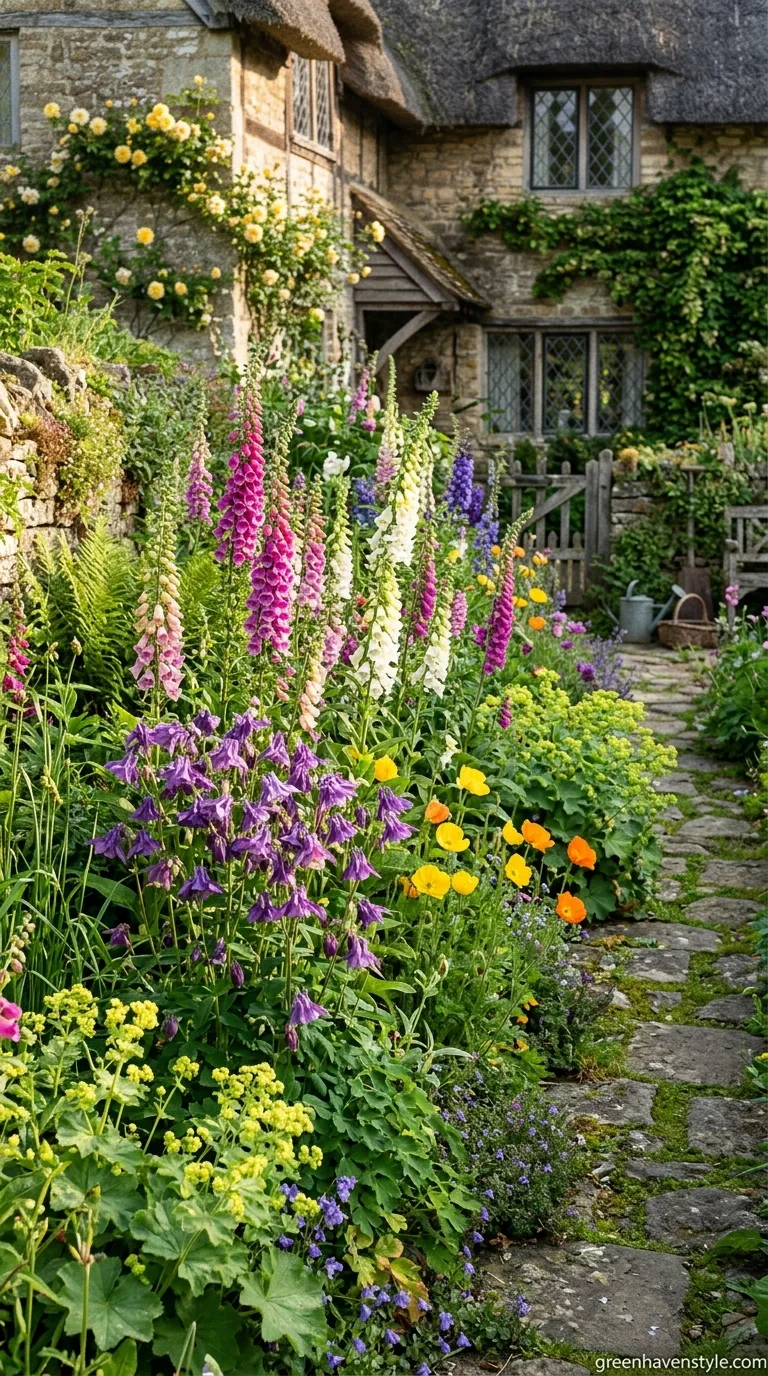
Encouraging perennials that self-seed freely creates borders that evolve naturally over time with unexpected color combinations and plant partnerships. Foxgloves, verbascums, aquilegias, and Welsh poppies colonize gaps and create spontaneous groupings that feel organic rather than rigidly planned.
This approach requires comfort with controlled chaos and willingness to edit enthusiastic seeders that appear in unwanted locations. I’ve observed that self-seeding borders develop unique character as plants find their preferred microclimates and establish in patterns that often improve upon the original design.
The naturalistic evolution reduces maintenance since plants thrive in self-selected spots rather than locations the gardener might choose. Your border gains authentic cottage garden charm as happy accidents create beautiful moments, and the gentle randomness prevents borders from feeling overly designed or static.
12. Seasonal Color Rotation
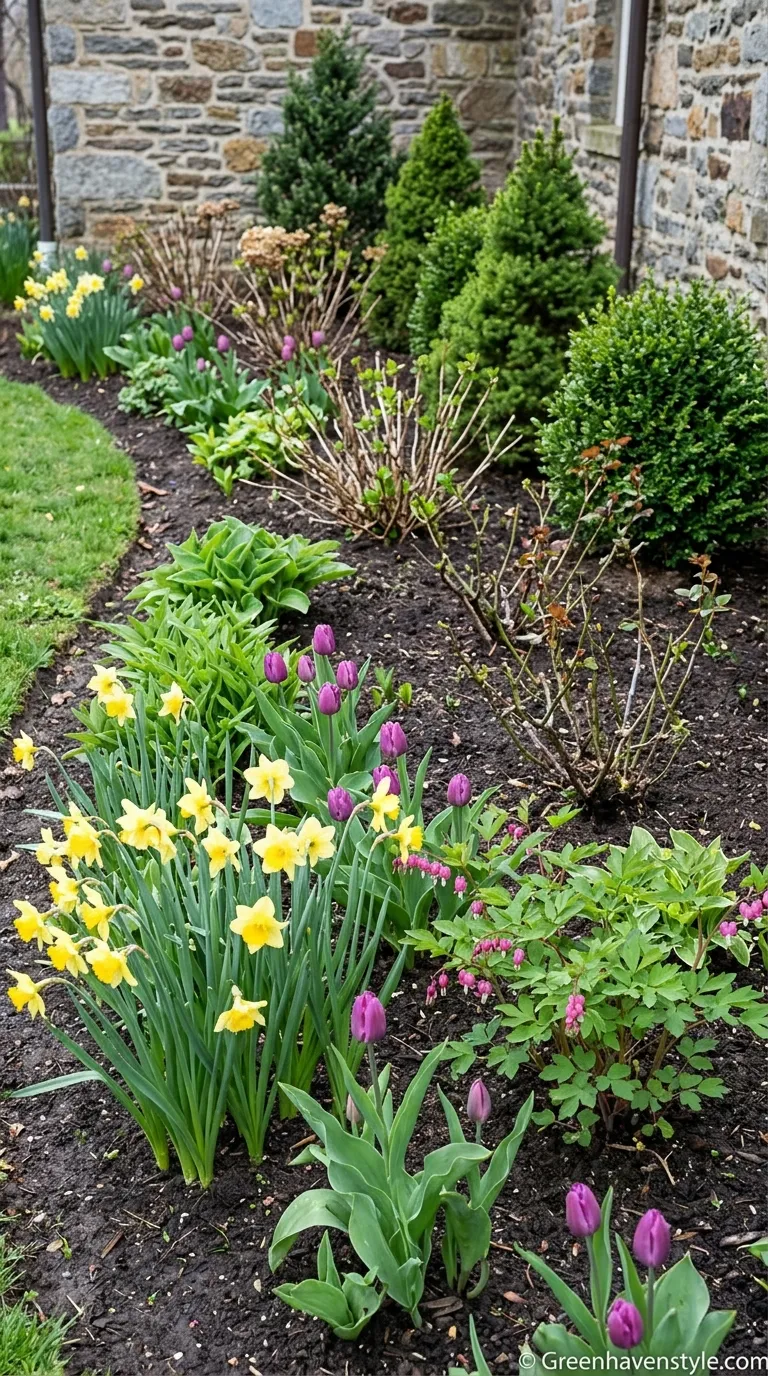
Planning borders for distinct seasonal peaks creates changing displays where different perennials take center stage as the year progresses. Spring bulbs integrated with early perennials transition to summer abundance, then yield to autumn bloomers in thoughtfully orchestrated succession.
This approach ensures borders never look bare or past their prime, always offering something at peak performance. From what I’ve seen, mapping bloom times during the planning phase prevents unintentional gaps and ensures balanced distribution of color throughout the growing season.
Including some evergreen or semi-evergreen perennials maintains winter structure when deciduous plants disappear. Your border becomes a dynamic landscape that reveals new personalities with each season, rewarding regular observation and creating anticipation as successive waves of plants approach their flowering moments.
Conclusion
These herbaceous cottage garden border ideas demonstrate how thoughtful perennial combinations create romantic, ever-changing landscapes that capture the essence of traditional cottage gardening. From pastel layered heights to bold hot-colored schemes, each approach brings unique character while honoring the relaxed abundance that defines the cottage style.
I’ve seen how well-planned borders transform gardens from simple plant collections into cohesive, emotionally engaging spaces that reward both casual viewers and dedicated gardeners. Whether you choose fragrant evening plantings, pollinator-friendly succession schemes, or naturalistic self-seeding styles, your border will develop personality and depth that deepens with each passing season.
The beauty lies in selecting approaches that match your site conditions, maintenance preferences, and aesthetic vision. Save your favorite ideas to Pinterest, choose perennials suited to your climate, and start creating those lush, romantic borders that make cottage gardens so enduringly beloved and endlessly inspiring.


