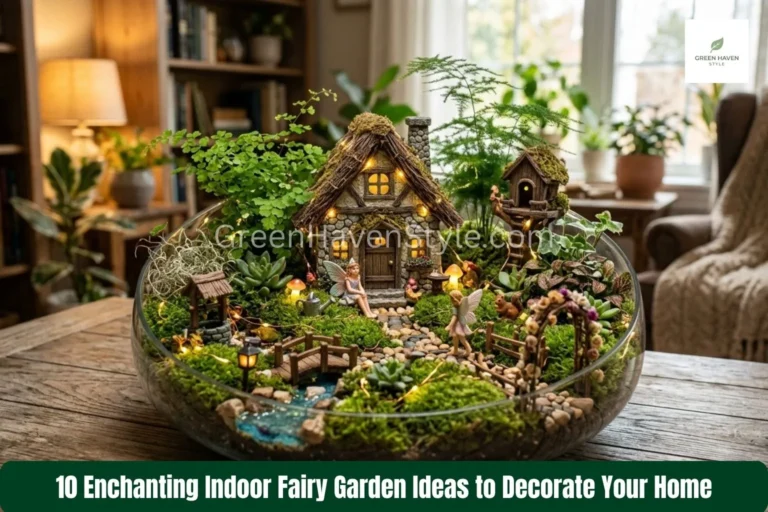
15 Enchanting Stone House Fairy Garden Ideas for Any Space
Imagine creating a miniature world where tiny stone cottages nestle among moss-covered pathways and delicate flowers bloom at fairy-sized doorways. If you’ve been captivated by the whimsical charm of miniature landscapes, these fairy garden ideas with stone houses will inspire you to craft your own enchanted retreat right in your backyard or on your patio.
The beauty of stone house fairy gardens lies in their timeless appeal and the way natural materials blend seamlessly with living plants.
15 Enchanting Stone House Fairy Garden Ideas for Any Space
Whether you’re designing a container garden for your balcony or transforming a corner of your yard into a magical village, stone structures add authentic cottage charm that feels collected from another realm. You’ll discover creative approaches for arranging miniature homes, selecting complementary plants, and adding details that bring your fairy world to life. Each idea celebrates the artistry of small-scale gardening while offering practical guidance for creating enchanting scenes that captivate visitors of all ages and spark imagination with every glance.
1. Moss-Covered Cottage Corner 
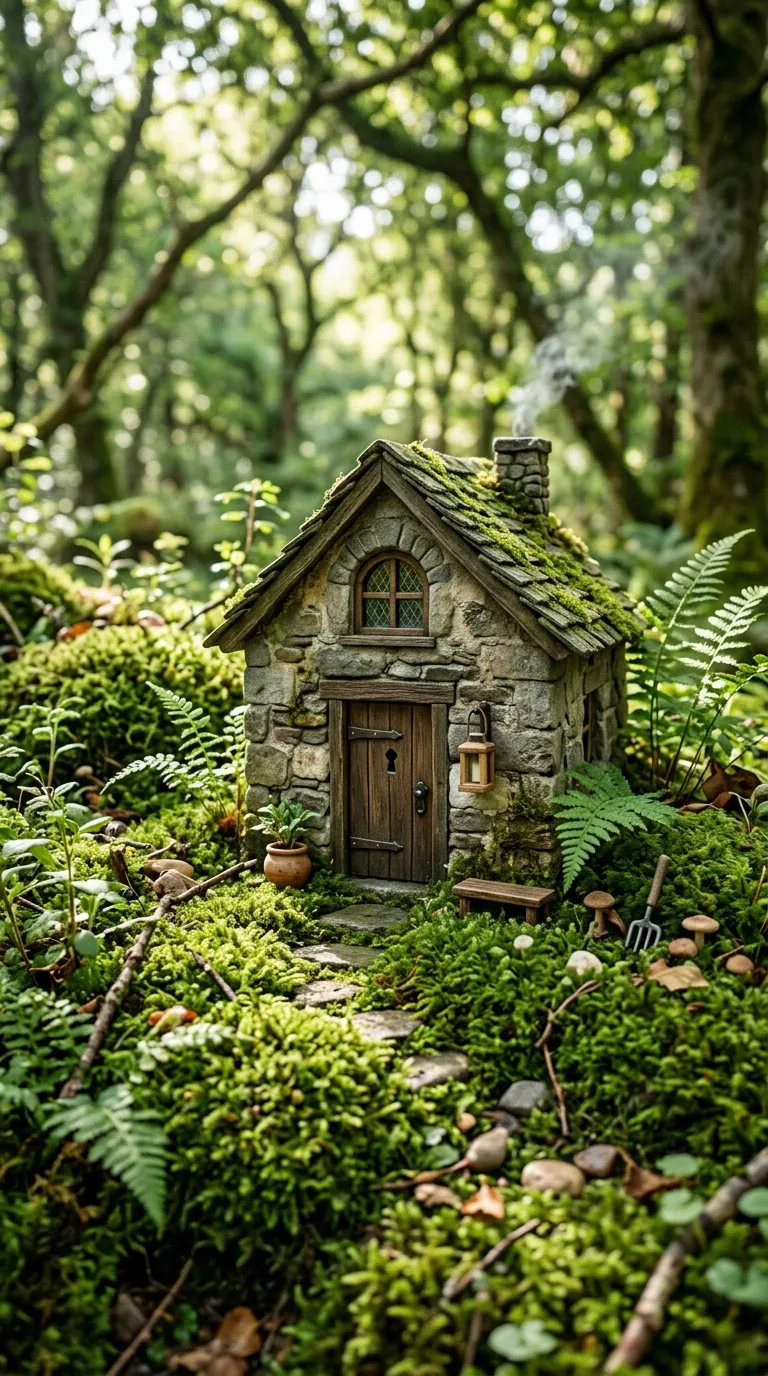
Positioning a rustic stone house within a lush bed of living moss creates an ancient, forest-dwelling atmosphere that looks naturally weathered. The soft green carpet provides the perfect foundation while making the miniature structure appear as though it’s been there for centuries.
Moss retains moisture beautifully, creating ideal growing conditions for tiny ferns and shade-loving miniatures planted nearby. I’ve found that misting the moss regularly keeps everything vibrant while encouraging that enchanted woodland aesthetic.
The textural contrast between rough stone walls and velvety moss adds dimensional interest that photographs gorgeously. Your fairy garden display gains authentic old-world charm as the moss creeps up the house walls naturally over time, and the low-maintenance ground cover eliminates weeding while providing a lush, magical carpet that makes the entire scene feel like a secret discovered deep in the woods.
2. Tiered Village Arrangement
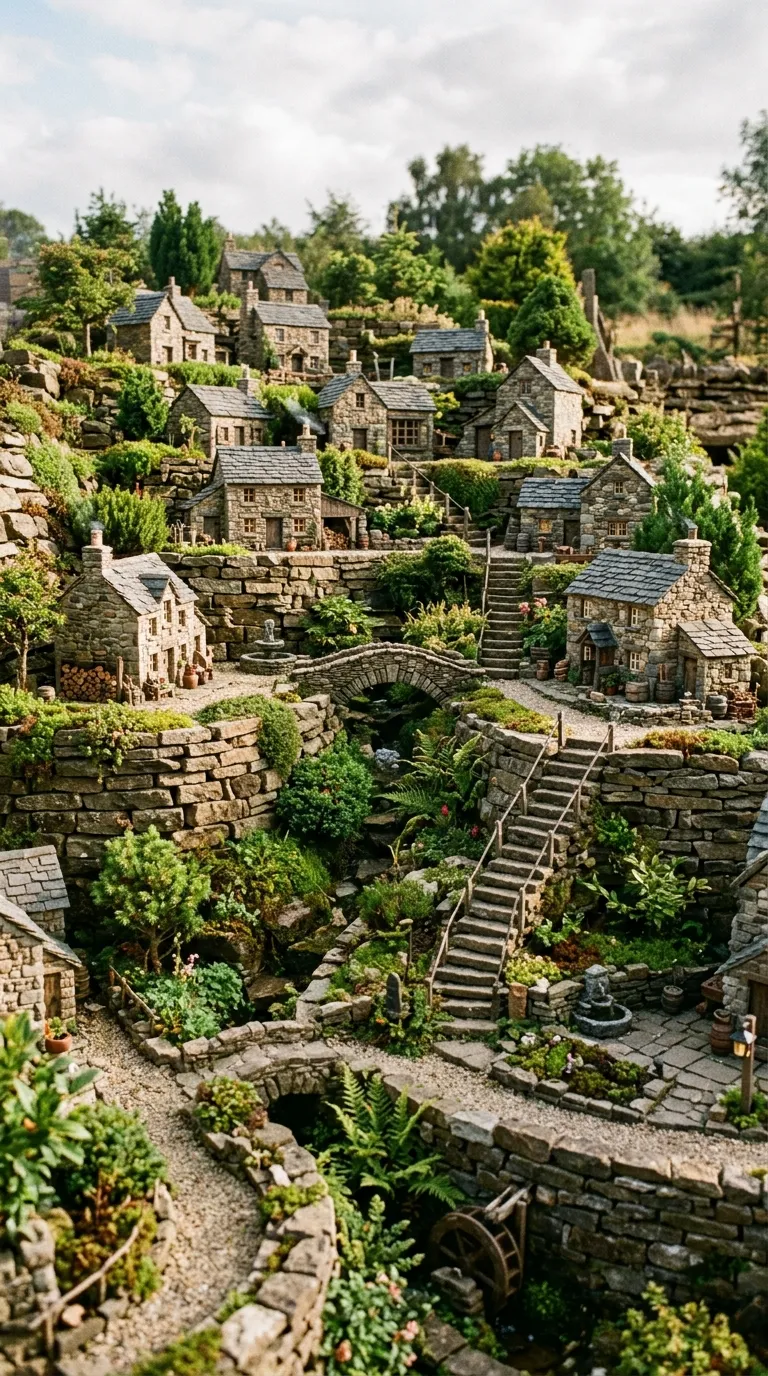
Creating multiple levels with stacked stones or terra cotta pot risers allows you to display several miniature houses at varying heights. This terraced approach mimics hillside villages and adds dramatic visual interest while maximizing planting space in compact areas.
The elevation changes create natural pathways between homes and prevent the garden from reading as flat or one-dimensional. In my experience, positioning the tallest house at the highest point draws the eye upward and creates a focal point that anchors the entire composition.
Small bridges connecting levels and tiny staircases enhance the village atmosphere beautifully. Your miniature landscape gains depth and storytelling potential as each tier reveals new details, and visitors naturally lean in closer to discover the charming elements tucked into each carefully designed level of your enchanted settlement.
3. Succulent Garden Hideaway
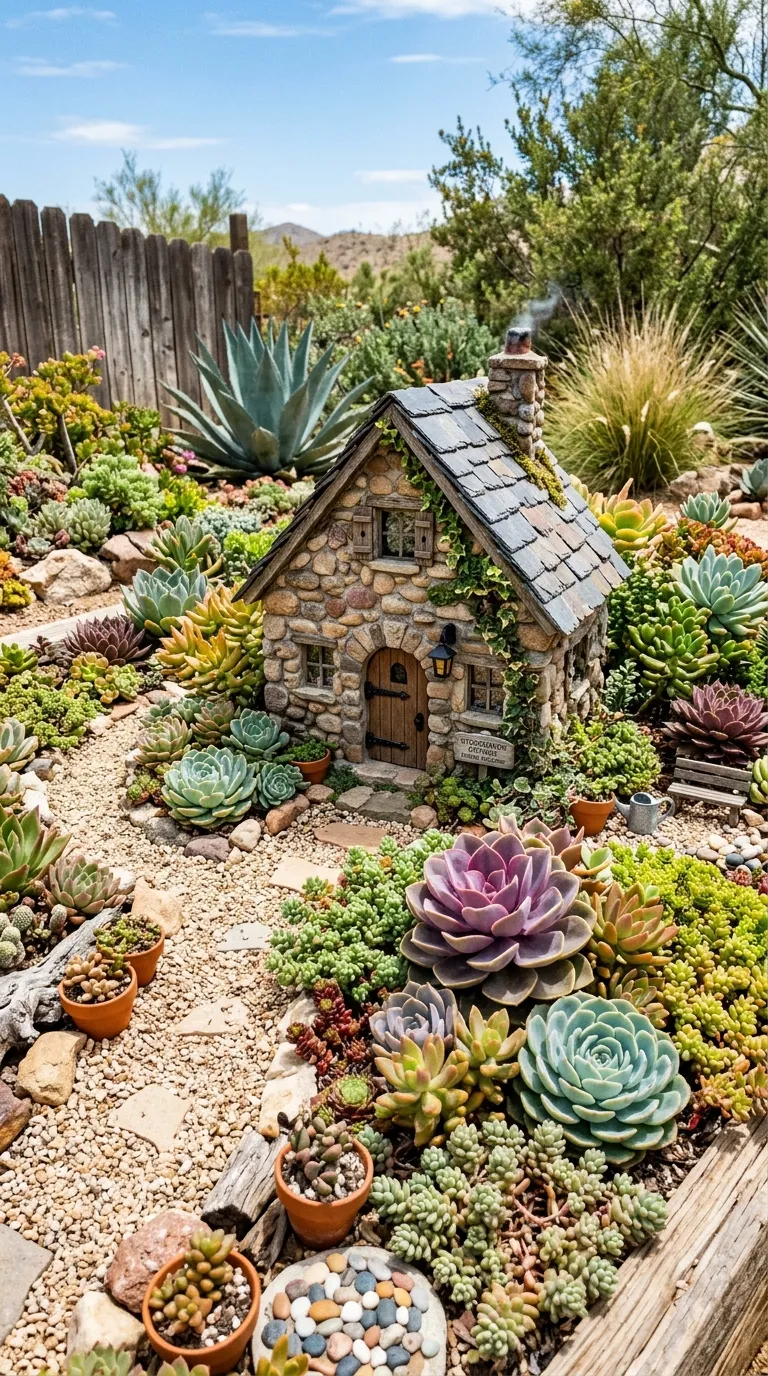
Pairing stone fairy houses with drought-tolerant succulents creates low-maintenance magical gardens perfect for sunny locations. The varied textures and colors of sedums, sempervivums, and echeverias provide lush backdrops without demanding constant watering or care.
Succulents naturally stay small and grow slowly, maintaining proper scale with miniature structures season after season. I’ve observed that the sculptural quality of these plants adds modern appeal while the stone cottages keep the whimsical fairy garden character intact.
Gravel pathways between succulents and houses complete the desert cottage aesthetic beautifully. Your miniature stone village thrives in bright conditions where traditional fairy garden plants might struggle, and the combination proves that enchanted gardens adapt successfully to various climates and maintenance preferences while remaining visually captivating.
4. Woodland Stream Setting
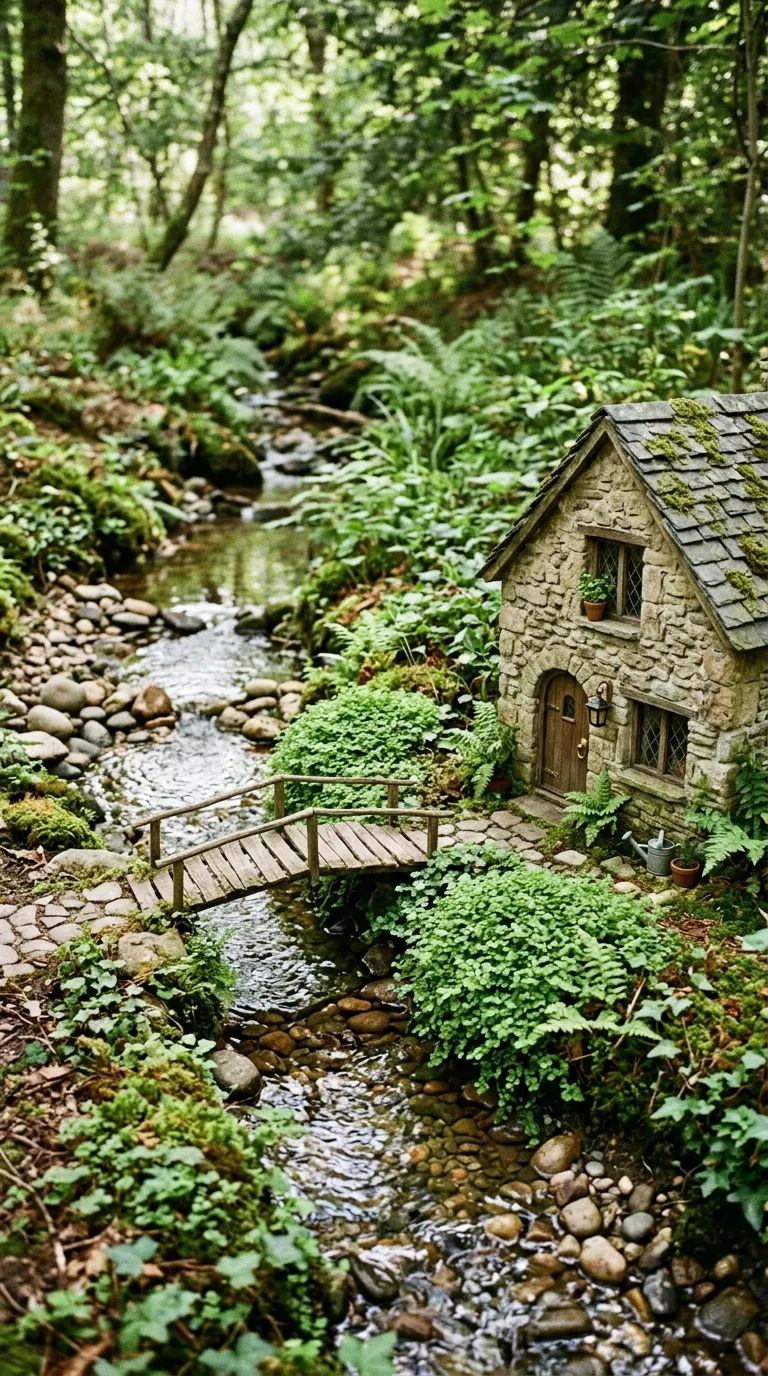
Incorporating a small water feature or dry creek bed beside stone houses creates naturalistic scenes that suggest fairies live near babbling brooks. Smooth pebbles arranged as a meandering stream add movement and sound when actual water flows, or visual interest when designed as a dry riverbed.
Tiny bridges spanning the water course and miniature stepping stones enhance the storybook quality immediately. From what I’ve seen, even a simple solar fountain adds delightful ambient sound that makes the garden feel more alive and immersive.
Moisture-loving plants like baby tears thrive along the stream banks naturally. Your fairy village gains environmental realism as the water element introduces reflected light, supports additional planting opportunities, and creates a central feature that organizes the landscape while suggesting the magical inhabitants gather here for their daily water needs.
5. Contained Windowsill Village
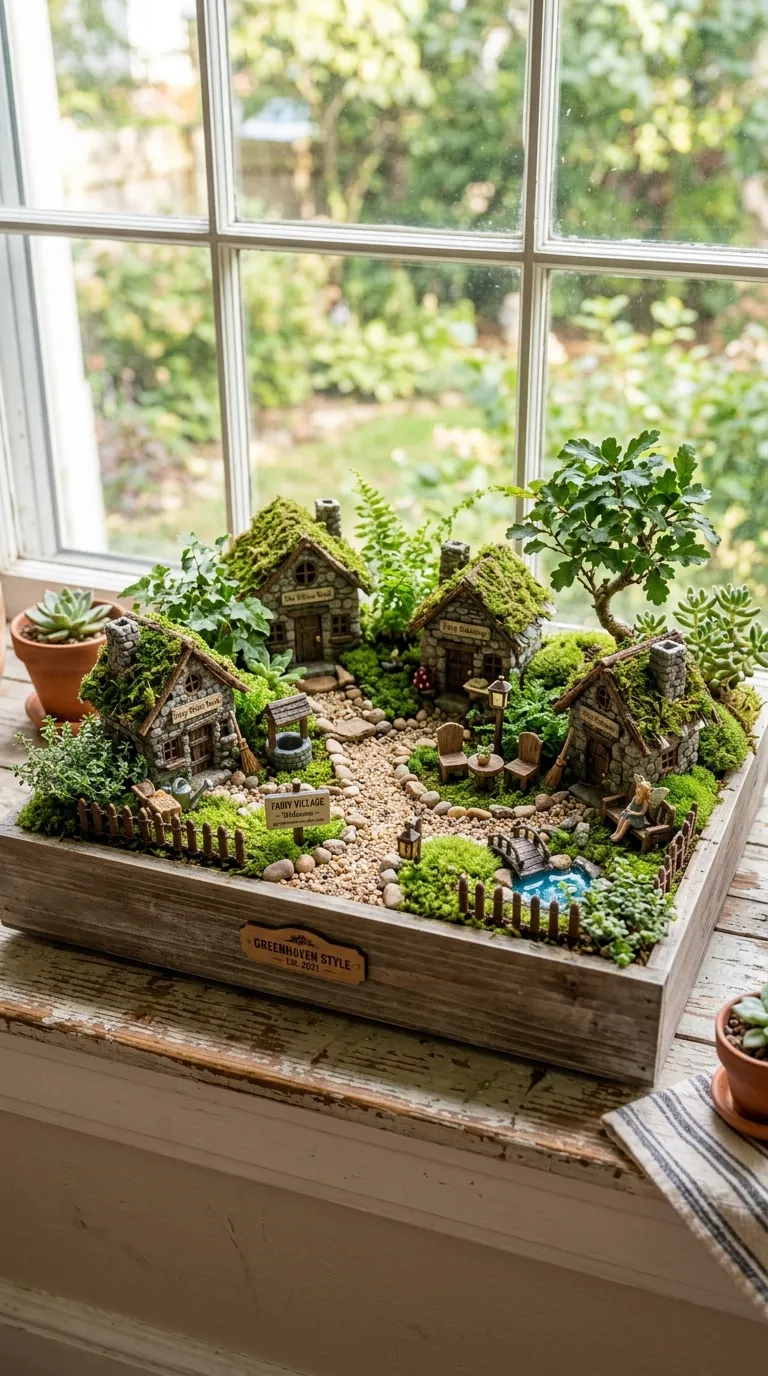
Designing a complete fairy settlement in a wide, shallow container brings the magic indoors or onto apartment balconies where ground planting isn’t possible. Long rectangular planters accommodate multiple stone houses while maintaining portability and allowing seasonal repositioning.
Container gardens offer complete control over soil composition and drainage, ensuring ideal growing conditions regardless of your native ground. I’ve found that windowsill villages catch beautiful natural light while remaining easily accessible for detailed arranging and maintenance.
Miniature furniture, tiny fences, and scaled accessories fill the space between houses perfectly. Your enchanted miniature garden thrives in limited square footage while delivering maximum visual impact, proving that fairy gardens adapt to any living situation and bring whimsy to spaces where traditional landscaping simply isn’t an option.
6. Seasonal Flower Accents
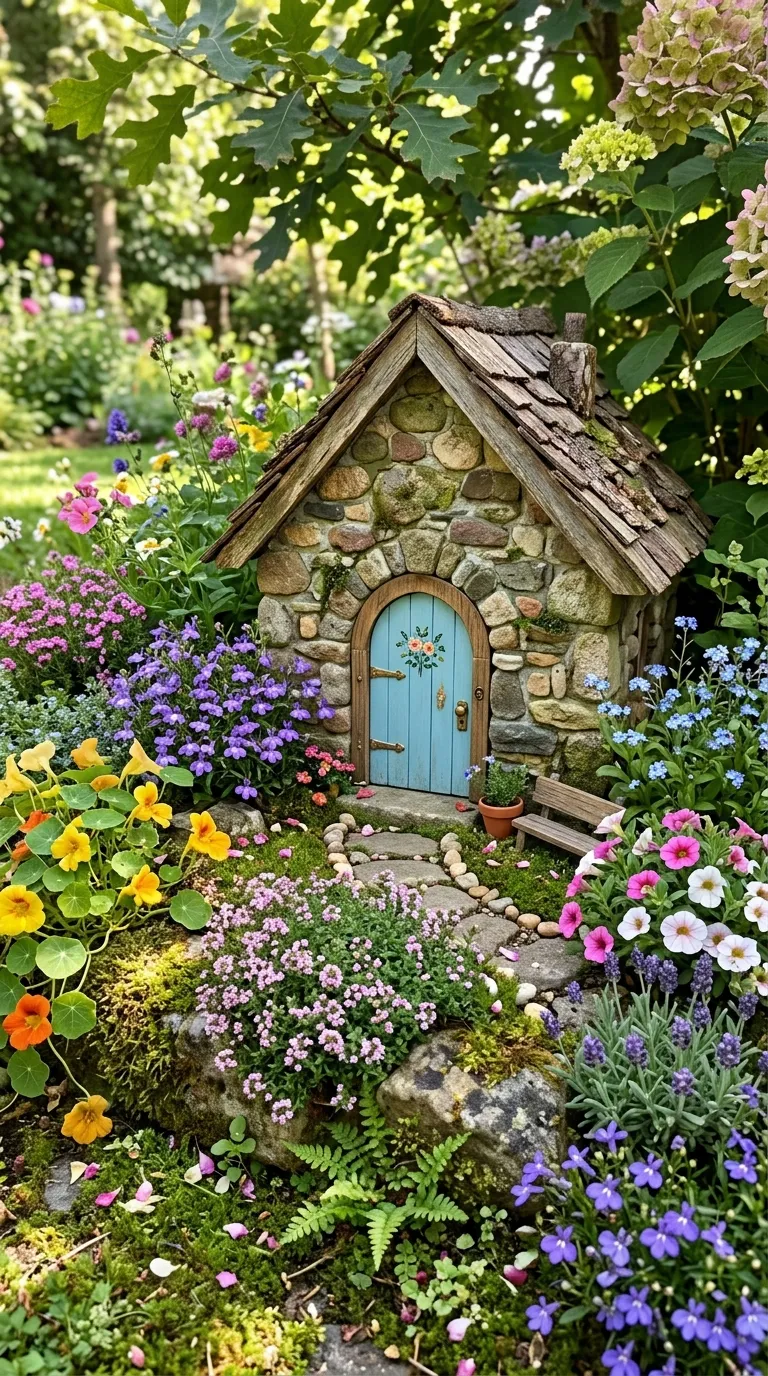
Surrounding stone cottages with blooming miniatures that change with the seasons keeps fairy gardens looking fresh and dynamic throughout the year. Spring bulbs give way to summer annuals, then autumn mums and winter evergreens, creating evolving color palettes around permanent structures.
The seasonal rotation prevents the garden from looking static or stale while celebrating nature’s changing rhythms. In my experience, planting in small clusters rather than single specimens creates better visual impact at miniature scale.
Flower colors can coordinate with house details like painted doors or window boxes beautifully. Your fairy village celebrates each season distinctly as blooms shift from pastel spring tones to vibrant summer hues and warm autumn shades, keeping the garden photographable and Pinterest-worthy year-round while maintaining evergreen structural elements.
7. Fairy Door Tree Integration
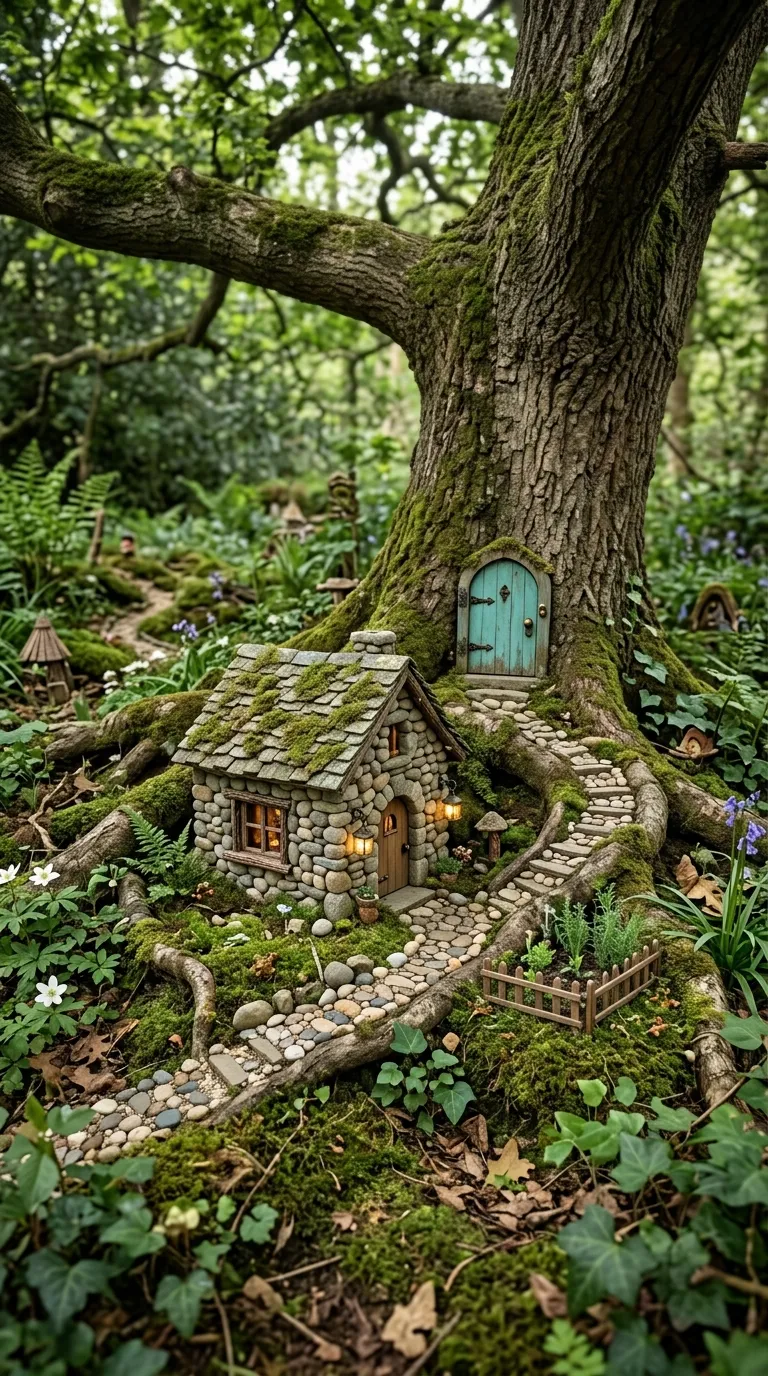
Positioning miniature stone houses at the base of established trees while adding tiny fairy doors to the trunk creates magical scenes that blend built and natural elements. The tree becomes part of the fairy architecture, suggesting entrances to underground homes and root-level dwellings.
This approach works beautifully in existing landscapes without requiring dedicated garden beds. I’ve noticed that the tree canopy provides natural shade that many fairy garden plants prefer while the trunk adds instant vertical drama.
Winding pathways from house to tree door complete the connected village atmosphere. Your garden gains immediate maturity and scale as the established tree anchors the design, and children especially love discovering the hidden doors that suggest entire fairy communities living within the ancient trunk.
8. Rock Garden Integration
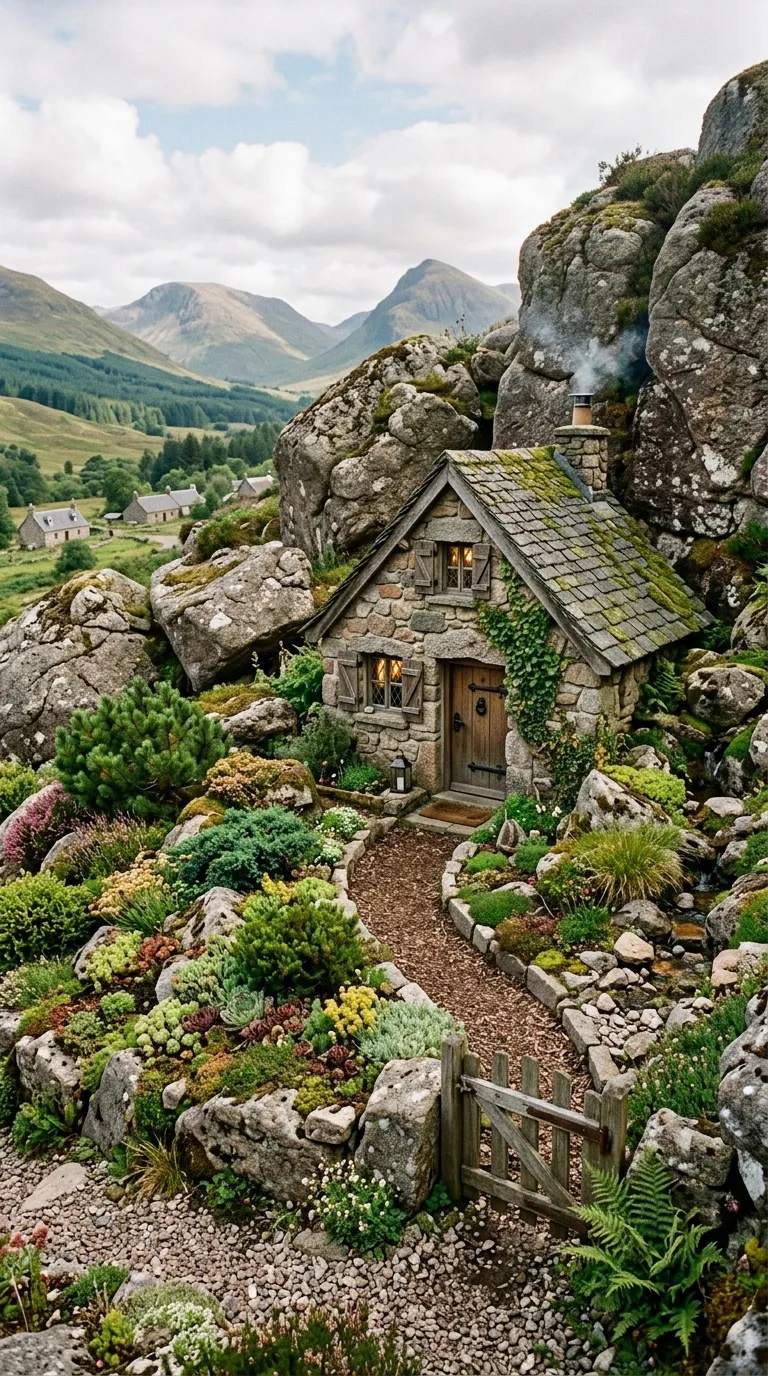
Nestling stone fairy houses among larger decorative rocks creates naturalistic settings where the miniature cottages appear to be built from the same stone formations. Boulder groupings provide windbreaks and microclimates while adding authentic rugged terrain to the landscape.
Alpine plants and rock garden perennials thrive in these conditions, offering appropriate scale and texture. From what I’ve seen, incorporating the fairy houses as if they’re natural extensions of the rockery makes them feel discovered rather than obviously placed.
Gravel mulch between rocks mimics mountain pathways beautifully. Your stone cottage fairy garden achieves geological authenticity as the materials harmonize, and the rocky terrain provides excellent drainage while creating the impression of a highland village clinging to mountainside ledges where magical beings have made their homes.
9. Herb Garden Companions
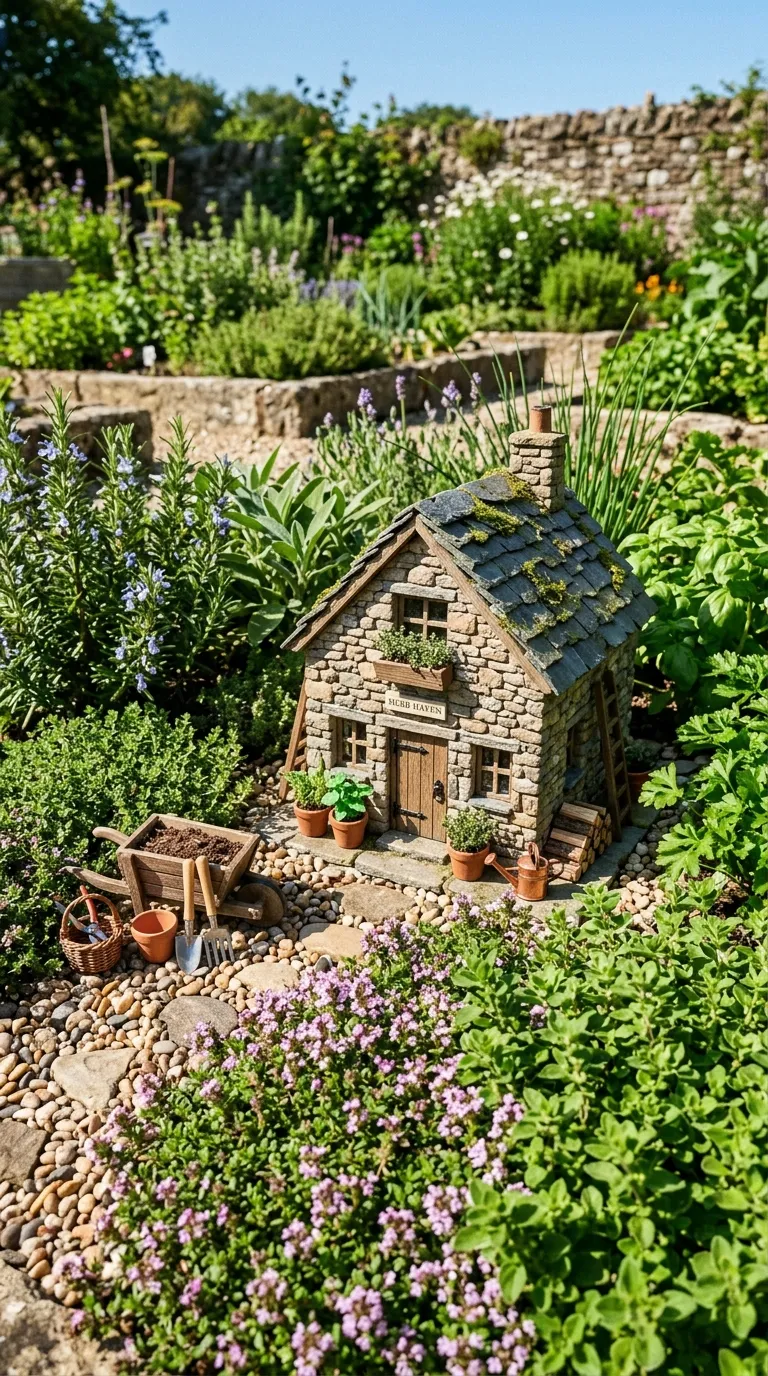
Planting miniature stone houses within functional herb gardens combines whimsy with practicality as fairies appear to tend fragrant thyme, oregano, and chamomile. Low-growing culinary herbs maintain appropriate scale while providing harvestable crops alongside decorative appeal.
The aromatic foliage releases fragrance when brushed, adding sensory dimensions to the fairy garden experience. I’ve experimented with this approach and found that herbs’ natural compactness prevents them from overwhelming the miniature structures as aggressively as some ornamentals might.
Tiny garden tools and miniature wheelbarrows enhance the working garden atmosphere. Your landscape serves double duty as both enchanted village and productive herb collection, and the combination demonstrates that fairy gardens integrate beautifully into edible landscapes without sacrificing function for fantasy or compromising the magical aesthetic.
10. Coastal Cottage Theme
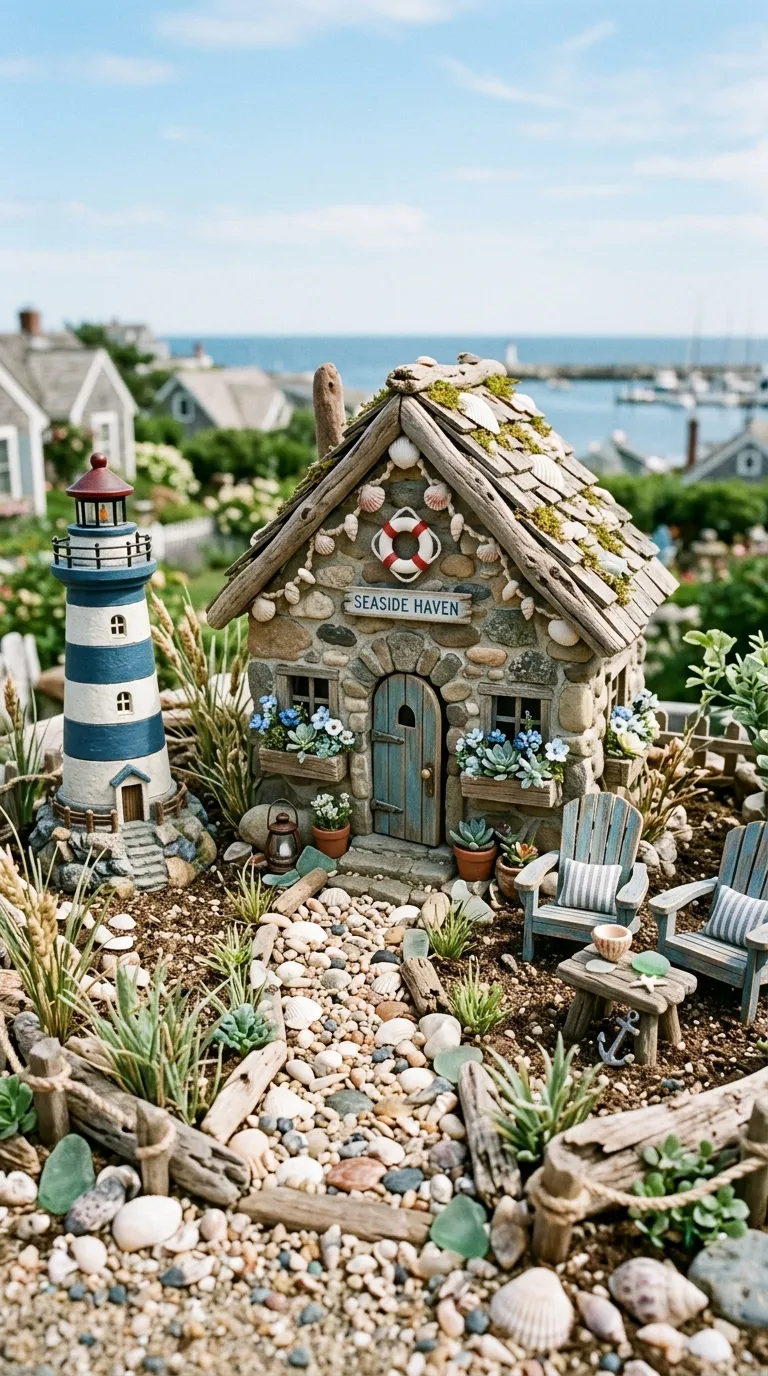
Designing beach-inspired fairy gardens with weathered stone houses, seashell pathways, and miniature beach accessories creates seaside retreat atmospheres. Sandy-textured soil and beach grass varieties complete the coastal aesthetic while maintaining proper growing conditions.
Driftwood pieces, tiny Adirondack chairs, and miniature lighthouses enhance the oceanside village character. In my experience, the tricky part is balancing beach elements without making the garden feel cluttered, but careful editing creates cohesive seaside charm.
Blue and white color schemes in plantings reinforce the coastal palette beautifully. Your fairy village transports viewers to windswept shores where magical inhabitants enjoy sunset views and ocean breezes, and the distinctive theme makes your garden memorable while offering creative alternatives to traditional woodland fairy garden aesthetics.
11. Illuminated Evening Garden
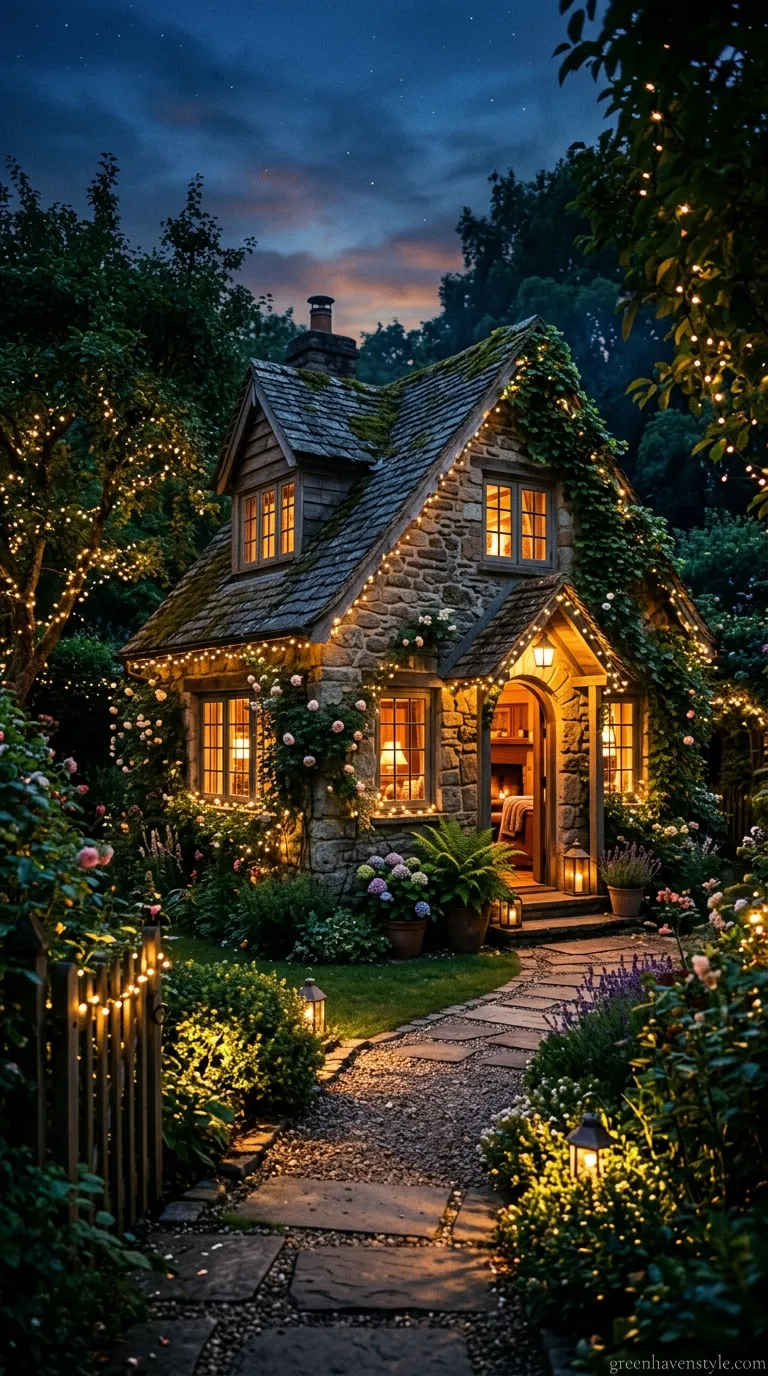
Adding miniature solar lights or LED strings to stone fairy houses creates enchanting nighttime displays that glow softly after dark. Tiny windows that light from within suggest cozy interiors where fairy families gather as evening falls.
The illumination extends garden enjoyment beyond daylight hours and creates romantic ambiance for outdoor entertaining. I’ve found that warm white lights photograph beautifully and create inviting atmospheres without overwhelming the miniature scale.
Pathway lighting guides visitors through the fairy village safely. Your garden transforms as dusk approaches, with the glowing stone cottages becoming focal points that draw attention and create magical atmospheres perfect for evening relaxation, and the lighting proves that fairy gardens offer visual interest around the clock.
12. Vertical Wall Gardens
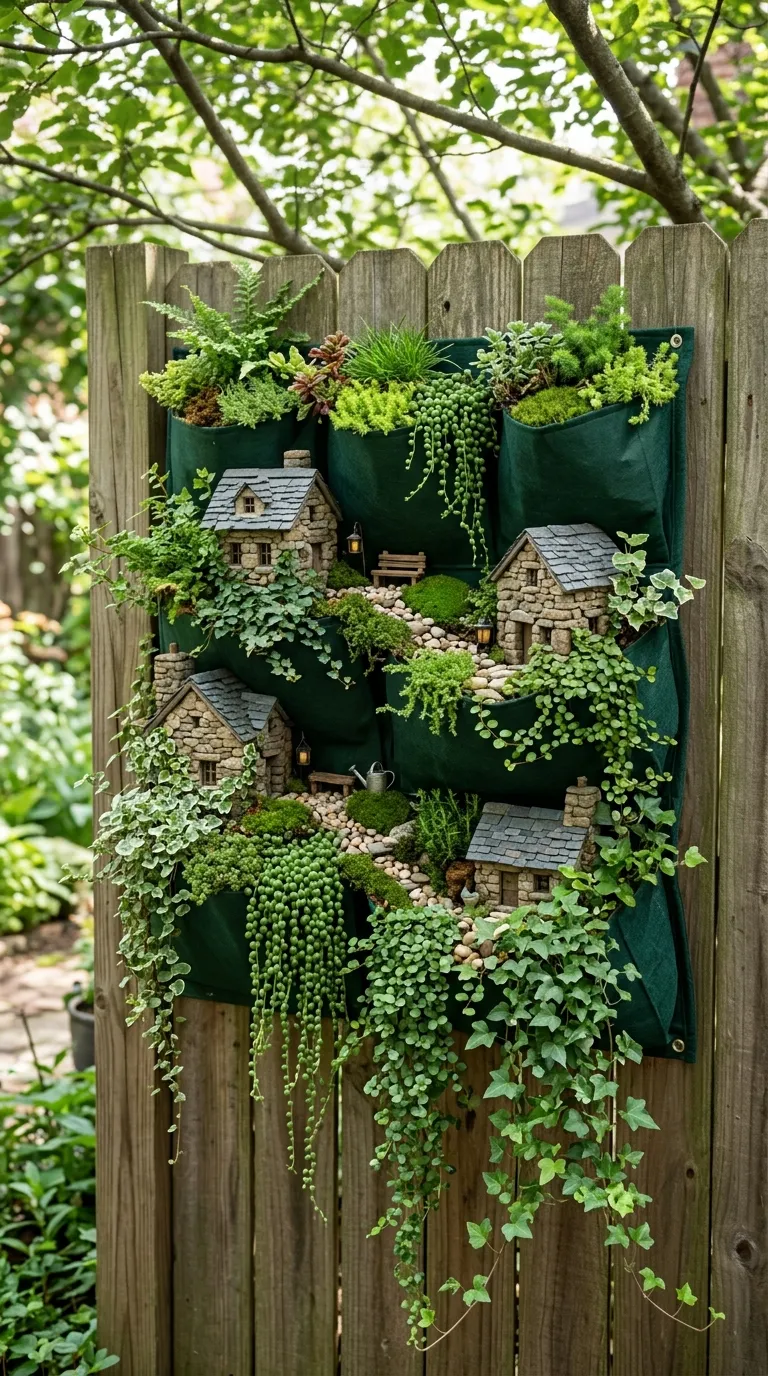
Mounting miniature stone houses on living walls or vertical planters creates space-saving fairy gardens perfect for small yards or urban settings. Pocket planters accommodate both structures and trailing plants that cascade downward, creating lush vertical landscapes.
This approach brings fairy magic to eye level where details are easily appreciated without bending. From what I’ve seen, vertical gardens work particularly well on blank fence sections or exterior walls that need softening and visual interest.
Climbing vines can be trained around houses naturally. Your miniature village defies gravity as it climbs upward, maximizing limited horizontal space while creating living artwork that transforms vertical surfaces into enchanted landscapes where fairy cottages perch on cliff faces surrounded by cascading greenery.
13. Broken Pot Landscapes
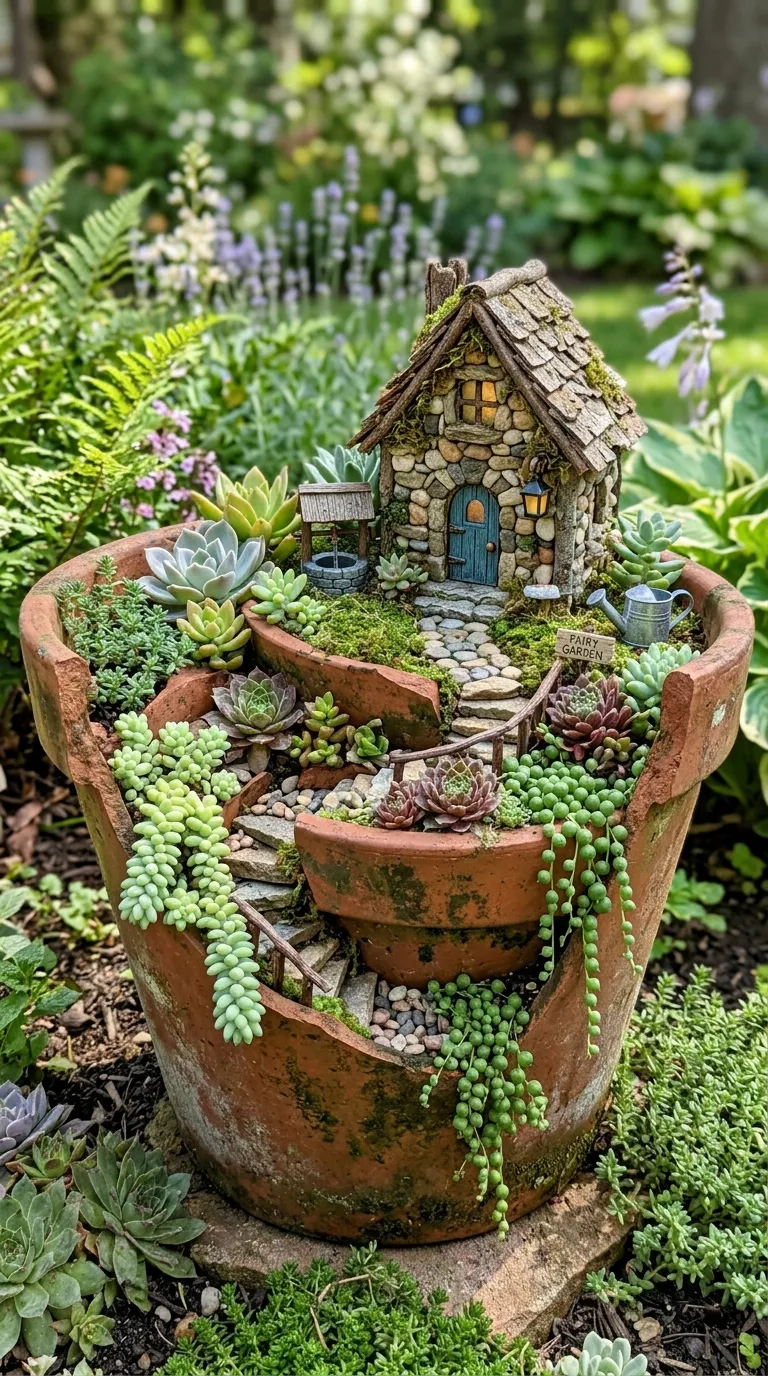
Arranging stone fairy houses within and around intentionally broken terra cotta pots creates multi-level landscapes with built-in planting pockets. The shattered pot pieces become natural terracing and retaining walls that add instant dimension and character.
This creative recycling transforms damaged containers into featured design elements rather than trash. I’ve observed that the terracotta fragments age beautifully, developing patina that enhances rather than detracts from the overall aesthetic.
Succulents and sedums spill from pot sections gorgeously. Your fairy garden gains whimsical charm through the unexpected use of broken pottery, and the technique demonstrates how creative thinking transforms limitations into distinctive design features that make your miniature landscape truly one-of-a-kind.
14. Miniature Vegetable Plots
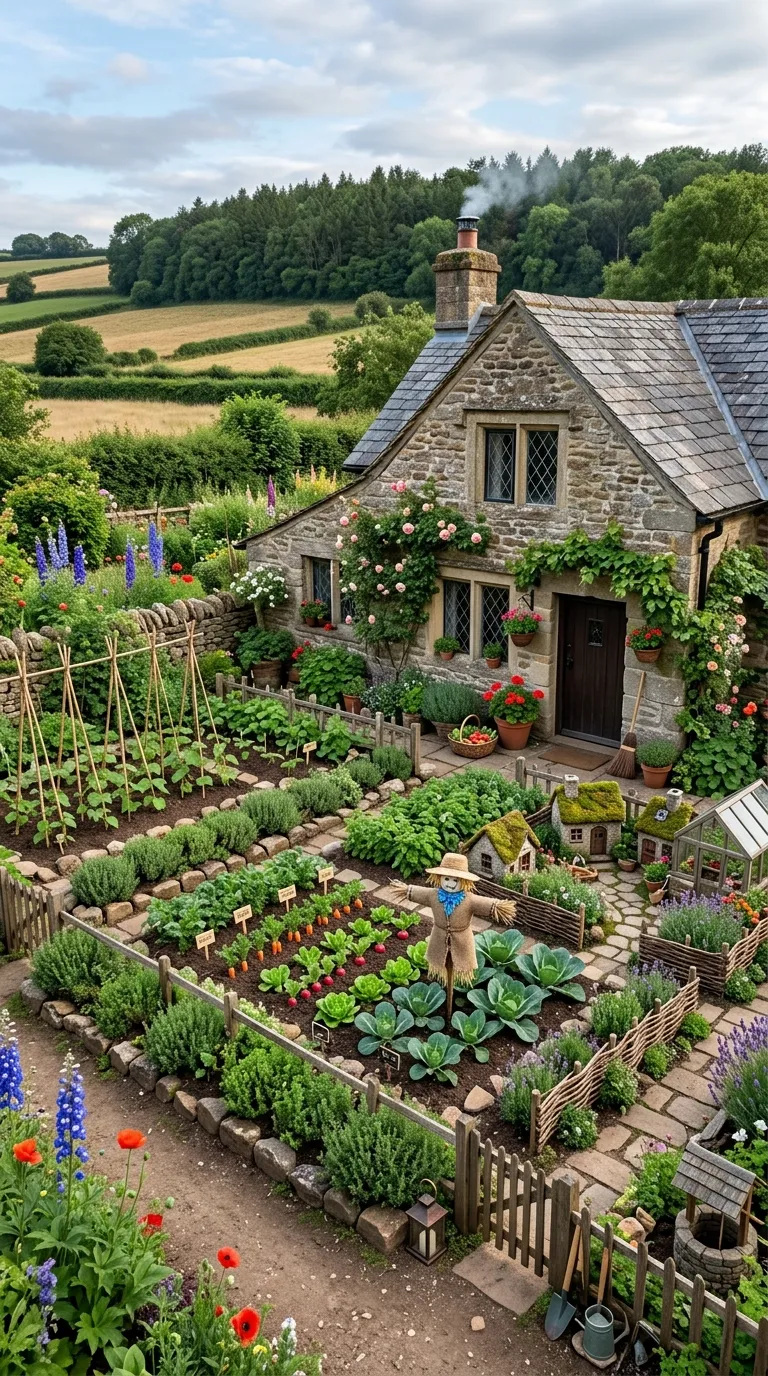
Creating tiny garden beds beside stone cottages where miniature vegetables or dwarf varieties grow adds productive realism to fairy villages. Thyme planted in rows mimics crops, while miniature bean poles and tiny trellises suggest fairies cultivate their own food sources.
This approach brings storytelling depth that engages children and adults alike. In my experience, the working garden elements create conversation starters and educational opportunities about where food comes from, even at miniature scale.
Tiny scarecrows and miniature garden fences complete the agricultural aesthetic. Your fairy stone house garden becomes a functioning homestead where magical inhabitants tend their plots, and the vegetable garden addition demonstrates thoughtful world-building that elevates fairy gardens from simple decoration to immersive miniature landscapes.
15. Enchanted Pathway Focus
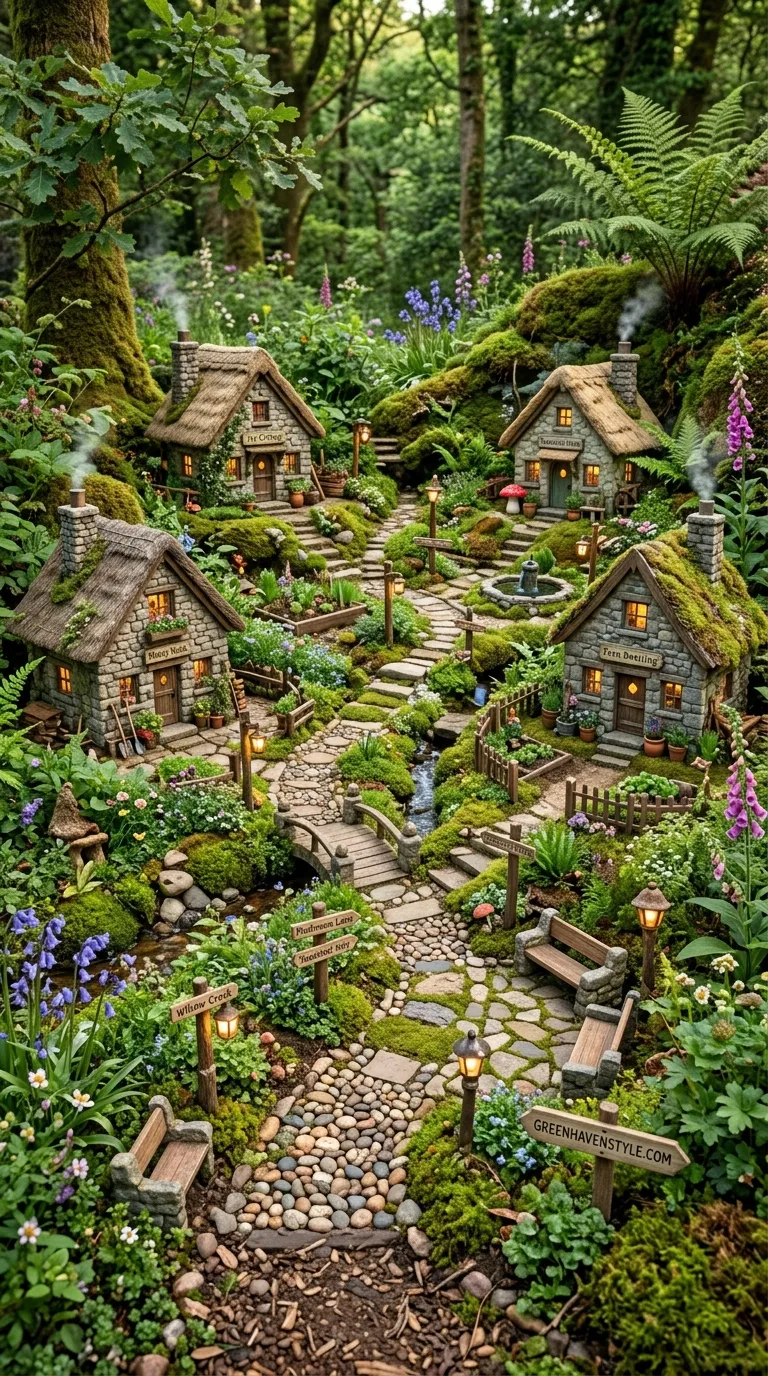
Designing the fairy garden primarily around winding pathways that connect stone houses creates journey-focused landscapes where the route is as important as the destinations. Various path materials like pebbles, slate chips, and moss create textural interest and define circulation patterns.
Miniature benches, lamp posts, and signposts along the pathways enhance the village infrastructure. I’ve found that pathways naturally guide the viewer’s eye through the garden, ensuring all elements receive attention rather than allowing certain areas to be overlooked.
Groundcover plants soften pathway edges beautifully without obscuring the routes. Your miniature village gains functional realism as the pathways suggest daily fairy life, morning walks, and evening strolls between neighbors, and the circulation network unifies disparate elements into cohesive enchanted settlements that feel authentically lived-in.
Conclusion
These fairy garden ideas with stone houses prove that miniature landscapes offer endless creative possibilities regardless of your available space or gardening experience. From moss-covered woodland cottages to illuminated evening villages, each approach brings distinctive character while celebrating the timeless appeal of tiny stone dwellings nestled among living plants.
I’ve seen how fairy gardens captivate imaginations and create conversation pieces that bring joy to everyone who discovers them. Whether you choose succulent hideaways, coastal themes, or terraced village arrangements, your miniature world will reflect your personal style while offering a delightful escape into whimsical enchantment.
The magic lies in the details you add and the care you invest in your tiny landscape. Save your favorite designs to Pinterest, gather your materials, and start creating those charming stone cottage scenes that transform ordinary garden spaces into extraordinary miniature realms where imagination flourishes and everyday magic feels wonderfully possible.