8 Perennial Cottage Garden Border Ideas for Year-Round Color
There’s something utterly enchanting about a cottage garden border where the same beloved plants return each spring, growing more beautiful and abundant with every passing season. If you’ve been longing to create that quintessential English garden look filled with reliable blooms and timeless charm, these perennial cottage garden border ideas will guide you toward designing borders that flourish year after year with minimal replanting effort.
The magic of perennial borders lies in their ability to evolve and improve over time as plants mature and establish themselves.
8 Perennial Cottage Garden Border Ideas for Year-Round Color
Whether you’re transforming a bare fence line or reimagining an existing bed, choosing the right perennial combinations creates landscapes that reward you with continuous color from early spring through late fall. You’ll discover how to layer heights, blend complementary textures, and select plants that naturalize beautifully while maintaining that relaxed cottage aesthetic. Each approach celebrates low-maintenance beauty while honoring traditional cottage garden principles that have created beloved landscapes for generations. These ideas prove that perennial borders offer both romance and practicality in equal measure.
1. Classic Pink and Purple Waves 
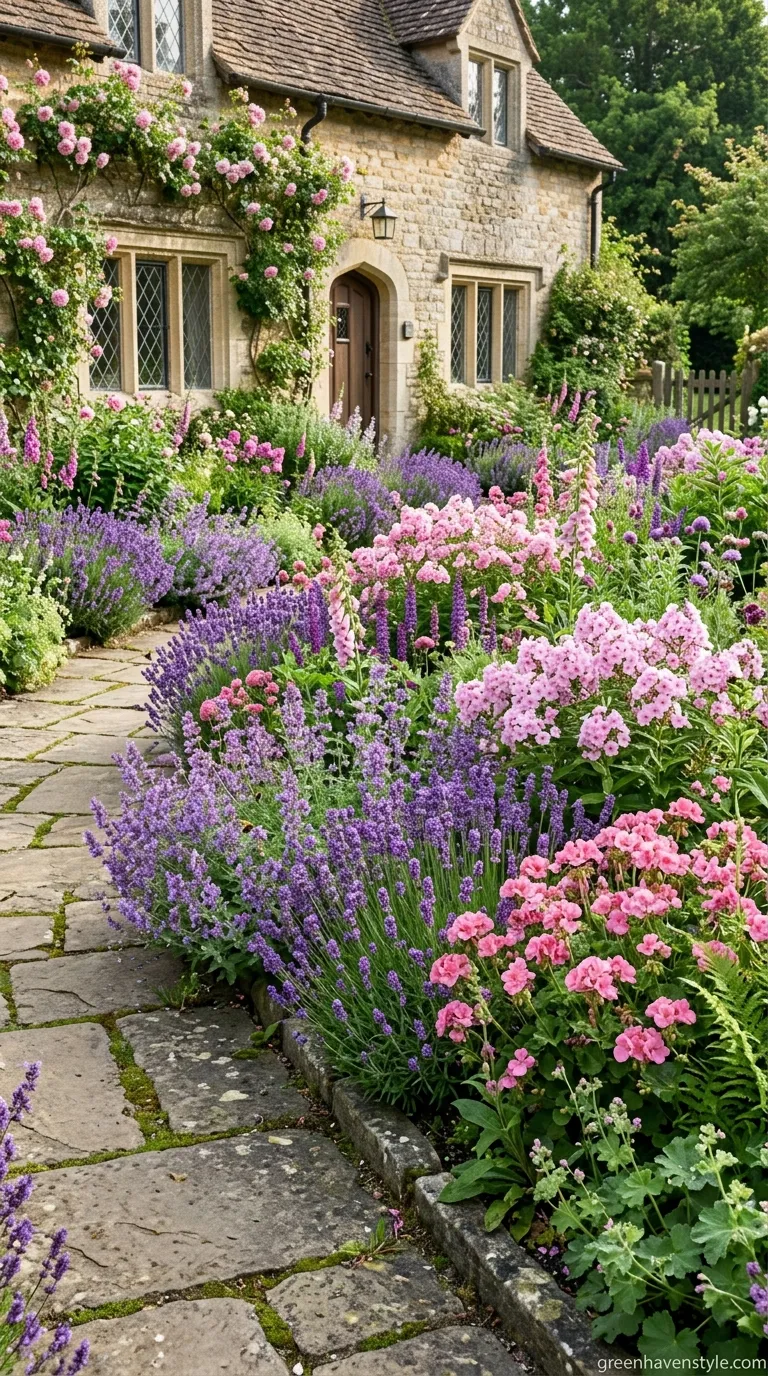
Building borders with repeating drifts of pink and purple perennials creates flowing color schemes that feel both romantic and cohesive. Lavender, catmint, hardy geraniums, and pink phlox blend together in soft waves that guide the eye along the entire border length beautifully.
The repetition of colors unifies diverse plant forms while the drifting pattern prevents rigid formality. I’ve found that planting in odd-numbered groups of three, five, or seven creates natural-looking clusters that mimic how plants self-seed in nature.
This palette photographs gorgeously in any lighting and pairs beautifully with traditional cottage architecture and stone pathways. Your border gains continuity and rhythm as the repeated hues create visual harmony, and the long-blooming perennials ensure color persists from late spring through early autumn with deadheading and proper care throughout the growing season.
2. Layered Height Succession
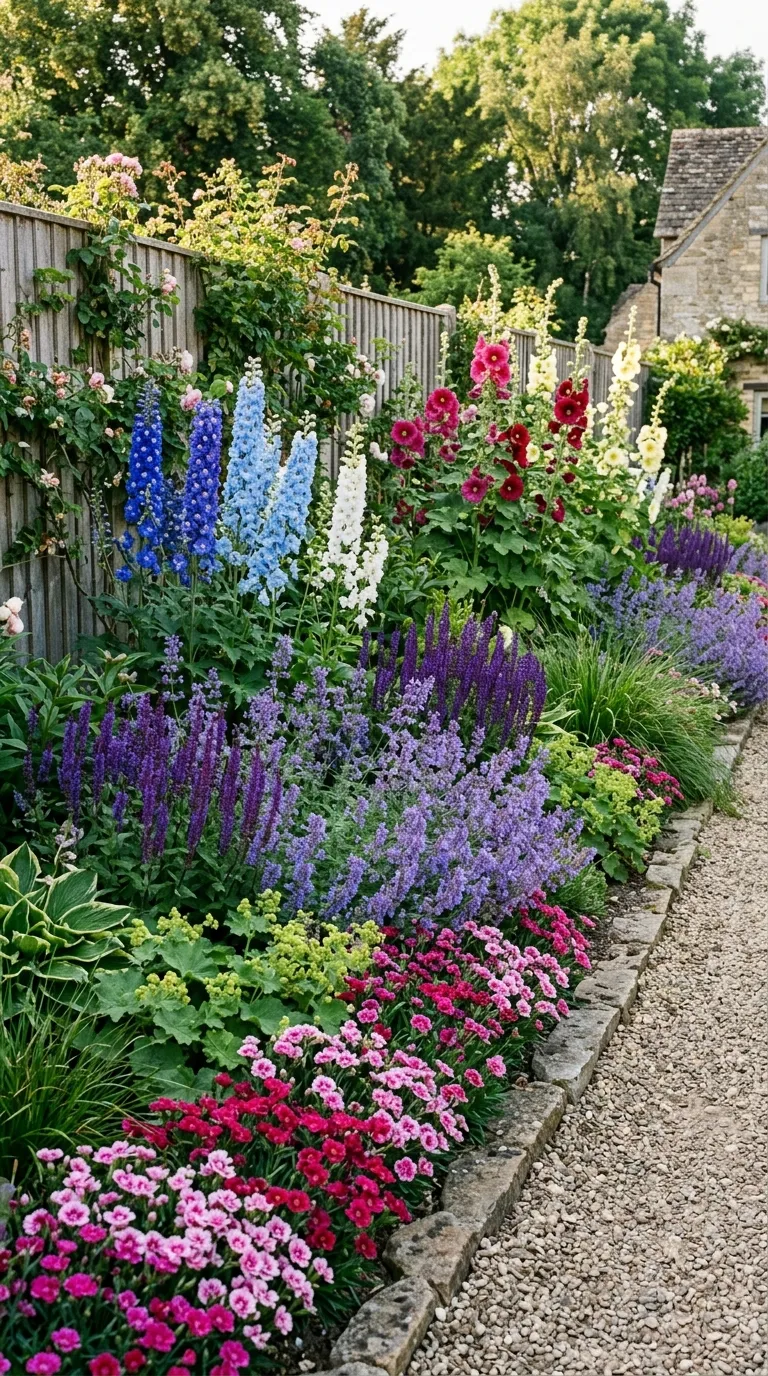
Arranging perennials by height from front to back creates borders where every plant remains visible and contributes to the overall composition. Low edgers like dianthus transition to mid-height nepeta and salvia, culminating in tall delphiniums and hollyhocks anchoring the back.
This traditional layering technique maximizes visual impact while ensuring shorter plants don’t get shaded out by taller companions. In my experience, leaving slight height variations within each layer prevents the border from looking too rigid or obviously graduated.
The dimensional structure creates natural frames for each plant grouping and allows you to appreciate individual specimens. Your border achieves professional polish as the careful height progression creates depth, and visitors can admire both foreground details and background drama without elements blocking or competing with one another visually.
3. Hot Summer Border Scheme
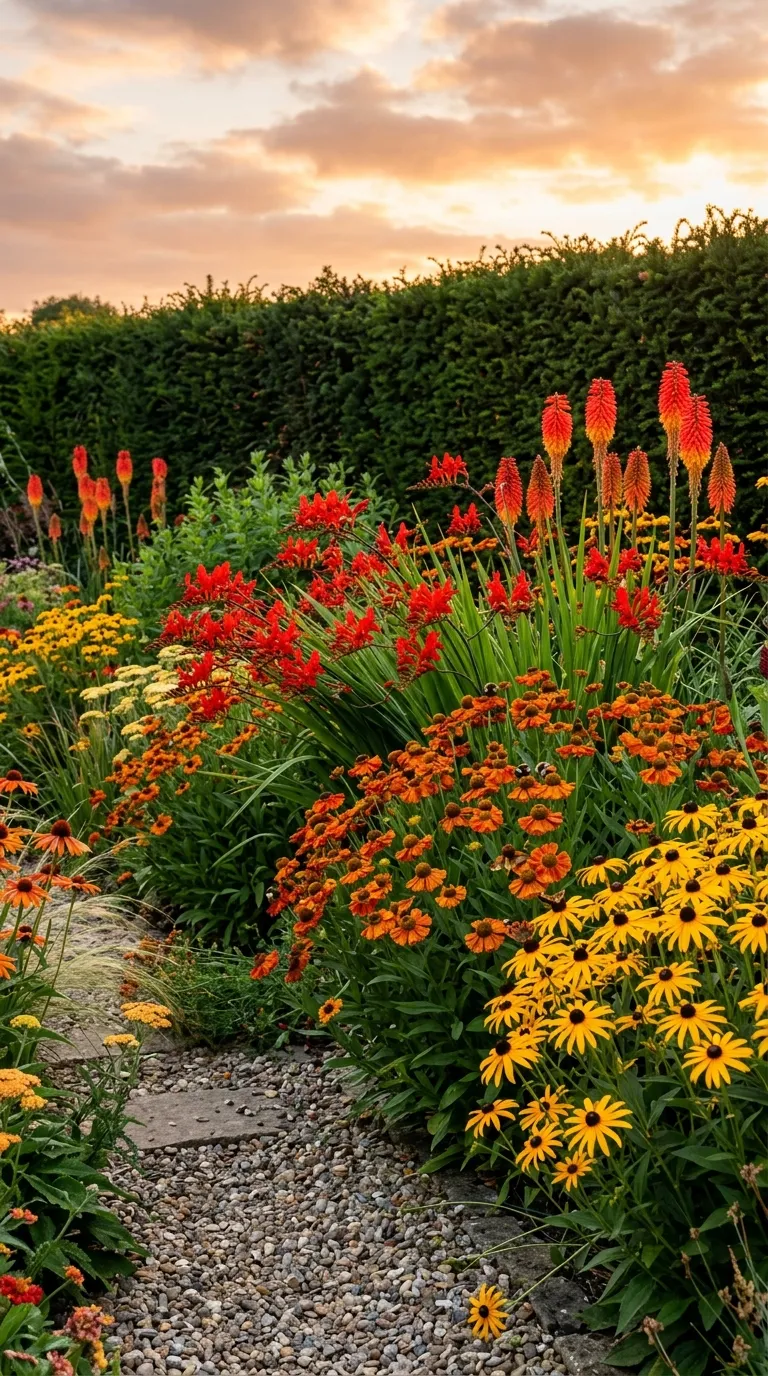
Designing with warm-toned perennials in reds, oranges, and golds creates energetic borders that radiate warmth during peak summer months. Crocosmia, helenium, rudbeckia, and red hot pokers combine in sunset-inspired palettes that celebrate bold, confident color choices.
These heat-loving plants thrive in sunny exposures where they produce abundant blooms that attract pollinators enthusiastically. I’ve observed that hot color schemes work beautifully against dark backgrounds like hedges or fences where the vibrant tones pop dramatically.
The saturated hues create excitement and movement that makes borders feel alive with energy. Your cottage-style planting gains dramatic presence as the fiery colors command attention, and the scheme proves particularly effective in contemporary settings where traditional pastel cottage gardens might feel too sweet or understated for modern architectural surroundings.
4. Silver Foliage Framework
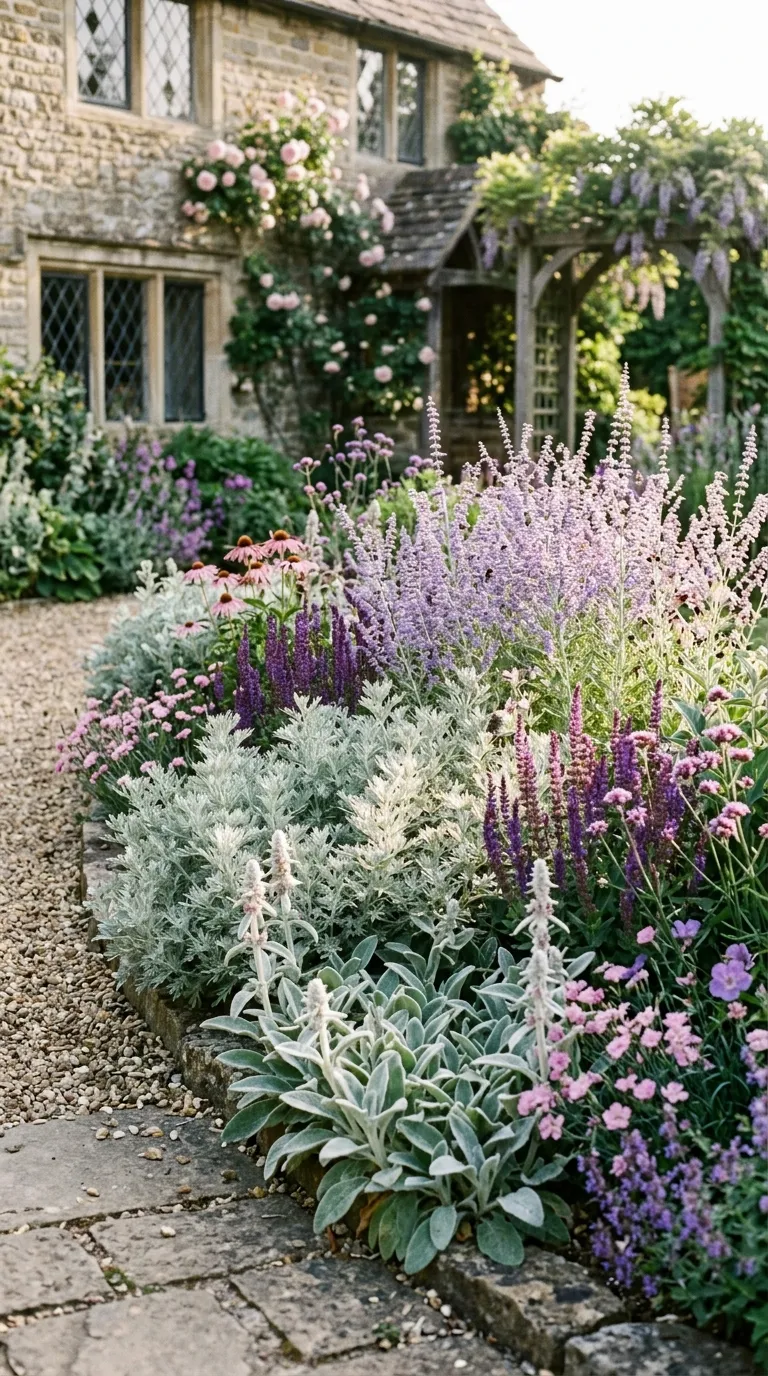
Incorporating perennials with silvery-gray foliage throughout borders creates textural interest and visual rest between colorful blooms. Artemisia, lamb’s ear, Russian sage, and stachys provide cooling tones that prevent busy plantings from feeling chaotic or overwhelming to the eye.
The neutral foliage harmonizes disparate flower colors while adding sophisticated refinement to cottage borders. From what I’ve seen, silver plants particularly shine in evening gardens where fading light makes the pale leaves almost luminous against darker green surroundings.
These drought-tolerant perennials often thrive in lean soils where other plants might struggle unnecessarily. Your border gains balance and elegance as the silver accents create breathing space, and the soft textures invite touch while highlighting neighboring blooms and demonstrating that perennial borders can combine beauty with water-wise practicality.
5. Cottage Rose Anchor Points
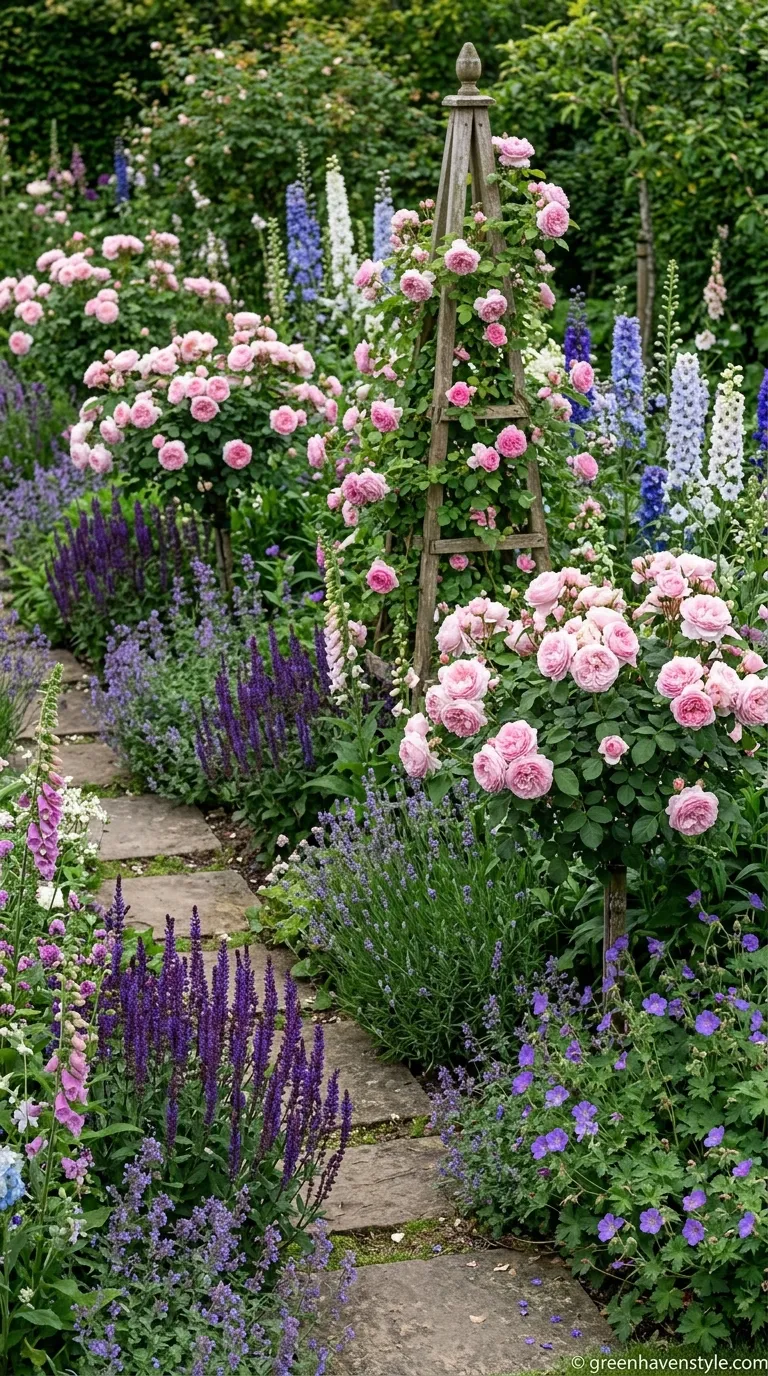
Positioning shrub roses at regular intervals throughout perennial borders creates vertical structure and fragrant focal points. English roses and old garden varieties blend seamlessly with herbaceous perennials, offering repeat blooms that complement surrounding flowers perfectly.
The roses provide permanent woody framework that herbaceous plants fill around seasonally as they emerge and grow. I’ve found that spacing roses approximately every six to eight feet creates pleasing rhythm without making the border feel repetitive or predictable.
Climbing varieties trained on simple supports add dramatic height without consuming excessive ground space. Your border transforms into a classic cottage garden display as roses bloom alongside complementary perennials, and the layered fragrance from both woody and herbaceous plants creates multisensory experiences that make garden time truly memorable and rewarding.
6. Native Pollinator Paradise
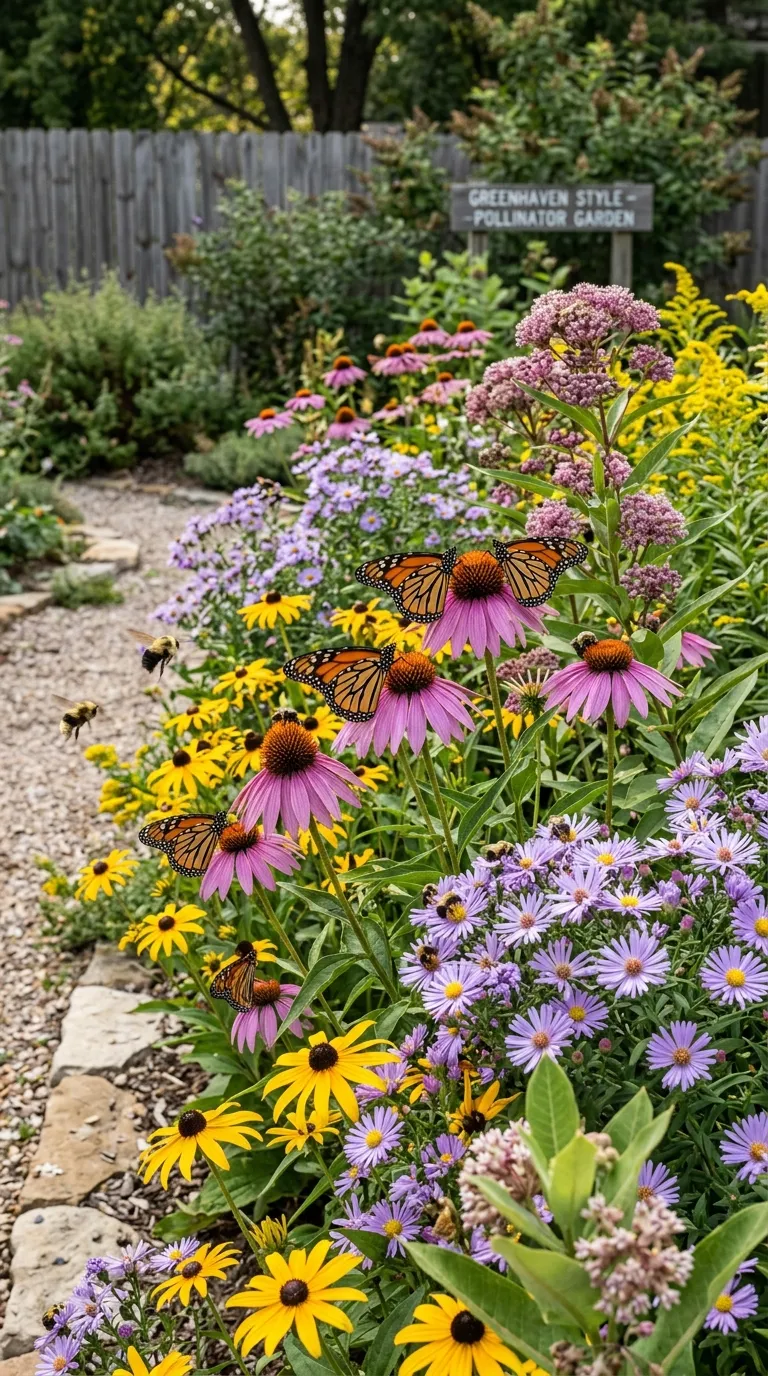
Selecting native perennials specifically for pollinator support creates borders that buzz with beneficial insect activity while celebrating regional plant communities. Coneflowers, black-eyed susans, asters, and native salvias provide nectar and pollen that local bee and butterfly populations have evolved alongside for millennia.
These adapted plants typically require less water and maintenance than non-native alternatives once established. In my experience, watching the constant pollinator activity becomes as rewarding as the visual beauty, and children especially love observing the wildlife interactions.
Native borders also support specialist pollinators that depend on specific plant species for survival. Your landscape contributes to local ecosystem health while achieving abundant cottage charm, proving that ecological responsibility and aesthetic beauty align perfectly when thoughtful plant selection honors both cottage garden traditions and environmental stewardship principles.
7. Fragrant Evening Border
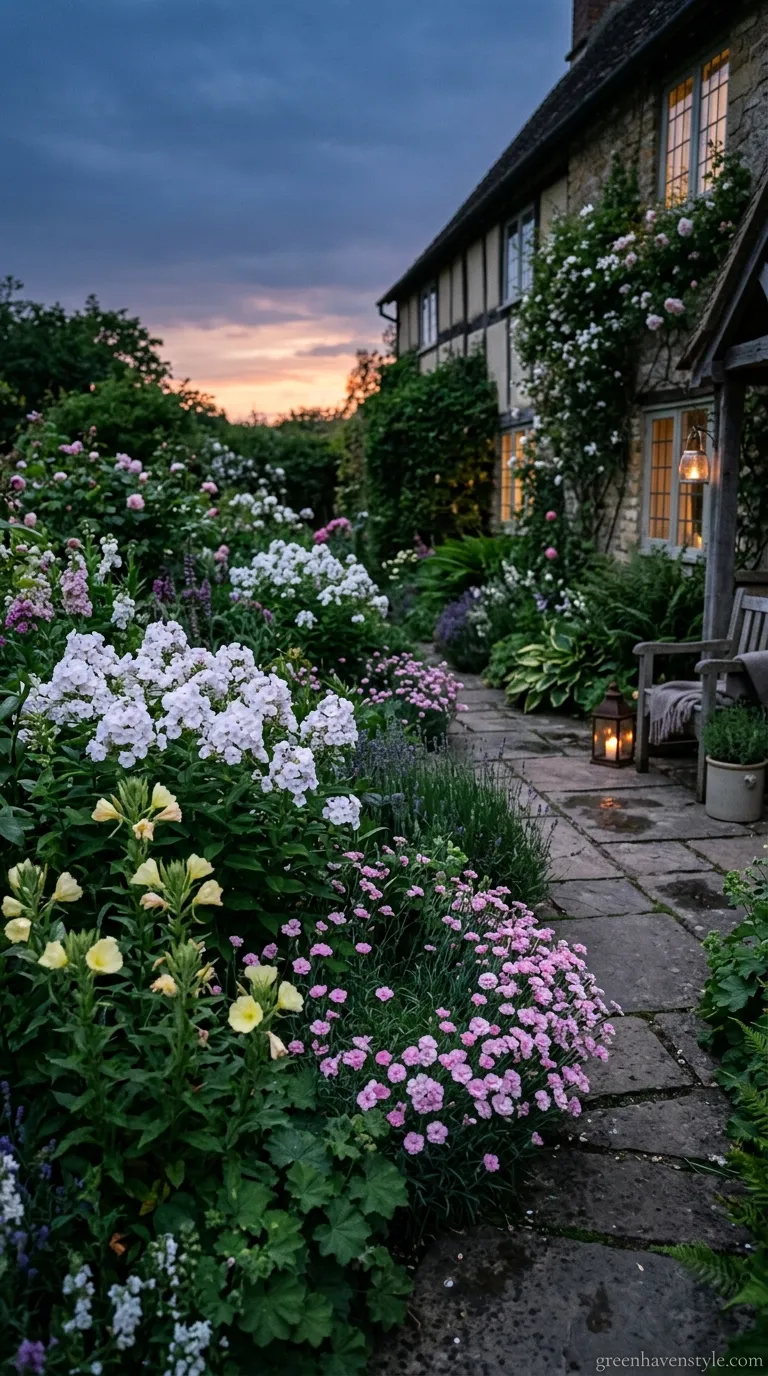
Curating borders specifically for evening fragrance creates outdoor spaces designed for twilight enjoyment when many perennials release their strongest scents. Phlox, dianthus, evening primrose, and nicotiana perfume the air as temperatures cool and you settle into outdoor seating areas.
Positioning fragrant borders near patios, bedroom windows, or frequently traveled pathways maximizes the sensory experience. I’ve noticed that pale-colored flowers show beautifully in fading light while simultaneously offering the strongest fragrances during evening hours.
The combination of visual and olfactory pleasure engages multiple senses simultaneously for richer experiences. Your garden extends its appeal beyond daytime viewing as dusk approaches, scent drifts through open windows, and the border continues offering beauty and pleasure long after sun-dependent flowers have closed for the night.
8. Self-Seeding Naturalistic Style
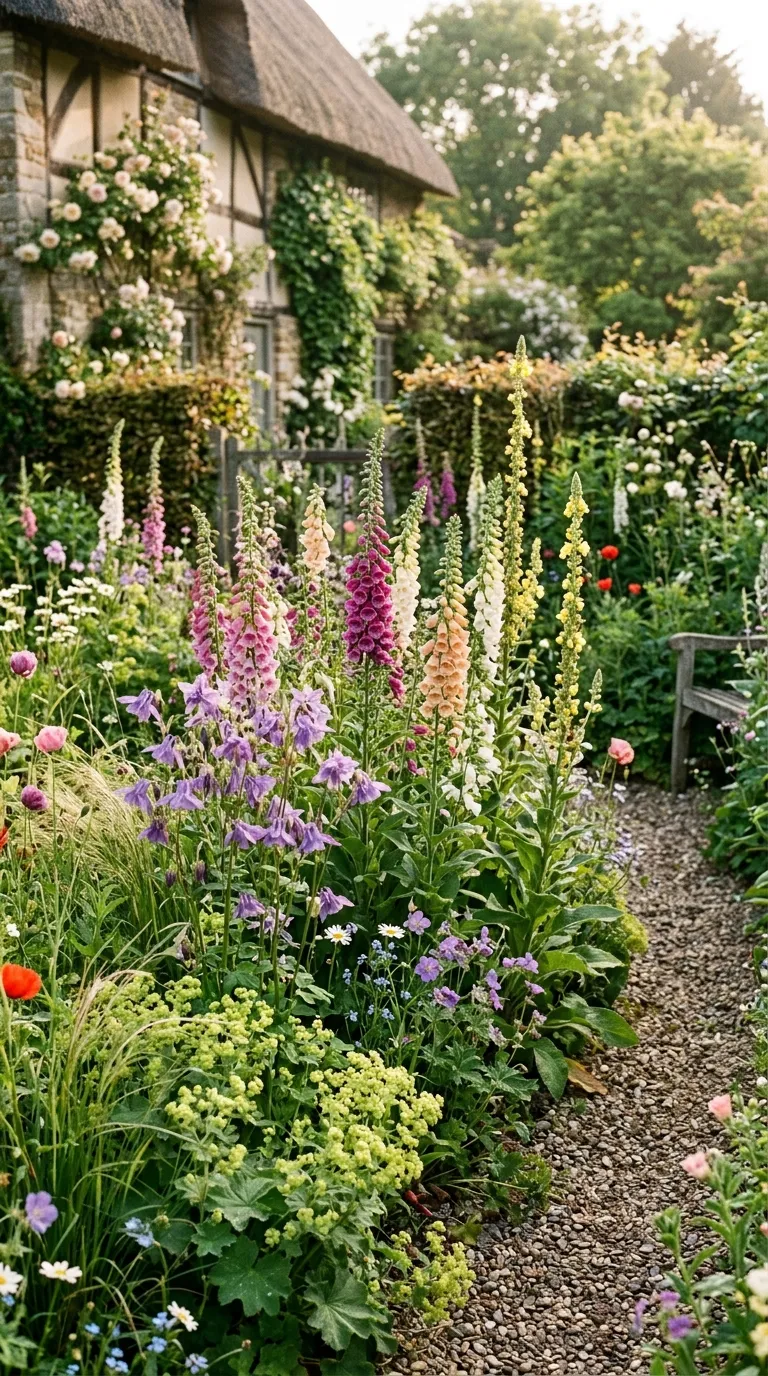
Encouraging perennials that self-seed freely creates borders that evolve naturally with unexpected plant partnerships and spontaneous color combinations. Foxgloves, aquilegias, verbascums, and hardy geraniums colonize gaps and establish in patterns that often improve upon rigid initial designs.
This approach requires comfort with controlled randomness and willingness to edit enthusiastic seeders occasionally. From what I’ve seen, self-seeding borders develop authentic cottage character as plants find their preferred microclimates and thrive in self-selected locations.
The naturalistic evolution reduces long-term maintenance since plants grow where conditions suit them best. Your perennial cottage border gains organic charm as happy accidents create beautiful moments, and the gentle unpredictability prevents borders from feeling overly designed while honoring the relaxed aesthetic that makes cottage gardens so enduringly beloved.
Conclusion
These perennial cottage garden border ideas demonstrate how thoughtful plant selection creates romantic, low-maintenance landscapes that improve and evolve with each passing year. From classic pink and purple waves to native pollinator havens, each approach brings unique character while celebrating the reliable beauty of returning perennials.
I’ve seen how well-planned borders transform gardens from temporary annual displays into permanent landscapes that deepen in beauty as plants mature and establish. Whether you choose fragrant evening schemes, hot summer palettes, or naturalistic self-seeding styles, your border will develop personality and presence that rewards both patience and seasonal observation.
The beauty lies in knowing your perennial investments grow more valuable each year as plants spread and bloom more abundantly. Save your favorite combinations to Pinterest, select varieties suited to your climate, and start creating those timeless borders that will greet you faithfully every spring and make your garden feel like home.