
13 Creative DIY Garden Trellis Ideas for Climbing Plants & Vegetables
Imagine stepping into your garden and seeing vibrant flowers climbing gracefully up handmade structures you built yourself. There’s something deeply satisfying about creating functional beauty with your own hands, especially when it enhances your outdoor space.
If you’re searching for DIY garden trellis ideas that combine creativity with practicality, you’re in exactly the right place. Building your own trellis doesn’t require advanced carpentry skills or expensive materials—just a bit of imagination and willingness to try something new.
These homemade structures do more than support climbing plants. They add vertical interest, create privacy screens, define garden zones, and become focal points that showcase your personal style. I’ve experimented with various designs over the years, and I’ve learned that the most successful projects often use repurposed materials and simple construction techniques.
13 Creative DIY Garden Trellis Ideas for Climbing Plants & Vegetables
Whether you’re growing beans, training roses, or simply want architectural elements in your garden, these ideas will inspire you to grab your tools and start building. Get ready to discover trellis designs that are as functional as they are beautiful, transforming your garden into a vertical wonderland.
1. Bamboo Teepee Structure 
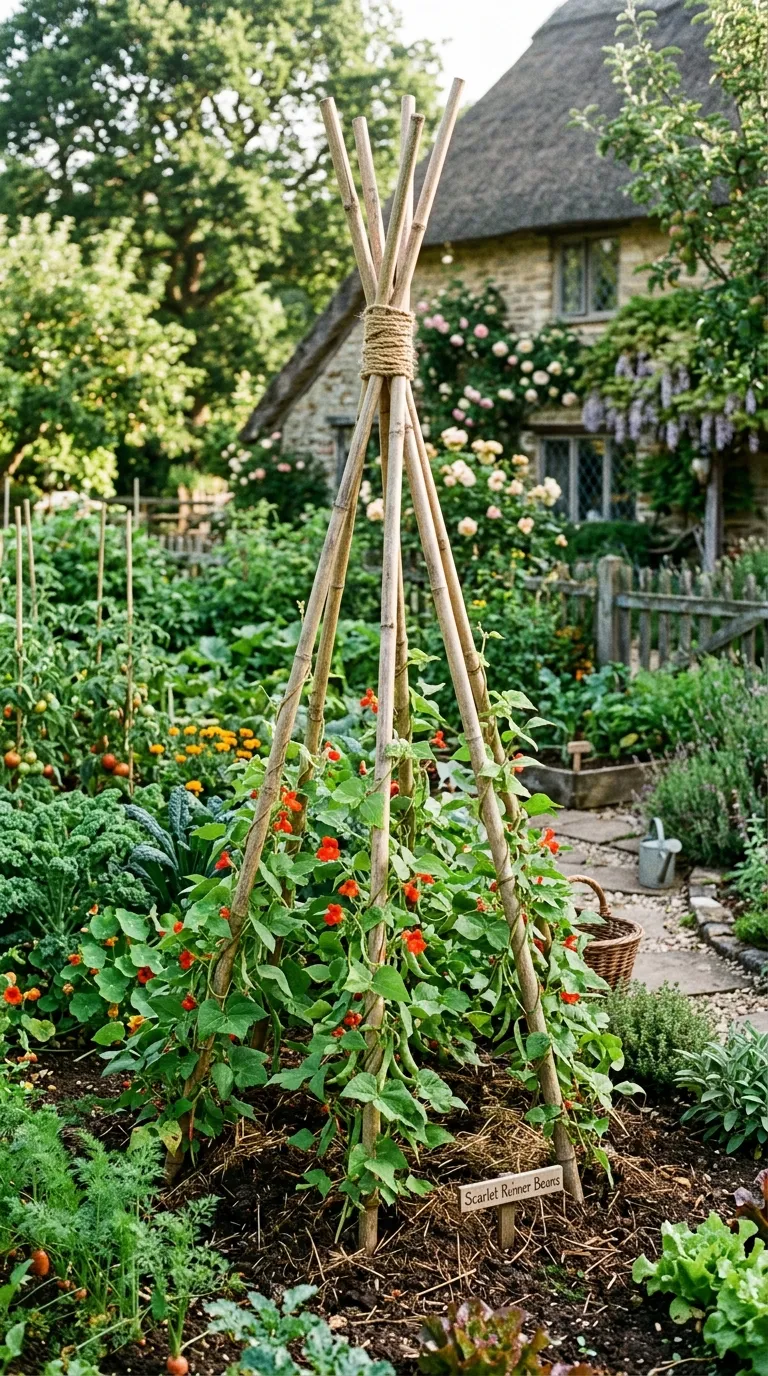
Picture this: natural bamboo poles lashed together at the top, creating a rustic pyramid that instantly becomes a garden centerpiece. This simple construction provides sturdy support for beans, peas, or morning glories while adding organic texture.
The beauty of bamboo lies in its strength, lightweight nature, and sustainable sourcing. I’ve found that securing poles with natural twine not only holds everything firmly but also maintains the earthy aesthetic that blends seamlessly with surrounding greenery.
Position your teepee in vegetable beds or flower borders where climbing plants need vertical space. As vines ascend and wrap around the poles, they create living sculpture that looks intentional and professionally designed, proving that simplicity often delivers the most striking results.
2. Recycled Pallet Vertical Garden
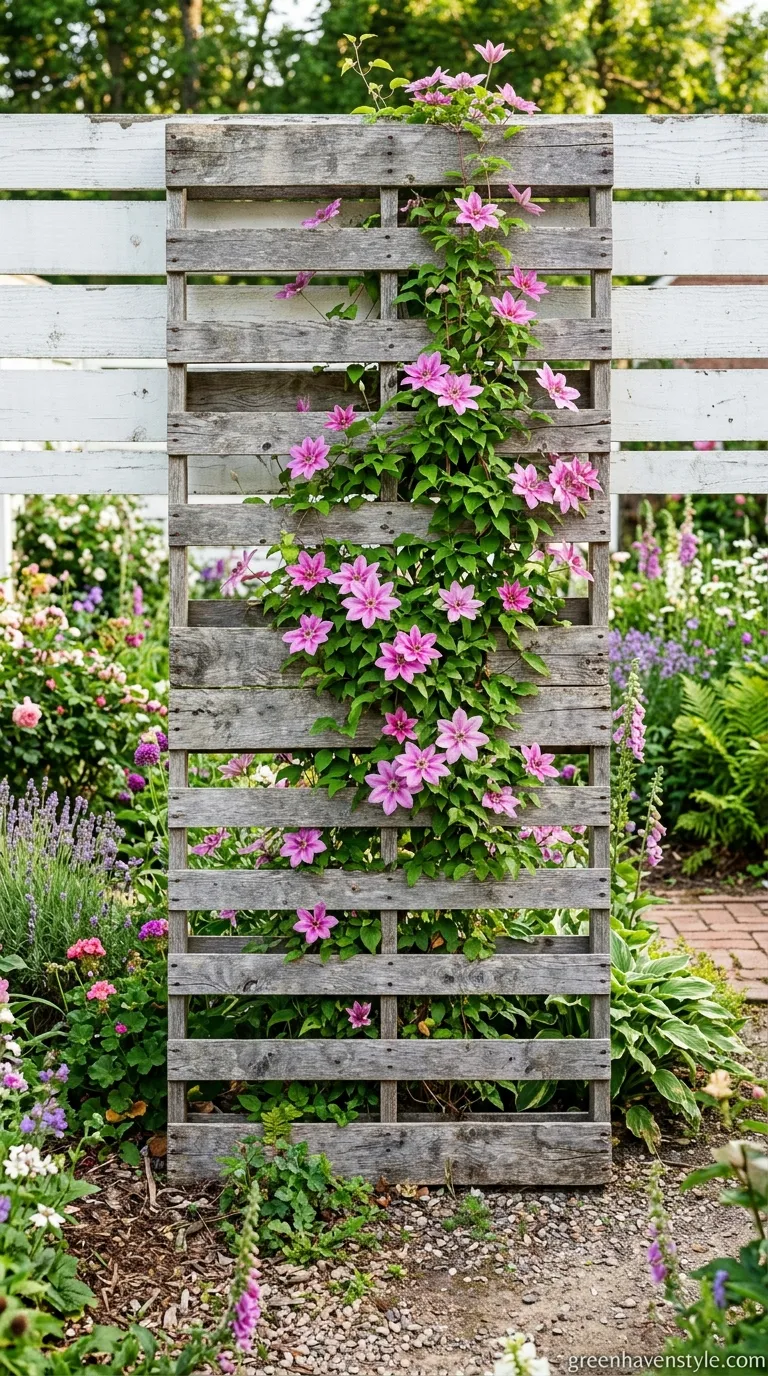
Old shipping pallets transform into instant vertical growing spaces when positioned upright against walls or fences. Their slatted construction provides perfect spacing for plants to weave through while maintaining structural integrity.
Sand rough edges, then stain or paint pallets to match your garden aesthetic—weathered gray, crisp white, or natural wood all work beautifully. I’ve noticed that leaving pallets untreated allows them to develop authentic patina that enhances cottage garden charm.
Attach securely to stable surfaces, then plant clematis, sweet peas, or climbing roses at the base. The horizontal slats create natural shelves where you can tuck small pots or wind training vines, maximizing space in compact gardens with creative vertical solutions.
3. Copper Pipe Modern Trellis
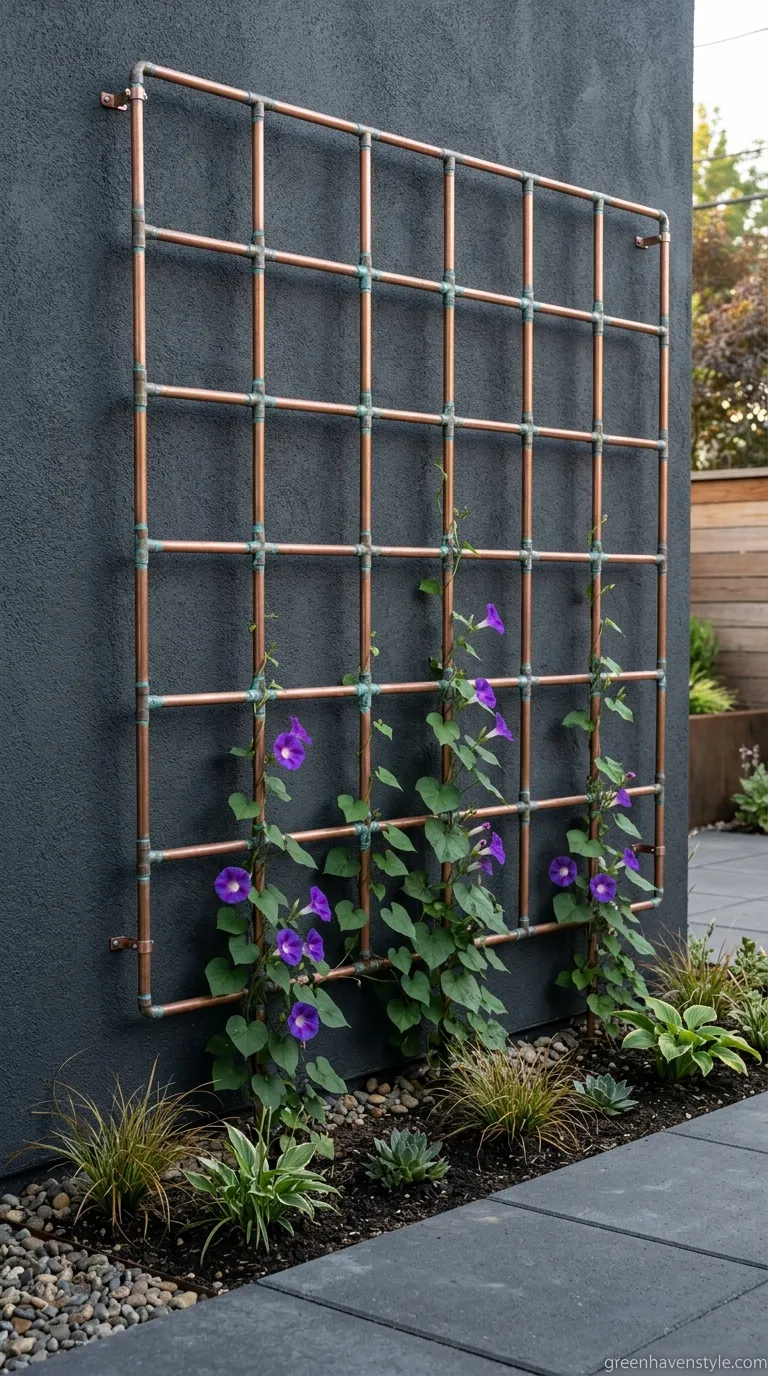
Sleek copper pipes connected with elbow joints create contemporary geometric patterns that contrast beautifully with organic plant forms. This design brings modern sophistication to gardens while providing sturdy climbing support.
The metallic finish develops gorgeous verdigris patina over time, transitioning from shiny copper to soft blue-green tones that add character. From what I’ve seen, the initial investment in materials pays dividends through durability and timeless style that never looks dated.
Configure pipes into grids, pyramids, or abstract shapes depending on your design preferences and available space. The slim profile doesn’t overwhelm small gardens, while the structural strength supports even heavy flowering vines without bending or collapsing under weight.
4. Branch and Twig Rustic Frame
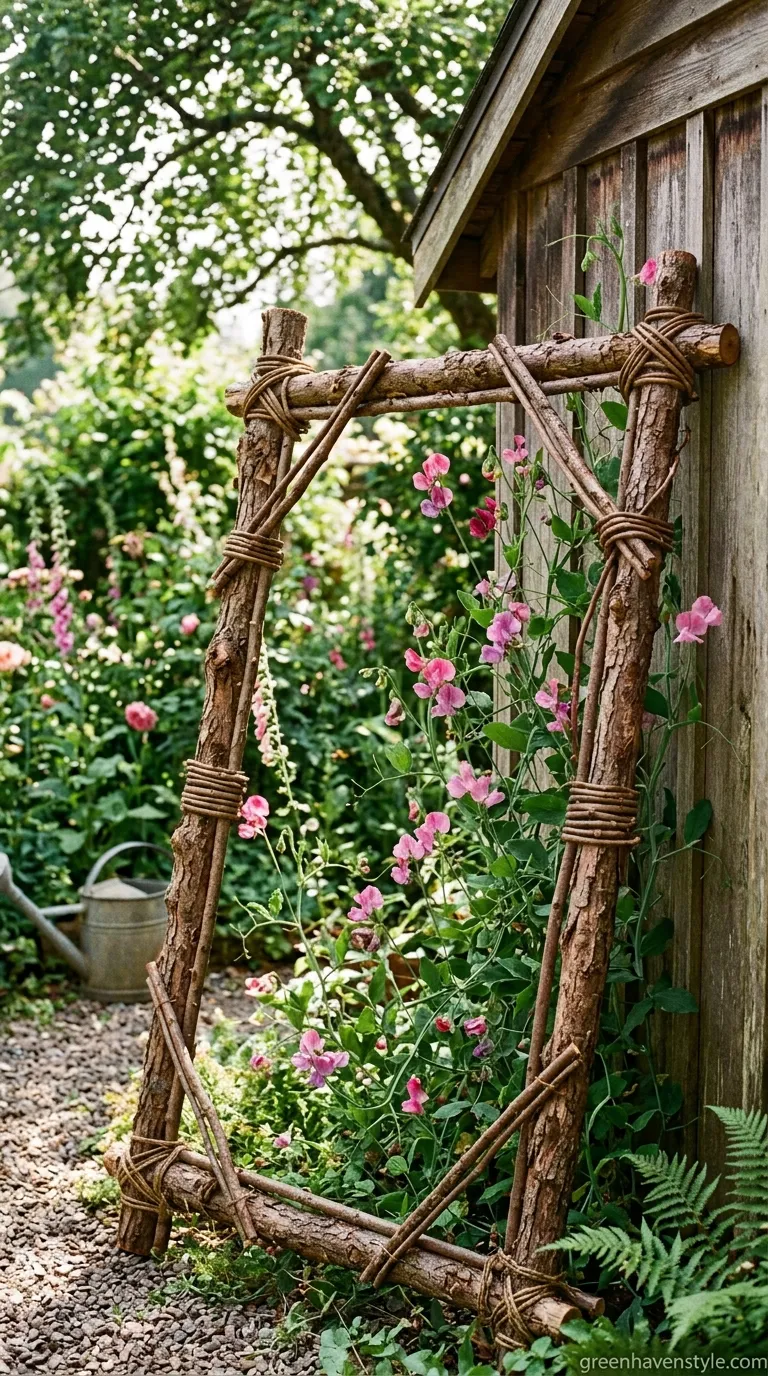
Collected branches arranged into rectangular or square frames bring woodland charm to any garden setting. This completely natural approach costs nothing if you gather materials from your property or local parks.
Choose relatively straight branches with interesting bark textures, then bind intersections with wire or twine hidden beneath smaller twig wrappings. In my experience, mixing thicknesses creates visual interest while maintaining structural stability for lighter climbing plants like nasturtiums or sweet peas.
This organic style works particularly well in cottage gardens, woodland settings, or naturalistic landscapes where manufactured materials would feel out of place. The imperfect, handcrafted quality adds authentic character that store-bought options simply cannot replicate.
5. Ladder Repurpose Design
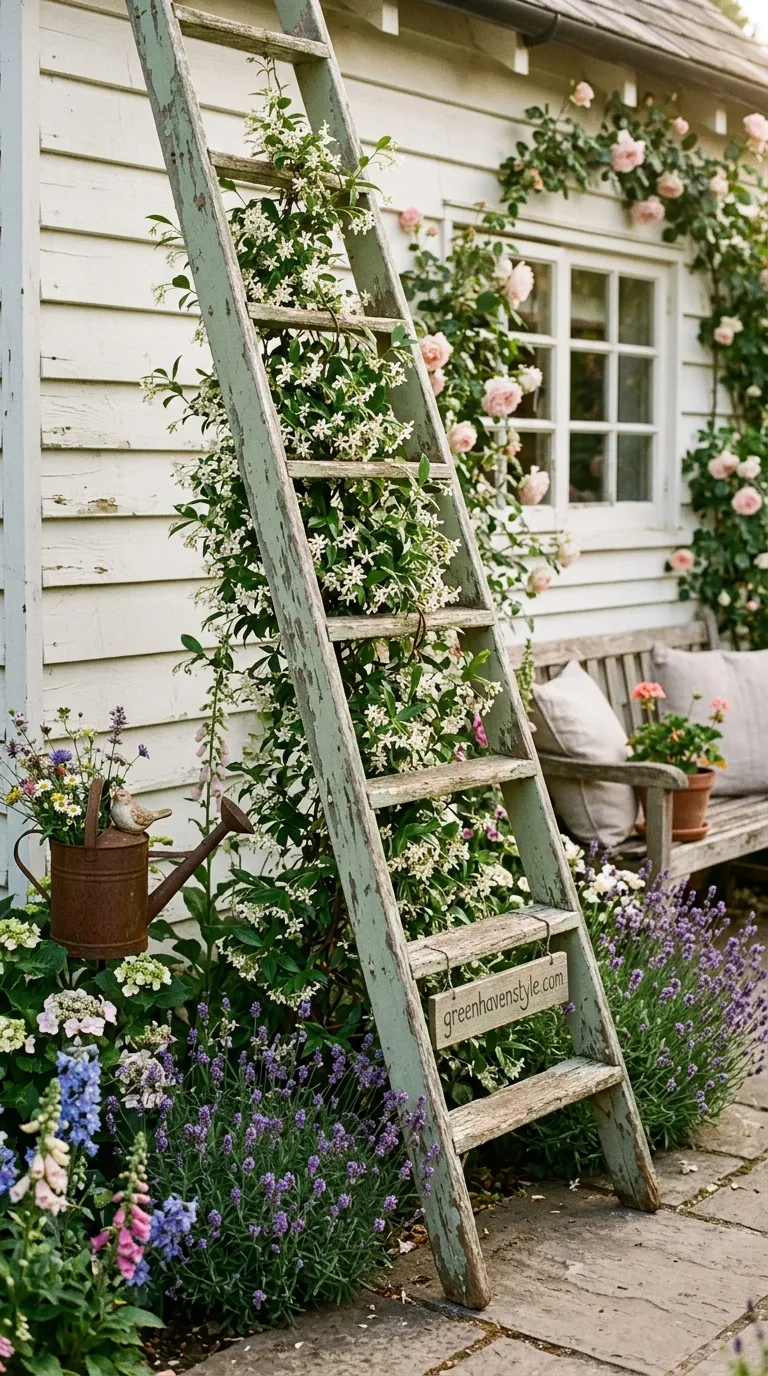
Vintage wooden ladders gain new purpose when positioned vertically or at angles against walls and fences. Their built-in rungs provide ready-made climbing supports without additional modification.
Paint ladders in colors that complement your home’s exterior or leave natural for rustic appeal. I’ve experimented with both approaches, finding that bold hues create focal points while weathered wood blends into planting schemes, letting flowers take center stage.
Lean ladders securely or mount them permanently for safety and stability. Train roses, jasmine, or clematis up the rungs, creating living art that combines salvaged materials with natural beauty in ways that feel both intentional and effortlessly charming.
6. Wire Mesh Panel Support
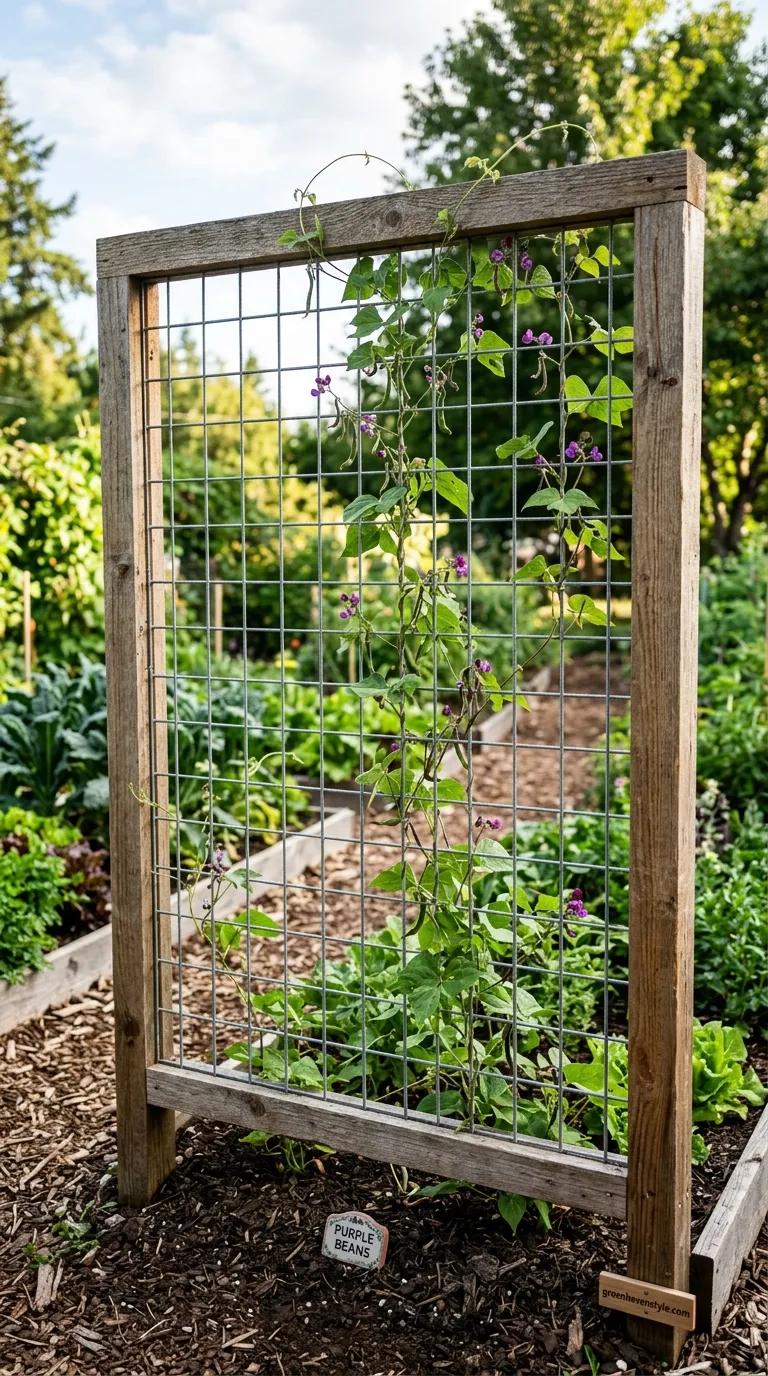
Galvanized wire mesh attached to simple wooden frames creates versatile climbing surfaces for various plant types. The open grid pattern allows tendrils to grab easily while air circulates freely around foliage.
This utilitarian approach excels in vegetable gardens where function matters more than decorative appeal, though the industrial aesthetic has gained popularity in modern landscape design. The mesh comes in different gauges and opening sizes to accommodate everything from delicate peas to robust squash vines.
I’ve found that it helps to build frames slightly larger than needed, allowing plants room to spread without immediately outgrowing their support. Mount panels vertically or create A-frame structures for maximum growing space in minimal footprints.
7. String and Stake System
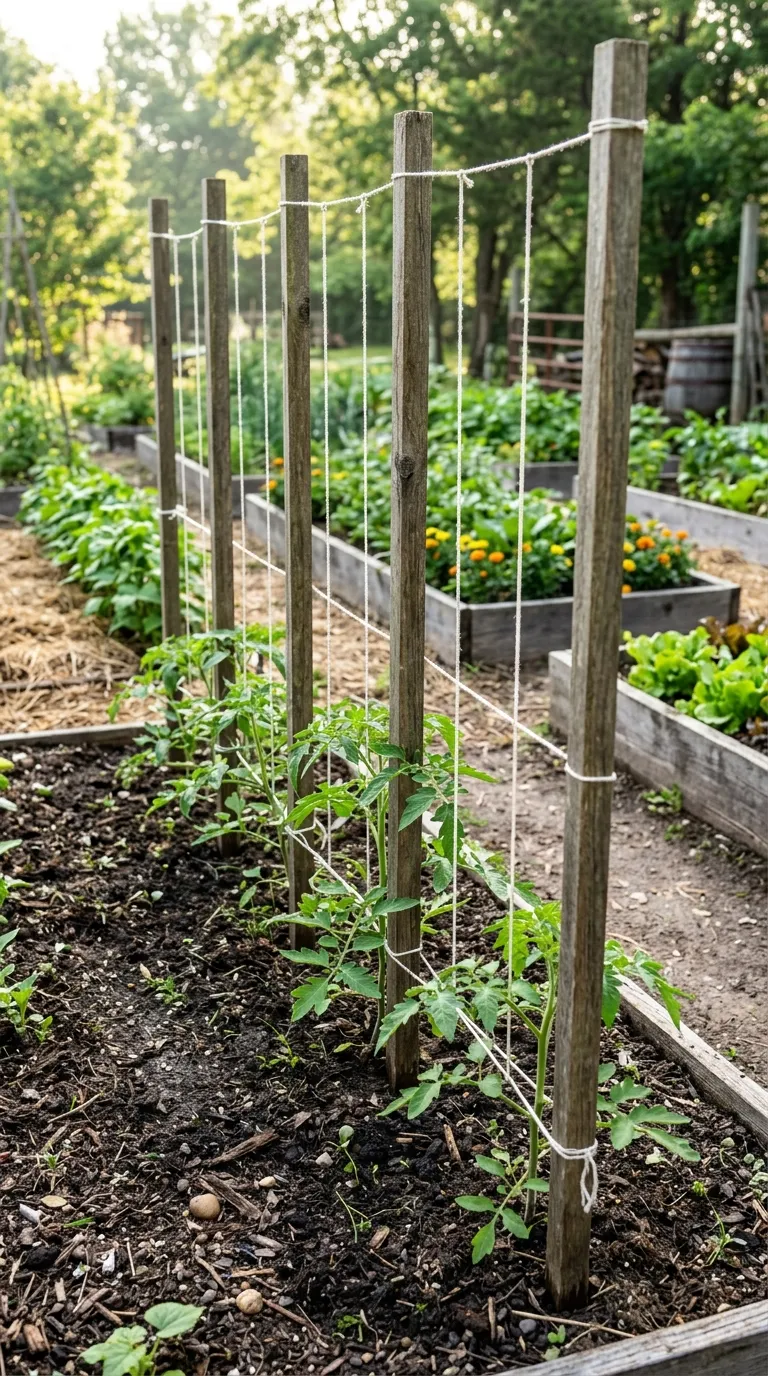
The simplest trellis sometimes proves the most effective: sturdy stakes driven into soil with strong twine strung between them in vertical or crisscross patterns. This flexible system adapts to any garden layout or plant requirement.
Use metal stakes, wooden posts, or even thick bamboo as anchors, then tie weather-resistant string at regular intervals. In my experience, the tricky part is maintaining proper tension—strings need tautness to support climbing weight without sagging mid-season.
This temporary solution works beautifully for annual vegetables and flowers, allowing you to reconfigure layouts each growing season. The minimal visual impact keeps attention focused on plants themselves rather than supporting structures.
8. Window Frame Garden Art
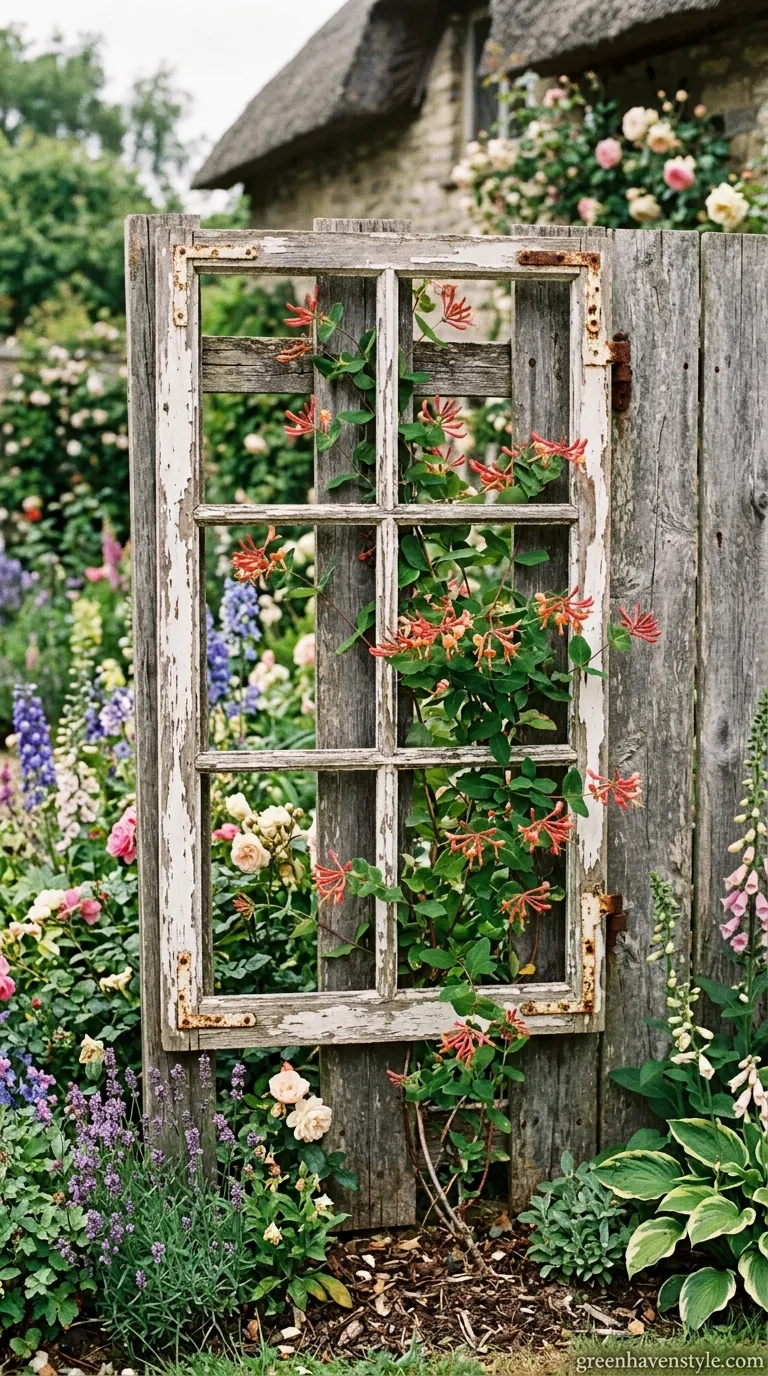
Salvaged window frames bring architectural interest when mounted vertically or arranged in creative configurations. Remove glass for safety and plant accessibility, leaving frames as decorative grid structures.
The divided panes create natural climbing sections that guide plant growth into organized patterns. I’ve observed that these repurposed pieces work especially well near entrances or against blank walls where they add dimension and vintage character.
Paint frames to match trim colors or embrace peeling paint for shabby chic appeal. As vines fill the openings, they create the illusion of living windows that blur boundaries between structure and nature in unexpectedly beautiful ways.
9. Cattle Panel Arch
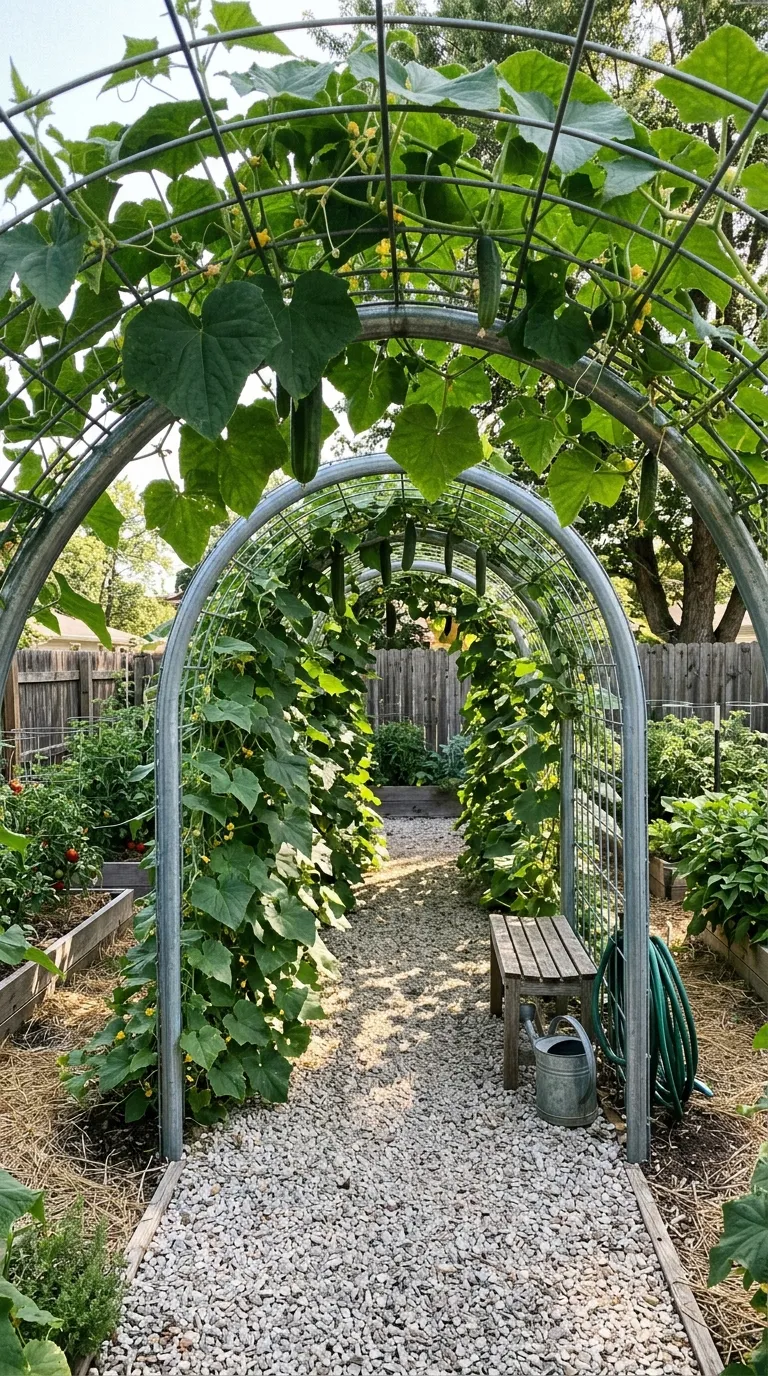
Heavy-gauge livestock panels bent into arched tunnels create impressive garden walkways that support vigorous climbers. Their substantial construction handles considerable weight from mature vines without collapsing or shifting.
Secure panel ends deeply into soil or attach to buried posts for stability. The tall clearance allows comfortable walking beneath while maximizing vertical growing space. From what I’ve seen, these structures become garden destinations that invite exploration and create magical transitional spaces.
Train cucumbers, pole beans, or flowering vines to create living tunnels that provide shade, visual interest, and abundant harvests. The galvanized finish withstands weather for years, making this investment worthwhile for serious gardeners planning permanent installations.
10. Wooden Obelisk Tower
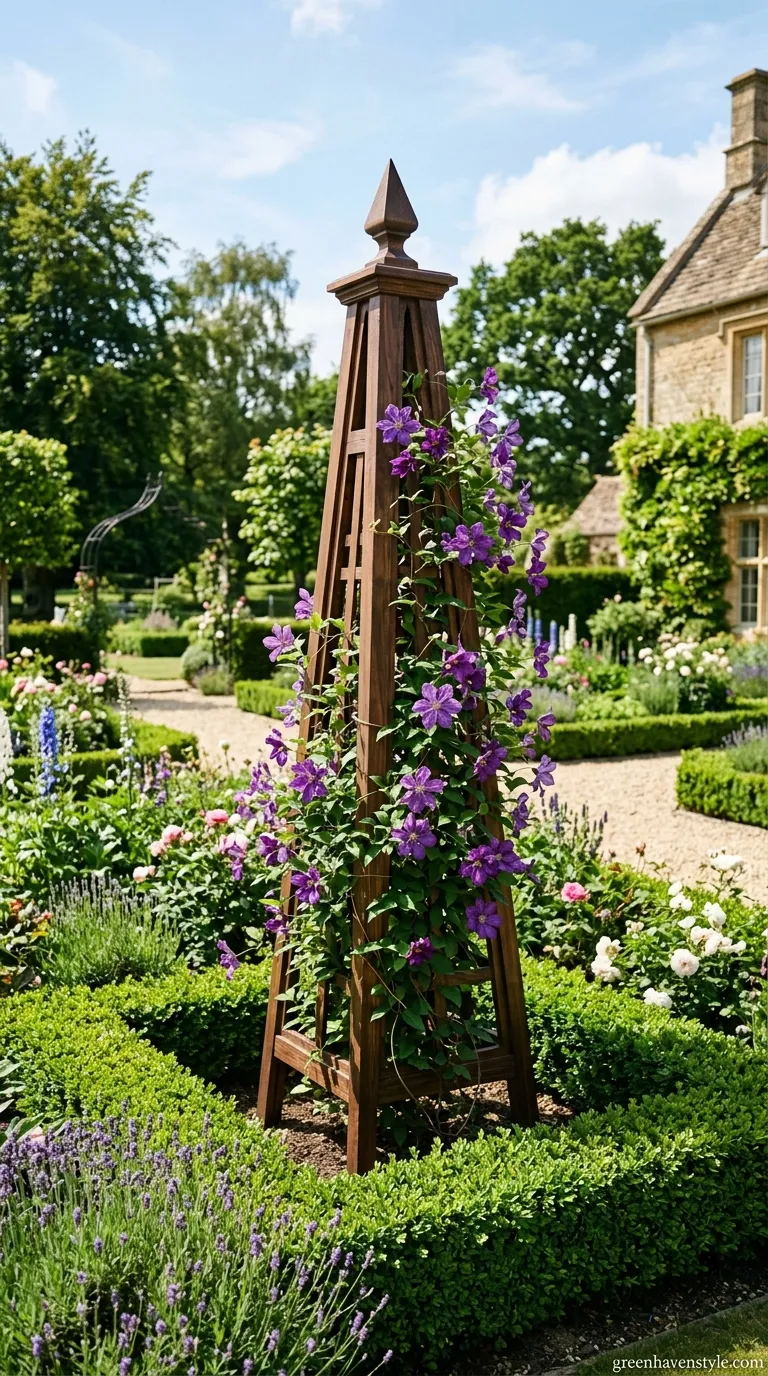
Four wooden stakes joined at the top and connected with horizontal cross-pieces create elegant pyramid structures that anchor formal garden beds. Their vertical emphasis draws the eye upward while occupying minimal ground space.
Stain or paint obelisks to coordinate with landscape color schemes. I’ve noticed these work particularly well as focal points in symmetrical plantings or positioned at corners where beds meet pathways, defining spaces while adding architectural interest.
The tapered shape naturally guides plant growth upward and outward, creating lush columns of foliage and flowers. Place obelisks centrally in containers or border plantings for maximum visual impact that combines structure with organic beauty.
11. Rope Net Climbing Wall
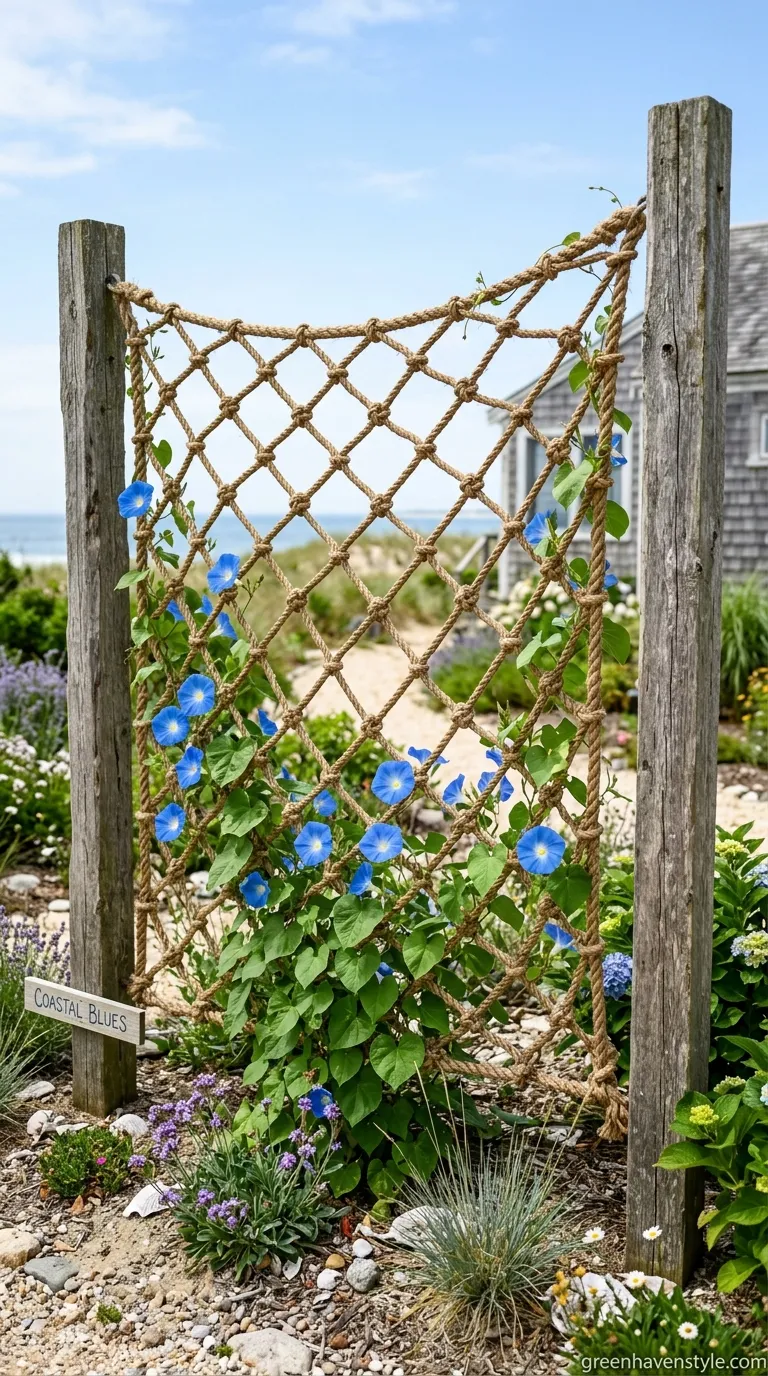
Thick rope knotted into net patterns and stretched between anchor points creates flexible climbing surfaces with nautical charm. This approach works beautifully in coastal gardens or anywhere you want casual, beach-inspired aesthetics.
Choose weather-resistant rope materials that withstand moisture and UV exposure without deteriorating quickly. The soft texture feels gentle on plant stems while providing adequate grip for tendrils and twining vines to secure themselves naturally.
I’ve found this design particularly suitable for lightweight annual vines like morning glories or black-eyed Susan vine. The rope’s give accommodates plant movement in breezes without damaging stems, creating dynamic vertical gardens that sway gracefully.
12. Fan-Shaped Wall Trellis
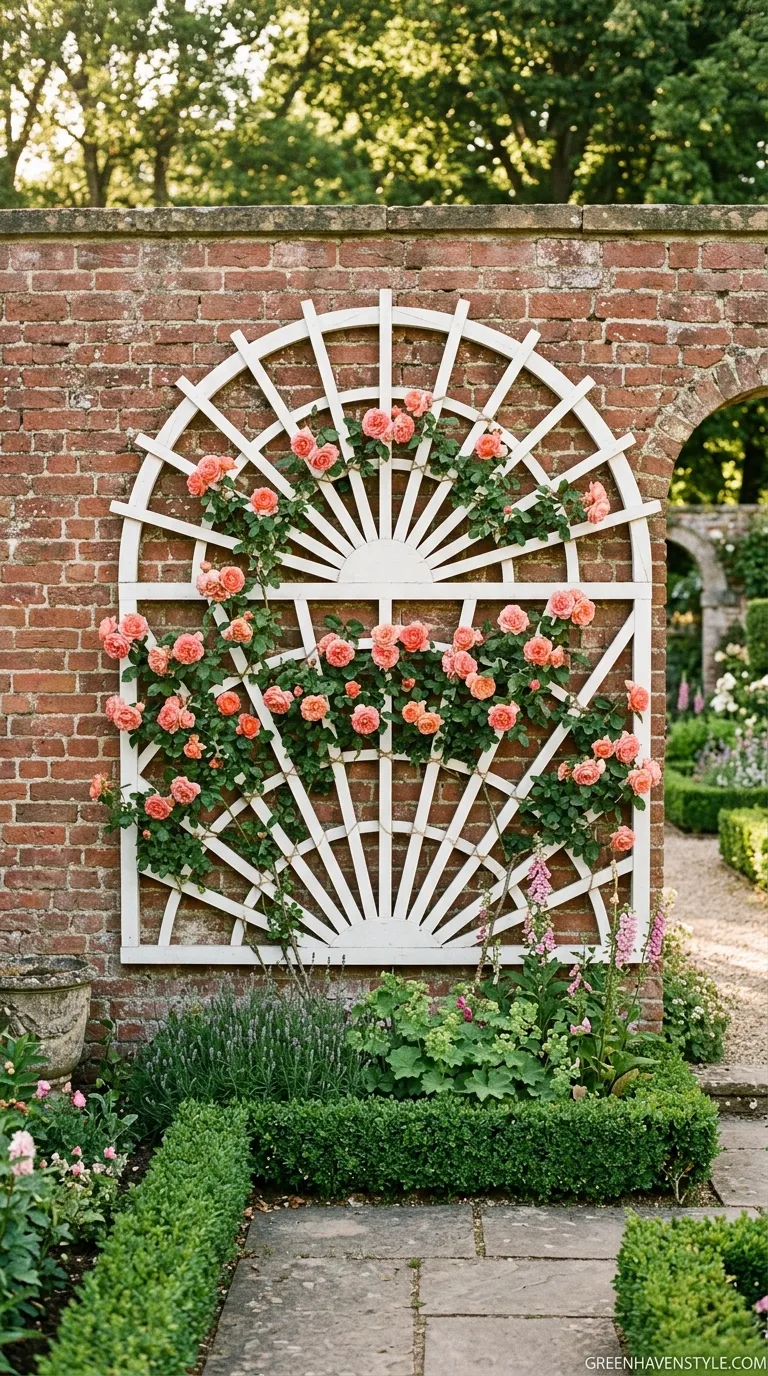
Wooden slats arranged in radiating fan patterns mounted against walls or fences create classic European-style supports for espalier training. The formal geometry brings refined elegance to any garden setting.
This traditional design excels for training fruit trees, roses, or ornamental vines into controlled shapes that maximize sun exposure and air circulation. The symmetrical pattern guides growth direction while creating living art against vertical surfaces.
In my experience, securing the fan base firmly and spacing slats evenly ensures balanced plant distribution as growth progresses. Paint or stain wood to complement architecture, creating cohesive design that enhances both building and landscape aesthetics.
13. Bicycle Wheel Upcycle
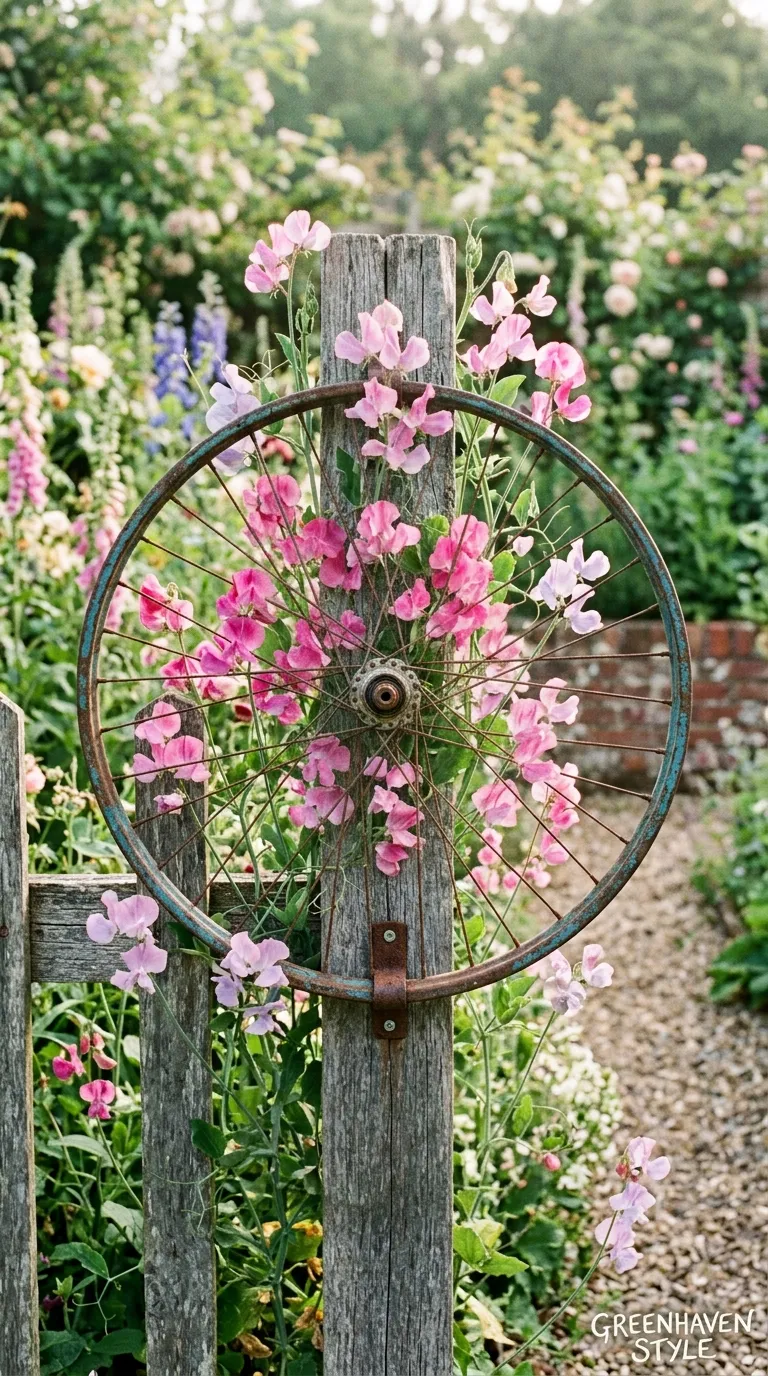
Vintage bicycle wheels mounted vertically create circular climbing frames with spoke patterns that guide vine growth into medallion shapes. This creative repurposing adds whimsical focal points while supporting lightweight climbers.
The wheel’s radial design naturally distributes plant coverage evenly around the circle, creating balanced visual compositions. I’ve experimented with leaving wheels their original colors or painting them to coordinate with garden themes—both approaches deliver charming results.
Attach wheels to fence posts, walls, or freestanding stakes, then plant morning glories, sweet peas, or other annual vines at the base. As tendrils weave through spokes, they create living wreaths that celebrate creative reuse and sustainable gardening practices.
Conclusion
Building your own garden supports proves that beautiful, functional structures don’t require professional carpentry skills or big budgets. These DIY garden trellis ideas demonstrate how imagination and basic materials combine to create vertical growing spaces that transform ordinary gardens into extraordinary landscapes.
I’ve seen how projects like these build confidence while adding personal touches that reflect individual style and creativity. The process itself becomes rewarding—measuring, cutting, assembling, then watching plants climb structures you built with your own hands.
Start with whichever design speaks to your skill level and available materials. Whether you choose simple stakes and string or more ambitious arched tunnels, each project adds vertical interest and functional beauty to your outdoor space.
Save this post to your Pinterest boards for future building inspiration, and don’t hesitate to modify these ideas to suit your unique garden needs. Share your completed projects with fellow gardening friends who might need that gentle push to try something new—your garden awaits its vertical transformation!


