
15 DIY Vertical Herb Garden Ideas for Any Wall
Running out of space to grow your favorite herbs doesn’t mean you have to give up on fresh basil, mint, or cilantro. Vertical herb garden ideas offer brilliant solutions for apartment dwellers, urban gardeners, and anyone looking to maximize their growing area without sacrificing style or function.
I’ve noticed that vertical gardening not only saves precious floor space but also turns blank walls and fences into lush, productive focal points. Whether you’re working with a tiny balcony, a narrow kitchen wall, or a sunny patio corner, growing upward instead of outward opens up endless possibilities for cultivating herbs you use every day.
15 Vertical Herb Garden Ideas
From simple wall-mounted planters to innovative ladder shelves and pocket gardens, these ideas prove you don’t need a sprawling backyard to enjoy homegrown flavor and fragrance. You’ll discover creative setups that fit any budget, skill level, and aesthetic preference while making the most of every square inch.
1. Pallet Wall Planter 
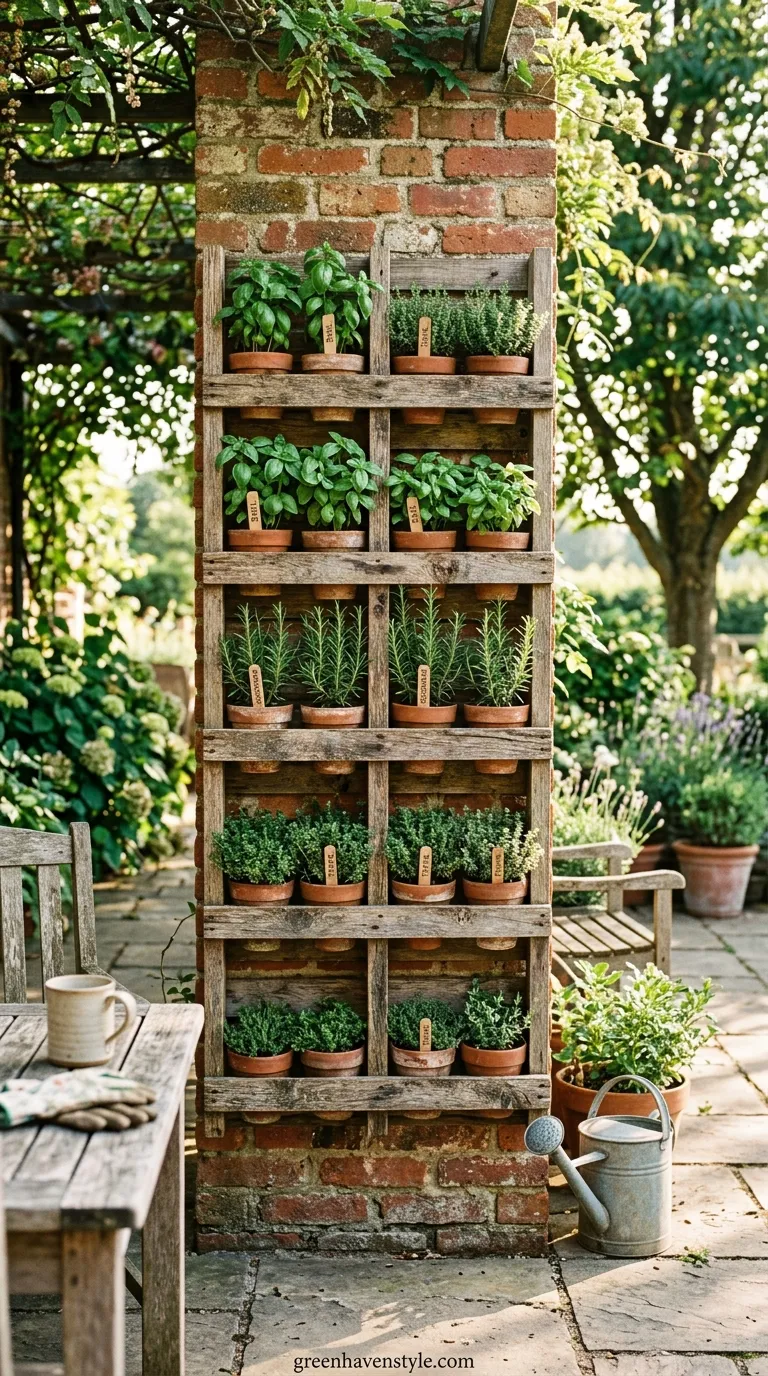
Reclaimed wooden pallets make excellent vertical planters when mounted against a wall or fence, creating rustic charm while holding multiple herb pots. This budget-friendly option works beautifully on patios, balconies, or even indoors with proper lighting and drainage.
I’ve seen this setup transform bare outdoor walls into thriving herb stations with minimal effort and expense. Simply attach small pots or fabric pouches to the pallet slats, ensuring each herb gets adequate sunlight and water without crowding its neighbors.
2. Hanging Gutter Garden
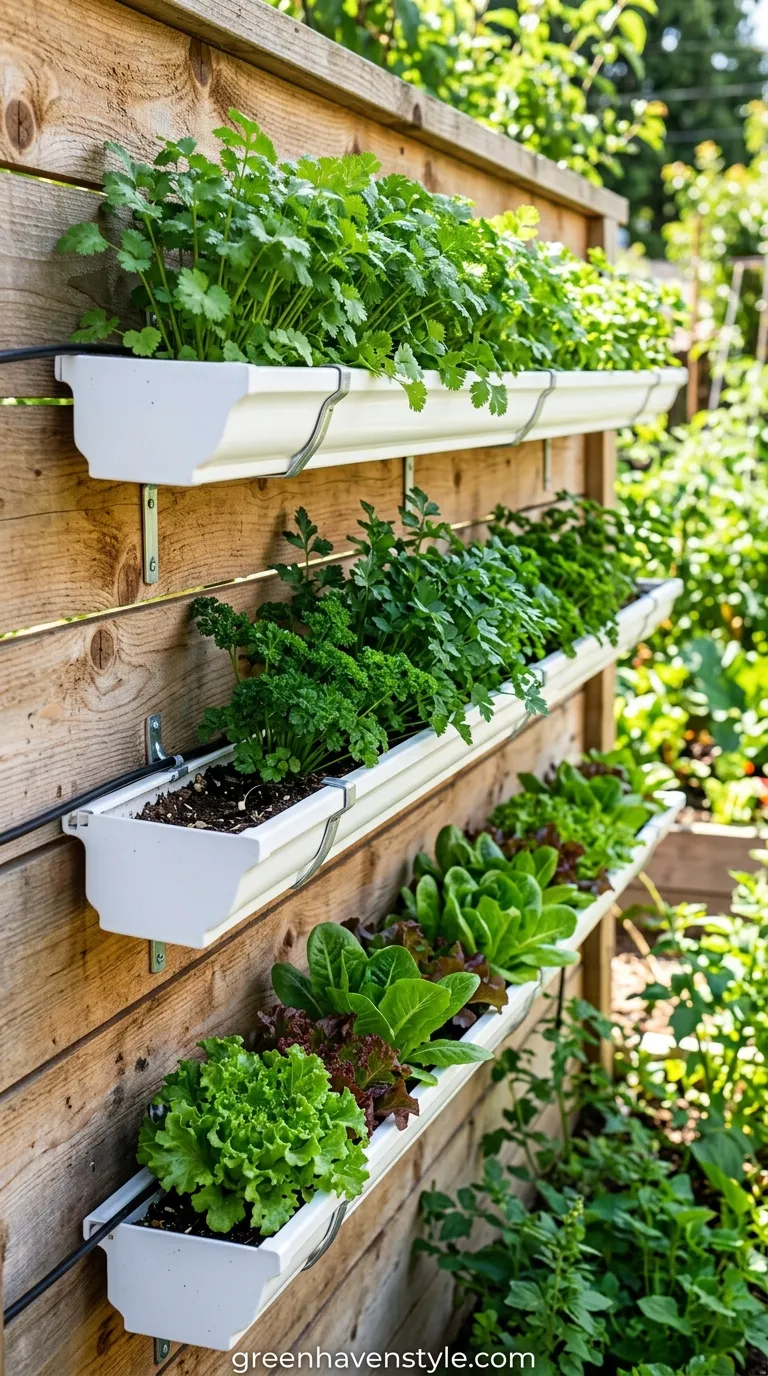
Clean white or galvanized metal gutters mounted horizontally on a sunny wall create sleek, modern herb rows perfect for compact spaces. This space-saving design allows you to grow several varieties in a linear fashion while keeping everything at eye level for easy harvesting.
In my experience, gutter gardens work especially well for shallow-rooted herbs like lettuce, cilantro, and parsley that don’t need deep soil. Drill drainage holes every few inches, secure them firmly to your wall, and watch your vertical herb collection flourish with minimal maintenance.
3. Tiered Ladder Shelf
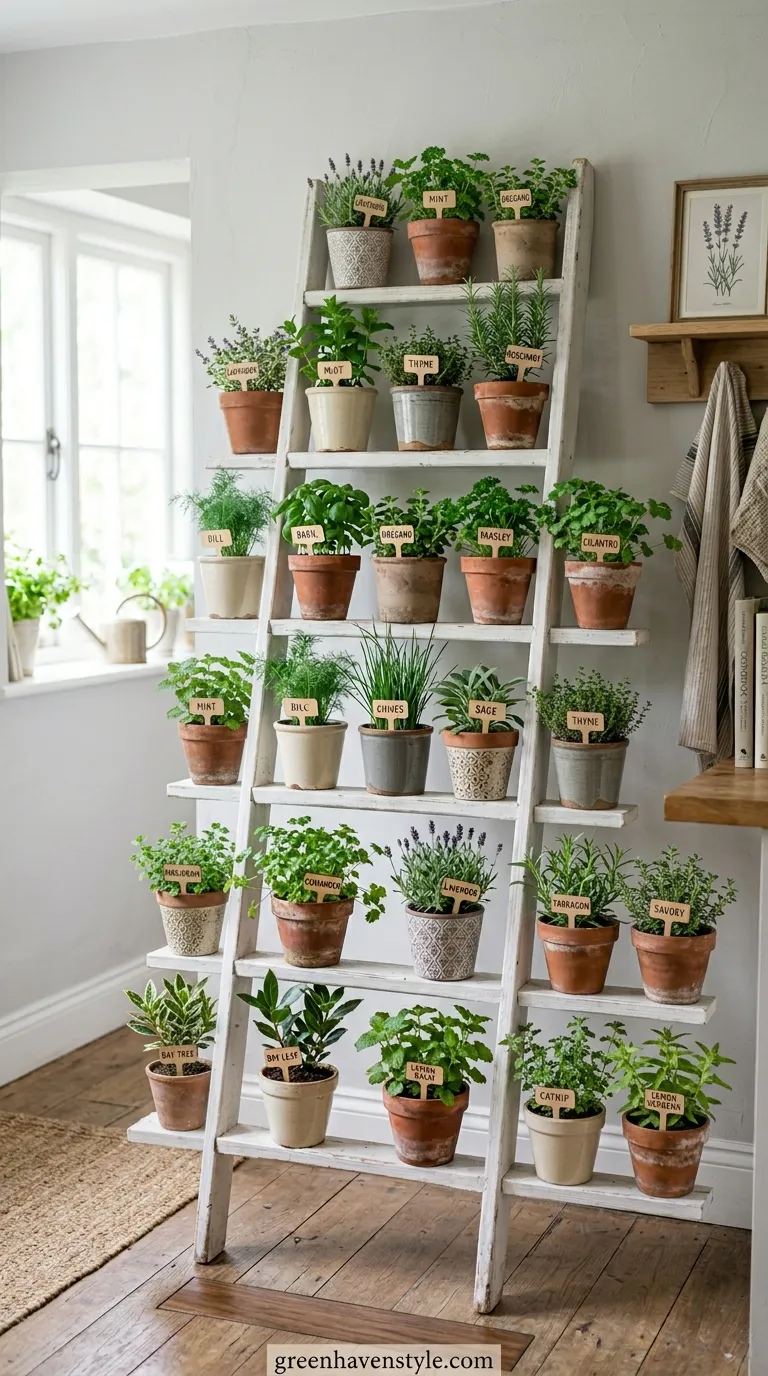
A wooden or metal ladder positioned against a wall or fence provides graduated levels for displaying potted herbs in varying heights and sizes. This versatile structure adds visual interest while keeping your plants organized and accessible from top to bottom.
I’ve found that ladder gardens suit both indoor and outdoor settings, offering flexibility to move your herbs toward sunlight as seasons change. Paint the ladder to match your décor, or leave it natural for a farmhouse-inspired look that blends function with aesthetic appeal.
4. Pocket Wall Organizer
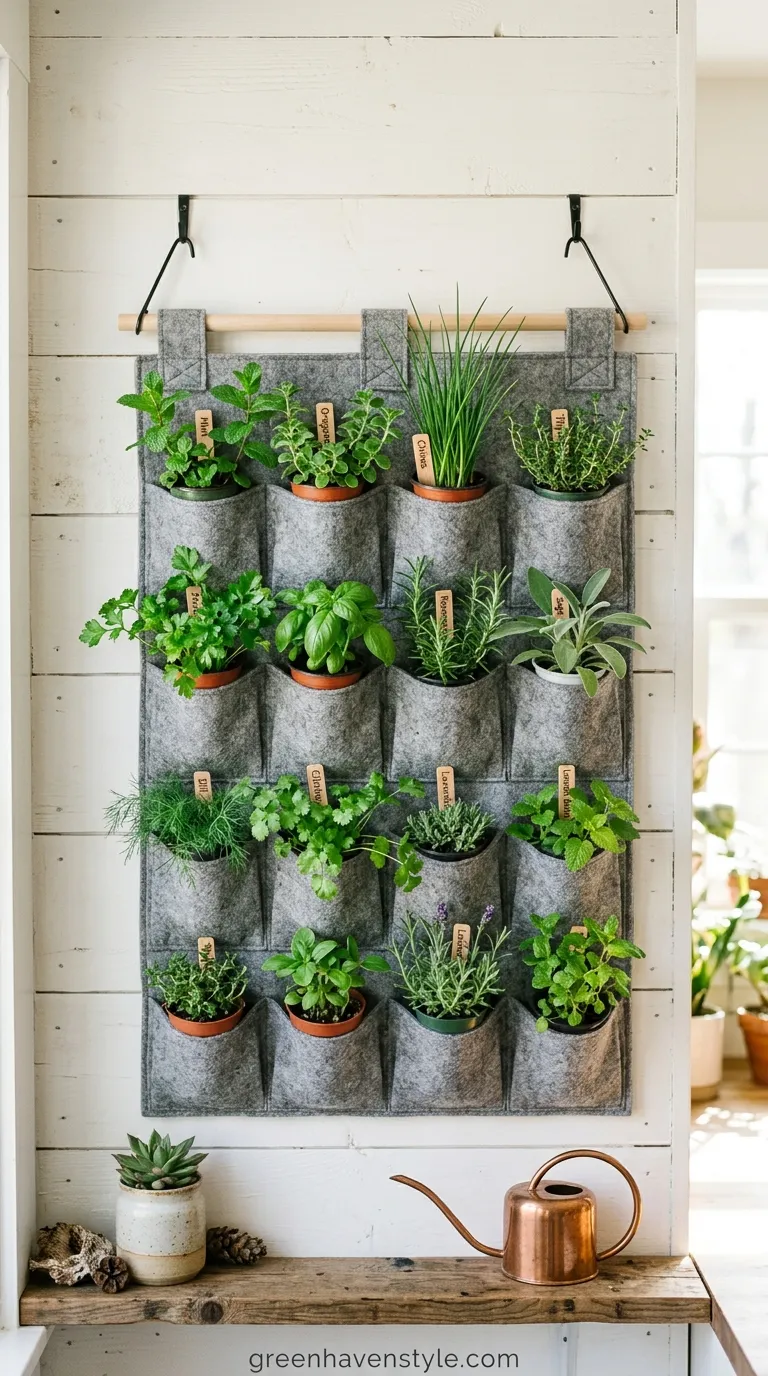
Fabric or felt pocket organizers originally designed for shoes or tools adapt beautifully into vertical planters that hang on walls, fences, or railings. Each pocket becomes a mini pot for individual herbs, creating a living tapestry of greens that’s easy to water and harvest.
From what I’ve seen, this method works best with smaller herbs or starter plants that don’t require extensive root depth. Choose weather-resistant materials for outdoor use, and arrange your pockets to ensure each plant receives adequate light without shading its neighbors.
5. Wooden Crate Stack
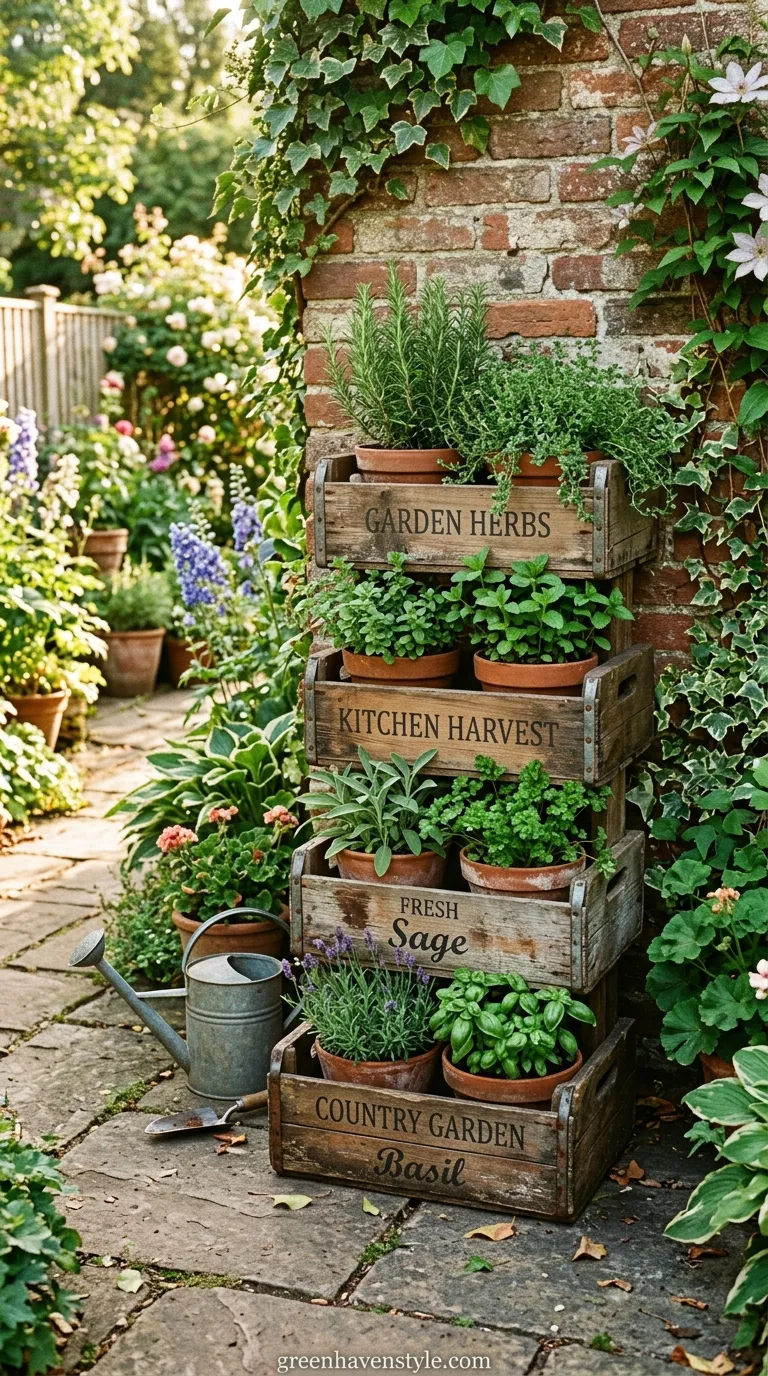
Stacking vintage wooden crates vertically and securing them to a wall or placing them on a stable surface creates charming cubby-style shelving for herb pots. This modular approach lets you customize the height and arrangement to fit your space and plant collection perfectly.
I’ve experimented with both painted and natural finishes, and both add character to patios, balconies, or kitchen corners. Line each crate with plastic or use individual pots inside to protect the wood from water damage while maintaining that rustic, farmhouse aesthetic.
6. Metal Grid Panel
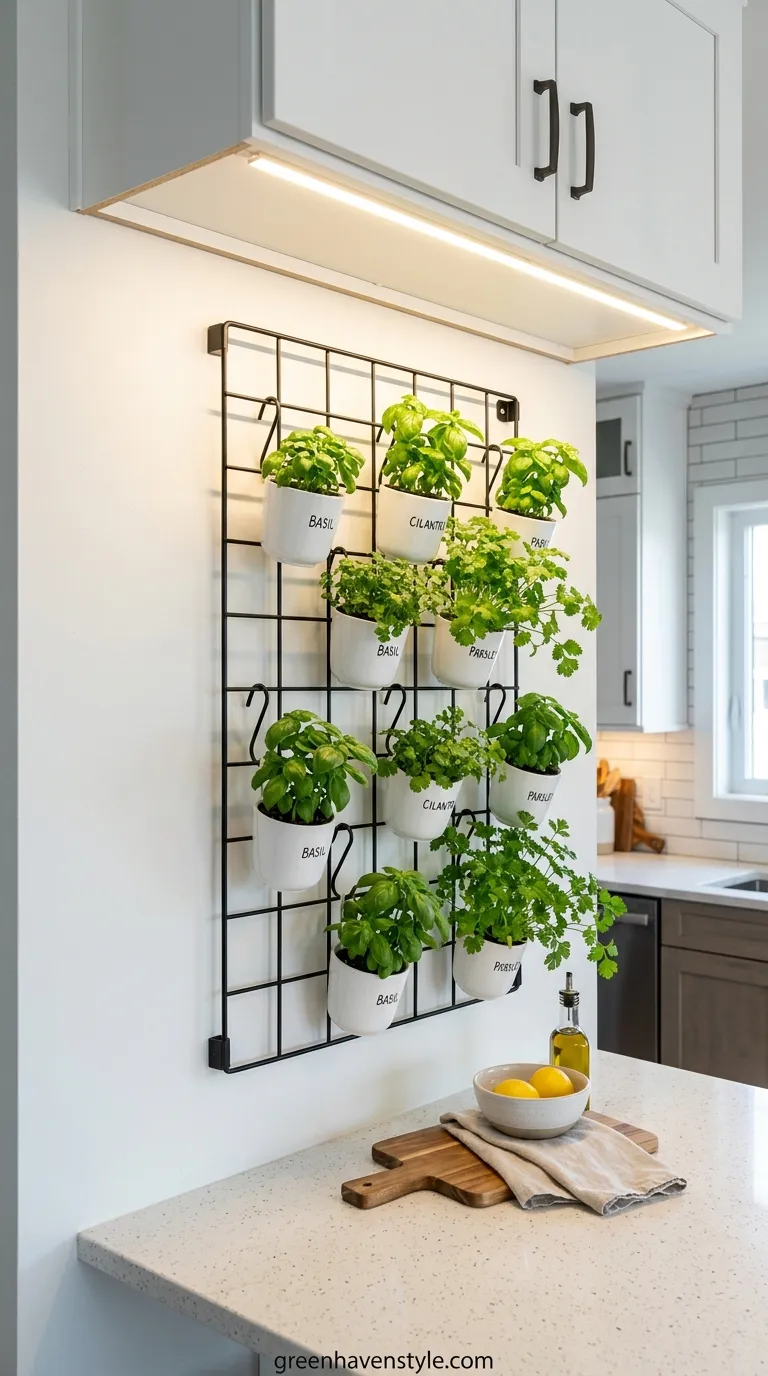
Black or white metal grid panels mounted on walls serve as versatile backdrops for hanging small planters using hooks or clips. This minimalist design keeps herbs visible and accessible while maintaining clean lines and a contemporary look that suits modern homes.
I’ve noticed that grid systems offer incredible flexibility since you can rearrange pots as plants grow or lighting conditions change. Pair them with matching containers for a cohesive appearance, or mix materials and colors to create an eclectic vertical growing space that reflects your personal style.
7. Bamboo Trellis Garden
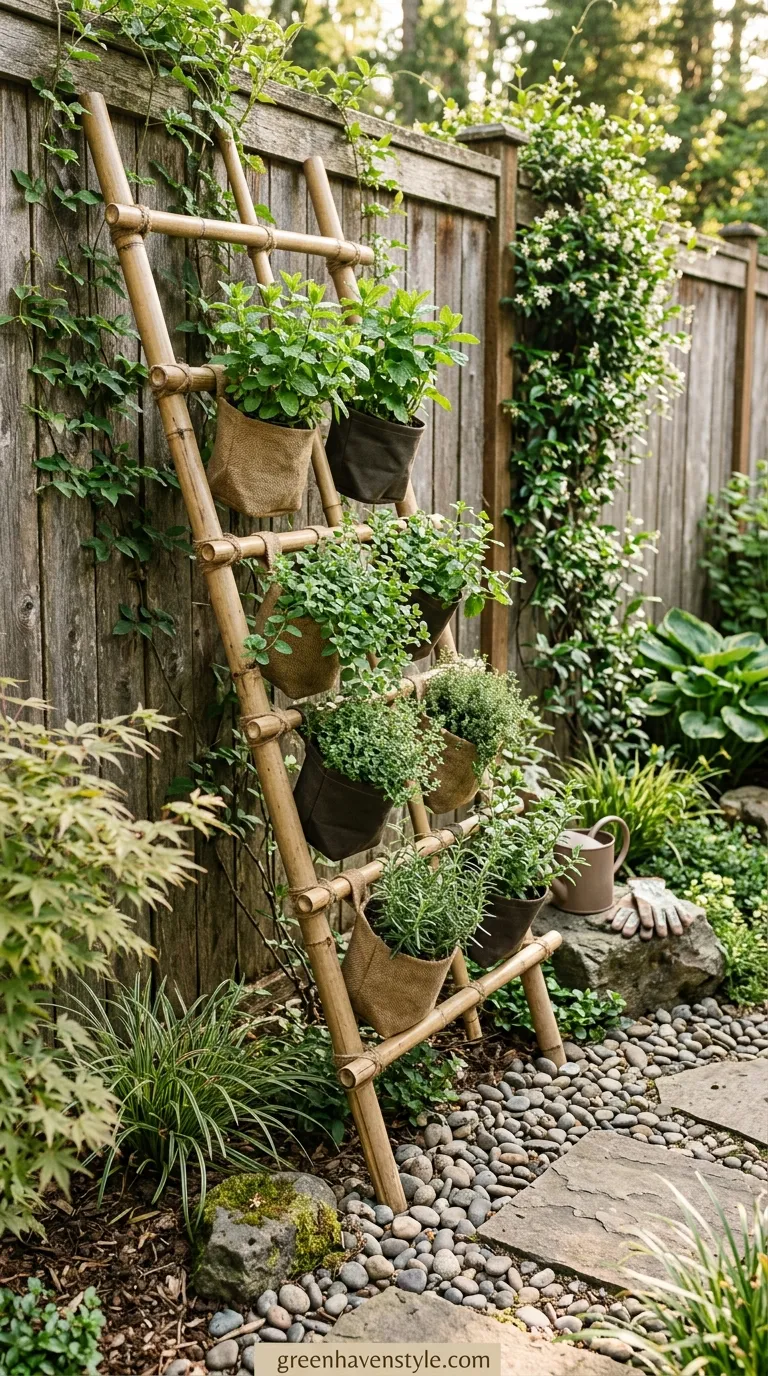
Natural bamboo trellises leaned against walls or fences provide an organic framework for climbing herbs like mint or trailing varieties of oregano and thyme. This eco-friendly structure blends seamlessly into outdoor spaces while supporting healthy upward growth and air circulation.
In my experience, bamboo adds a zen-like simplicity to gardens and balconies, creating texture and height without overwhelming smaller areas. Secure the trellis firmly, attach small pots or pouches at intervals, and enjoy watching your herbs climb and cascade in beautiful, natural patterns.
8. Vertical Tower Planter
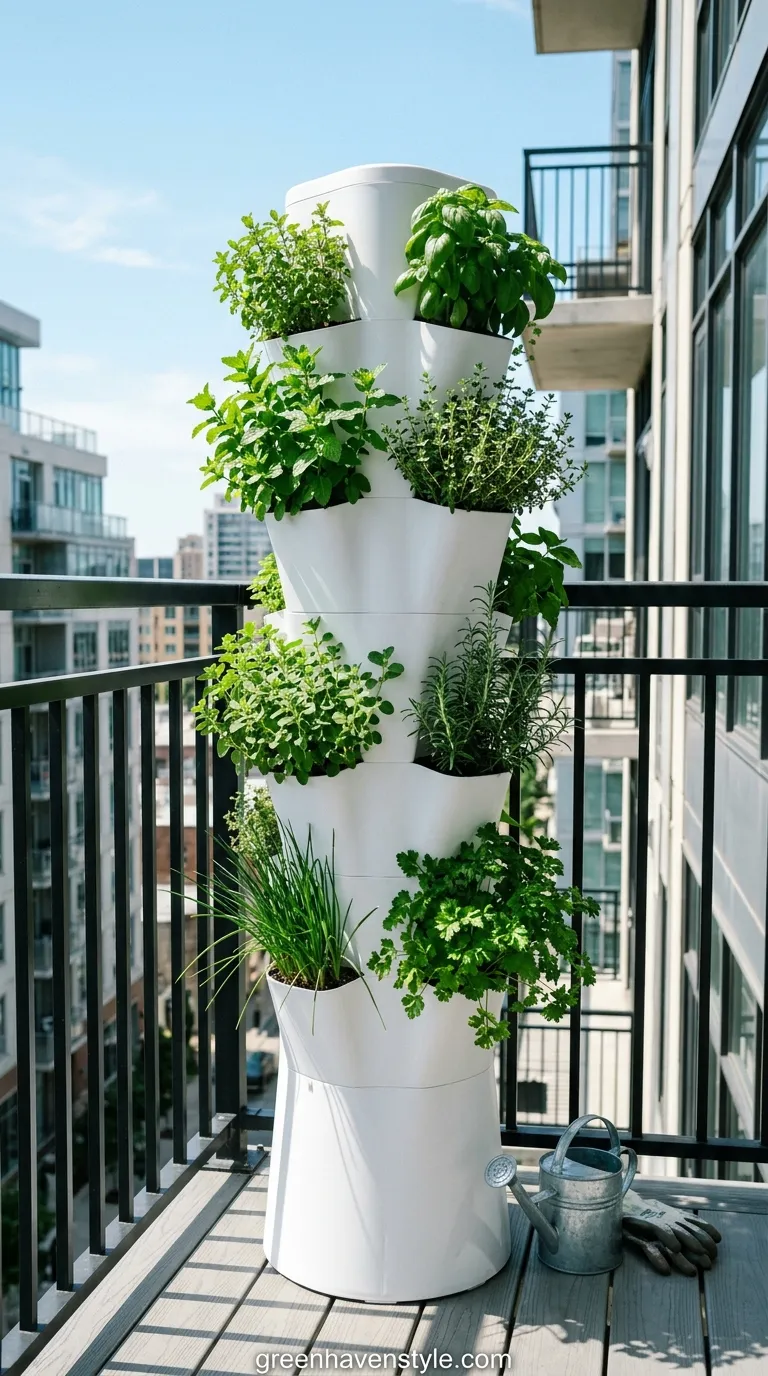
Freestanding tower planters with stacked pockets or shelves maximize growing space in the smallest footprints, making them ideal for balconies and patios. These self-contained units often include built-in drainage and rotation features for even light distribution and healthy plant development.
I’ve found that tower systems work particularly well for renters or anyone who wants a portable herb garden that moves with the seasons or relocations. Choose models with sturdy bases and UV-resistant materials, and position them where they’ll receive consistent sunlight throughout the day.
9. Pegboard Herb Display
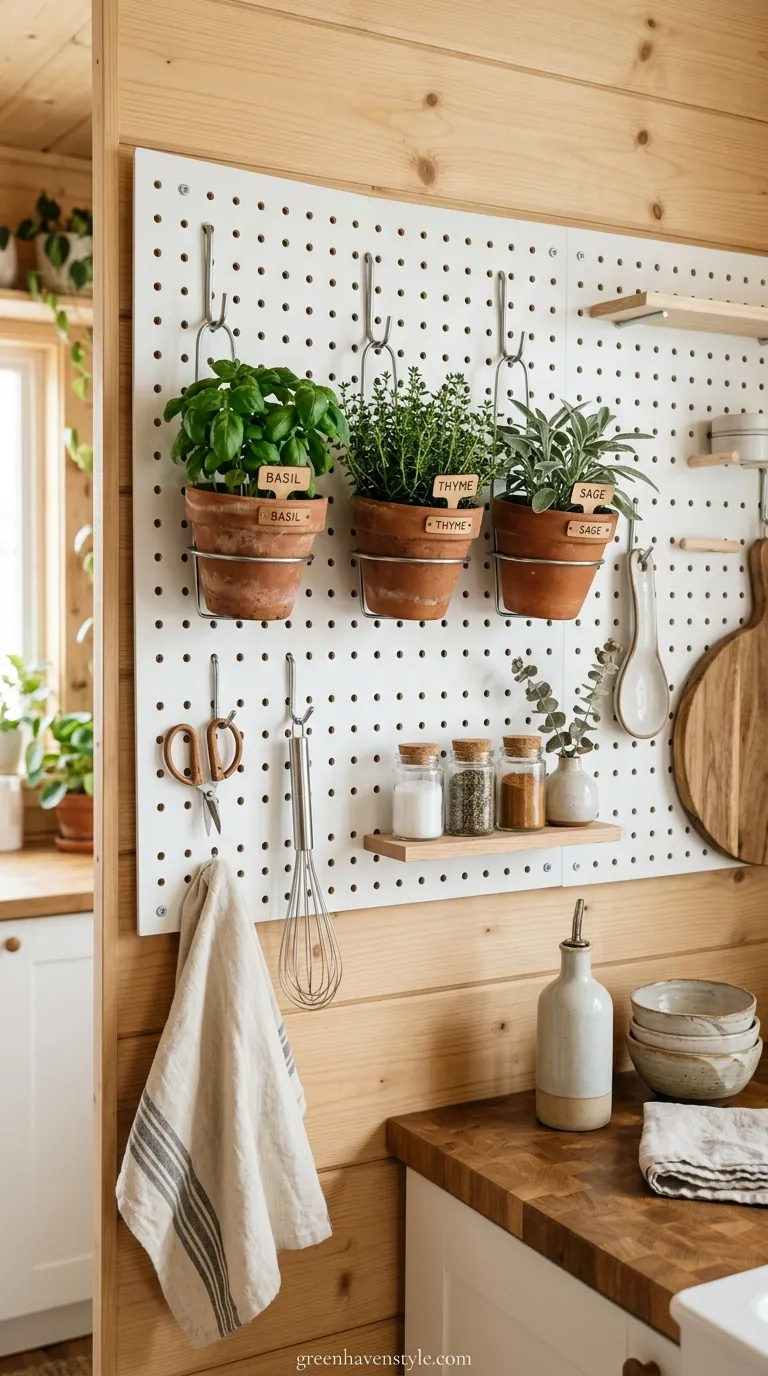
Painted pegboards mounted to kitchen or patio walls transform into customizable herb holders using hooks and small containers that slot into pre-drilled holes. This industrial-chic option keeps your cooking herbs within arm’s reach while adding functional art to your space.
From what I’ve seen, pegboards offer unmatched versatility since you can adjust hook placement as your collection grows or changes with the seasons. Paint the board in bold colors for a statement piece, or keep it neutral to let the greenery take center stage.
10. Repurposed Shutter Garden
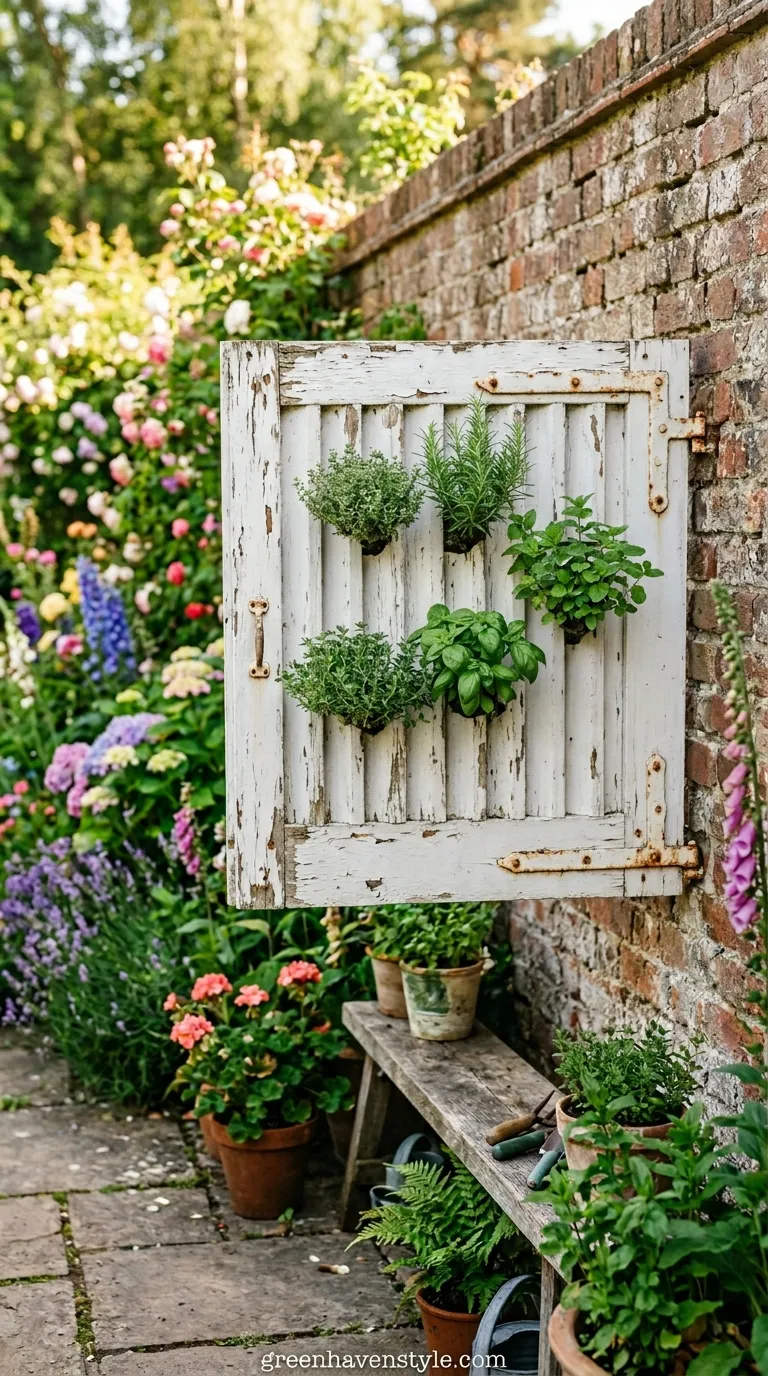
Old wooden shutters mounted horizontally or vertically create instant shelving for small herb pots slotted between the slats. This vintage-inspired idea brings architectural charm to gardens, patios, and even indoor spaces when treated with weatherproof finishes.
I’ve tried both horizontal and vertical orientations, and both create stunning focal points with minimal effort or expense. Secure the shutter firmly to your wall or fence, choose pots that fit snugly between slats, and enjoy the cottage-style aesthetic that adds character to any setting.
11. Mason Jar Wall Mount
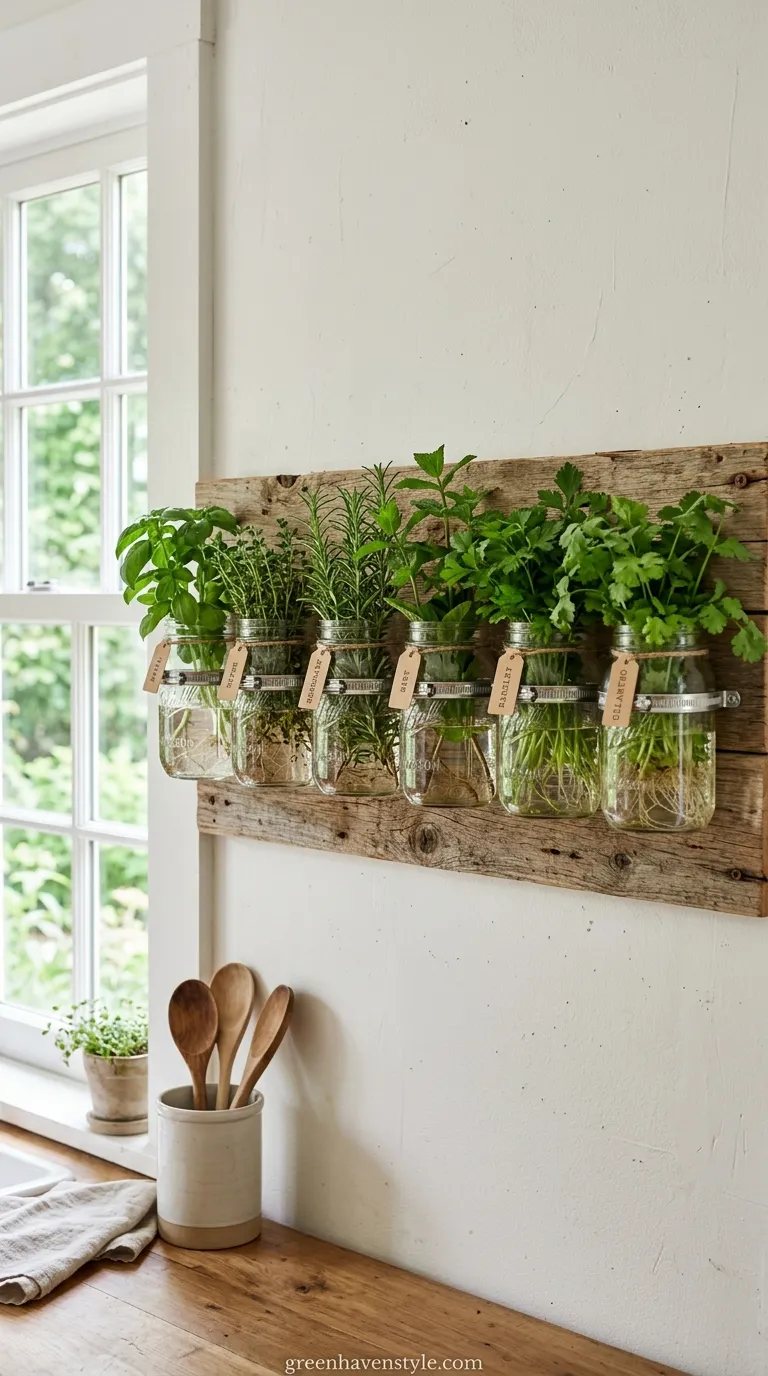
Clear mason jars attached to wooden boards or metal strips create a simple yet charming vertical herb display perfect for kitchens and small outdoor spaces. The transparency of glass lets you monitor root health and water levels while adding a farmhouse touch to your décor.
In my experience, mason jar gardens work best with herbs that tolerate shallow growing conditions and don’t mind being visible from all angles. Mount them near a sunny window or on a protected patio wall, and enjoy fresh herbs just steps from your cooking space.
12. Hanging Chain Planter
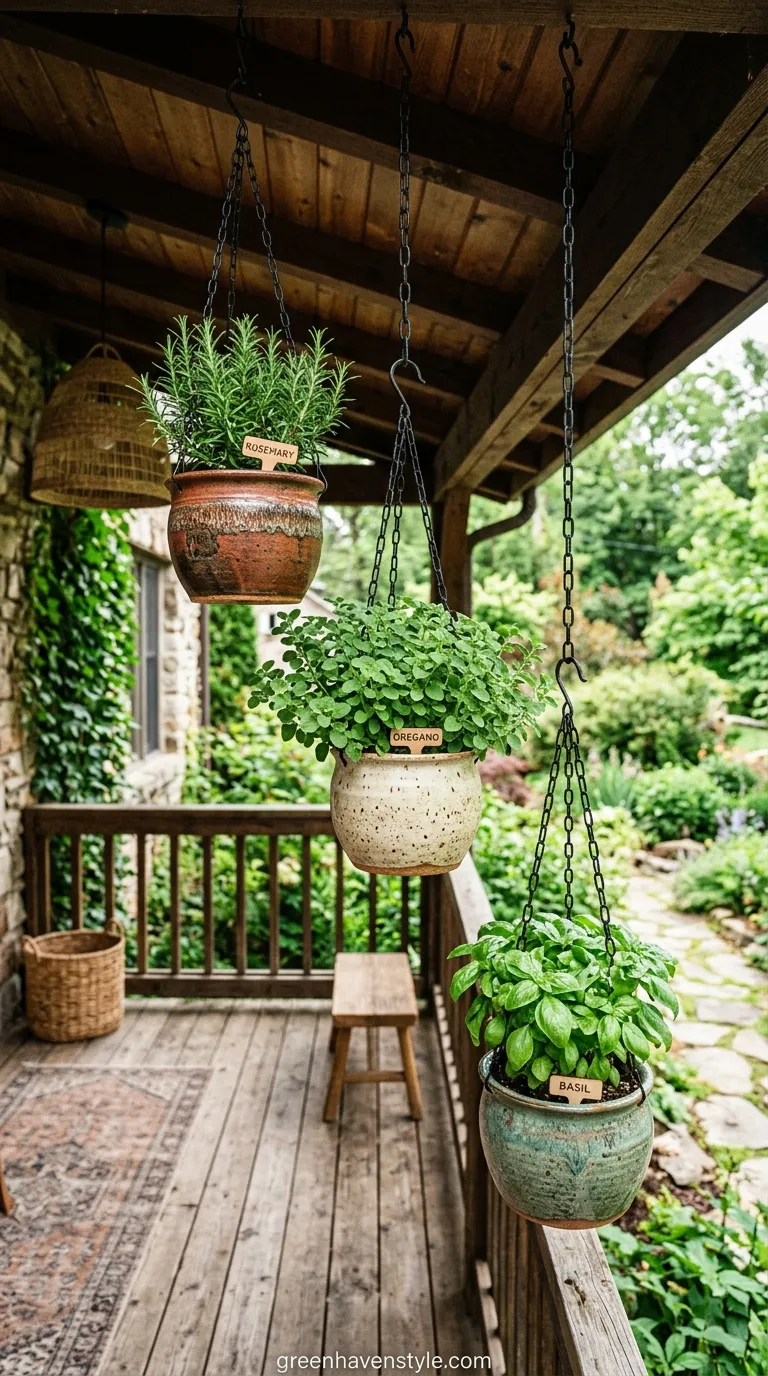
Tiered planters suspended from sturdy chains or ropes create cascading layers of herbs that save floor space while adding vertical drama to porches and balconies. This eye-catching arrangement draws the gaze upward and makes the most of overhead space often left unused.
I’ve observed that hanging systems work beautifully in corners or near railings where floor planters would obstruct walkways or views. Choose containers with good drainage, stagger heights for visual interest, and adjust chain lengths to ensure each tier receives adequate sunlight.
13. Copper Pipe Planter
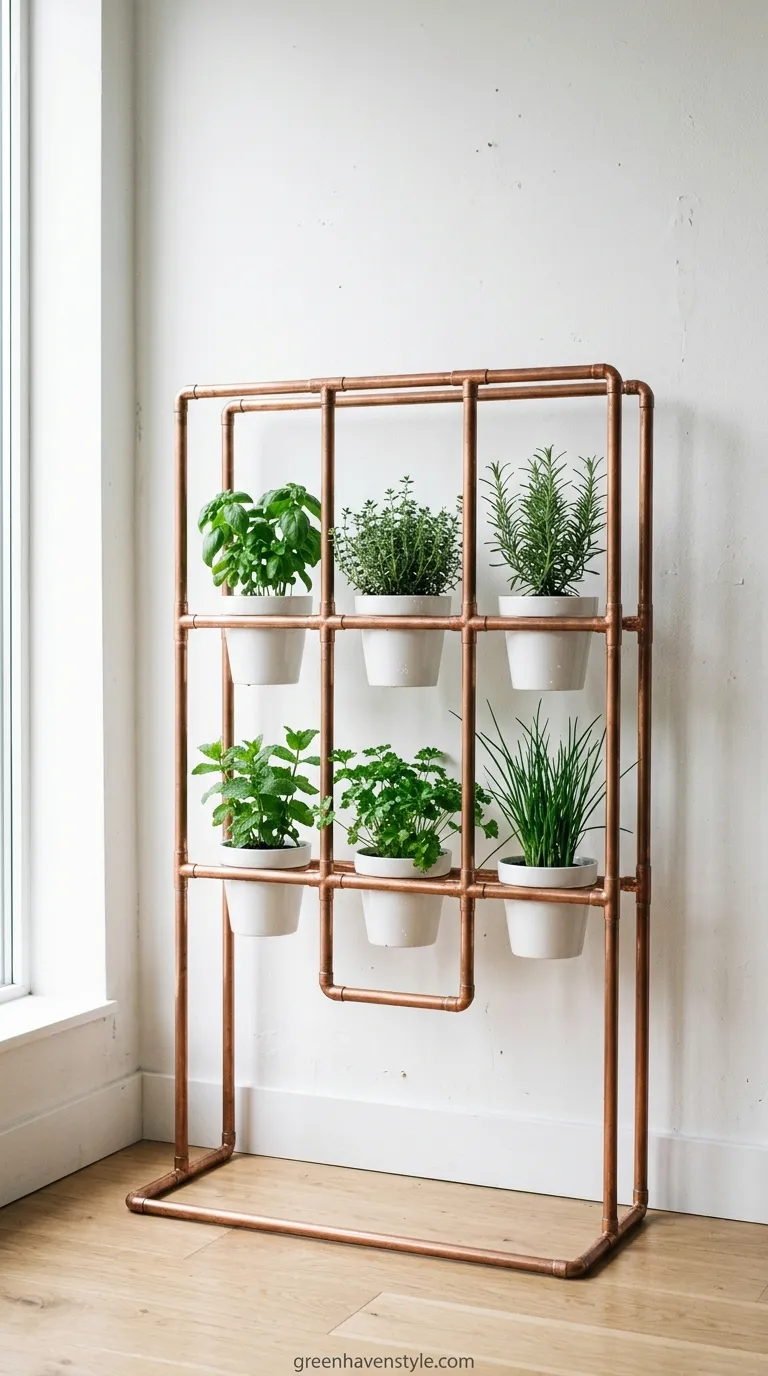
Custom-built frames using copper or PVC pipes form modern geometric structures that hold pots at varying heights and angles. This DIY-friendly project lets you design a vertical growing system tailored to your exact space dimensions and aesthetic preferences.
From what I’ve seen, pipe planters appeal to those who appreciate clean lines and industrial design elements in their gardens or interiors. The materials are affordable and widely available, and the finished piece adds sculptural interest while keeping your herbs organized and accessible.
14. Magnetic Fridge Garden
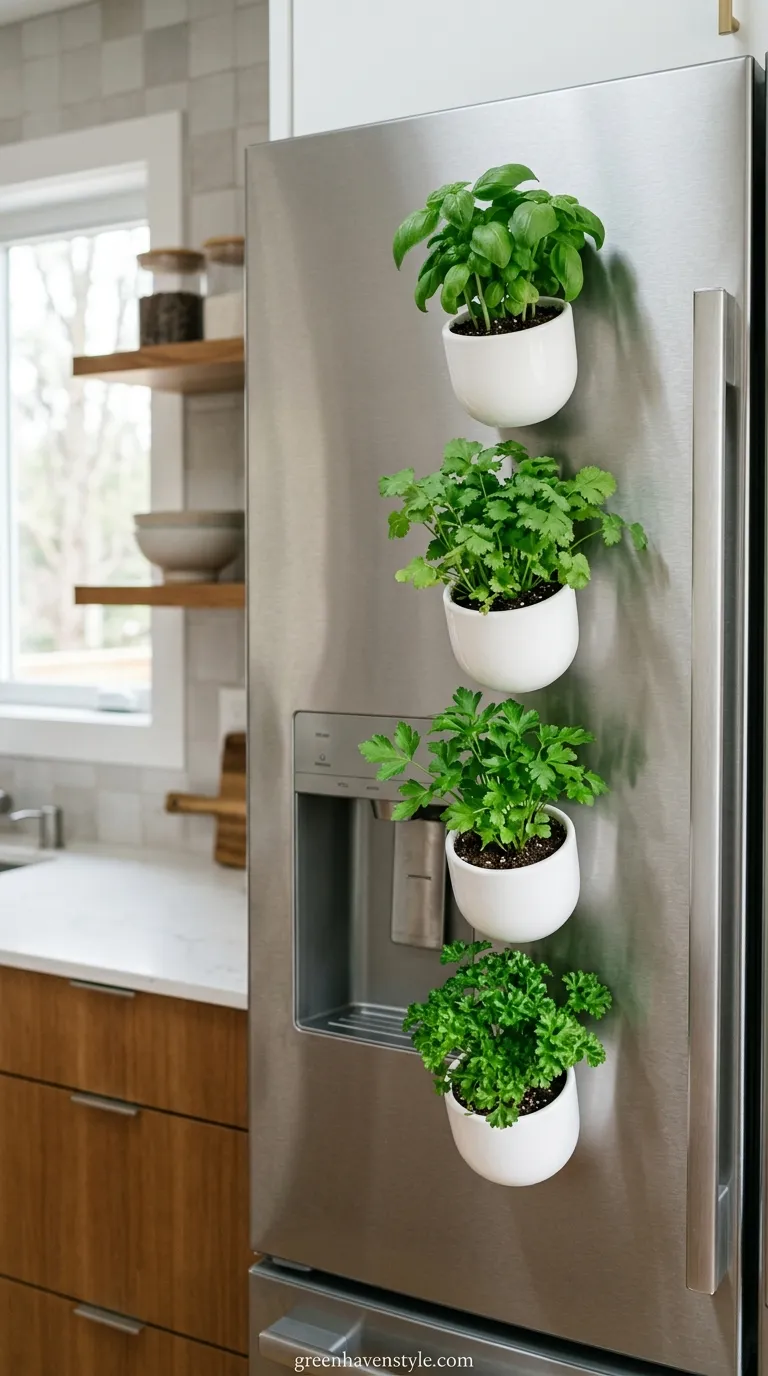
Small magnetic planters attached directly to refrigerator doors or metal wall panels bring fresh herbs into the heart of your kitchen without sacrificing counter or windowsill space. This ultra-compact solution keeps your most-used herbs within immediate reach while cooking.
I’ve found that magnetic gardens work best with compact herb varieties and shallow-rooted plants that thrive in small containers. Choose lightweight pots with strong magnets, ensure adequate drainage, and position them where they’ll receive natural light from nearby windows or supplemental grow lights.
15. Living Wall Panel
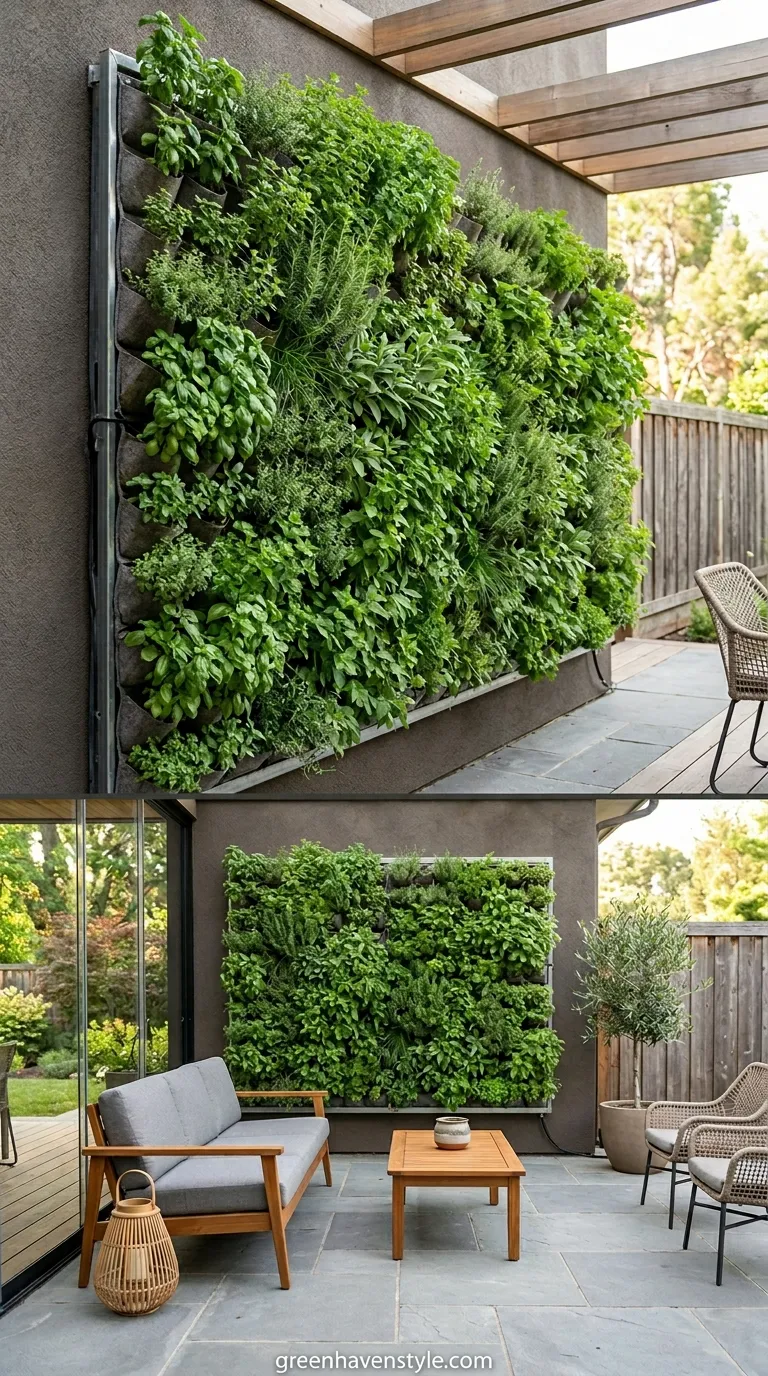
Pre-made vertical garden panels with built-in pockets or planting slots create lush, professional-looking herb walls that transform blank spaces into living art. These modular systems often include irrigation features and are designed for both indoor and outdoor installation.
In my experience, living wall panels deliver the most dramatic visual impact and can accommodate larger herb collections than single planters or DIY solutions. They require initial investment but pay off in ease of maintenance, aesthetic appeal, and the sheer volume of fresh herbs you can grow in a compact vertical footprint.
Conclusion
Creating a vertical herb garden opens up a world of possibilities for growing fresh flavors in even the smallest spaces. From simple pallet planters to sophisticated living wall systems, these ideas prove that limited square footage doesn’t have to limit your gardening ambitions or culinary creativity.
I’ve seen how vertical setups not only maximize space but also turn ordinary walls, fences, and balconies into beautiful, productive focal points that inspire daily cooking and outdoor enjoyment. Whether you’re a beginner or an experienced gardener, there’s an approach here that matches your skill level, budget, and style preferences perfectly.
Pick the idea that excites you most, gather your materials, and start building upward. Save this post for future reference, share it with fellow plant lovers, and enjoy the satisfaction of harvesting fresh herbs from your own vertical oasis.


