
15 Cottage Garden Border Ideas for a Lush, Layered Look
Dreaming of a garden that looks like it stepped out of a storybook painting? These cottage garden border ideas transform ordinary yard edges into overflowing ribbons of color, texture, and romantic charm that make every glance out the window feel like a countryside escape.
Cottage-style borders solve the common problem of stark property lines and boring foundation plantings by creating layered, abundant displays that feel relaxed yet intentional. Unlike formal gardens that demand precision, cottage borders embrace a delightful “controlled chaos” where plants spill over edges, self-seed into charming combinations, and create that sought-after lived-in beauty.
15 Cottage Garden Border Ideas for a Lush, Layered Look
I’ve found that the magic of cottage borders lies in their forgiving nature and ability to look established quickly, even in first-year plantings. From traditional perennial mixes to creative edging solutions, each idea works beautifully whether you’re bordering a fence line, framing a pathway, or defining garden rooms within your landscape. You’ll discover how thoughtful plant combinations and simple structural elements create those quintessential cottage garden scenes that feel timeless, inviting, and effortlessly beautiful without requiring professional landscaping skills or overwhelming maintenance schedules.
1. Lavender Hedge Edging 
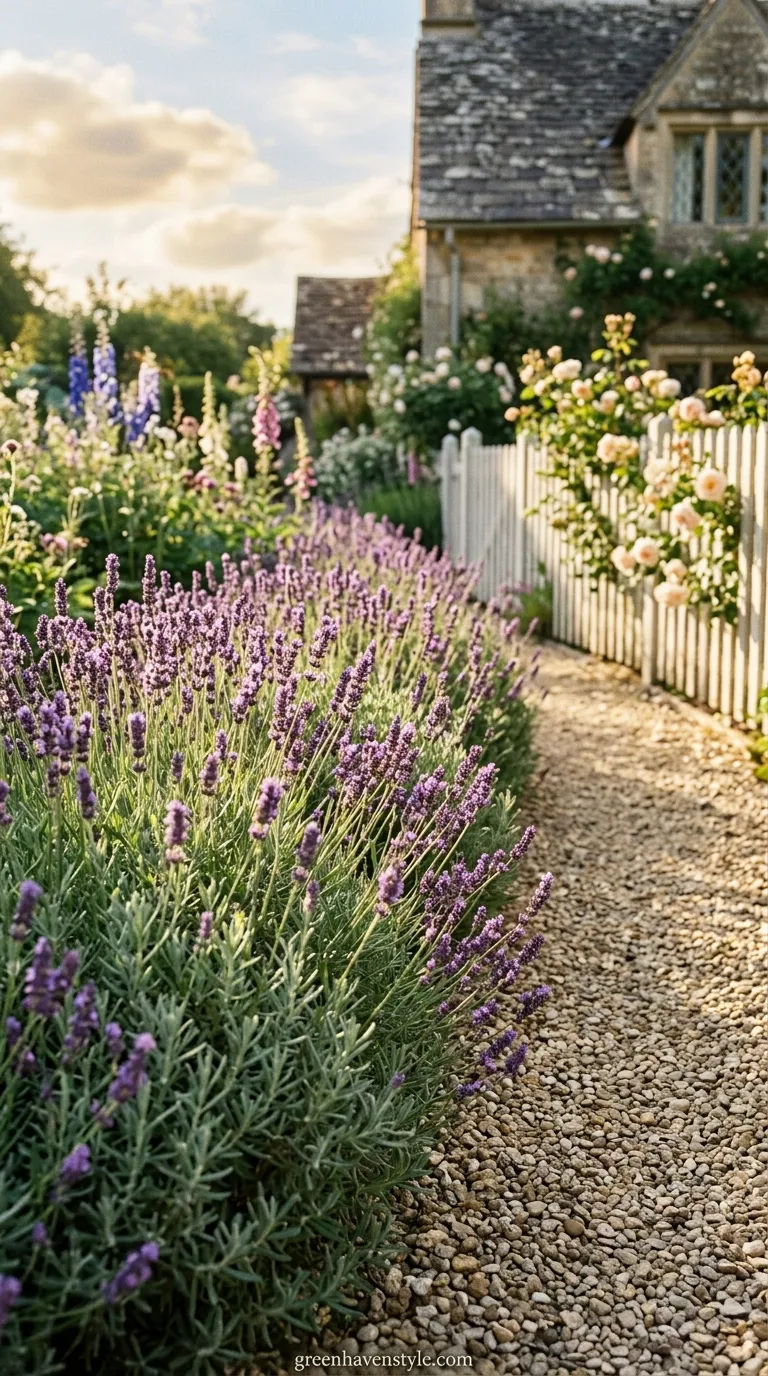
Purple lavender plants forming neat low hedge border along garden path, silvery-green foliage creating soft textured edge, limestone gravel pathway visible, white picket fence in background, warm golden afternoon sunlight, romantic cottage aesthetic, gentle breeze effect on flower spikes, angled perspective down pathway length, greenhavenstyle.com watermark bottom center.
Nothing announces cottage garden charm quite like a fragrant lavender hedge defining your border edges with both visual beauty and sensory delight. The silvery foliage provides year-round structure while summer blooms attract pollinators that bring movement and life to your garden throughout the growing season.
I’ve noticed that lavender borders work exceptionally well because they establish clear boundaries without feeling rigid or formal like traditional boxwood. The natural drought tolerance means established plants thrive with minimal watering, and the evergreen foliage prevents that bare winter look that plague herbaceous-only perennial garden edges.
2. Climbing Rose Fence Line
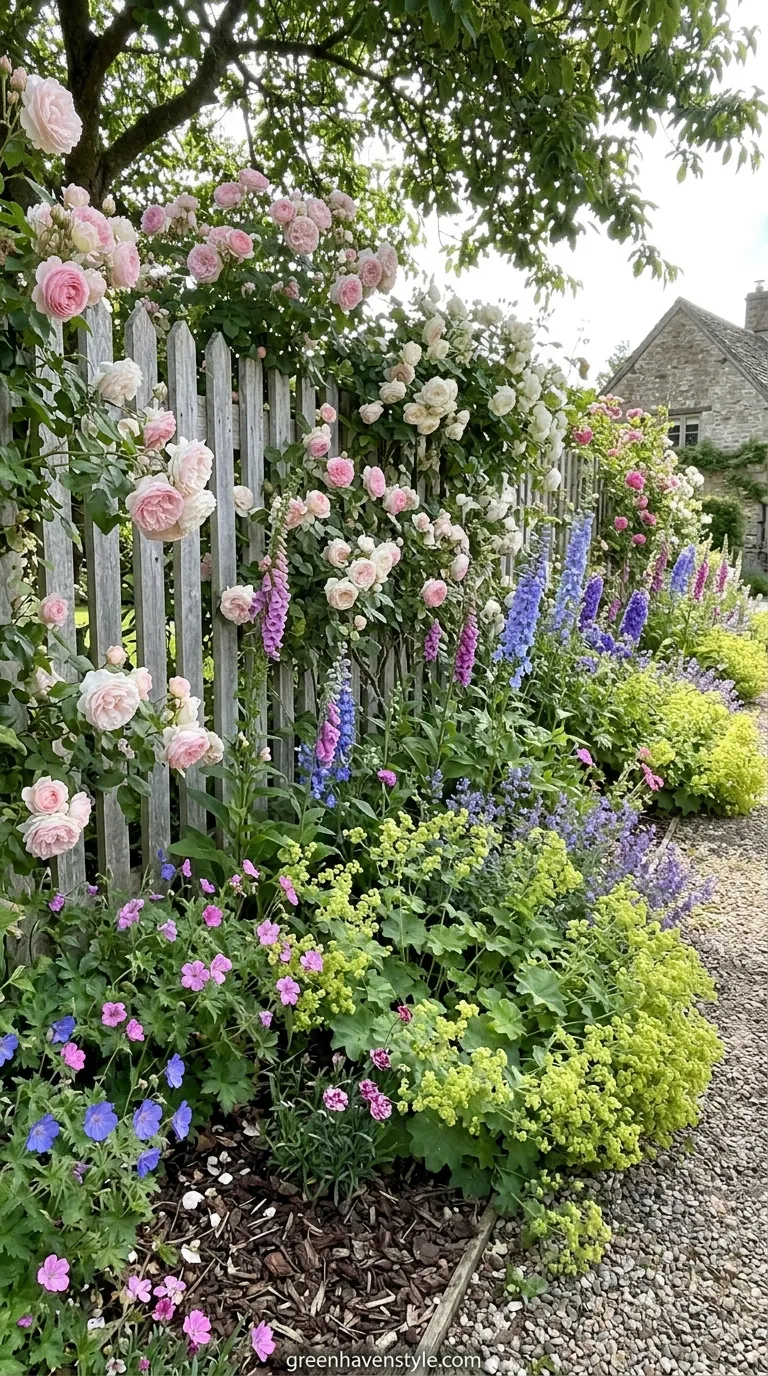
Weathered wooden fence completely covered with climbing roses in soft pinks and creams, mixed perennials planted below including delphiniums, foxgloves, and lady’s mantle, mulched soil visible at base, dappled morning sunlight filtering through blooms, quintessential English cottage garden mood, horizontal view along fence length, greenhavenstyle.com watermark bottom center.
Transforming a plain fence into a vertical flower wall creates dramatic height and abundance that defines cottage-style landscaping at its most romantic. Climbing roses provide the spectacular focal blooms while underplantings fill lower levels, creating that signature layered fullness where every vertical inch contributes to the overall display.
The fence structure eliminates the need for additional support systems and creates an instant backdrop that makes your border feel more established and intentional. From what I’ve seen, it depends heavily on choosing disease-resistant rose varieties that won’t require constant spraying to maintain their beauty throughout the season.
3. Brick Pathway Border
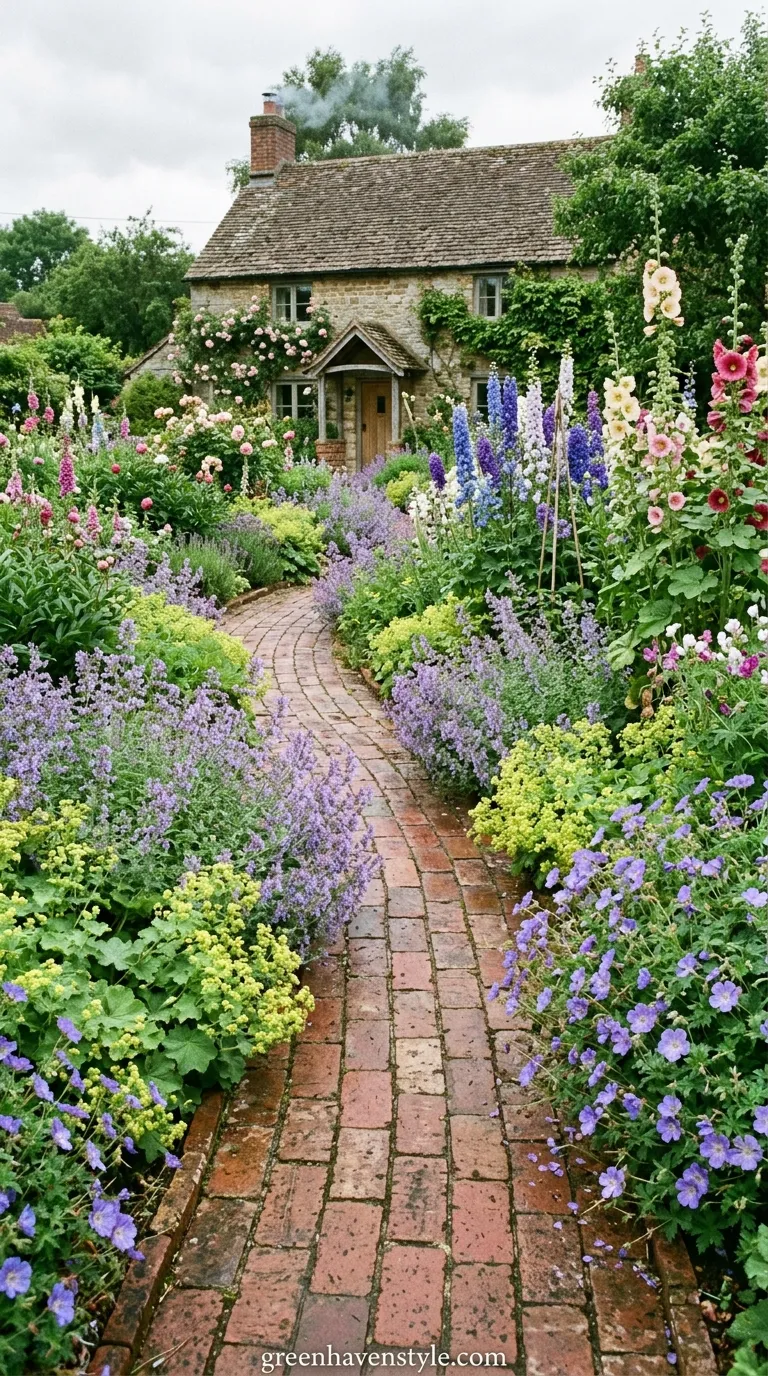
Curved brick pathway edged with billowing clouds of catmint, lady’s mantle, and hardy geraniums spilling over brick edges, tall delphiniums and hollyhocks providing height in back layer, cottage house visible in background, soft diffused natural lighting, overflowing informal planting style, eye-level perspective from pathway, greenhavenstyle.com watermark bottom center.
Creating borders that soften hardscaping edges prevents pathways from feeling too stark or institutional while establishing clear circulation patterns through your garden. Plants that naturally cascade over brick edges blur the line between planted areas and walkways, creating that relaxed cottage aesthetic where everything flows together harmoniously.
I’ve experimented with different edging plants and discovered that self-seeding varieties gradually colonize cracks between bricks, adding to the established cottage charm. The brick material provides excellent heat retention that extends blooming periods for sun-loving plants while the solid edge contains aggressive spreaders that might otherwise invade lawn areas.
4. Perennial Color Waves
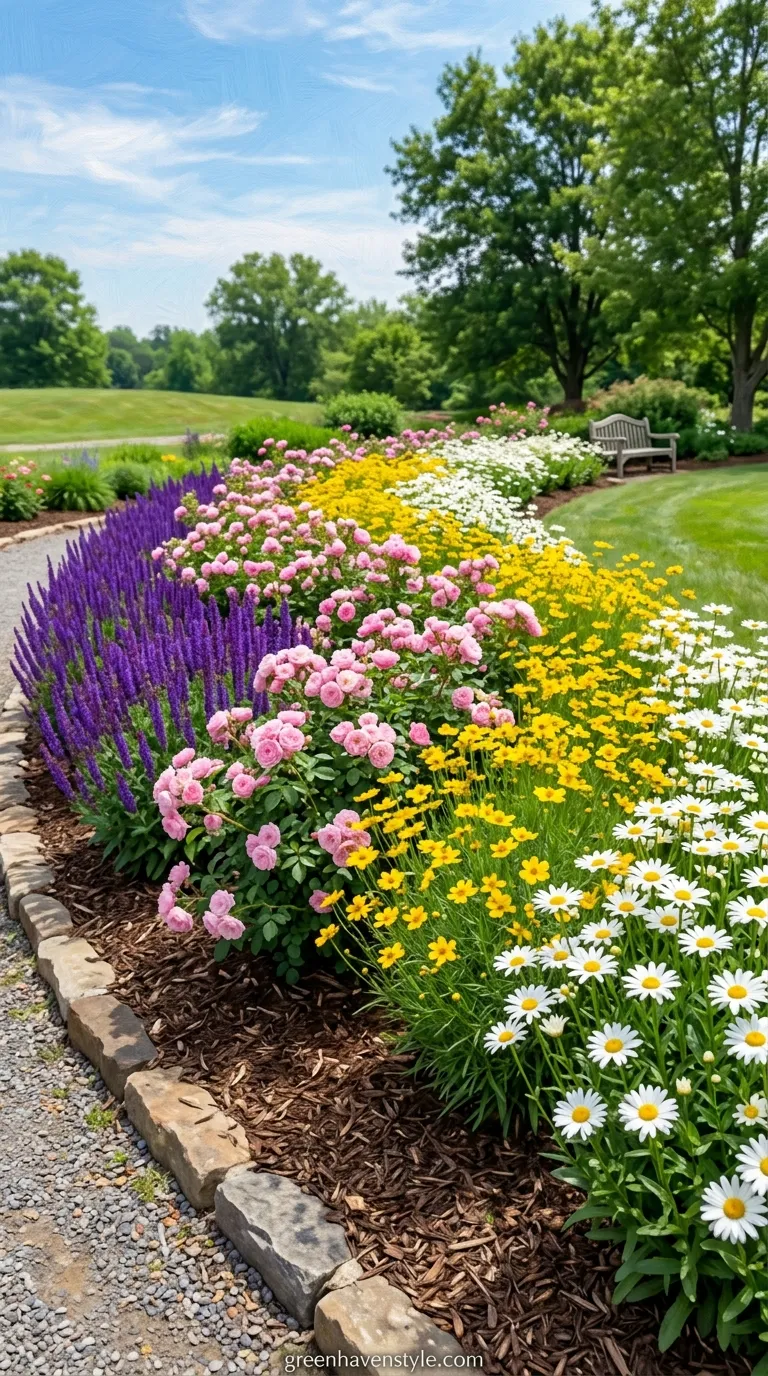
Garden border showing distinct color wave planting with purple salvias flowing into pink roses, transitioning to yellow coreopsis, then white shasta daisies, creating ribbon effect, mulched bed with stone edging, blue sky background, bright midday sunlight, painterly impressionist garden style, wide angle showing full color progression, greenhavenstyle.com watermark bottom center.
Organizing plants in sweeping color drifts rather than individual specimens creates cohesive visual flow that guides eyes along your border’s length while maintaining cottage abundance. The wave technique prevents the spotty, chaotic look that happens when too many different plants compete for attention without intentional grouping.
This approach offers colorful garden design that photographs beautifully and creates stronger seasonal impact than scattered single plants. In my experience, the tricky part is choosing bloom-time companions so color waves overlap rather than leaving gaps, but selecting plants with extended flowering periods solves this challenge naturally.
5. Stone Wall Planting Pockets
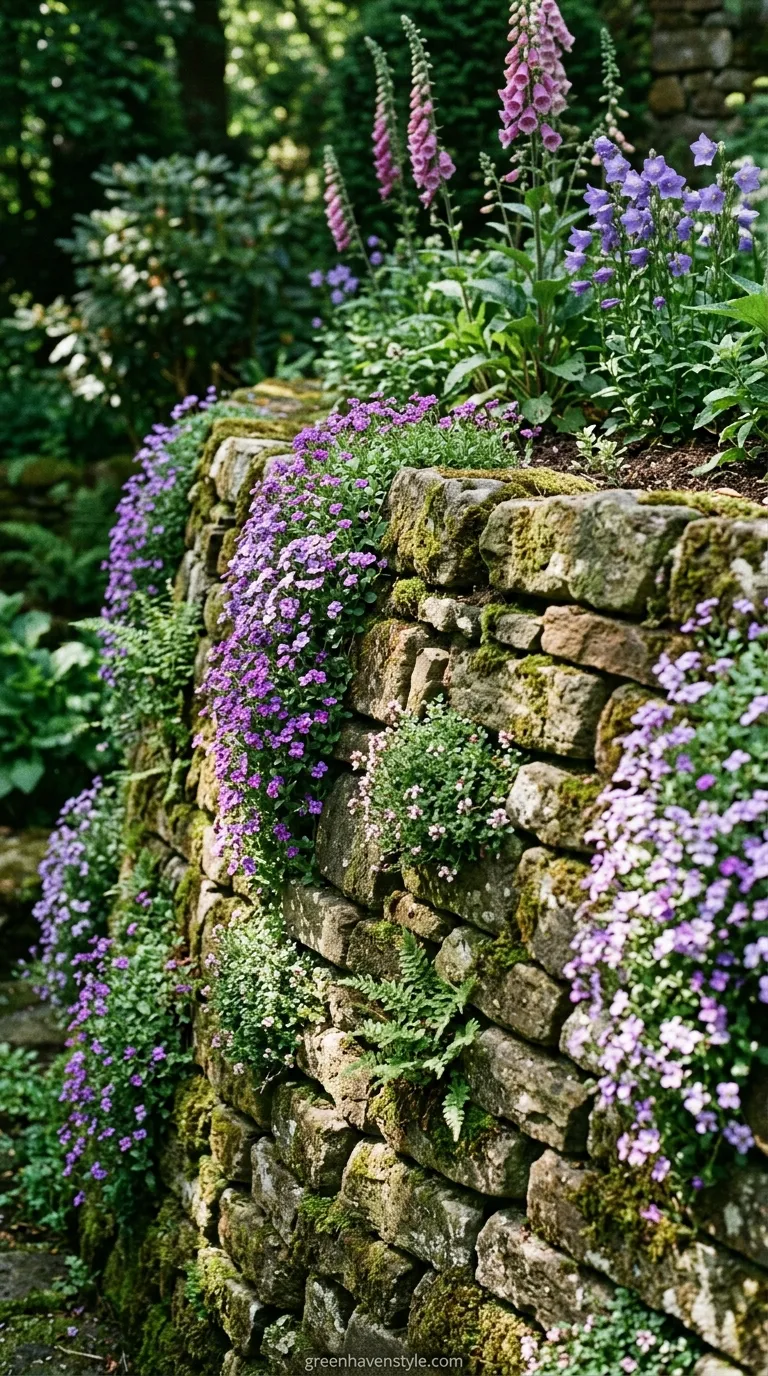
Dry-stacked stone retaining wall with plants growing from crevices including aubrieta cascading in purple waterfalls, creeping thyme, and small ferns, taller foxgloves and campanulas planted at wall top, moss-covered stones, cool shade with patches of filtered sunlight, textural layered aesthetic, close-up angled view showing vertical planting, greenhavenstyle.com watermark bottom center.
Converting functional retaining walls into vertical planting opportunities multiplies your border’s display area while softening hard stone surfaces with living color and texture. The stone provides perfect drainage for alpine and rock garden plants that struggle in heavy border soils, expanding your plant palette beyond typical cottage garden selections.
I’ve seen this work beautifully in sloped yards where retaining walls become necessary structural elements that might otherwise feel too utilitarian. The gradual moss and lichen development on stones adds authenticity that makes even new walls look pleasantly aged, contributing to that timeless cottage garden character.
6. Mixed Height Layering
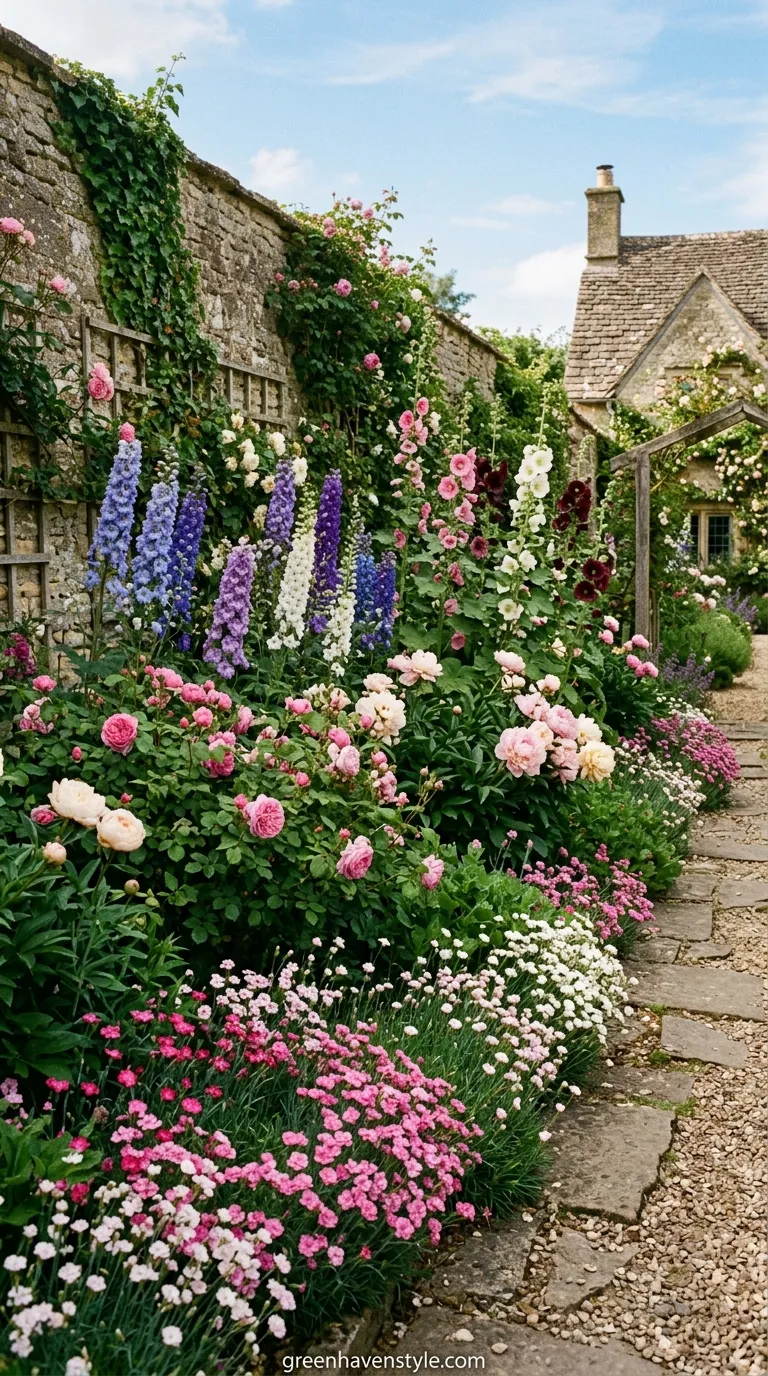
Border showing perfect cottage layering with low-growing pinks and thrift at front, mid-height roses and peonies in center, tall delphiniums and hollyhocks at back against stone wall, color palette of pinks, purples, and whites, natural afternoon lighting, depth and dimension visible, slight angle showing all three layers, greenhavenstyle.com watermark bottom center.
Proper height graduation prevents taller plants from hiding shorter ones while creating the illusion of greater depth and abundance in your border plantings. The layered approach mimics natural meadow growth patterns where plants arrange themselves by light needs, resulting in displays that feel organic rather than artificially staged.
This fundamental cottage principle works in borders of any width because you’re maximizing vertical space rather than depending solely on horizontal square footage. I’ve found that it helps to consider mature plant heights rather than nursery pot sizes, leaving adequate room for back-row plants to reach their full dramatic potential.
7. Self-Seeding Wildflower Mix
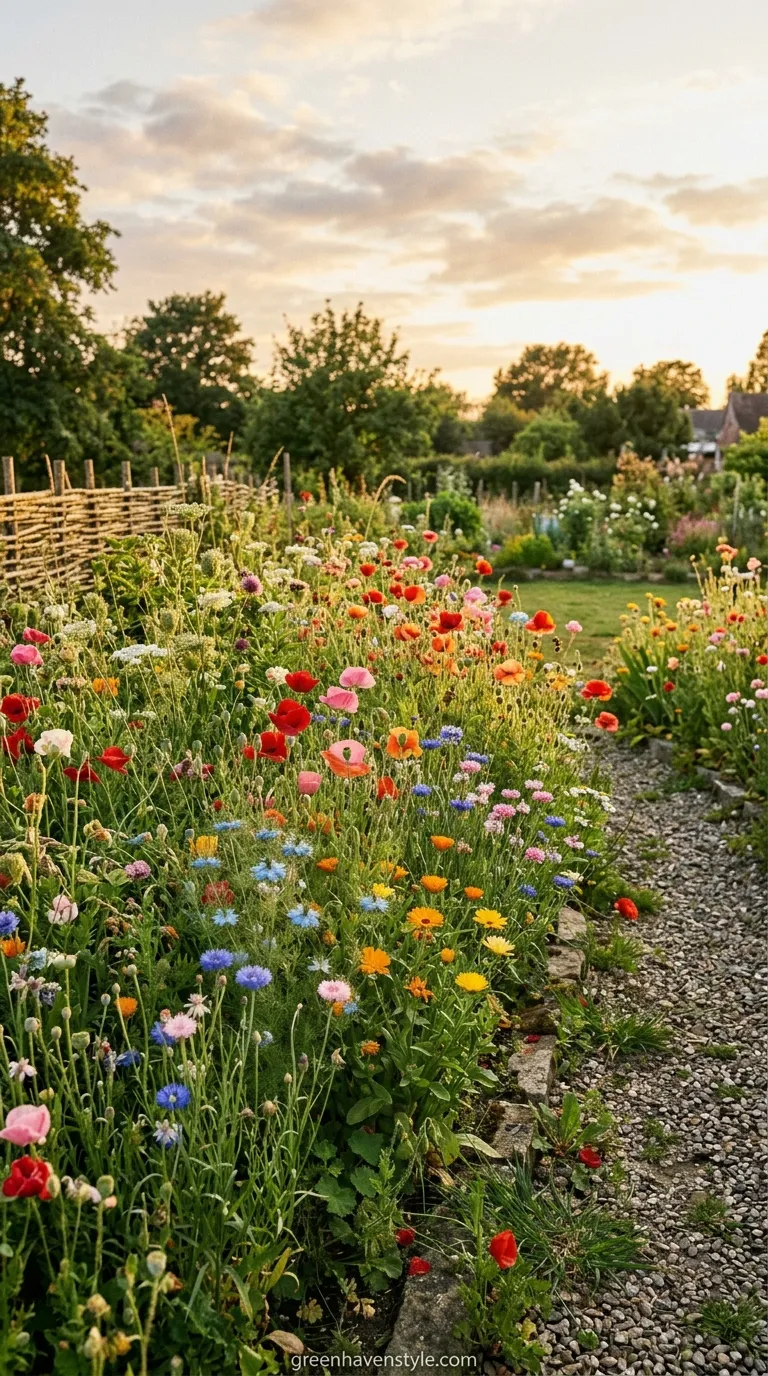
Naturalistic border filled with self-seeding cottage flowers including poppies, nigella, calendula, and cornflowers in mixed colors, plants at varying stages of bloom and seed, informal meadow-like appearance, gravel path edge visible, warm evening golden hour light, romantic wild garden aesthetic, horizontal view across border depth, greenhavenstyle.com watermark bottom center.
Encouraging self-seeding annuals creates ever-changing combinations that keep your border feeling fresh and spontaneous rather than predictably static season after season. These willing volunteers fill gaps between perennials and create happy accidents of color and form that you couldn’t intentionally design, adding to the authentic cottage charm.
The self-maintaining nature means less replanting work each spring as plants naturally regenerate in favorable locations. From what I’ve seen, the key is leaving seedheads through winter rather than excessive fall cleanup, allowing nature to distribute seeds where they’ll thrive best in your specific informal garden border.
8. Boxwood and Roses Pairing
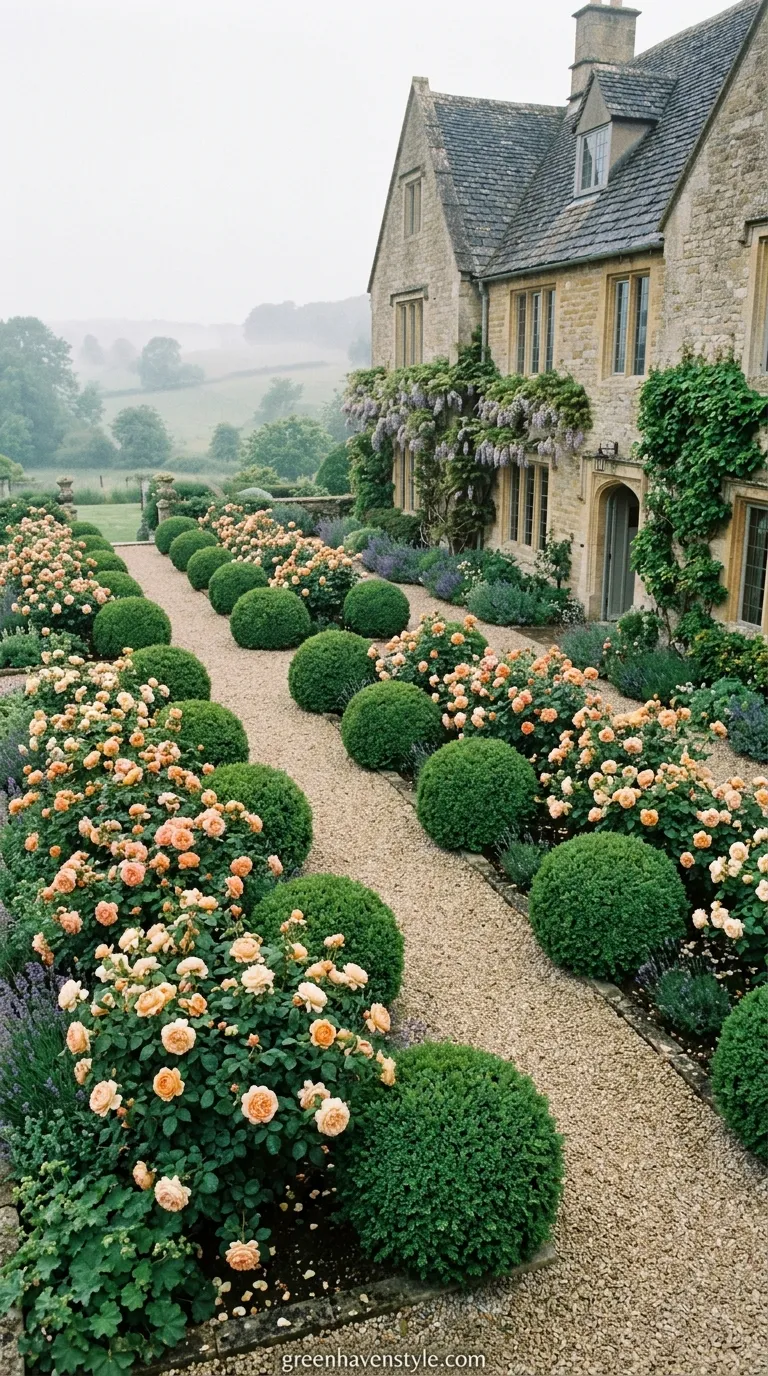
Formal clipped boxwood balls providing evergreen structure with David Austin roses planted between boxwood spheres, rose blooms in peachy apricot shades, gravel garden floor, stone manor house backdrop, soft morning mist lighting, cottage meets formal garden hybrid style, elevated perspective showing pattern repetition, greenhavenstyle.com watermark bottom center.
Combining formal boxwood structure with romantic cottage roses creates sophisticated borders that maintain visual interest during winter dormancy while exploding with color during growing season. The evergreen framework prevents that empty barren look in cold months and provides clear organization that makes abundant cottage plantings feel intentional rather than messy.
I’ve observed that this pairing works especially well near house foundations or formal entertaining areas where pure cottage chaos might feel too casual. The boxwood spheres create rhythmic repetition that unifies the border while roses provide that essential cottage romance, balancing structure with softness beautifully.
9. Gravel Garden Border
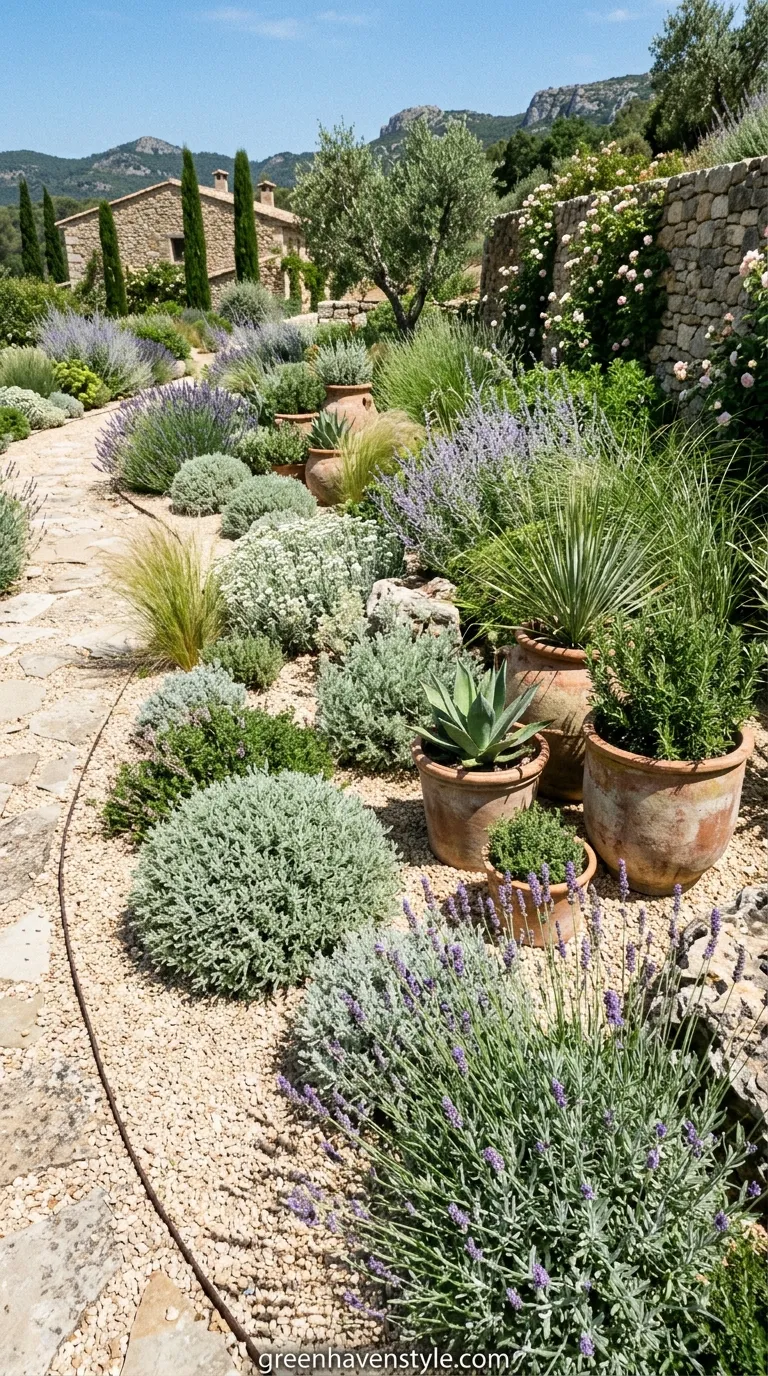
Mediterranean-style border with gravel mulch instead of traditional soil mulch, drought-tolerant cottage plants including lavender, santolina, artemisia, and ornamental grasses, terra-cotta pots integrated into planting, hot sunny location, silvery-green color palette, bright direct sunlight, textural dry garden aesthetic, overhead angled view, greenhavenstyle.com watermark bottom center.
Gravel-based borders offer cottage charm adapted for hot, dry climates or gardeners seeking lower-maintenance alternatives to traditional thirsty cottage plantings. The excellent drainage suits Mediterranean plants that provide similar romantic abundance while tolerating challenging conditions that would stress classic cottage perennials like delphiniums and peonies.
The gravel surface prevents weed growth more effectively than organic mulches and reflects light upward to illuminate flower undersides beautifully. In my experience, this water-wise garden edge approach actually simplifies maintenance since drought-adapted plants need less intervention once established, making cottage beauty achievable even in challenging climates.
10. Cottage Cutting Garden Border

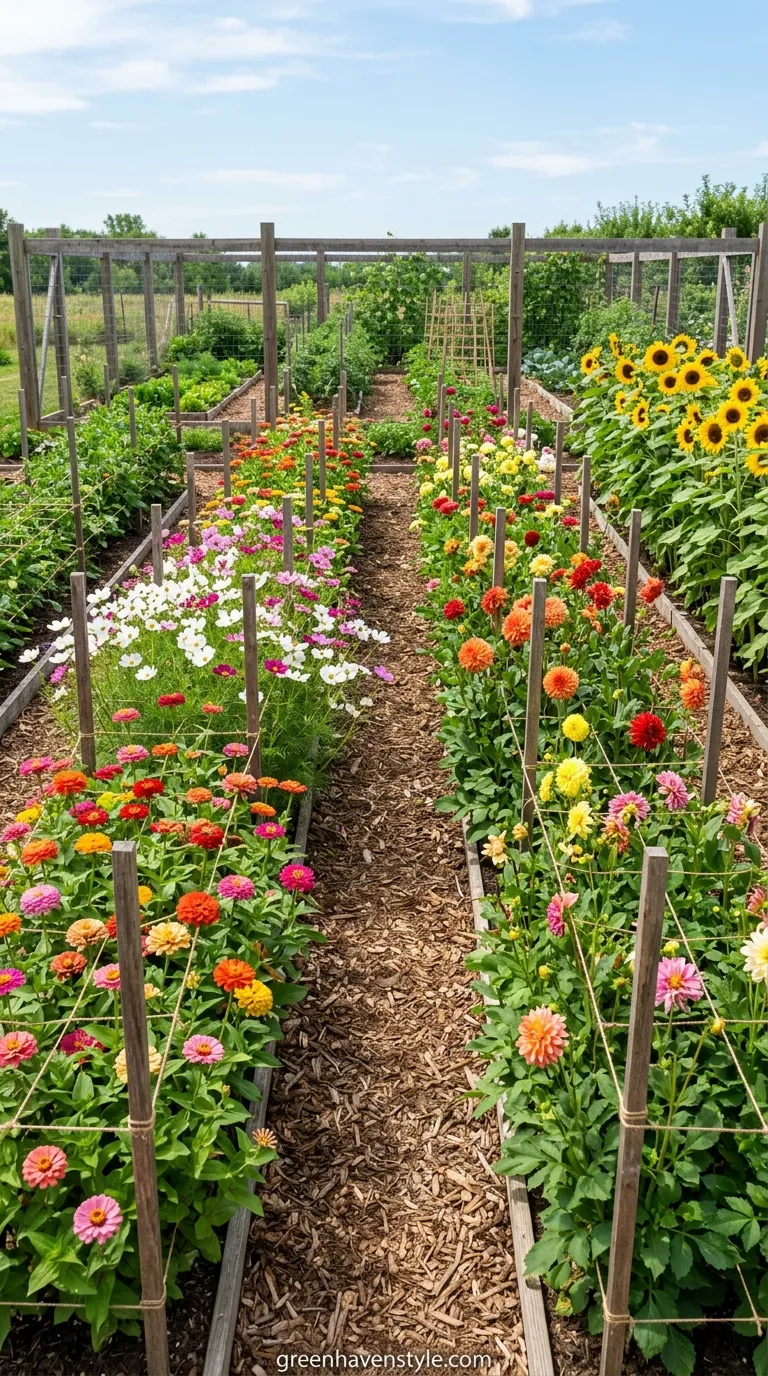
Organized rows of cutting flowers including zinnias, cosmos, dahlias, and sunflowers in rainbow colors, staked plants showing productive garden purpose, mulched pathways between rows for harvest access, vegetable garden fence in background, bright cheerful daylight, functional beauty aesthetic, straight-on view showing organized abundance, greenhavenstyle.com watermark bottom center.
Designing borders specifically for harvesting armloads of fresh flowers combines cottage beauty with practical productivity that keeps your home filled with seasonal blooms. The generous plant spacing and organized layout make cutting easy without destroying the border’s appearance, unlike ornamental borders where harvesting creates noticeable gaps.
I’ve found that dedicated cutting borders actually look more abundant than mixed ornamental borders because you’re growing flowers for maximum bloom production rather than restraining vigorous varieties. The constant harvesting encourages continued flower production, creating a self-reinforcing cycle where cutting promotes more blooms for future arrangements.
11. Shade Garden Cottage Border
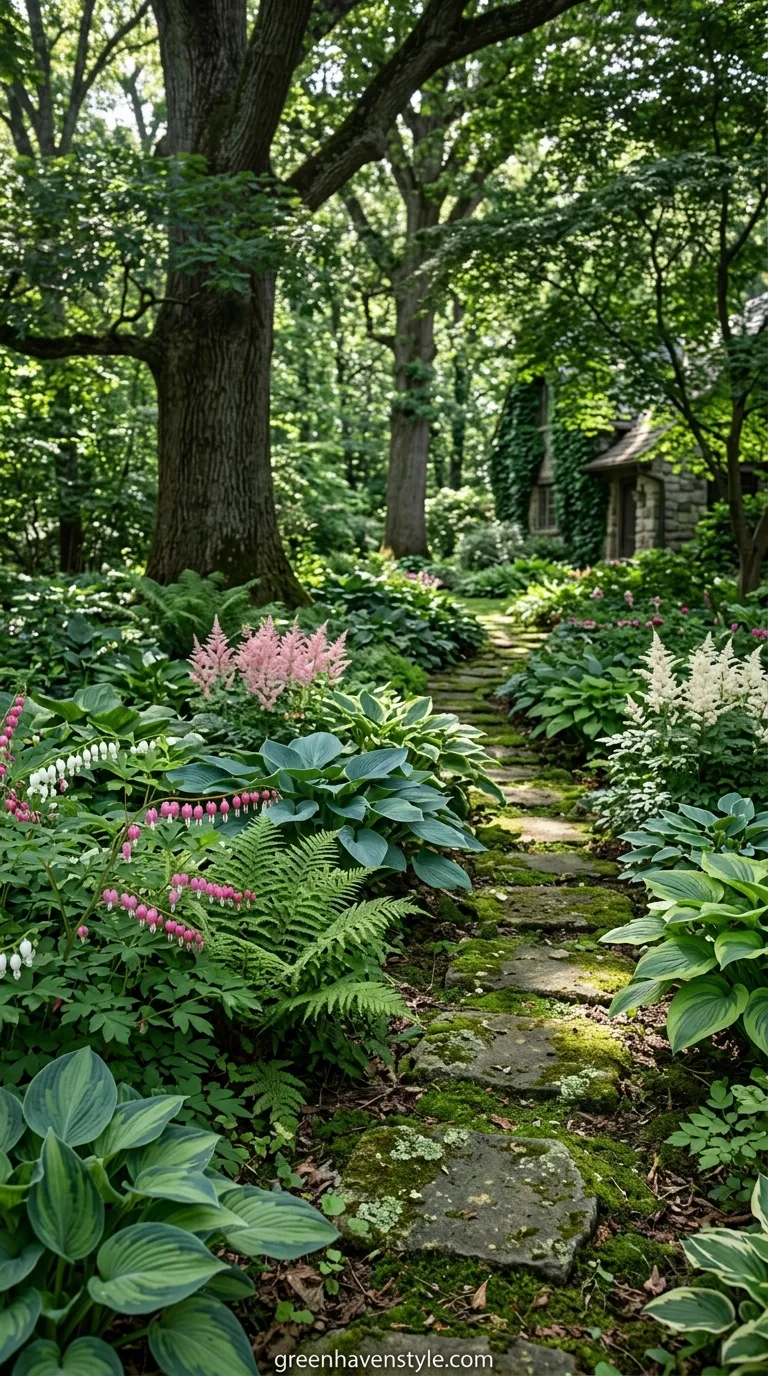
Shaded border under mature trees filled with hostas, astilbes, bleeding hearts, and ferns, white and pink color scheme, stepping stone path winding through planting, dappled shade lighting creating light patterns, moss covering stones, cool peaceful woodland cottage mood, low angle through foliage perspective, greenhavenstyle.com watermark bottom center.
Adapting cottage charm to shaded locations proves that romantic abundance isn’t limited to sunny exposures, solving the common challenge of bringing color and interest to tree-shaded yard areas. Shade-tolerant cottage plants offer different textures and foliage interest that create sophisticated displays where flower power takes a secondary role to leaf forms and patterns.
The cooler microclimate means shade borders require less watering and maintenance during hot summers compared to sun-baked borders. I’ve noticed that shade cottage gardens feel more serene and contemplative than their sunny counterparts, creating restful spaces that offer different emotional benefits within your overall landscape.
12. Herb and Flower Combination
Border mixing ornamental flowers with culinary herbs including purple sage, flowering chives, bronze fennel, calendula, and nasturtiums, edible and beautiful plants intermingled, raised bed with wooden edge, kitchen garden visible beyond, natural daylight, practical cottage garden tradition, horizontal view showing mixed planting, greenhavenstyle.com watermark bottom center.
Blending herbs with ornamental flowers honors authentic cottage garden history where beauty and utility occupied the same spaces out of necessity and evolved into charming tradition. The aromatic foliage adds sensory dimension beyond visual appeal, and many herbs attract beneficial insects that improve your entire garden’s health while providing kitchen ingredients steps from your door.
This edible landscape border approach means your garden literally feeds you while looking beautiful, adding meaningful purpose to ornamental efforts. From what I’ve seen, the soft textures and colors of many culinary herbs integrate seamlessly with traditional cottage flowers, creating cohesive displays where visitors can’t distinguish which plants are edible versus purely decorative.
13. Picket Fence Foundation Border
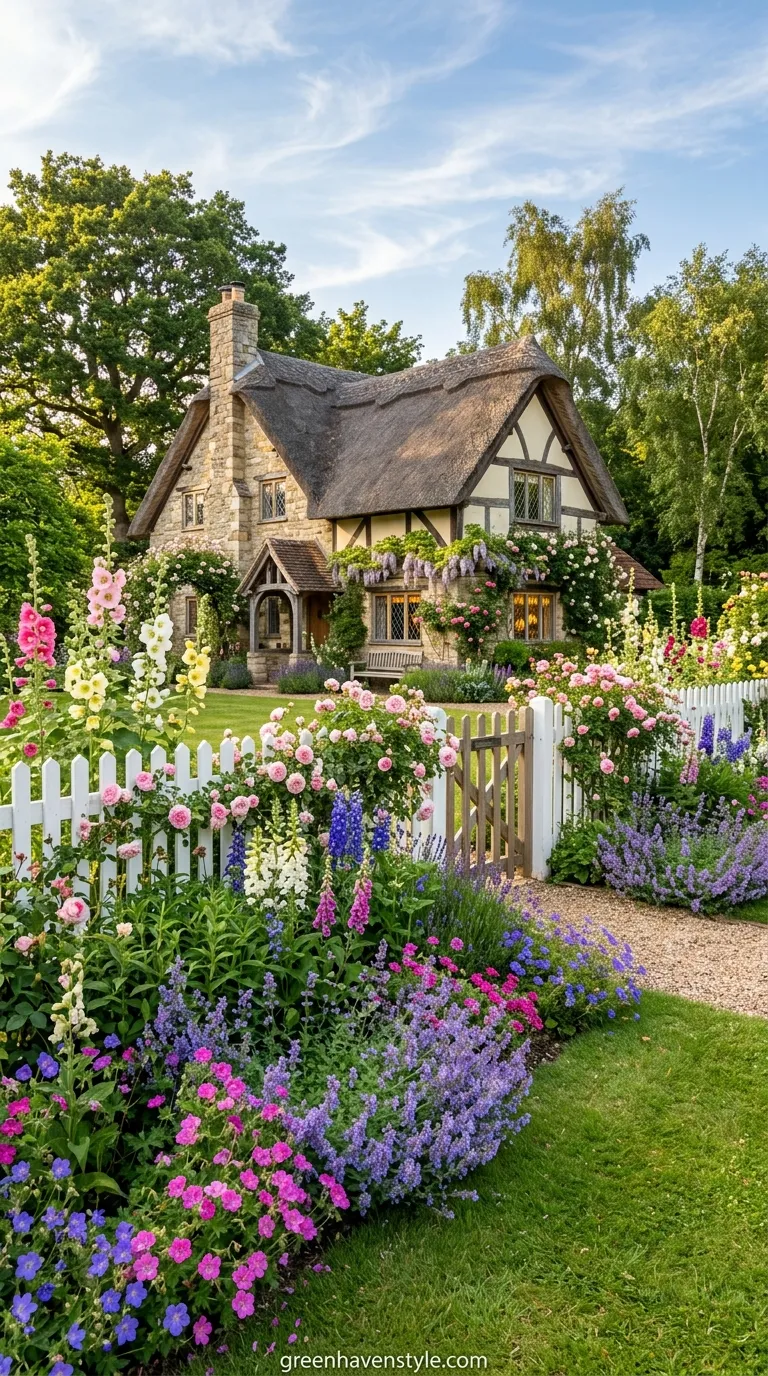
White picket fence with generous border planting in front including hollyhocks towering above fence, roses climbing fence pickets, low catmint and geraniums spilling onto lawn edge, classic cottage in background, perfect summer afternoon lighting, idealized cottage garden scene, slight elevated angle showing fence and plantings, greenhavenstyle.com watermark bottom center.
Nothing captures quintessential cottage garden romance quite like abundant plantings softening a white picket fence with layers of color that obscure the fence’s hard lines. The vertical fence provides support for climbers and backdrop contrast that makes flower colors pop more vibrantly while defining your property boundary with charming authority rather than hostile barriers.
I’ve seen this classic combination work beautifully in front yards where it creates welcoming curb appeal that invites rather than excludes neighbors and passersby. The fence structure contains exuberant growth that might otherwise spread into lawns, providing functional plant management disguised as pure aesthetic charm.
14. Ornamental Grass Anchors
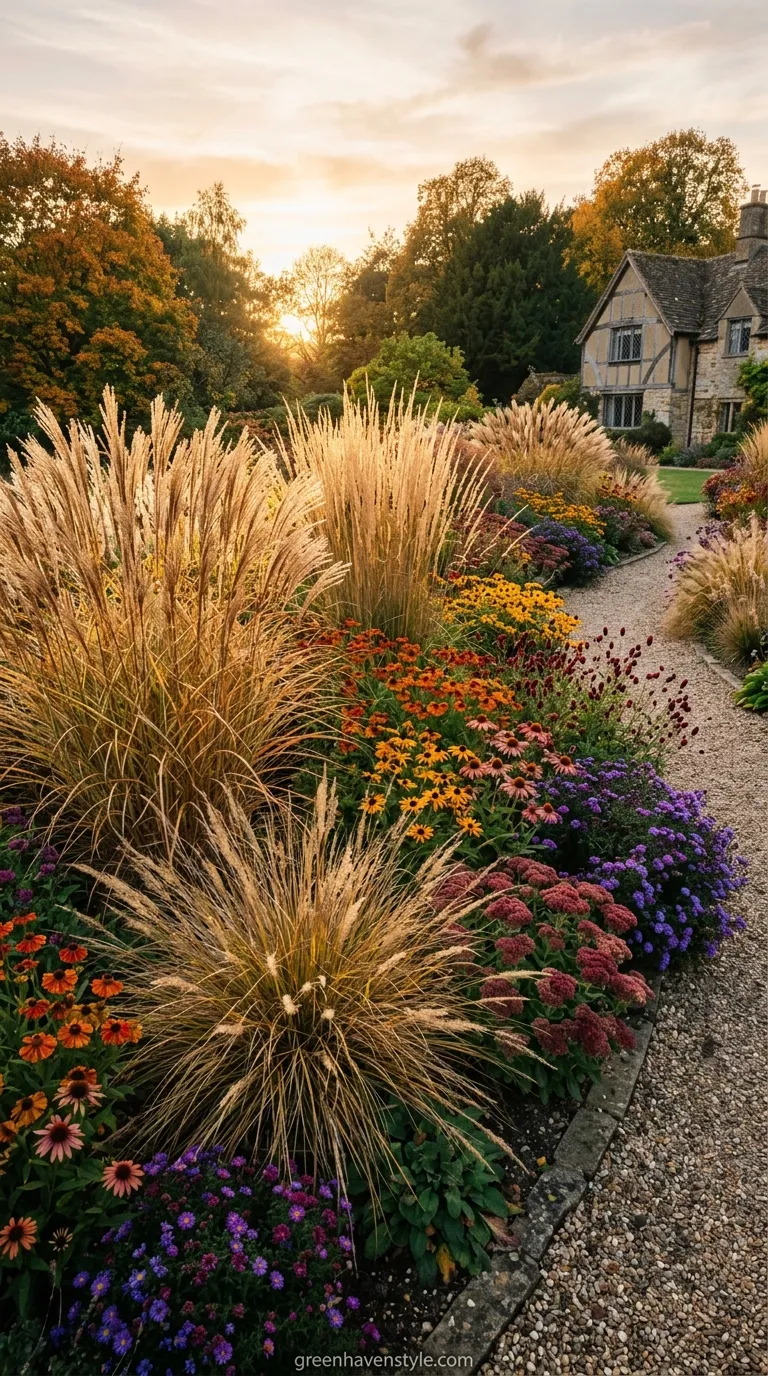
Border design featuring large ornamental grasses as structural anchors with flowering perennials woven between grass clumps, miscanthus and calamagrostis providing vertical accents, autumn color palette of golds, bronzes, and burgundy, backlit by setting sun creating glowing effect, textural contemporary cottage fusion, wide angle showing full border sweep, greenhavenstyle.com watermark bottom center.
Incorporating ornamental grasses adds modern structure and four-season interest that extends cottage border appeal beyond traditional summer peak into fall and winter months. The vertical grass forms create architectural punctuation that organizes cottage abundance while movement in breezes adds kinetic interest that static perennials cannot provide.
The low-maintenance nature and drought tolerance of established grasses reduces overall border upkeep significantly. In my experience, grasses dramatically improve cottage border designs in exposed windy locations where traditional floppy cottage perennials struggle to stand upright without extensive staking that ruins the casual aesthetic.
15. Bulb Succession Planting
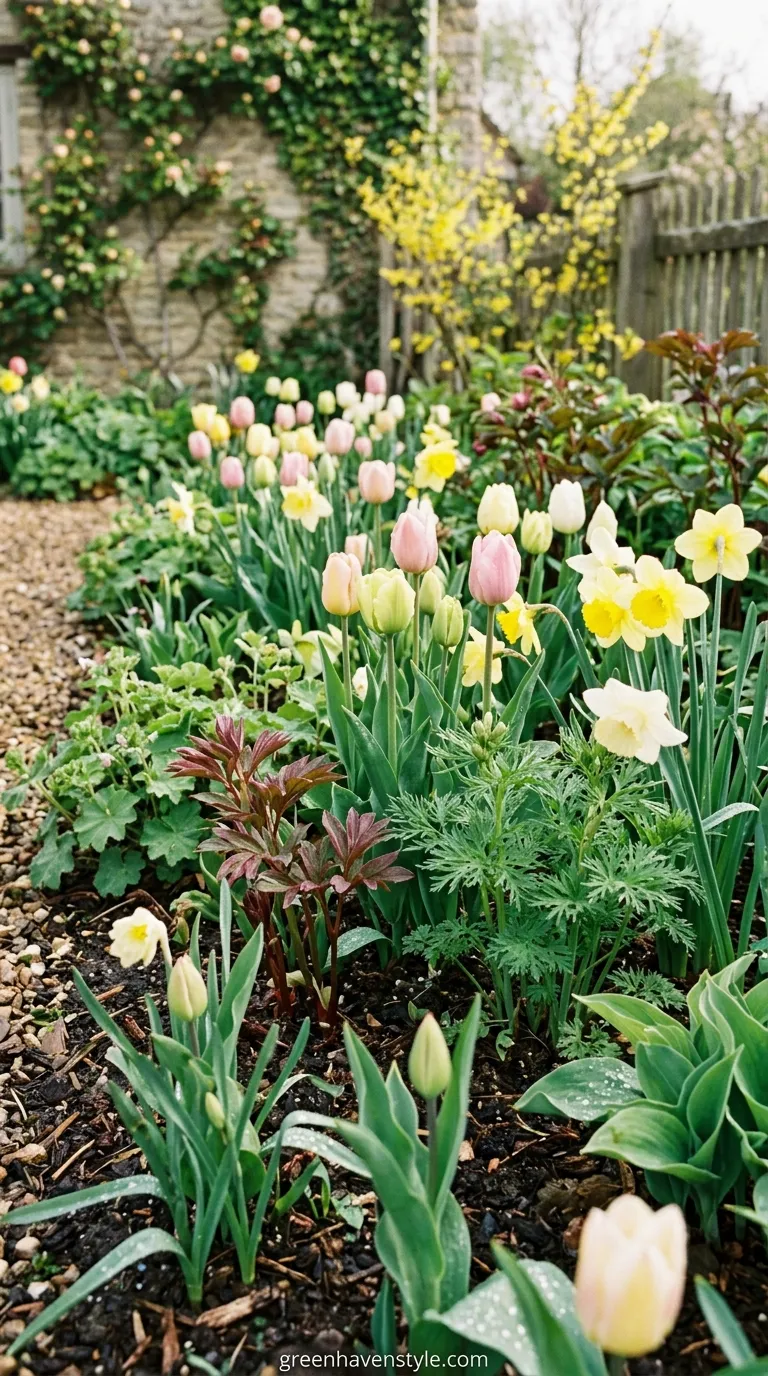
Spring cottage border showing tulips and daffodils emerging through ground-level perennials not yet fully leafed out, mixed bulb colors in pastels, glimpses of emerging peony and delphinium foliage, fresh spring morning dewdrops visible, renewal and awakening mood, eye-level close-up perspective, greenhavenstyle.com watermark bottom center.
Layering spring bulbs beneath later-emerging perennials ensures your cottage border delivers color from earliest spring rather than waiting until summer perennials hit their stride. The bulbs capitalize on available sunlight before tree canopies fill in and perennial foliage expands, maximizing productivity from every square inch of border space throughout the extended growing season.
I’ve found that this succession approach solves the common problem of fading bulb foliage that looks messy in formal gardens, as expanding perennial leaves naturally camouflage declining bulb foliage. The extra spring color costs minimal effort since bulbs return reliably year after year, delivering maximum impact from minimal ongoing maintenance in your cottage garden border ideas.
Conclusion
These cottage garden border ideas demonstrate that creating romantic, abundant edge plantings is achievable regardless of your yard’s size, sun exposure, or climate challenges. Whether you’re drawn to classic rose-covered fences or modern grass-anchored designs, each approach transforms ordinary property edges into enchanting displays that elevate your entire landscape’s beauty and character.
I’ve seen how even a single well-planted border completely changes a yard’s atmosphere, making outdoor spaces feel more intentional and welcoming. The cottage style’s forgiving nature means you can start with a few favorite plants and expand gradually as your confidence and plant knowledge grow.
Save your favorite concepts to Pinterest for seasonal reference, then choose one border location to transform this growing season. Your cottage garden journey begins with that first border planting, and the joy it brings will inspire you to expand these charming edges throughout your landscape in ways you never imagined possible.


