
10 Indoor Hydroponic Gardening Ideas for Fresh Herbs & Greens
Imagine harvesting fresh basil for dinner or crisp lettuce for salads without stepping outside, even in the middle of winter. That’s the beauty of indoor hydroponic gardening ideas that bring year-round growing directly into your home using innovative soil-free systems. These modern setups fit seamlessly into kitchens, living spaces, and even closets, transforming unused areas into productive mini farms that supply fresh produce regardless of season or outdoor weather conditions.
I’ve experimented with various hydroponic systems over the years, and the technology has become remarkably accessible and beginner-friendly. What once required expensive equipment and technical knowledge now works beautifully with simple setups that anyone can maintain. From countertop herb gardens to vertical wall systems, hydroponic growing offers clean, efficient food production that fits modern lifestyles perfectly.
10 Indoor Hydroponic Gardening Ideas for Fresh Herbs & Greens
This collection shares 10 creative approaches to bringing soil-free gardening indoors, each offering unique advantages for different spaces, budgets, and growing goals. Whether you’re interested in fresh herbs, salad greens, or even fruiting plants, these ideas help you cultivate homegrown abundance inside your home.
1. Countertop Herb Garden
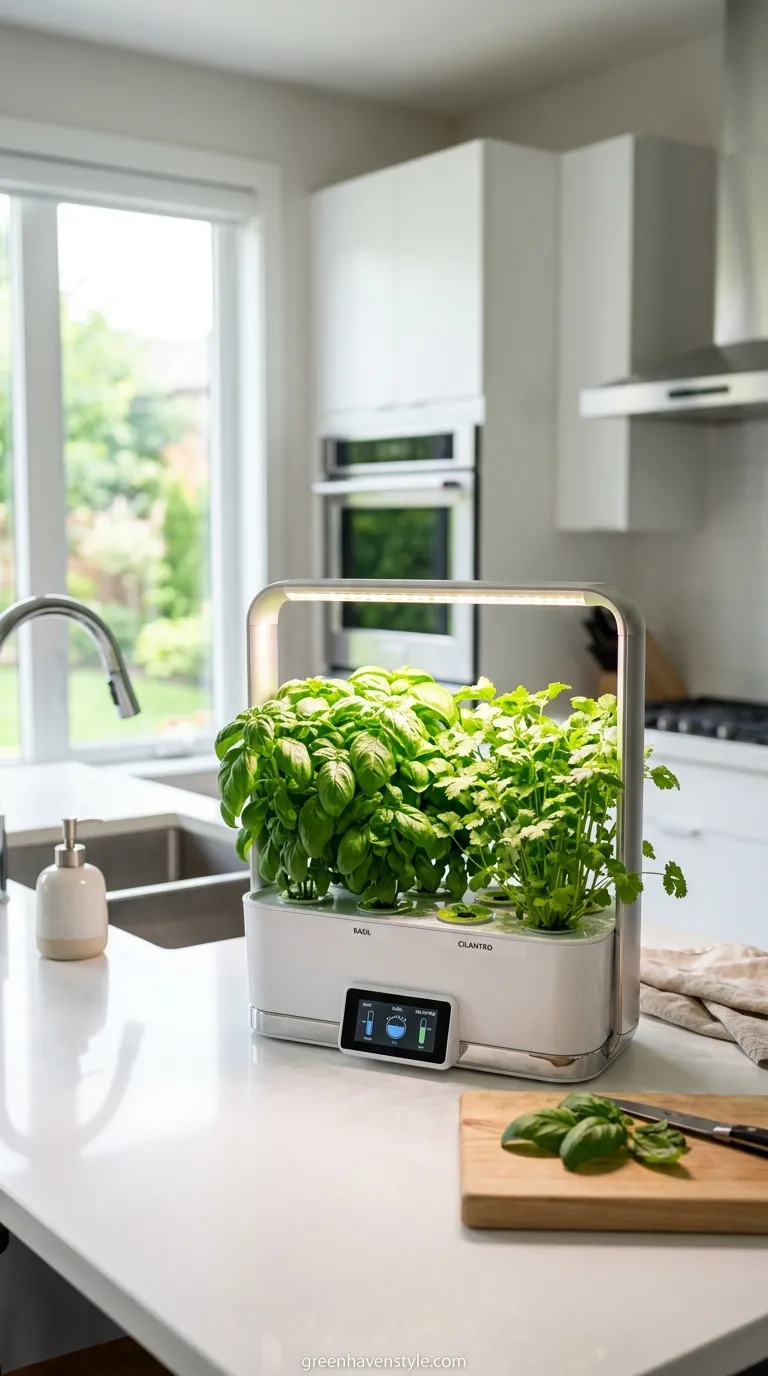
Create a compact hydroponic herb system on kitchen counters using self-watering planters with LED grow lights, growing basil, cilantro, and parsley within arm’s reach of your cooking space.
I’ve found that having fresh herbs just steps from the stove completely transforms home cooking. These countertop systems require minimal space while providing continuous harvests that save money and eliminate those sad, wilted grocery store herb packages that spoil before you use them.
Most countertop units feature built-in lighting and automated watering, making them nearly foolproof for beginners. Simply add water and nutrients weekly, then watch your herbs thrive under optimized growing conditions that produce more vigorous, flavorful plants than traditional soil methods.
2. Vertical Wall Tower
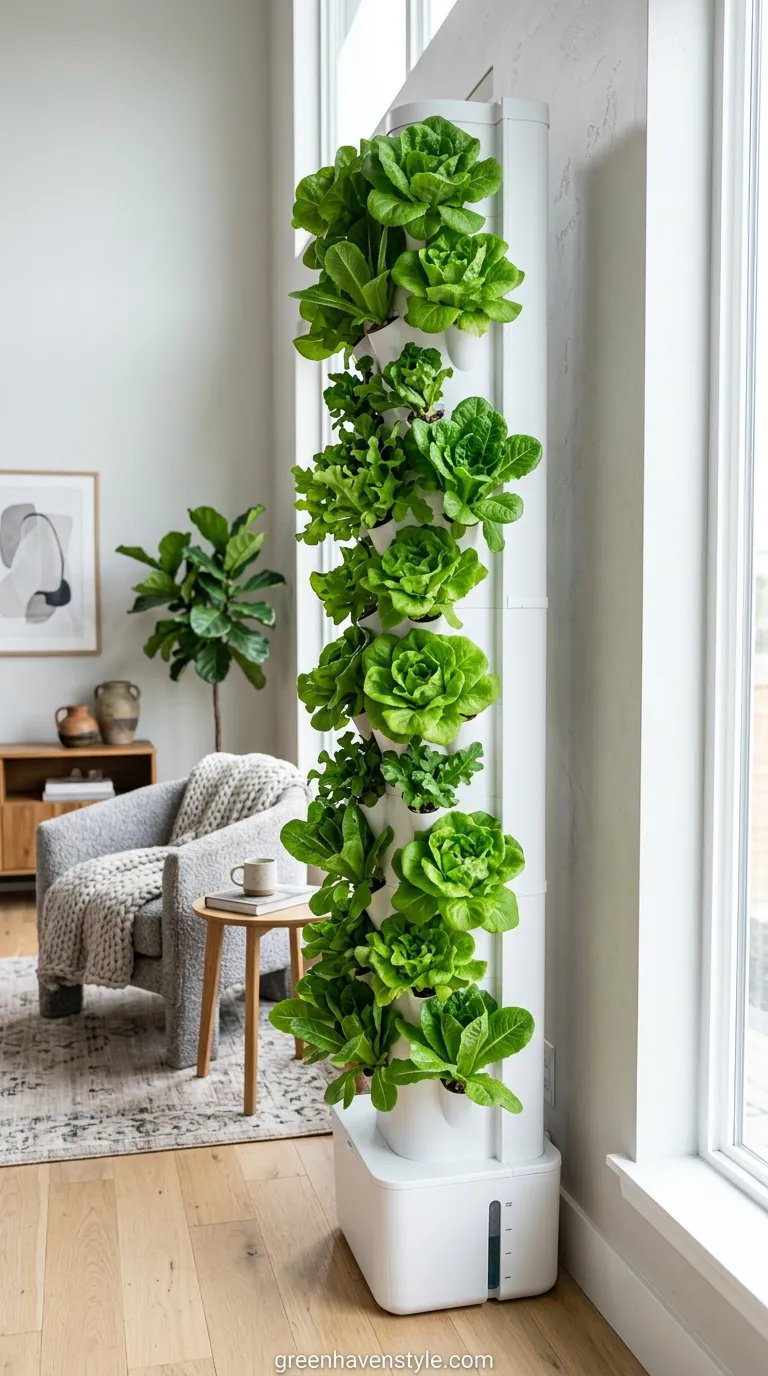
Install a vertical hydroponic tower system against an empty wall, stacking multiple growing pockets vertically to maximize production in minimal floor space while creating a living green wall aesthetic.
From what I’ve seen, vertical systems solve space limitations brilliantly while producing impressive yields from small footprints. The tower design allows you to grow dozens of plants in the space one traditional pot would occupy, making it ideal for apartments or homes with limited square footage.
These systems circulate nutrient-rich water from bottom to top, feeding all plants efficiently. The vertical arrangement also creates stunning visual displays that function as living art while producing edible greens, making them both decorative and functional additions to modern interiors.
3.Window Shelf Lettuce Farm
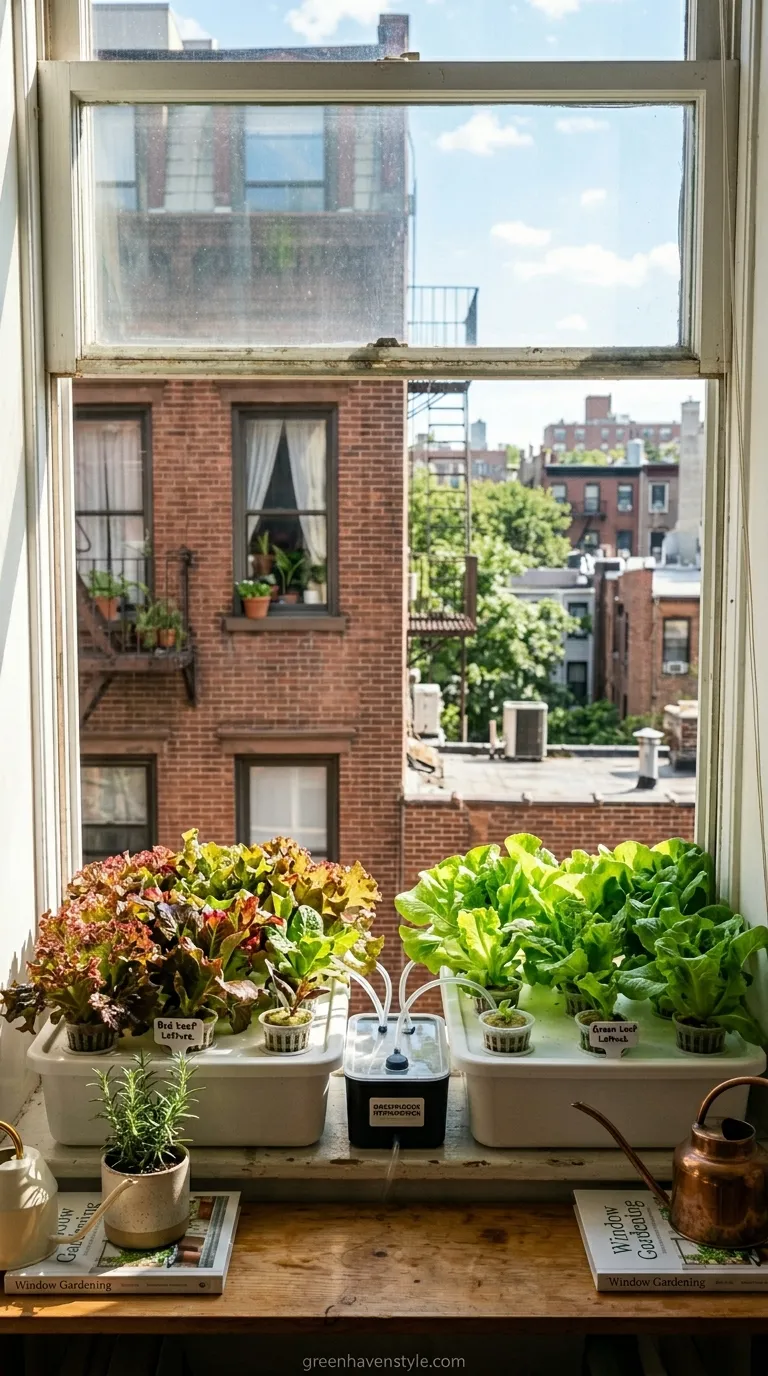
Position shallow hydroponic trays along sunny windowsills, using natural light supplemented with small grow lights to cultivate continuous lettuce and salad green harvests throughout the year.
I’ve noticed that windowsill setups take advantage of free natural light while keeping plants visible as reminders to check water levels and nutrient solutions. Watching greens grow from seed to harvest becomes a daily source of satisfaction and connection to your food sources.
Choose cut-and-come-again varieties that regrow after harvesting, providing ongoing production from single plantings. The shallow trays fit standard windowsills perfectly while the constant availability of fresh, pesticide-free salad greens encourages healthier eating habits naturally.
4. Closet Growing Station
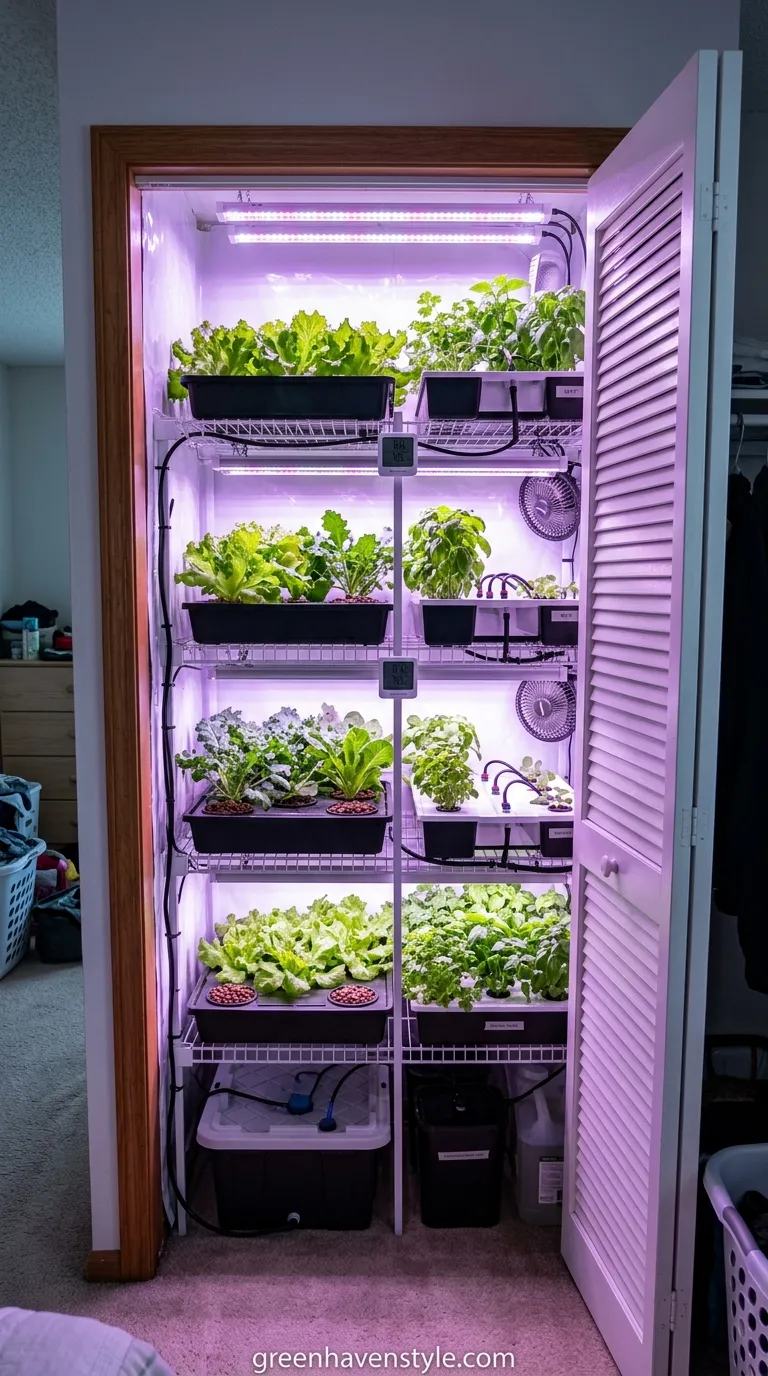
Convert a spare closet into a controlled environment hydroponic setup with shelving, full-spectrum lights, and proper ventilation, creating a dedicated growing space hidden behind closed doors when not in use.
In my experience, closet gardens offer complete environmental control while keeping systems out of sight in living areas. The enclosed space makes it easier to manage temperature, humidity, and light cycles precisely, creating optimal conditions that maximize plant growth and productivity.
Install wire shelving at multiple heights, hang LED grow lights above each level, and add a small fan for air circulation. This dedicated space lets you experiment with more demanding crops while maintaining your home’s aesthetic when entertaining guests.
5. Mason Jar Kratky Method
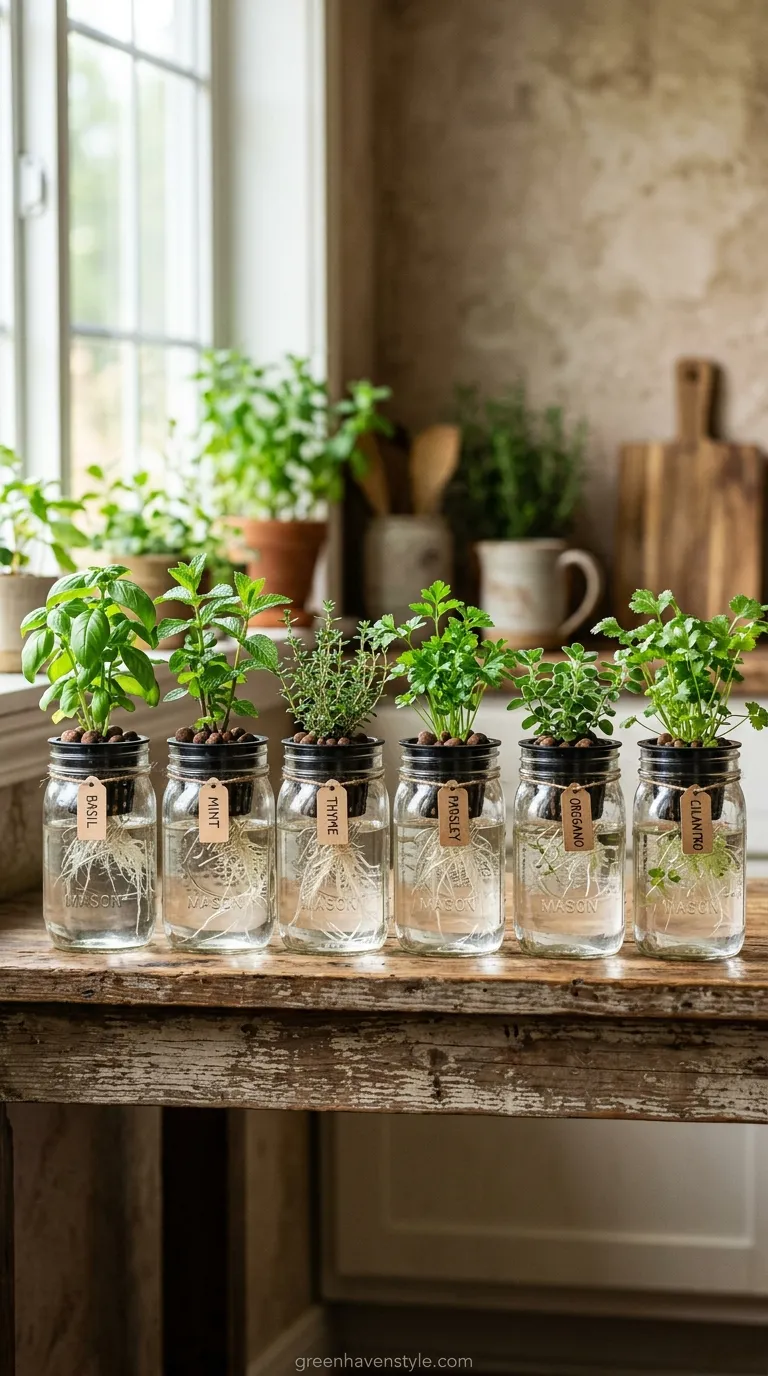
Grow individual herbs or small greens in wide-mouth mason jars using the passive Kratky method that requires no pumps or electricity, just nutrient solution and net pots for simple, low-tech production.
I’ve observed that the Kratky method appeals to beginners because it eliminates complicated equipment while still delivering successful results. These self-contained jars sit on any shelf or counter, requiring only periodic nutrient solution refills as plants consume water and grow.
The transparent glass lets you monitor root development and solution levels easily. This approach works beautifully for testing hydroponic growing before investing in larger systems, or for maintaining a few favorite herbs with minimal effort and expense.
6. Under-Cabinet Microgreens
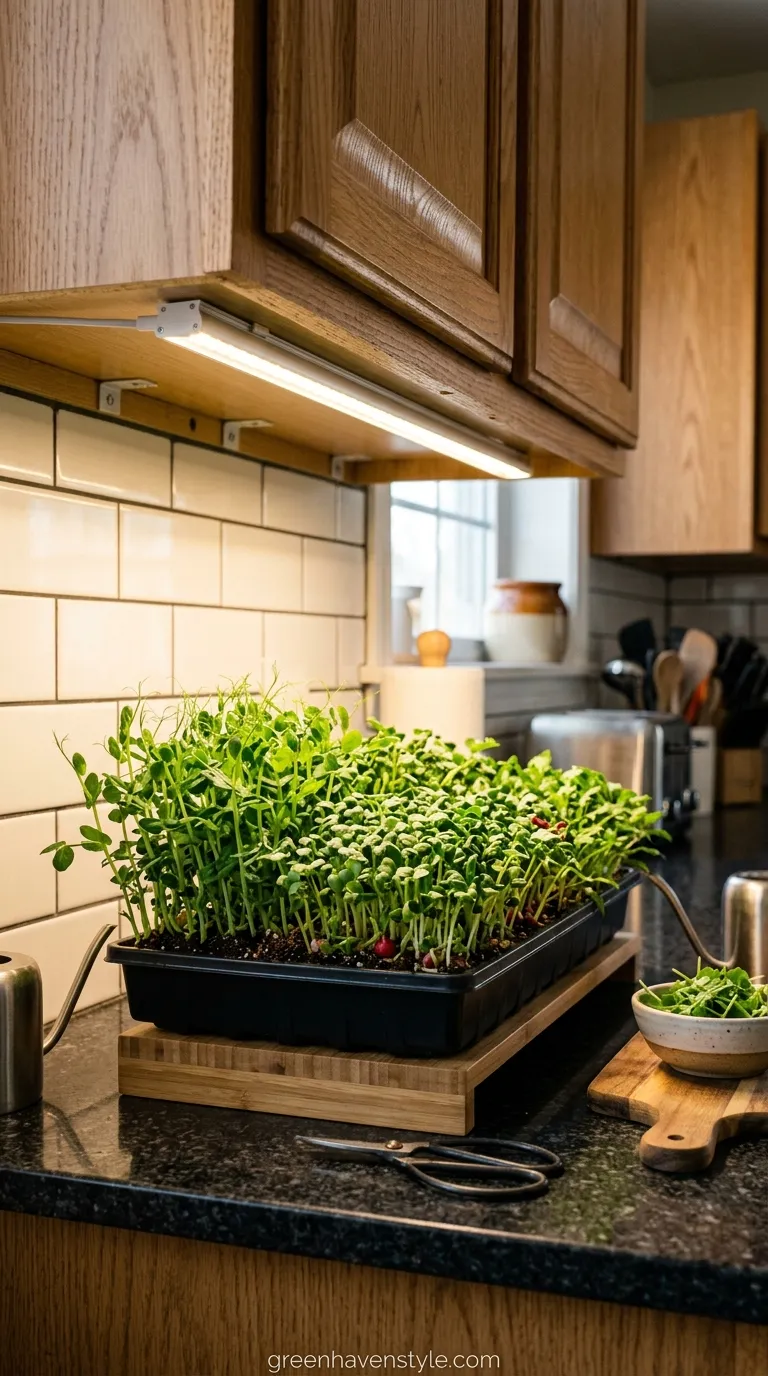
Install shallow hydroponic trays under kitchen cabinets with strip LED lights attached to cabinet bottoms, growing fast-cycling microgreens that harvest in just 7-14 days for continuous fresh additions to meals.
From what I’ve seen, microgreens offer the quickest return on investment of any hydroponic crop. Their rapid growth cycle means you’re harvesting nutrient-dense greens within weeks of planting, and the under-cabinet location uses otherwise wasted space efficiently.
These tender shoots add intense flavor and nutrition to salads, sandwiches, and smoothies. The short growing time lets you experiment with different varieties constantly, rotating through spicy radish, mild sunflower, or peppery arugula microgreens based on your current culinary preferences.
7. Aquaponics Fish Tank Combo
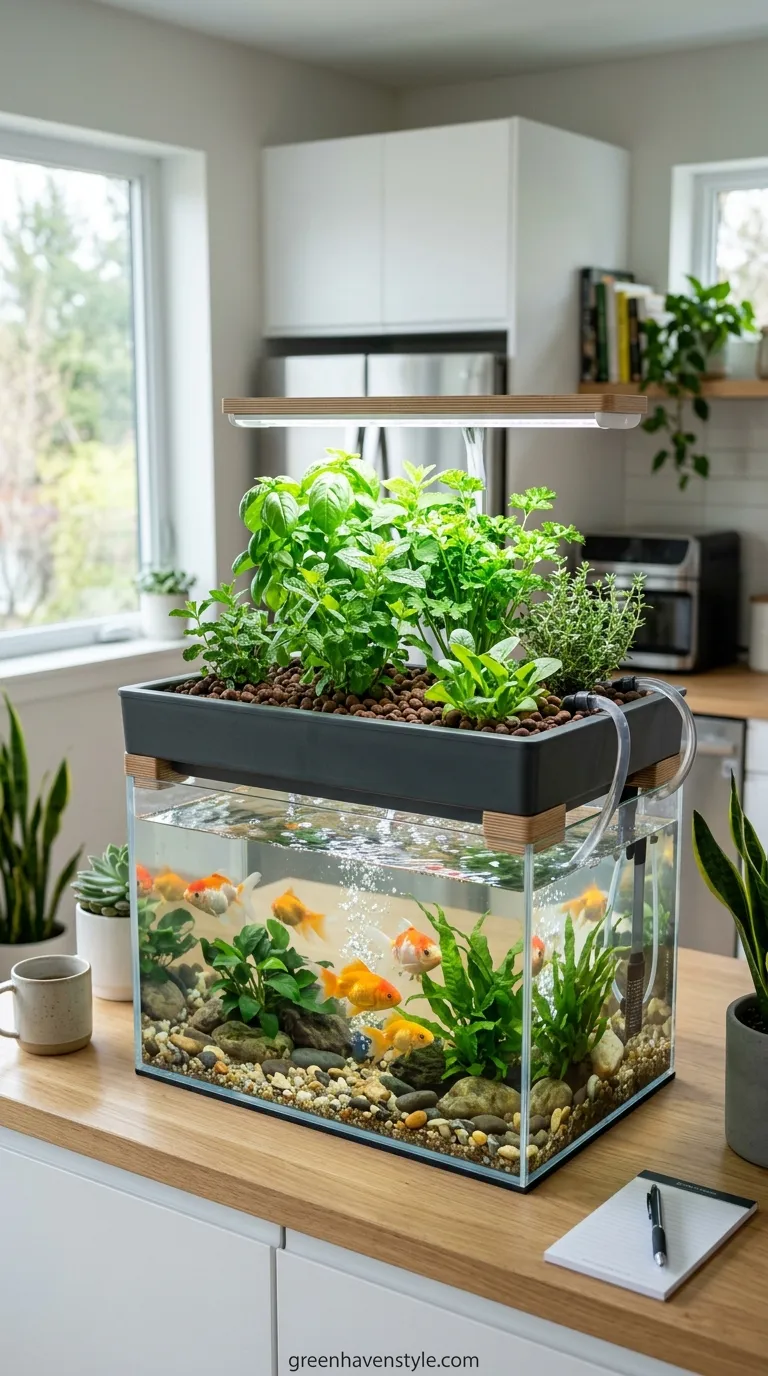
Combine a decorative fish tank with hydroponic plant beds where fish waste provides natural nutrients for plants while plants filter water back to the fish, creating a self-sustaining ecosystem.
I’ve found that aquaponics systems fascinate everyone who sees them, sparking conversations about sustainable food production. The symbiotic relationship between fish and plants creates a balanced system that requires fewer water changes and nutrient additions than separate setups would need.
Small desktop versions work beautifully with betta fish and herbs, while larger systems can support goldfish and substantial vegetable production. The gentle sound of circulating water adds calming ambiance while the living ecosystem provides both food and relaxation benefits.
8. Rolling Cart Garden
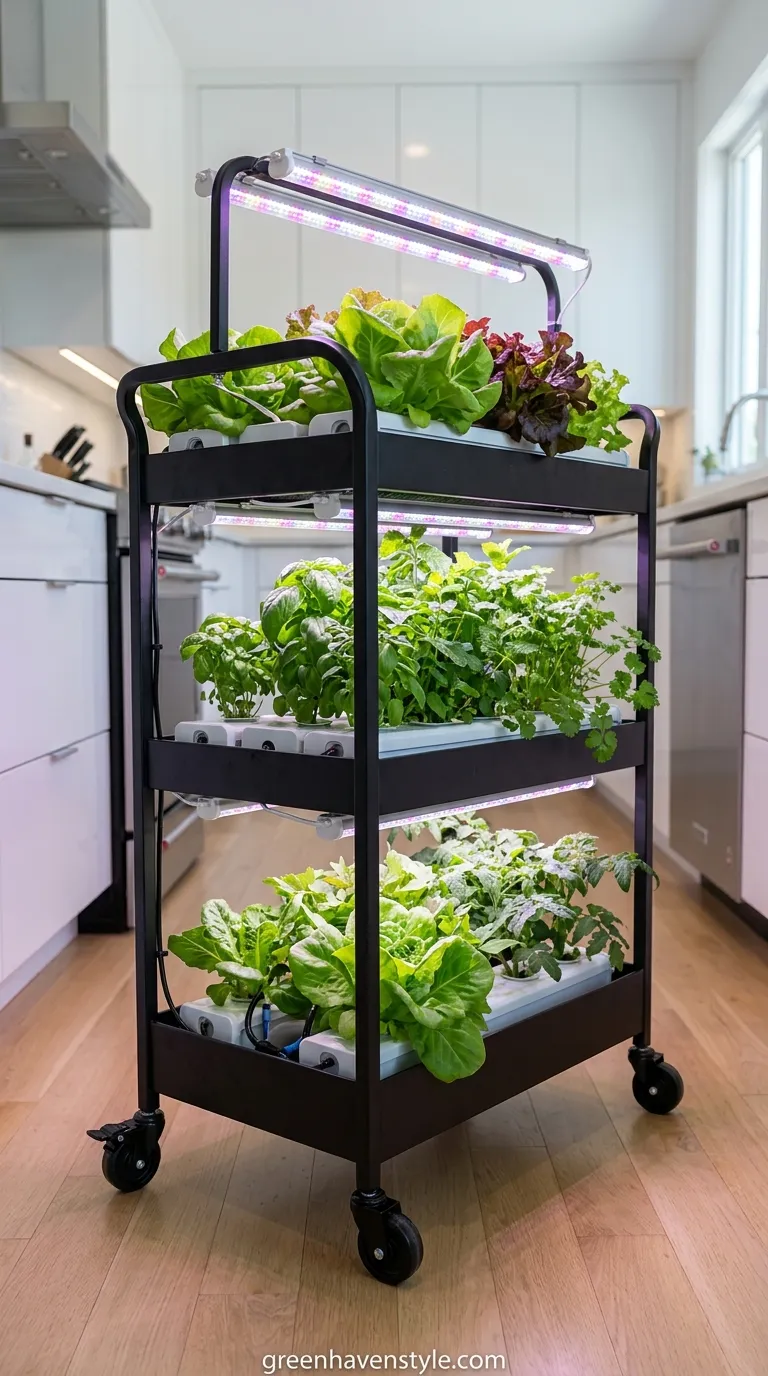
Build a mobile hydroponic garden on a rolling utility cart with multiple tiers, allowing you to move plants between locations to follow natural light or tuck the system away when needed.
In my experience, mobility offers tremendous flexibility in homes where space serves multiple purposes. Roll your garden to the sunniest spot during the day, then move it aside for yoga class or when hosting gatherings that need the floor space.
The cart’s shelves accommodate different system types across levels—herbs on top, lettuce mid-level, and nutrient reservoir below. Locking wheels keep it stable during use while the compact footprint fits through doorways and into storage areas effortlessly.
9. Bookshelf Vertical Farm
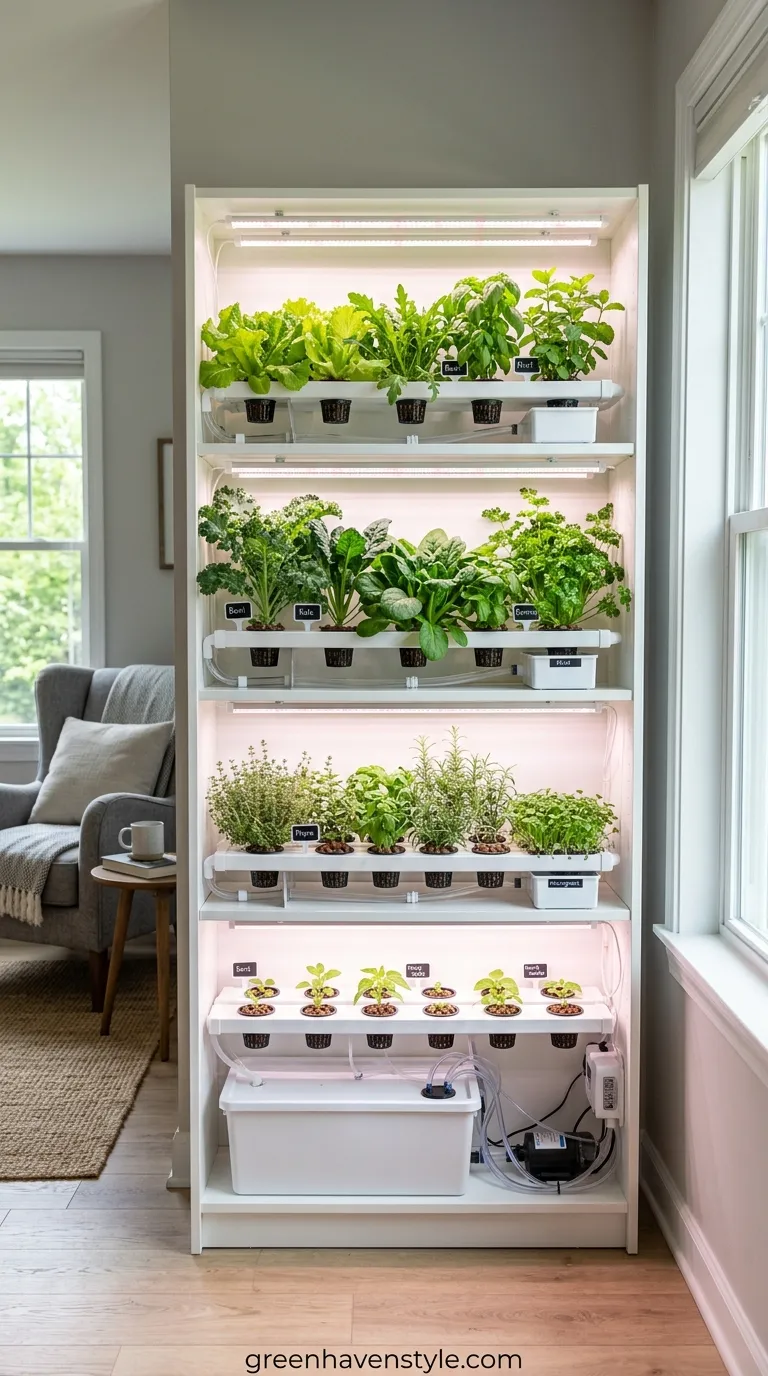
Transform a standard bookshelf into a multi-level growing station by adding hydroponic trays to each shelf with LED strip lights attached beneath upper shelves to illuminate plants below.
I’ve noticed that repurposing existing furniture makes hydroponic growing more accessible and budget-friendly. The familiar bookshelf format fits naturally into living spaces while providing ample vertical growing area that produces far more than its footprint suggests.
Each shelf becomes an independent growing zone where you can cultivate different crops or experiment with varying nutrient strengths. The organized appearance keeps systems tidy and maintains home aesthetics while producing substantial harvests from vertical space.
10. Hanging Basket System
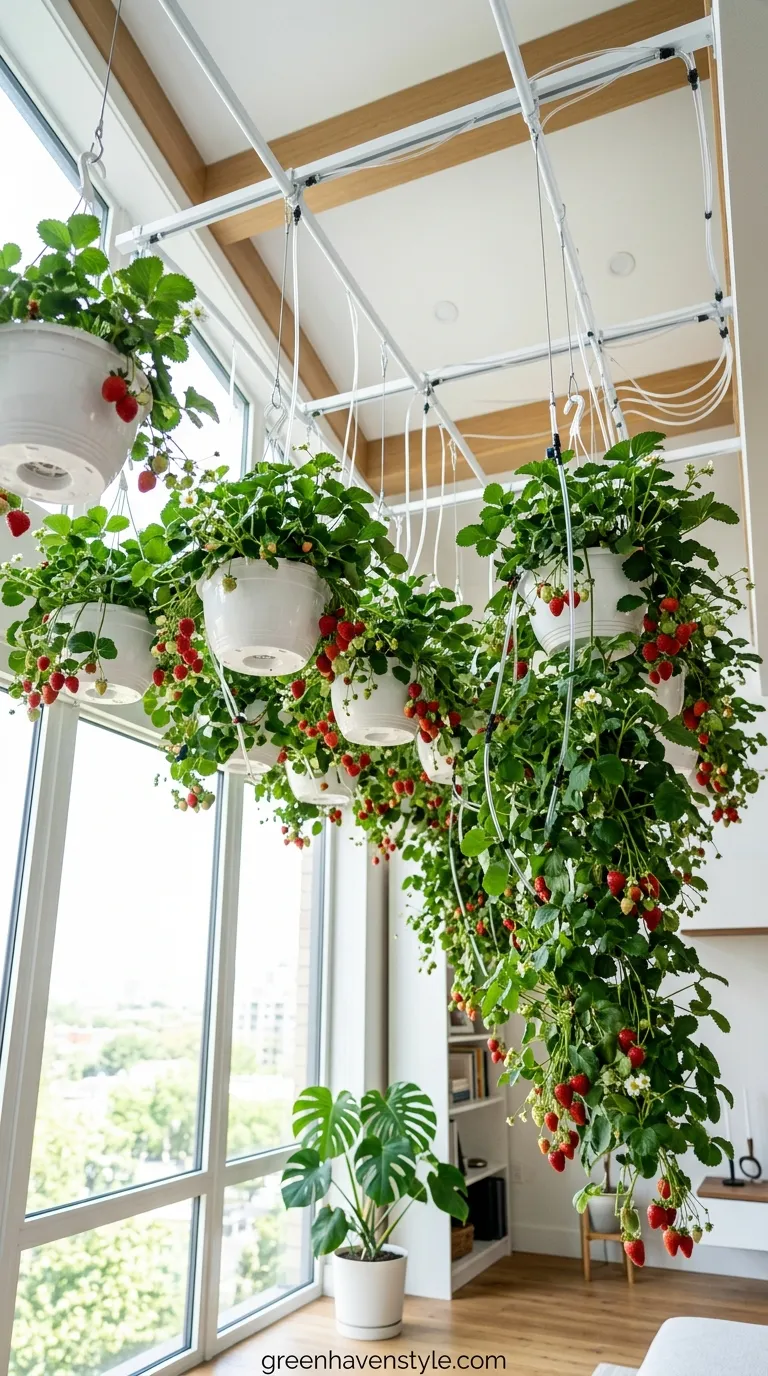
Suspend hydroponic baskets from ceiling hooks with nutrient delivery lines running to each basket, creating an overhead garden that grows strawberries or trailing herbs without consuming floor or counter space.
From what I’ve seen, hanging systems utilize often-neglected ceiling height beautifully. The elevated position keeps plants away from pets and young children while the cascading growth habit of strawberries or trailing herbs creates attractive living decorations overhead.
Position baskets near windows or install grow lights above them for proper illumination. The suspended design allows air circulation around all plant sides while the unique overhead perspective lets you inspect plant health and ripening fruit easily from below.
Conclusion
Growing fresh food indoors year-round becomes achievable and enjoyable when you explore these indoor hydroponic gardening ideas that fit modern homes and lifestyles perfectly. From simple countertop herb gardens to sophisticated vertical towers, each approach offers unique benefits for bringing soil-free cultivation into your living spaces with minimal hassle and maximum productivity.
I’ve seen how starting with even one small system builds confidence and often leads to expanding hydroponic setups as the joy of harvesting homegrown produce becomes addictive. Whether you choose passive mason jar methods or automated vertical farms, the satisfaction of eating food you’ve grown yourself never gets old.
Save these ideas for planning your indoor garden, start with a system that matches your available space and commitment level, then enjoy the fresh flavors and connection to your food that hydroponic growing delivers.


