
12 Easy Indoor Herb Garden Ideas for a Fresh and Flavorful Home
Imagine snipping fresh basil for your pasta or grabbing mint for your tea without stepping outside. Growing herbs indoors brings restaurant-quality ingredients right to your fingertips while filling your home with natural beauty and incredible fragrance.
Indoor herb garden ideas aren’t complicated or expensive to implement. They work in any home, whether you have a sunny windowsill or a compact apartment kitchen. I’ve noticed that people often think herb gardening requires outdoor space, but some of the most productive herb gardens thrive entirely indoors.
12 Easy Indoor Herb Garden Ideas for a Fresh and Flavorful Home
These ideas combine function with style, turning everyday cooking herbs into living décor that serves a purpose. From vertical wall planters to repurposed containers, you’ll discover setups that fit your space, skill level, and aesthetic preferences. Fresh herbs elevate every meal while purifying your air and adding life to previously empty corners.
1. Window Sill Herb Boxes 
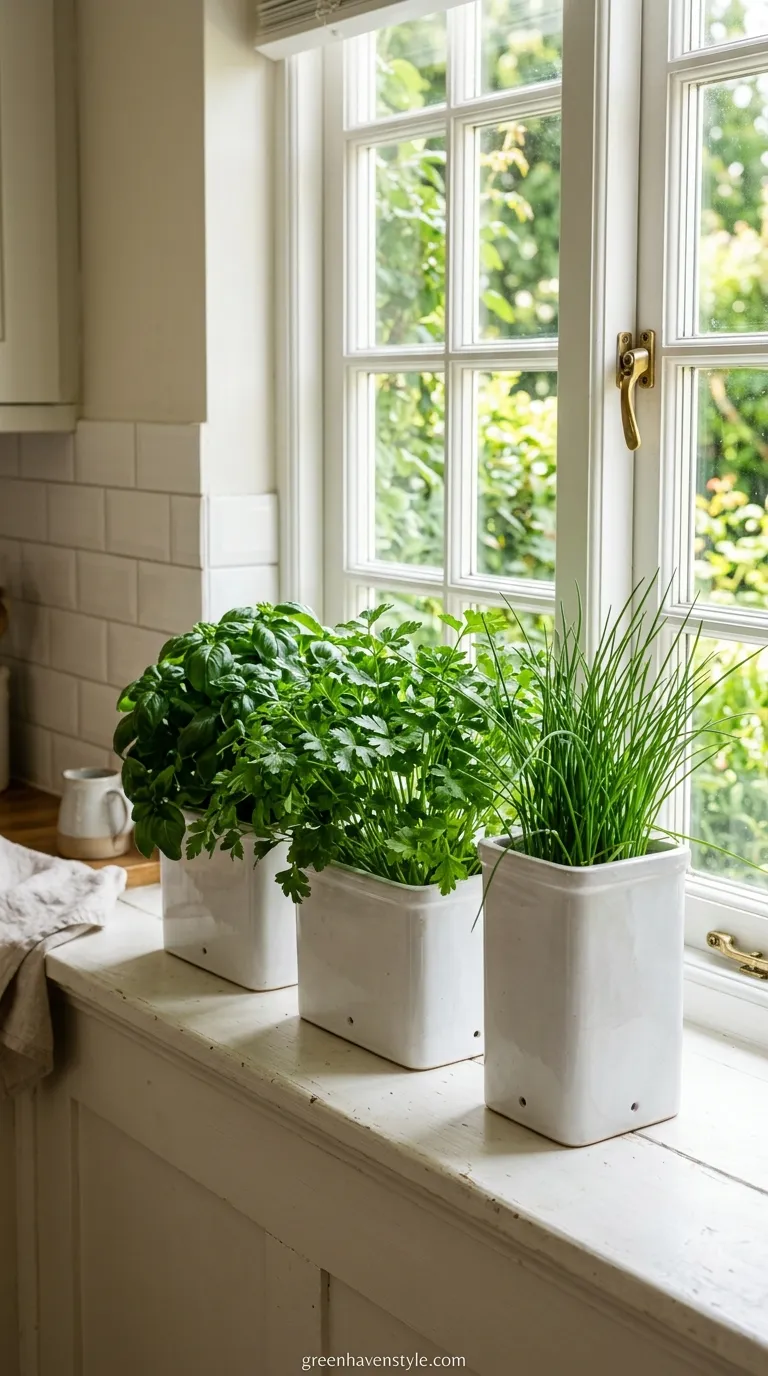
Small rectangular planters lined along a sunny window create the simplest growing setup. This classic arrangement takes advantage of natural light while keeping your most-used herbs within arm’s reach of your cooking space.
The continuous sunlight exposure promotes healthy growth without special equipment. I’ve found that south-facing windows work best, though east-facing spots provide gentler morning light that many herbs appreciate. Group basil, parsley, and chives together since they share similar watering needs and growth patterns.
2. Hanging Tiered Planters
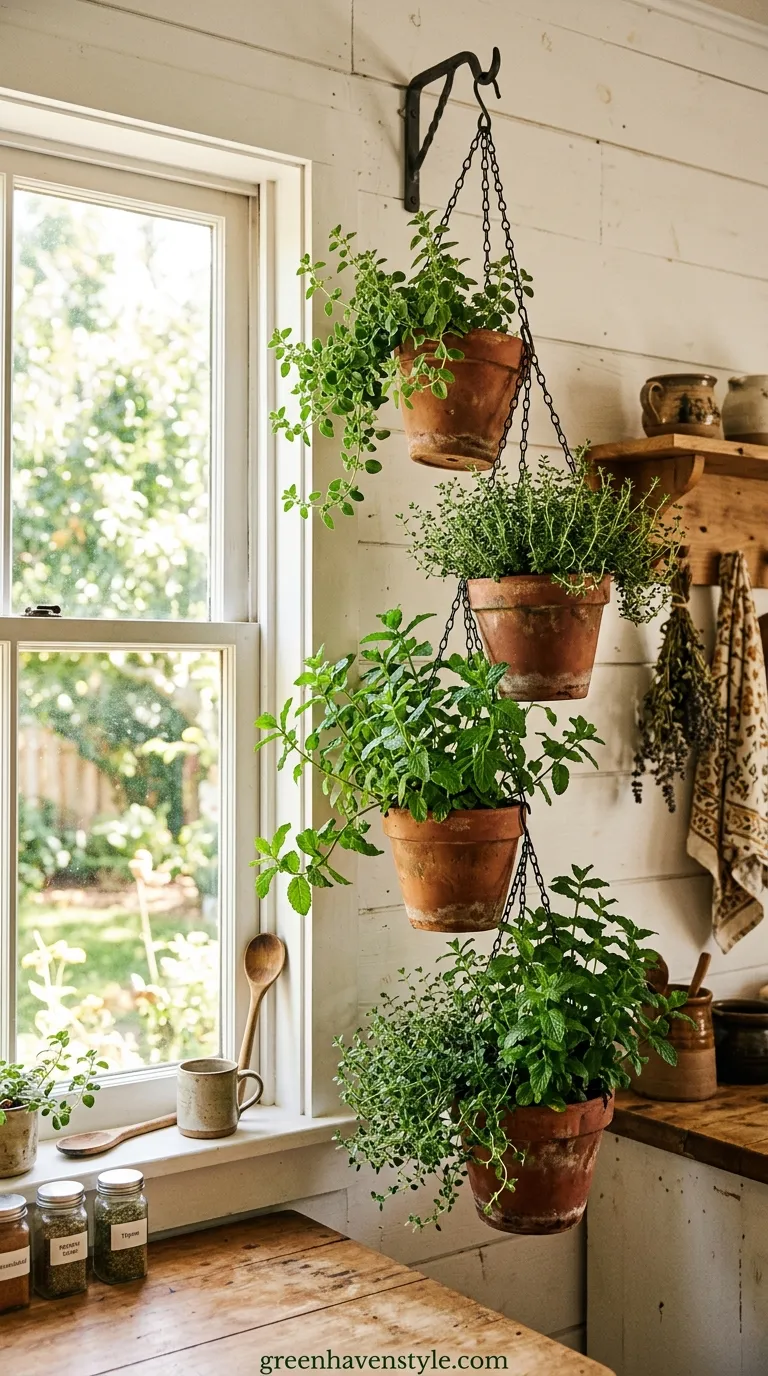
Vertical hanging containers maximize growing space in kitchens with limited counter area. Three or four pots suspended at different heights create visual interest while allowing you to cultivate multiple herb varieties in the same footprint.
The cascading arrangement looks beautiful and provides excellent drainage as water flows downward. From what I’ve seen, this setup works particularly well in corners near windows where vertical space goes unused, turning empty air into productive growing zones.
3. Mason Jar Collection
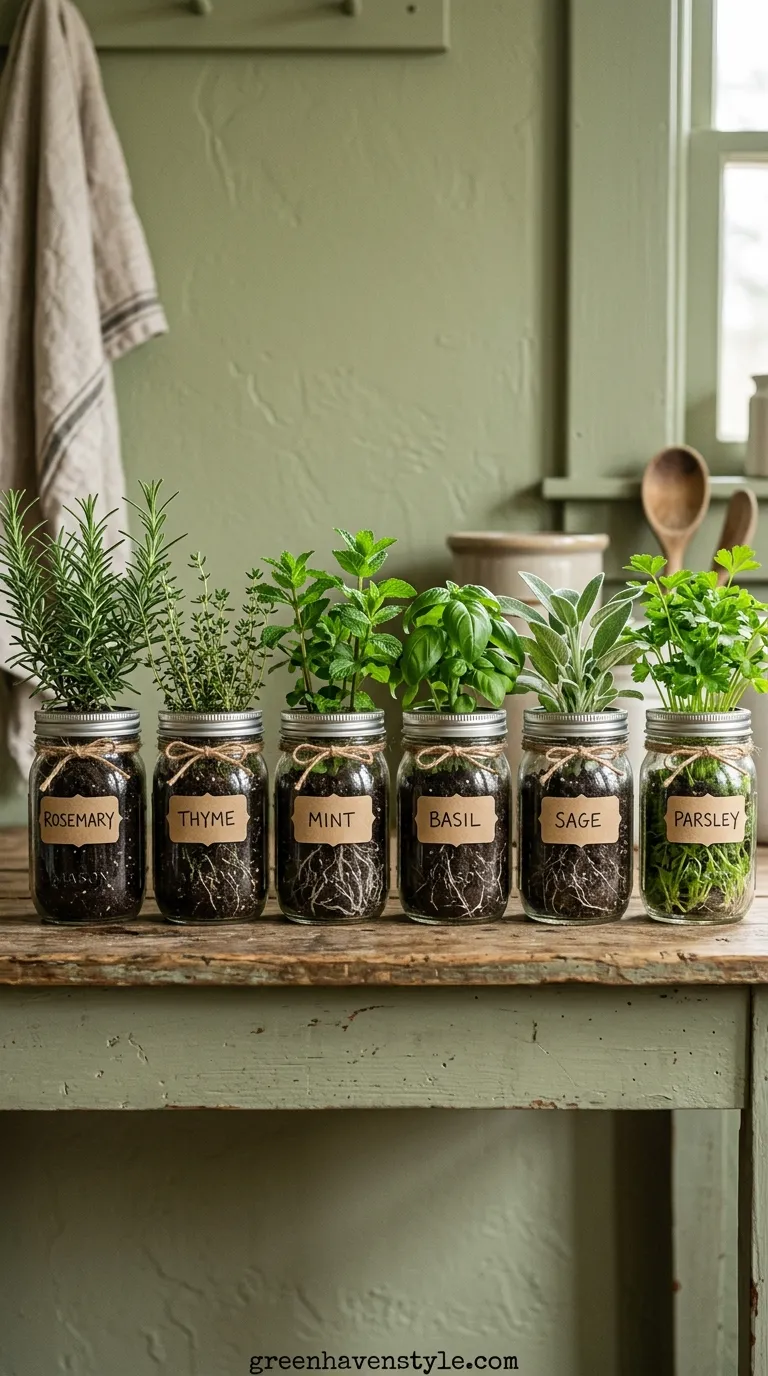
Clear glass jars arranged on open shelving bring farmhouse charm to herb growing indoors. The transparent containers let you monitor root health and water levels while creating a cohesive, Pinterest-worthy display that doubles as kitchen décor.
This budget-friendly approach repurposes items you likely already own. I’ve experimented with both soil and hydroponic setups in mason jars, and both methods produce abundant harvests. Add small drainage holes or use decorative pebbles at the bottom to prevent root rot.
4. Ladder Shelf Display
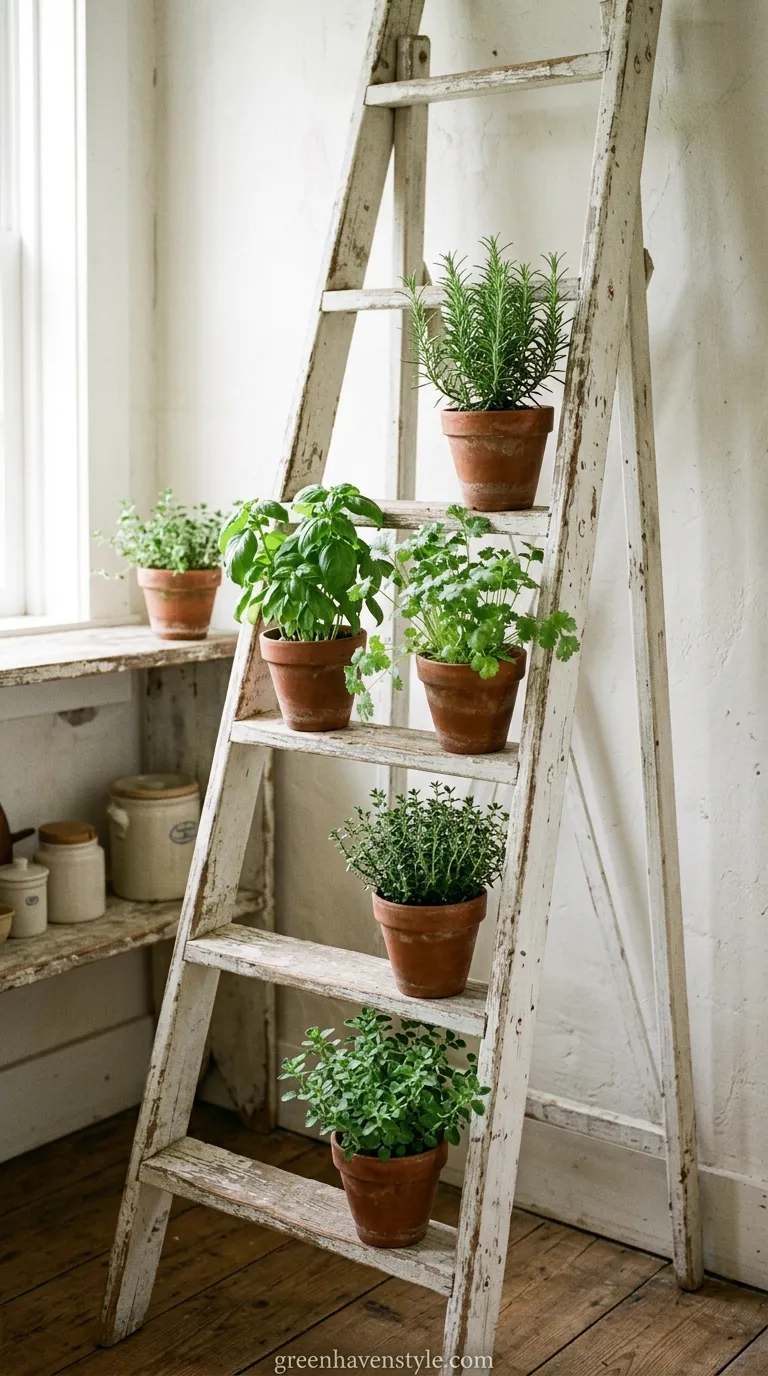
A wooden ladder leaning against the wall creates rustic multi-level herb planting spaces. Each rung holds small pots at slightly different heights, creating dimension while accommodating herbs with varying light preferences from top to bottom.
The angled design ensures all plants receive adequate light exposure. In my experience, placing shade-tolerant herbs like mint and parsley on lower rungs while sun-lovers like rosemary claim top positions creates the healthiest overall garden with minimal fussing.
5. Magnetic Wall Containers
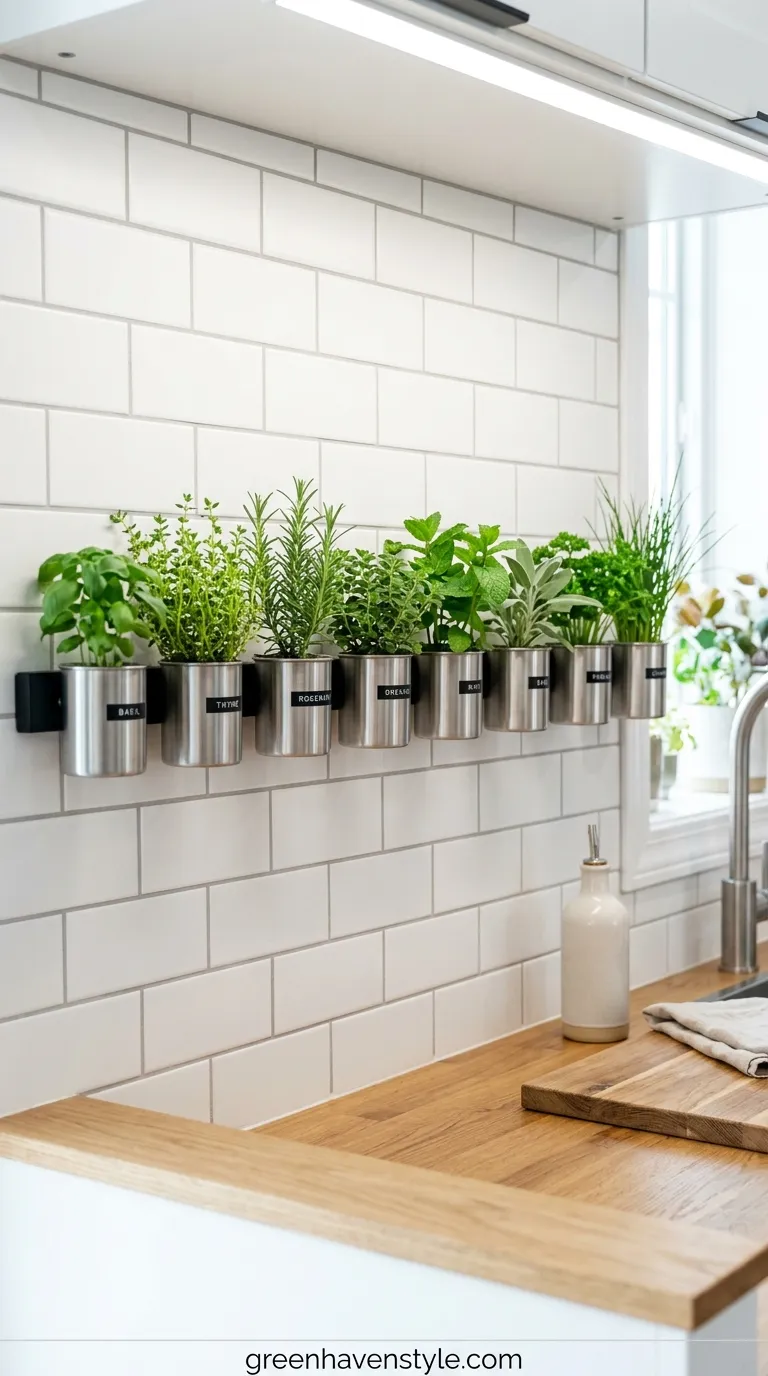
Small metal planters attached to magnetic strips on walls save precious counter space. This modern solution transforms blank kitchen walls into productive growing areas while maintaining a clean, minimalist aesthetic that feels intentional rather than cluttered.
The wall-mounted approach keeps herbs at eye level for easy harvesting. I’ve observed that this setup works beautifully in rental spaces where permanent installations aren’t allowed, since magnetic systems remove cleanly without damaging surfaces or losing security deposits.
6. Kitchen Cart Garden
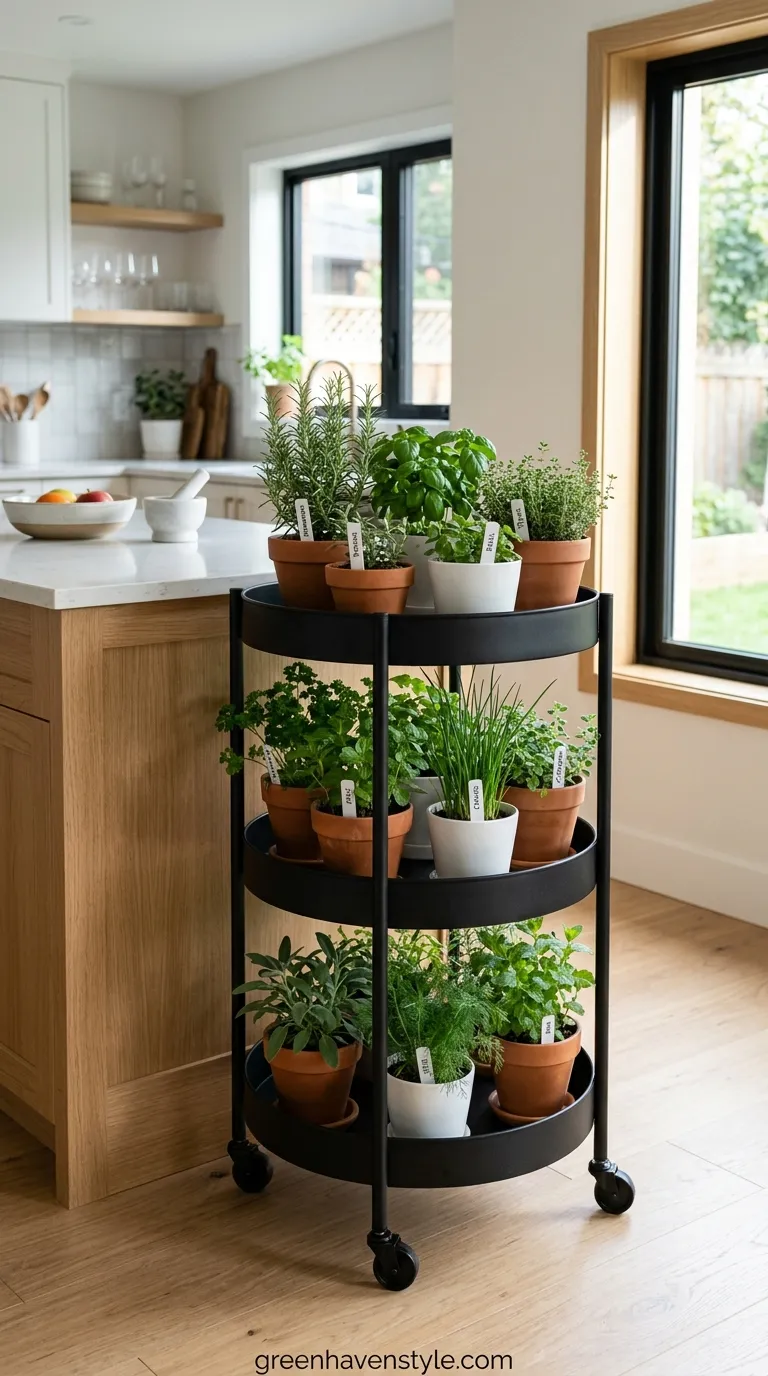
A rolling cart dedicated entirely to fresh herbs at home creates a mobile growing station. The multi-tiered design provides space for numerous pots while allowing you to move your entire garden toward sunlight or away from drafts as seasons change.
The flexibility helps you optimize growing conditions throughout the year. I learned the hard way that herbs near heating vents dry out quickly, but mobile carts let you adjust positions easily, protecting delicate plants while keeping them accessible during meal preparation.
7. Repurposed Tea Tin Planters
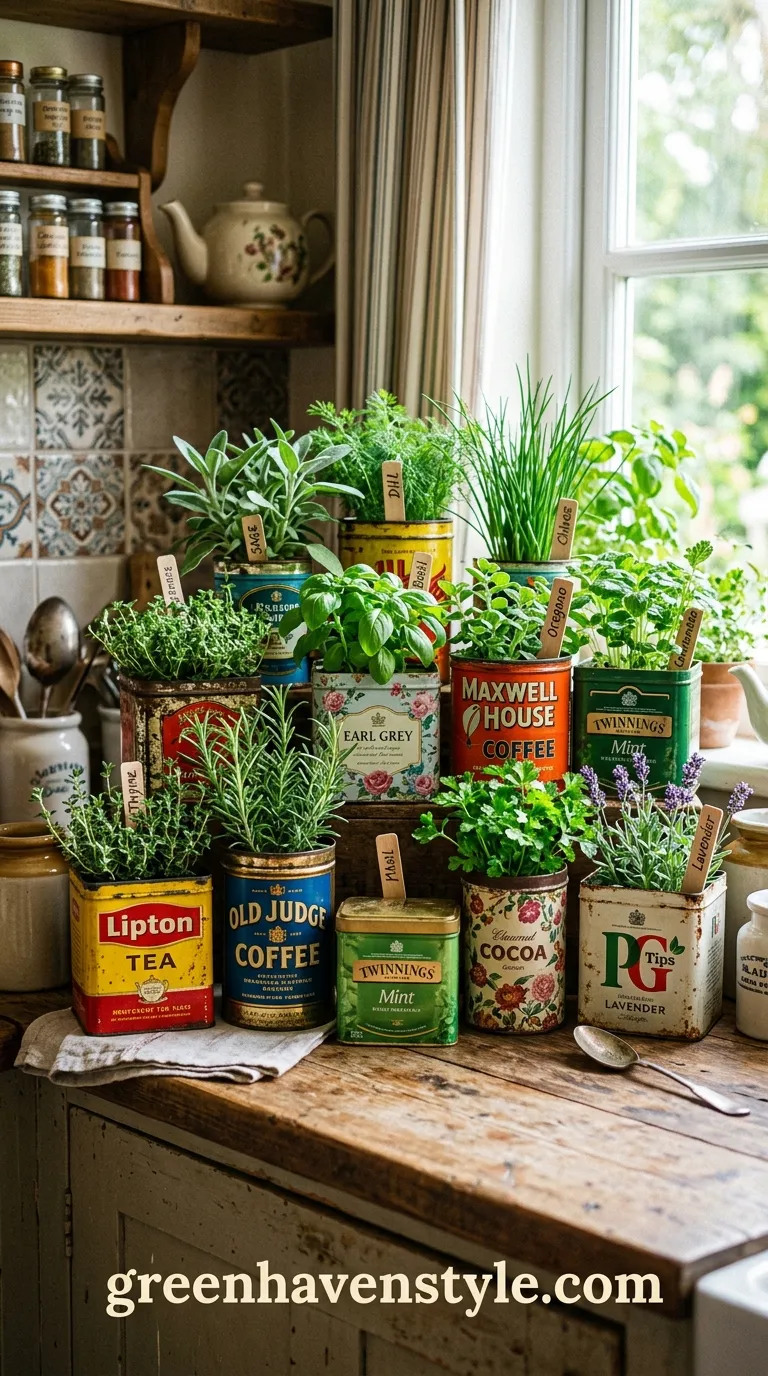
Vintage tea tins and coffee cans become charming container herb gardens with drainage holes added. The colorful, mismatched containers add personality to kitchens while proving that effective herb growing doesn’t require expensive specialized pots or matching sets.
This eco-friendly approach gives new life to items headed for recycling. I’ve noticed that smaller containers like these actually help beginners avoid overwatering, one of the most common mistakes in indoor herb cultivation, since the limited soil volume dries between waterings.
8. Windowsill Greenhouse Box
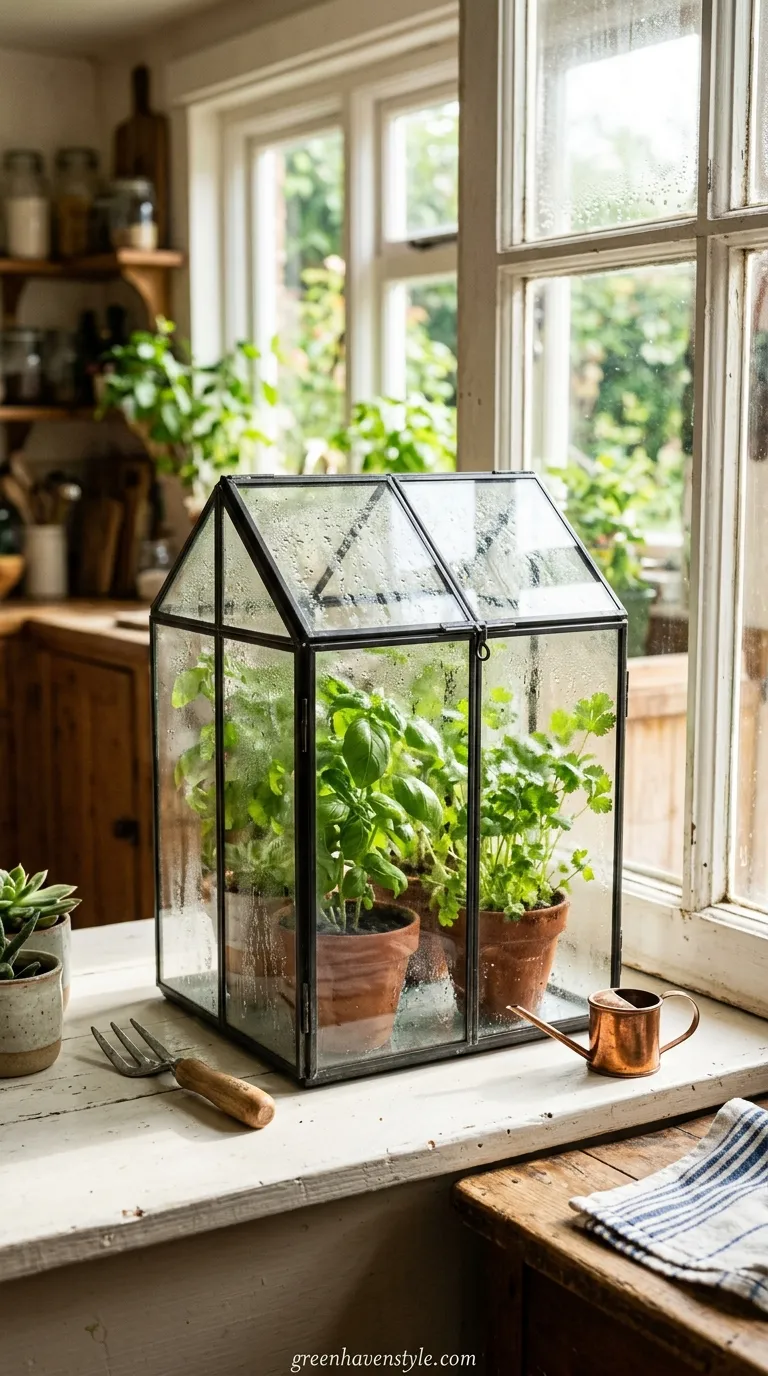
A miniature greenhouse structure sitting on your windowsill extends the growing season. The clear cover traps humidity and warmth, creating ideal microclimates for tender herbs like basil that struggle in dry indoor air during winter months.
The contained environment maintains consistent moisture levels with less frequent watering. From what I’ve seen, this setup particularly benefits those in colder climates where indoor heating creates desert-like conditions that stress Mediterranean herbs accustomed to humid coastal environments.
9. Stackable Tower Planter
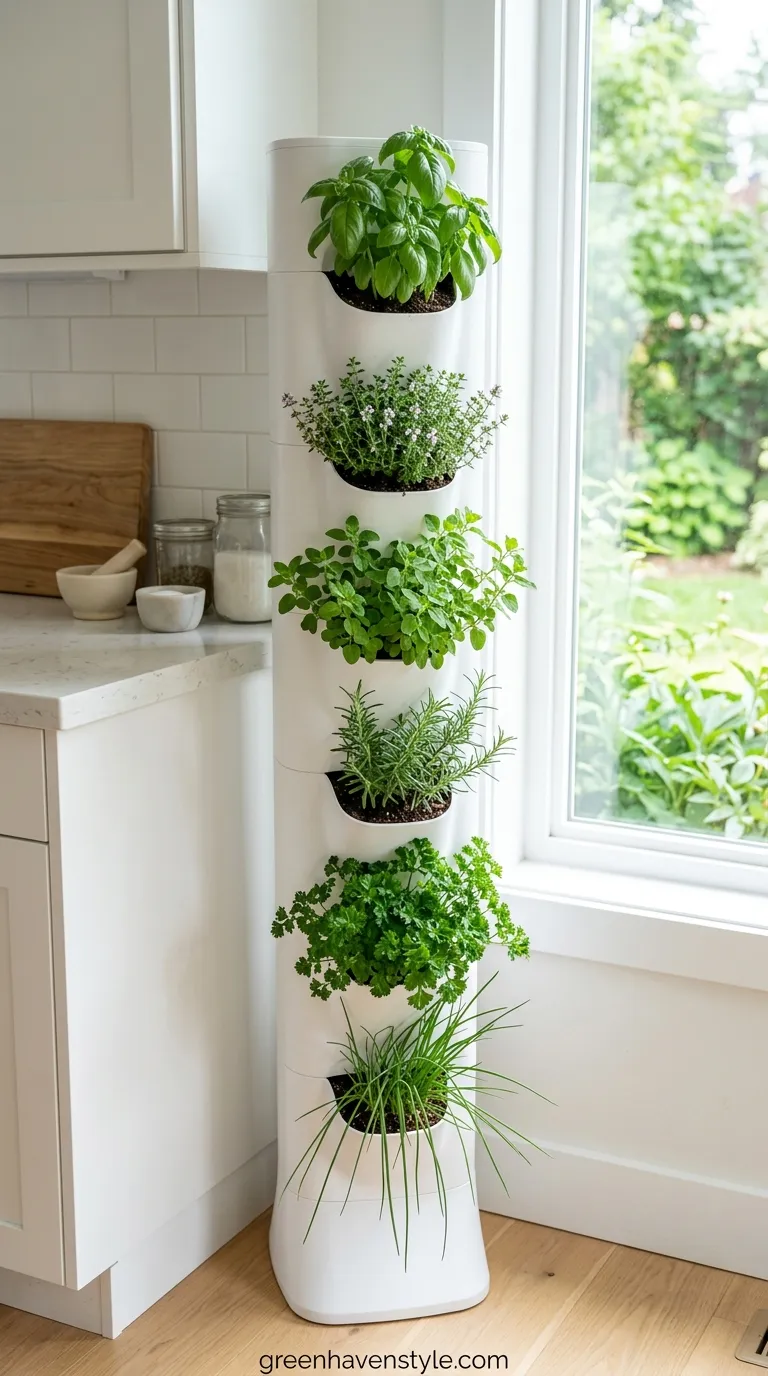
Vertical tower systems with multiple planting pockets maximize production in minimal floor space. These freestanding columns fit into corners or beside appliances, turning overlooked areas into thriving kitchen herb gardens that produce surprising amounts of fresh ingredients.
The compact footprint makes them perfect for apartment living. I’ve tried both rotating and stationary towers, and rotation models ensure all herbs receive equal light exposure, producing more balanced growth across all pockets without constant manual repositioning.
10. Floating Shelf Arrangement
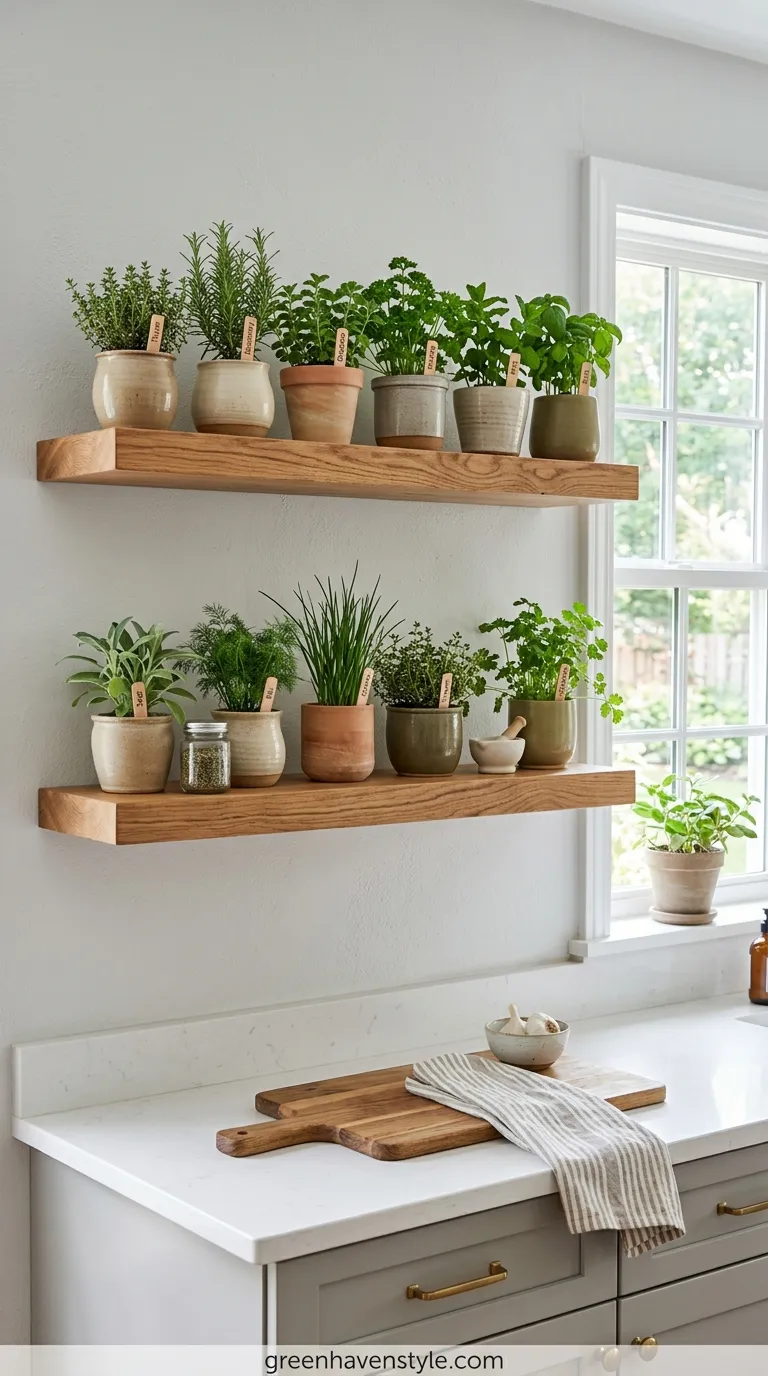
Open shelves installed specifically for herb containers create dedicated growing zones. The elevated positioning protects plants from curious pets and small children while displaying your herbs like living art that enhances your kitchen’s visual appeal.
Strategic shelf placement near windows ensures adequate natural light. In my experience, the tricky part is finding the right depth, shelves need enough width to accommodate standard pots while not protruding too far into walkways or workspace.
11. Countertop Hydroponic System
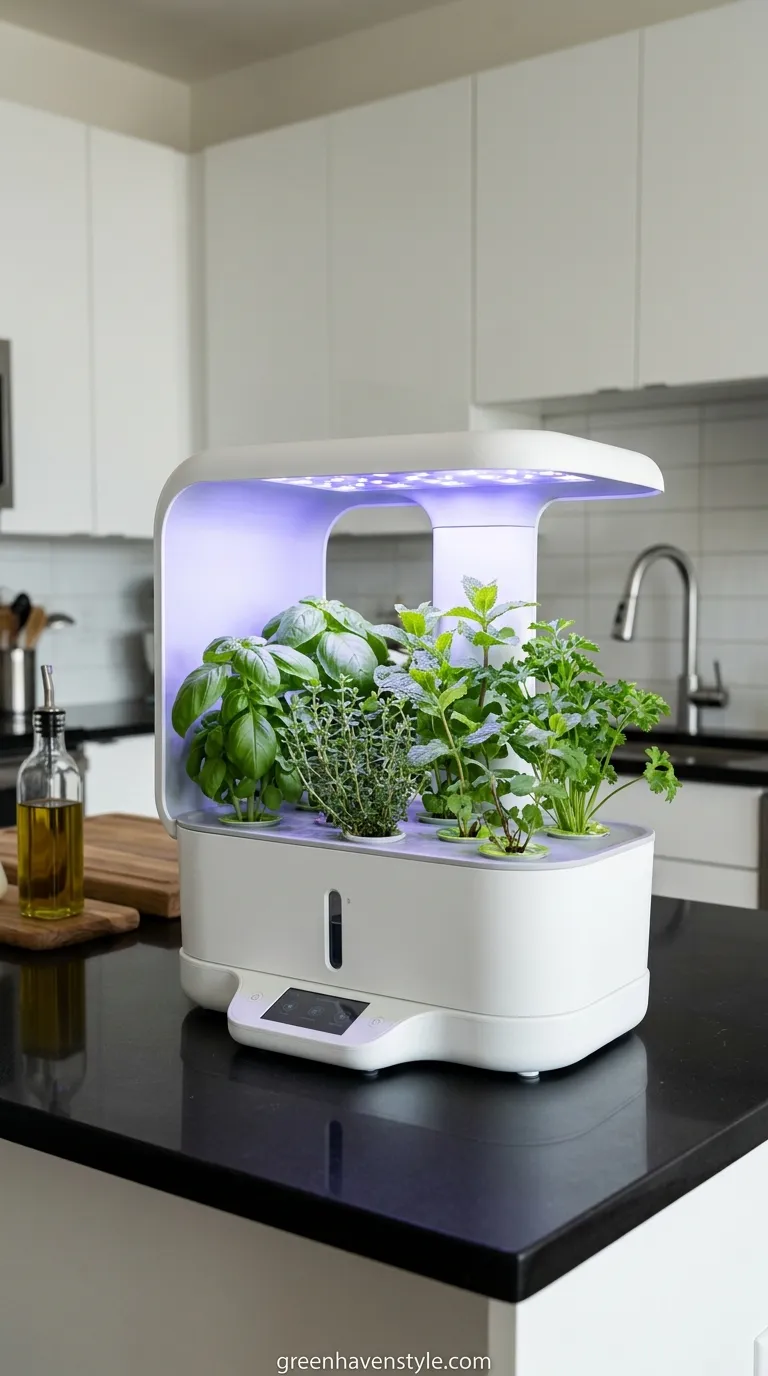
Self-watering hydroponic units bring technology to indoor gardening. These sleek systems grow herbs faster than soil-based methods while eliminating mess and guesswork, making them perfect for busy households wanting fresh herbs without traditional gardening effort.
Built-in grow lights mean placement flexibility regardless of window availability. I’ve been in kitchens where these systems produce restaurant-quality herbs year-round with minimal maintenance, just adding water and nutrients on simple schedules that fit modern lifestyles.
12. Vintage Crate Display
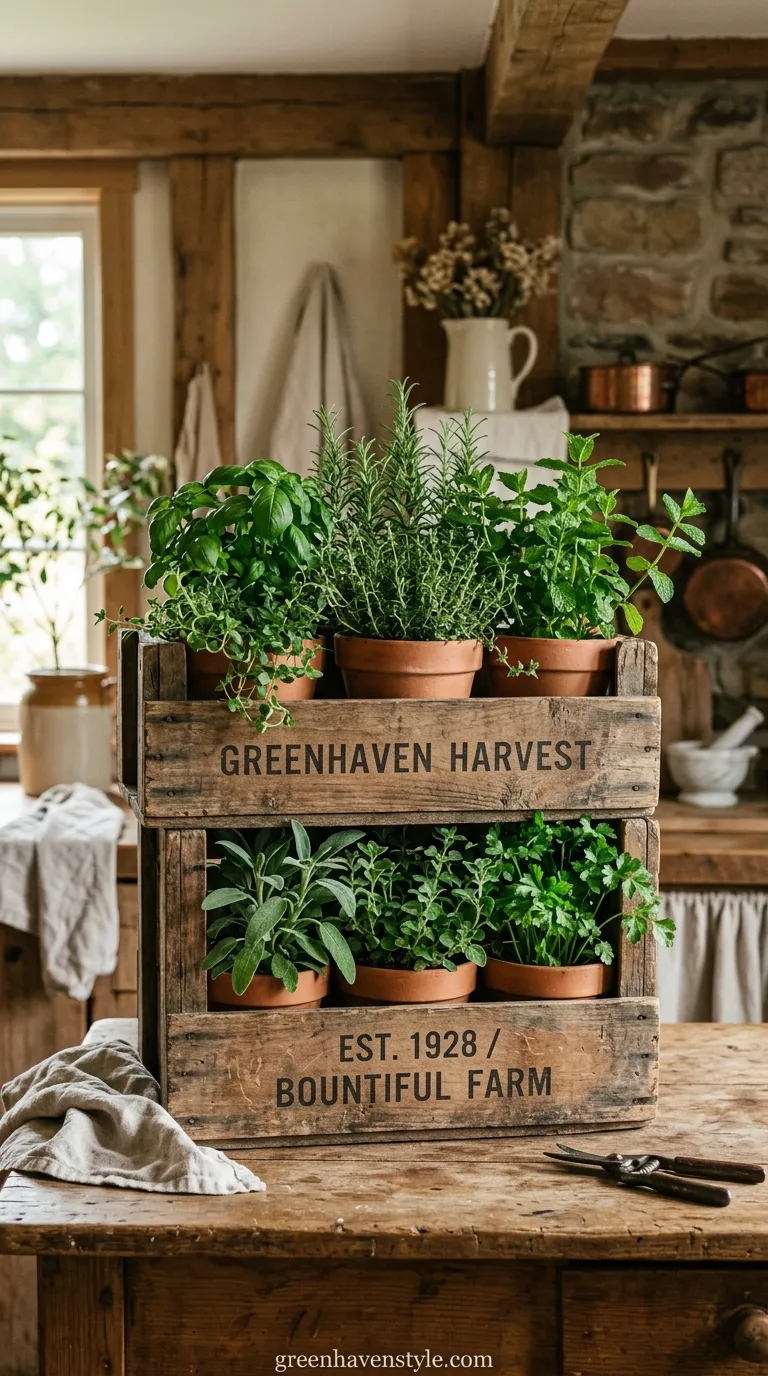
Wooden produce crates stacked or mounted create rustic herb growing stations. The weathered wood adds texture and warmth to kitchens while the open slat design provides excellent air circulation that prevents the fungal issues common in more enclosed containers.
This approach feels both practical and decorative simultaneously. I’ve found that lining crates with landscape fabric before adding soil prevents mess while maintaining drainage, creating functional planters that look authentically vintage rather than artificially distressed.
Conclusion
Creating your own version of these indoor herb garden ideas transforms how you cook and experience your kitchen daily. Fresh herbs add flavor, fragrance, and living beauty to your home while connecting you to the simple satisfaction of growing your own ingredients.
I’ve seen how even a small windowsill setup changes cooking habits, encouraging more adventurous seasoning and healthier meals. Whether you choose a single mason jar or an elaborate tower system, starting somewhere matters more than starting perfectly.
Pick one idea that matches your space and confidence level, then watch your kitchen come alive with green growth and incredible scents. Save these ideas to Pinterest for inspiration as your indoor garden evolves and expands with your growing skills.


