
17 Stunning Tropical Garden Design Ideas for an Exotic Outdoor Escape
Imagine stepping into your backyard and feeling like you’ve been transported to a lush island paradise. Bold foliage, vibrant blooms, and layered greenery create that vacation-worthy atmosphere right outside your door. Tropical garden design isn’t reserved for warm climates alone, these ideas adapt beautifully to various zones with smart plant selections and creative styling.
The secret lies in creating density, drama, and depth through plants with large leaves, striking textures, and bold colors that make spaces feel alive and abundant. Even small yards transform into private jungle retreats when you layer plants thoughtfully and embrace the gloriously wild aesthetic.
17 Stunning Tropical Garden Design Ideas for an Exotic Outdoor Escape
I’ve noticed that people often hesitate, thinking tropical gardens require constant maintenance or special conditions. The reality surprises most beginners. Many tropical-looking plants thrive with minimal care once established, and clever design makes maintenance manageable while delivering that wow factor.
These ideas will guide you through creating your own tropical escape, from selecting statement plants to arranging elements that maximize impact. Whether you’re working with a tiny patio or expansive property, you’ll discover approaches that bring exotic beauty into your everyday life.
1. Layered Palm Groupings 
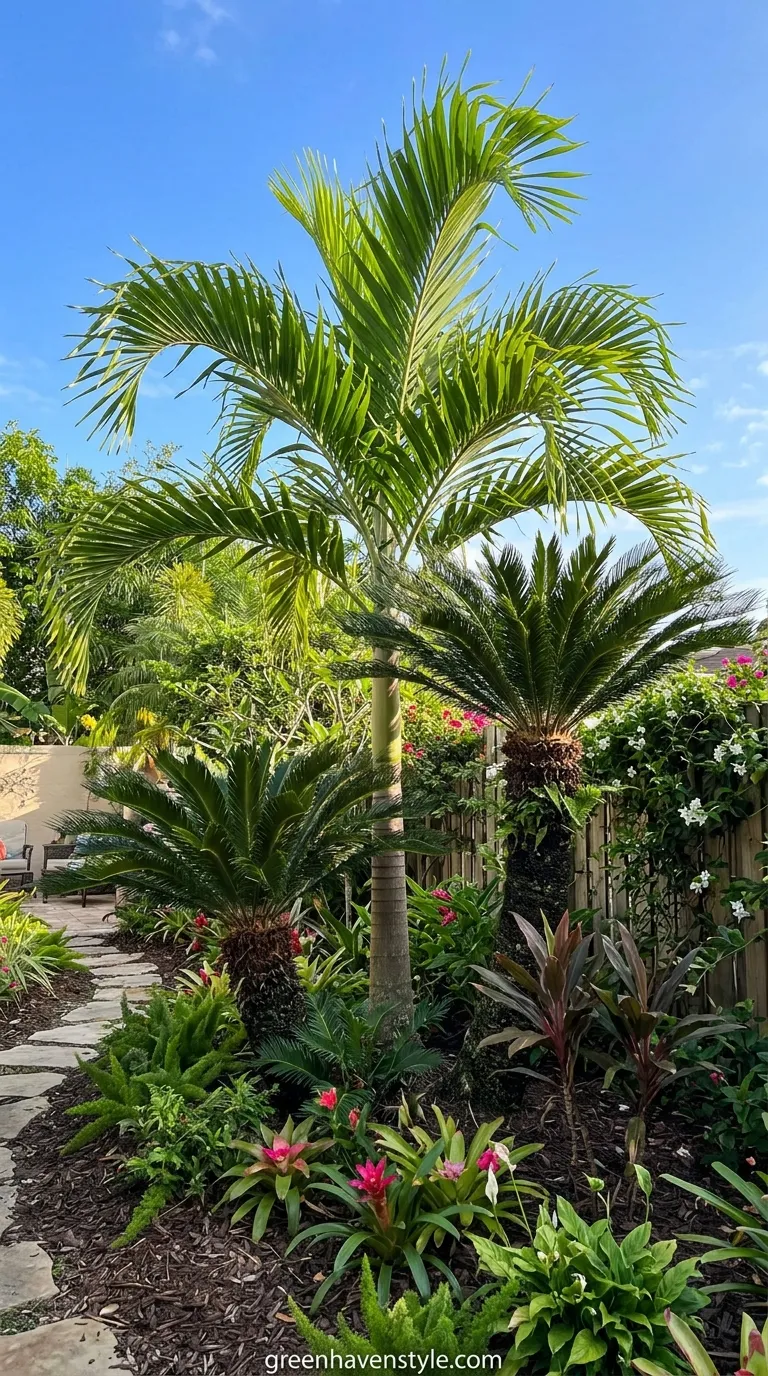
Multiple palm varieties planted in clusters create instant tropical atmosphere. Varying heights from towering majesty palms to compact sago palms establish vertical drama while the iconic fronds immediately signal paradise, transforming ordinary yards into exotic outdoor spaces that feel worlds away.
The layered approach prevents the lone-palm look that often falls flat visually. I’ve found that odd-numbered groupings of three or five palms in staggered heights creates more natural, visually pleasing arrangements than evenly spaced pairs or single specimens standing awkwardly alone.
2. Banana Leaf Statement Plants
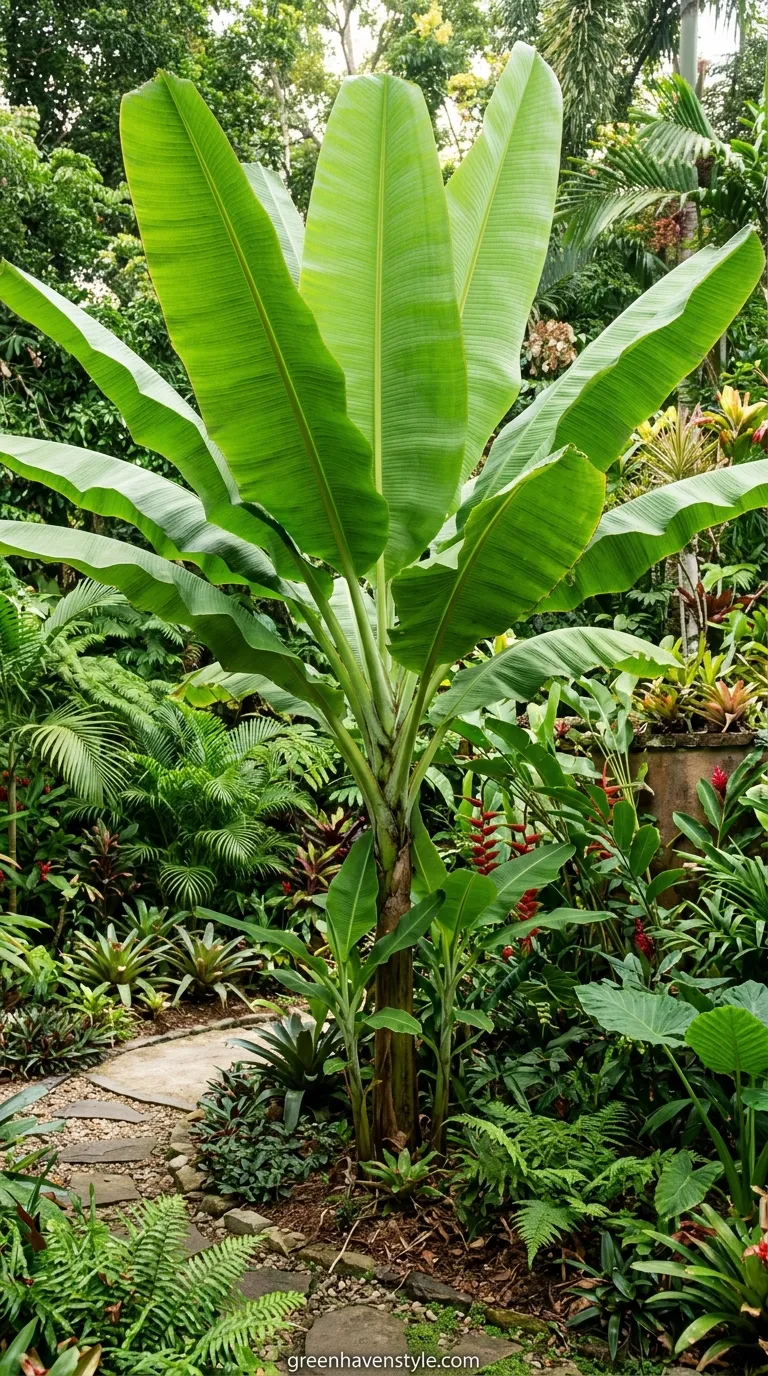
Giant banana plants with massive paddle-shaped leaves become living sculptures. The enormous foliage creates bold focal points while providing that quintessential tropical silhouette that photographs beautifully and establishes the lush, oversized plant aesthetic that defines successful tropical landscaping immediately.
These plants grow surprisingly fast, delivering quick gratification for impatient gardeners. From what I’ve seen, even non-fruiting ornamental varieties like Abyssinian banana survive winters in zones far colder than expected when heavily mulched, expanding possibilities for more gardeners than realize.
3. Colorful Croton Borders
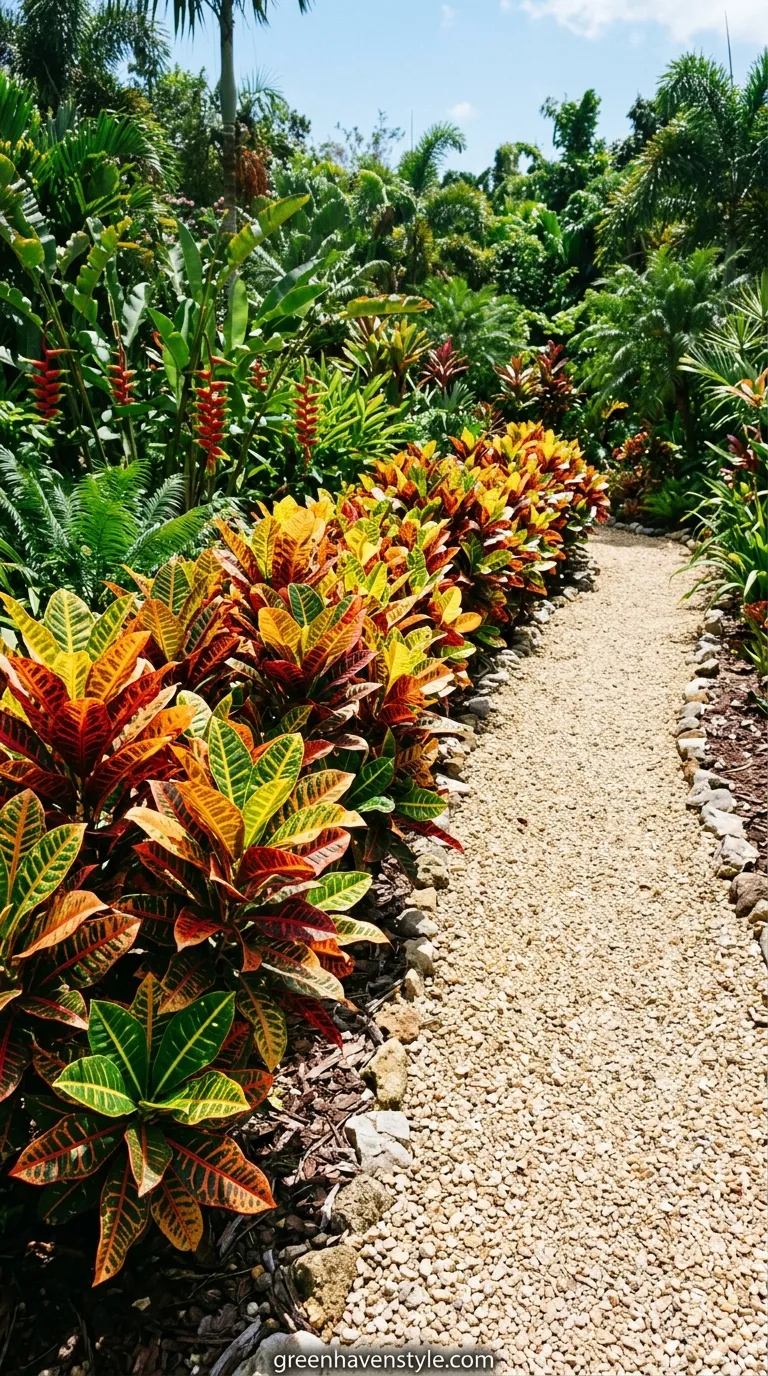
Vibrant croton shrubs with multicolored foliage line pathways and beds. The leaves display spectacular combinations of red, orange, yellow, and green simultaneously, providing year-round color without relying solely on flowers that come and go seasonally throughout the year.
The paint-splattered appearance adds artistic flair to garden edges. I’ve experimented with both full-sun and partial-shade placements, finding that brighter light intensifies colors dramatically, though even shadier spots maintain enough vibrancy to make these plants worthwhile investments for tropical aesthetics.
4. Water Feature Centerpiece
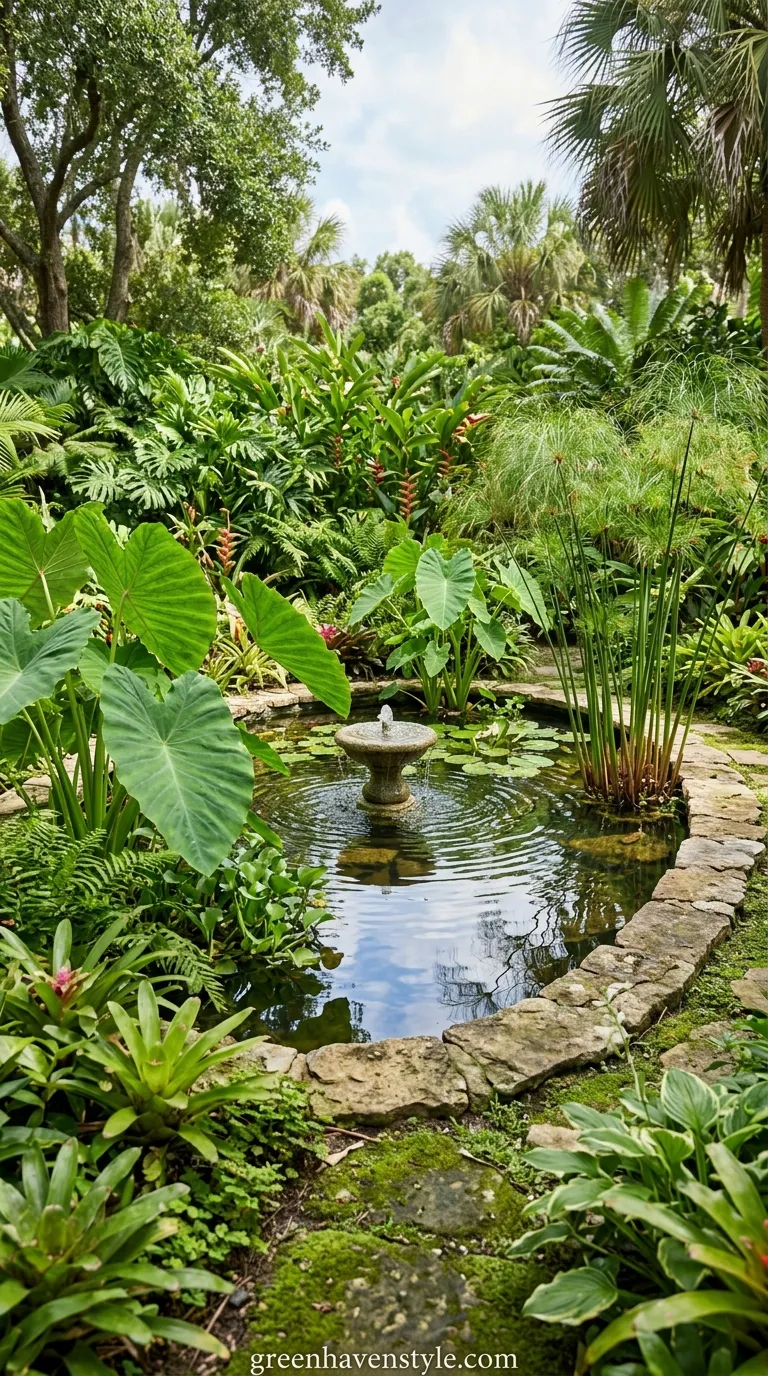
A pond or fountain surrounded by moisture-loving tropicals creates humid microclimates. The water element adds authentic jungle atmosphere through sound and reflection while supporting plants like elephant ears and papyrus that thrive in consistently damp conditions other areas can’t provide.
Moving water attracts birds and beneficial wildlife naturally. In my experience, the tricky part is balancing pump size to water volume, too weak creates disappointing trickles while overly powerful pumps splash excessively, but getting it right transforms gardens acoustically and visually.
5. Bird of Paradise Clusters
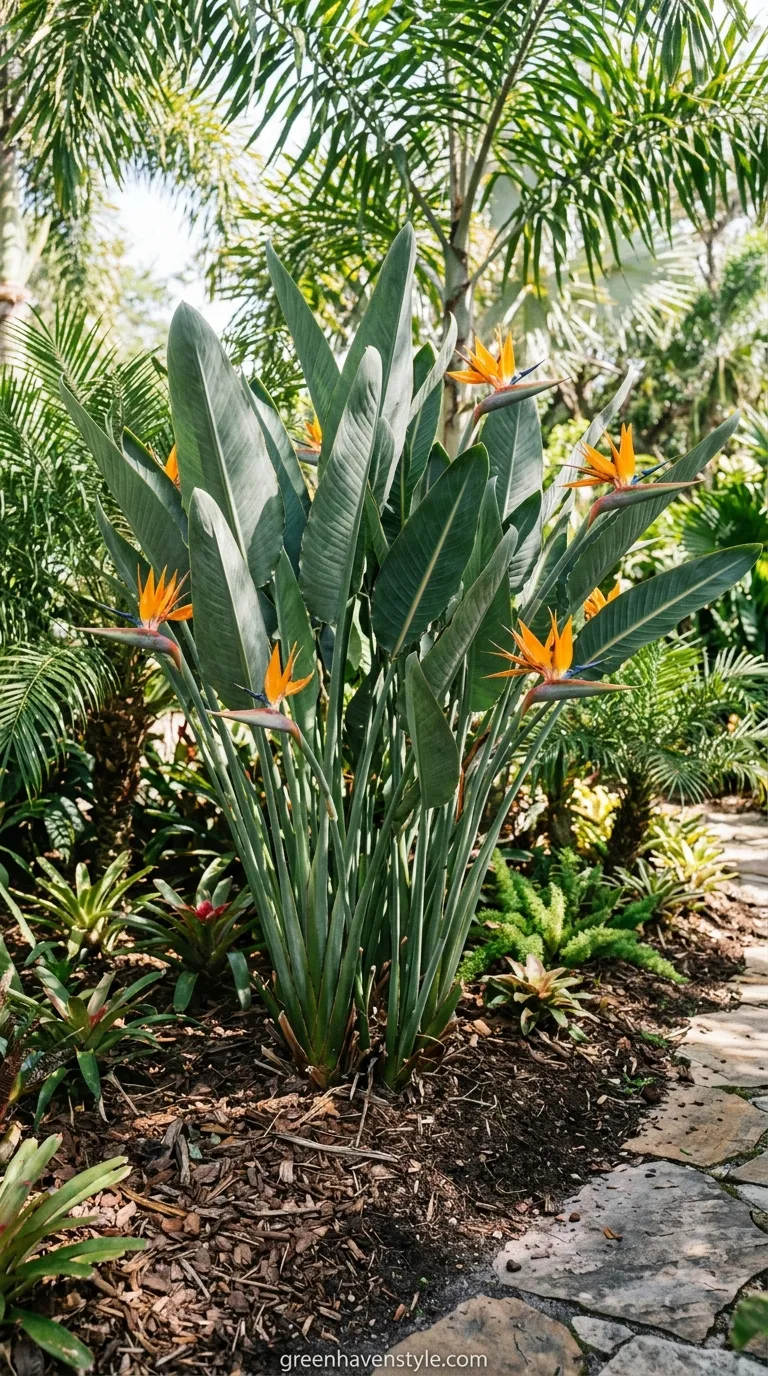
Strelitzia plants with architectural leaves and exotic orange blooms make dramatic statements. The sculptural foliage alone justifies their inclusion, but those stunning bird-shaped flowers become conversation pieces that make neighbors stop and ask questions about your impressive tropical planting choices.
These plants tolerate more neglect than their exotic appearance suggests. I’ve observed that established clumps bloom more prolifically than isolated plants, making groupings of three or more specimens worthwhile investments that pay dividends in spectacular floral displays.
6. Overhead Pergola Canopy
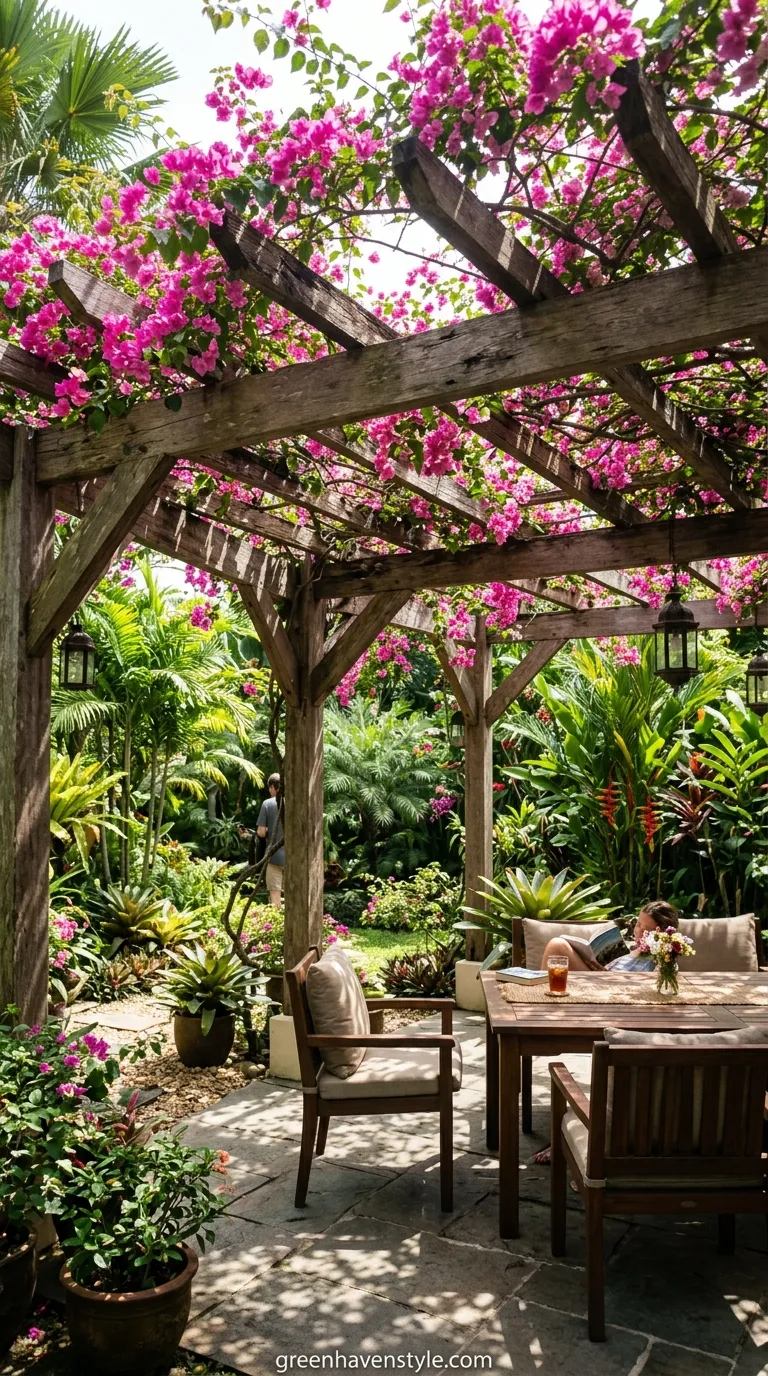
A wooden pergola draped with tropical vines creates shaded retreat spaces. Passionflower, mandevilla, or bougainvillea scramble overhead, filtering harsh sunlight while establishing that enclosed jungle feeling where you’re surrounded by greenery from ground level to sky above.
The structure supports plants while defining outdoor rooms below. I learned the hard way that lightweight pergolas shift under vigorous vine weight, so anchoring properly from the start prevents frustrating repairs later when plants have already established and intertwined.
7. Colorful Hibiscus Accents
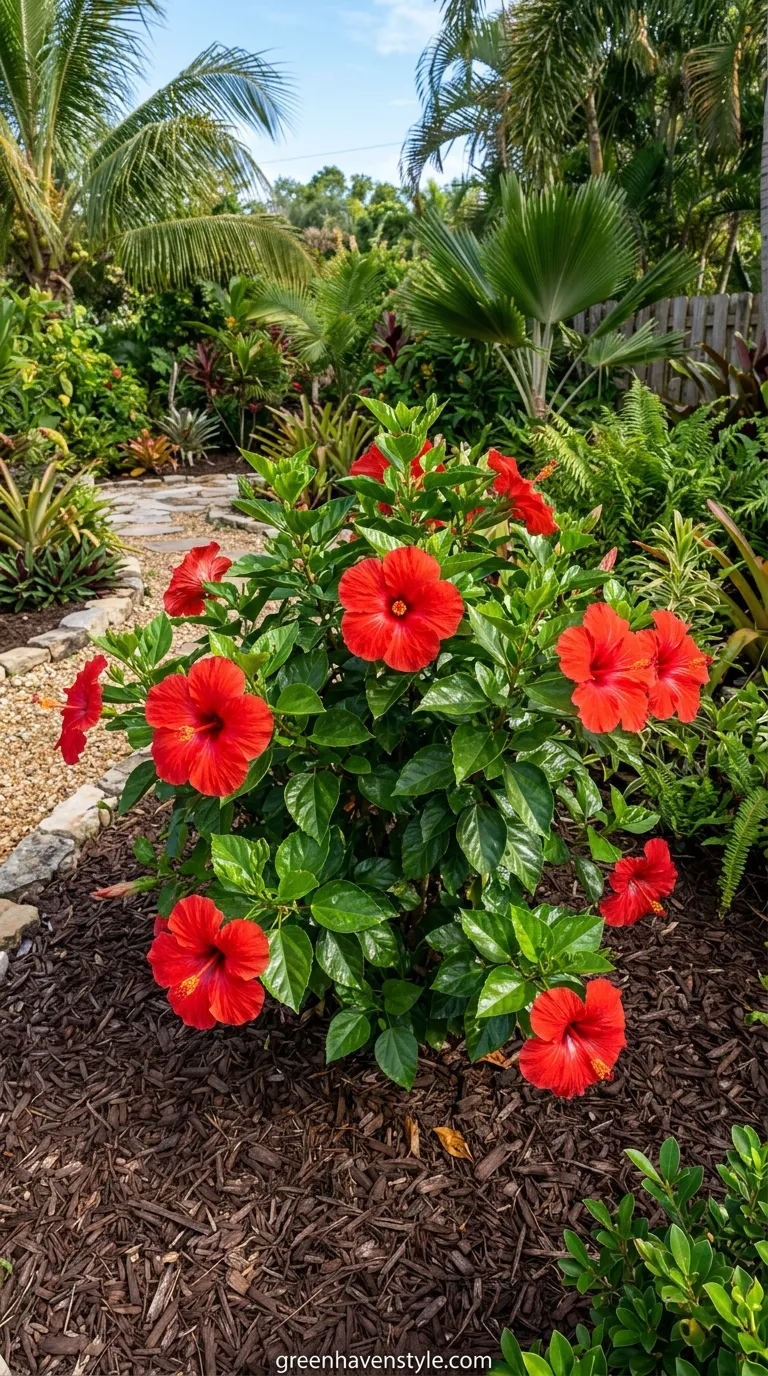
Tropical hibiscus shrubs provide brilliant flower pops throughout growing seasons. The dinner-plate sized blooms in reds, pinks, oranges, and yellows create focal points while the glossy green foliage maintains structure even when flowers fade, ensuring year-round contribution to overall garden composition.
Daily blooms create constantly changing displays despite individual flowers lasting just one day. From what I’ve seen, regular fertilizing produces noticeably more abundant flowering, making the minimal effort of monthly feeding absolutely worthwhile for maintaining that continuous tropical color.
8. Gravel and Stone Pathways
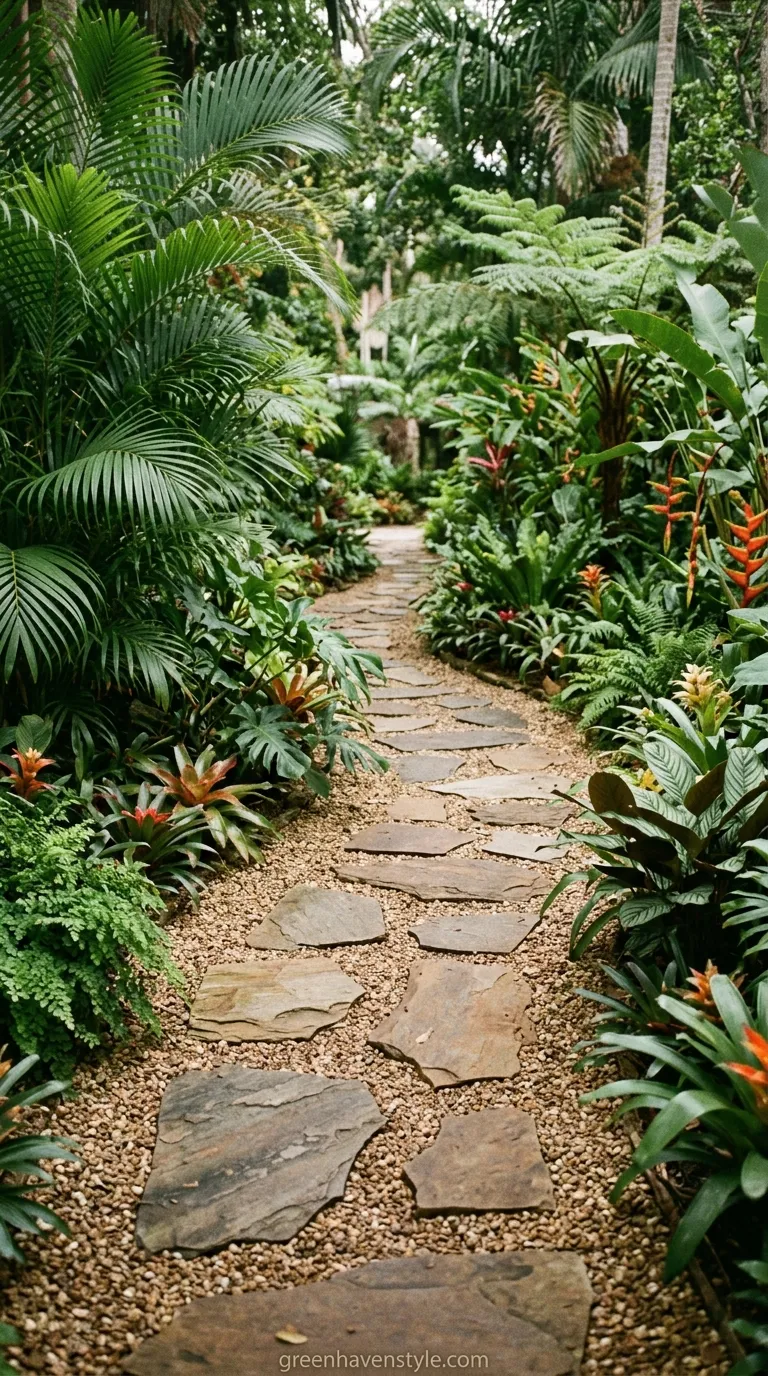
Irregular stepping stones or crushed gravel paths wind through plantings naturally. The earth-toned hardscaping provides textural contrast to lush greenery while maintaining the organic, slightly wild aesthetic that formal brick or concrete would disrupt in authentically tropical-feeling garden spaces.
Permeable surfaces handle tropical downpours better than solid paving. I’ve tried both river rock and decomposed granite, finding that granite compacts into firmer walking surfaces while river rock provides better drainage, so choosing depends heavily on your specific soil and rainfall patterns.
9. Canna Lily Borders
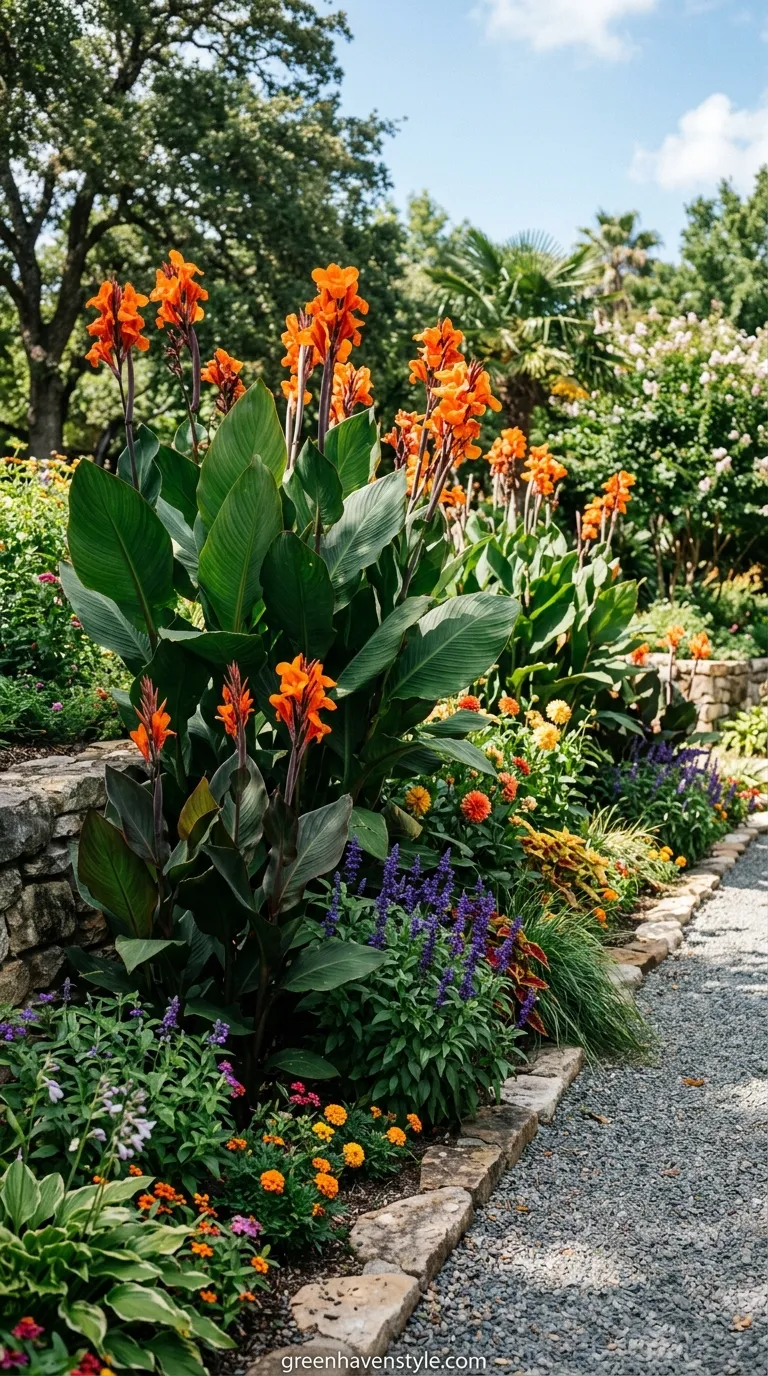
Bold canna plants with tropical foliage and vibrant flower spikes line beds and borders. The broad leaves resemble bananas while the bright blooms add height and color, creating that layered jungle density where every vertical level contains visual interest and textural variety.
Cannas spread reliably, filling space quickly without becoming aggressively invasive. I’ve noticed that dividing clumps every few years maintains vigor and provides plenty of plants to expand your tropical garden or share with friends interested in creating similar lush effects.
10. Tiki Torch Lighting
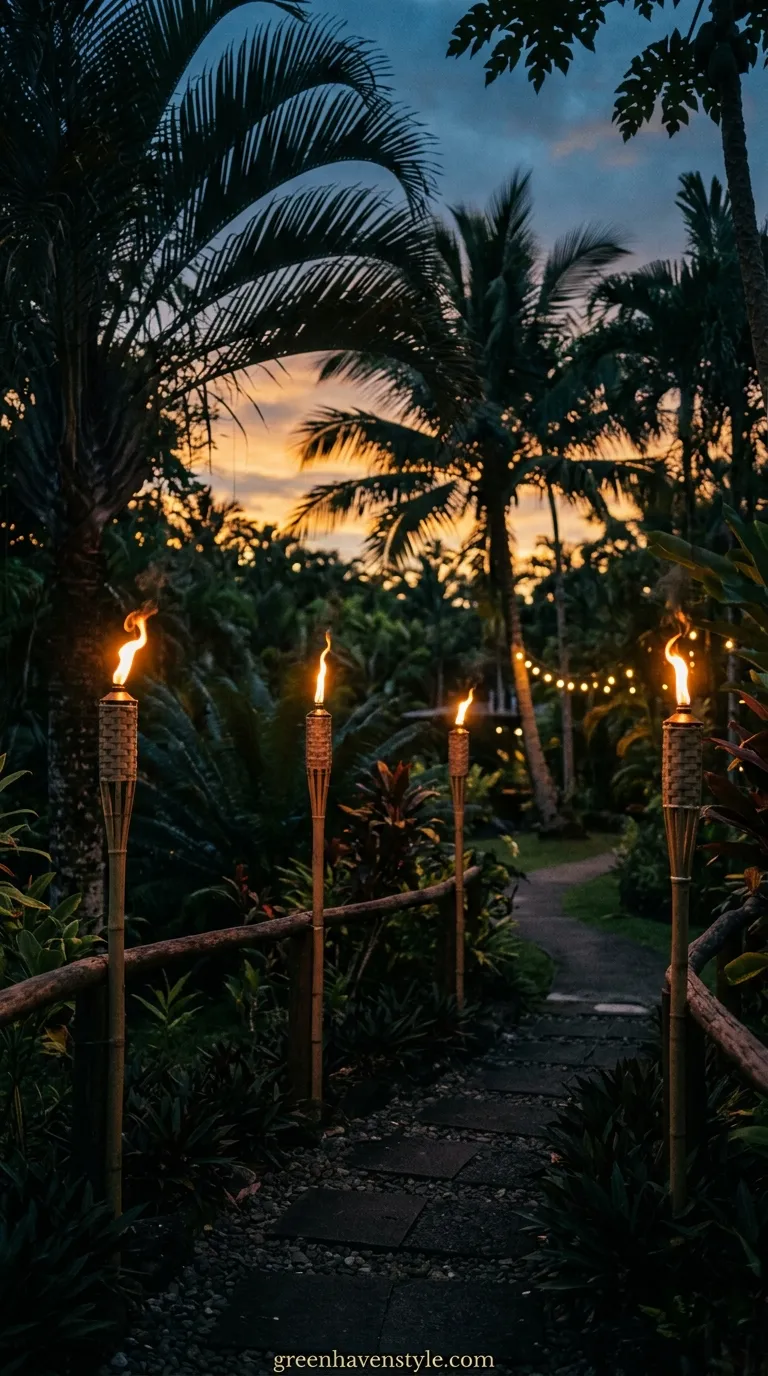
Bamboo torches placed strategically extend garden enjoyment into evenings. The flickering flames create ambiance while the tropical styling reinforces your theme, making nighttime gatherings feel like beachside parties even when you’re miles from any ocean or coastline.
LED flameless versions offer worry-free alternatives to open flames. In my experience, spacing torches eight to ten feet apart provides adequate lighting without creating daylight brightness, maintaining that romantic, mysterious atmosphere that makes tropical gardens magical after sunset.
11. Monstera Deliciosa Containers
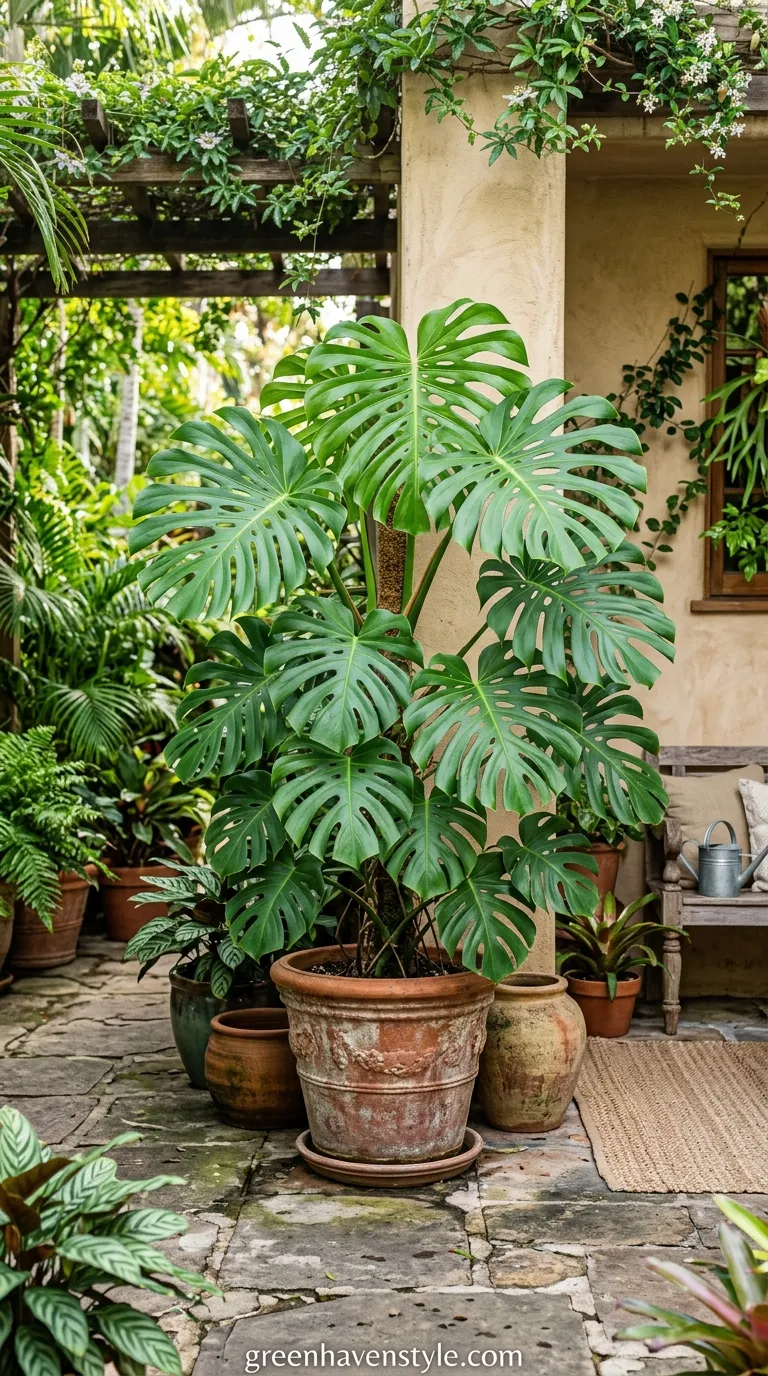
Swiss cheese plants in large decorative pots create instant tropical drama. The iconic perforated leaves make unmistakable statements while container planting allows moving these frost-sensitive beauties indoors during cold months, extending tropical aesthetics to year-round enjoyment regardless of climate.
These plants tolerate lower light surprisingly well for tropicals. I’ve found that positioning containers near walls or fences provides support for the natural climbing tendency while preventing wind damage to those spectacular but somewhat fragile leaves during storms.
12. Lush Ground Cover Layers
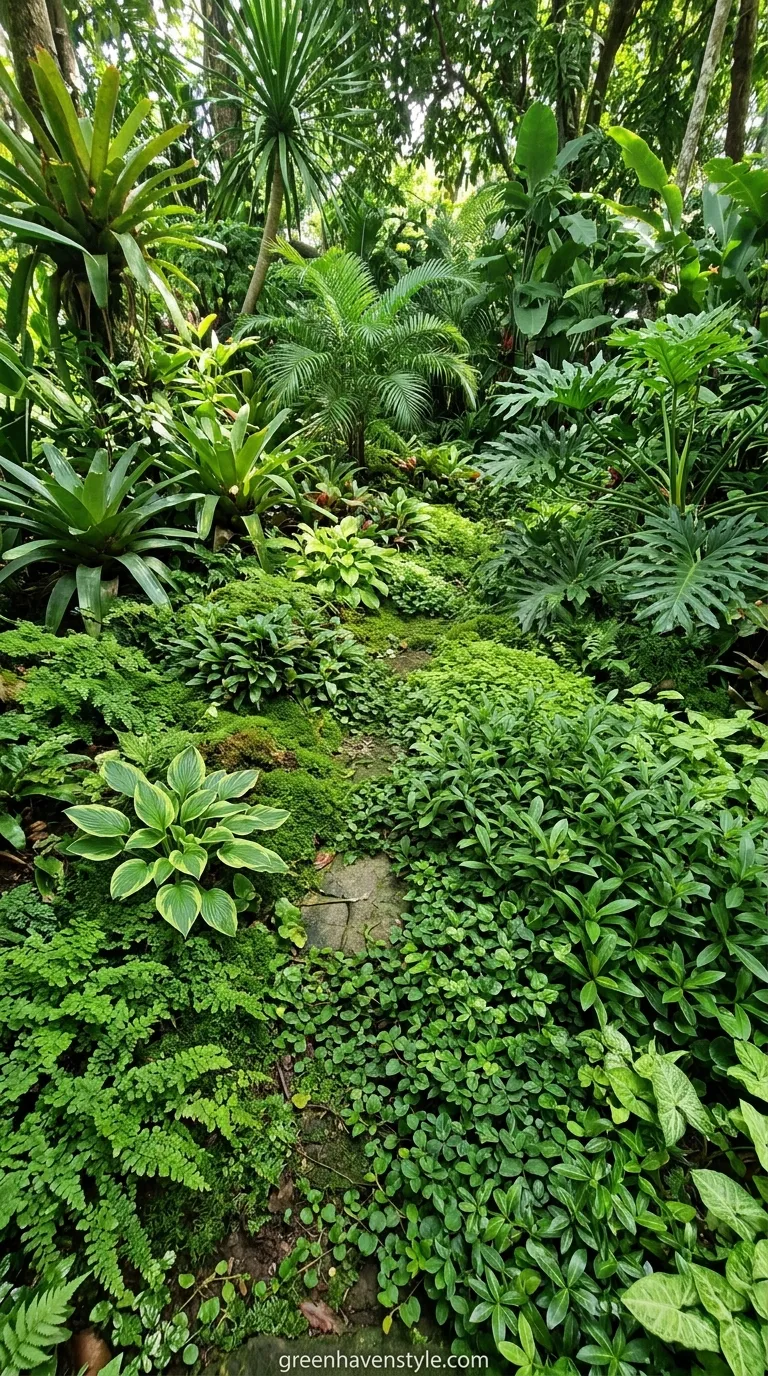
Low-growing tropicals like creeping jenny or sweet potato vine carpet ground beneath taller plants. This layering eliminates bare soil while creating that dense jungle floor appearance where greenery fills every available space, preventing weeds naturally through complete coverage.
Ground covers also retain soil moisture and moderate temperatures effectively. From what I’ve seen, combining multiple ground cover varieties in informal drifts creates more interesting tapestries than single-species plantings, adding subtle color and texture variations at foot level.
13. Bamboo Screen Walls
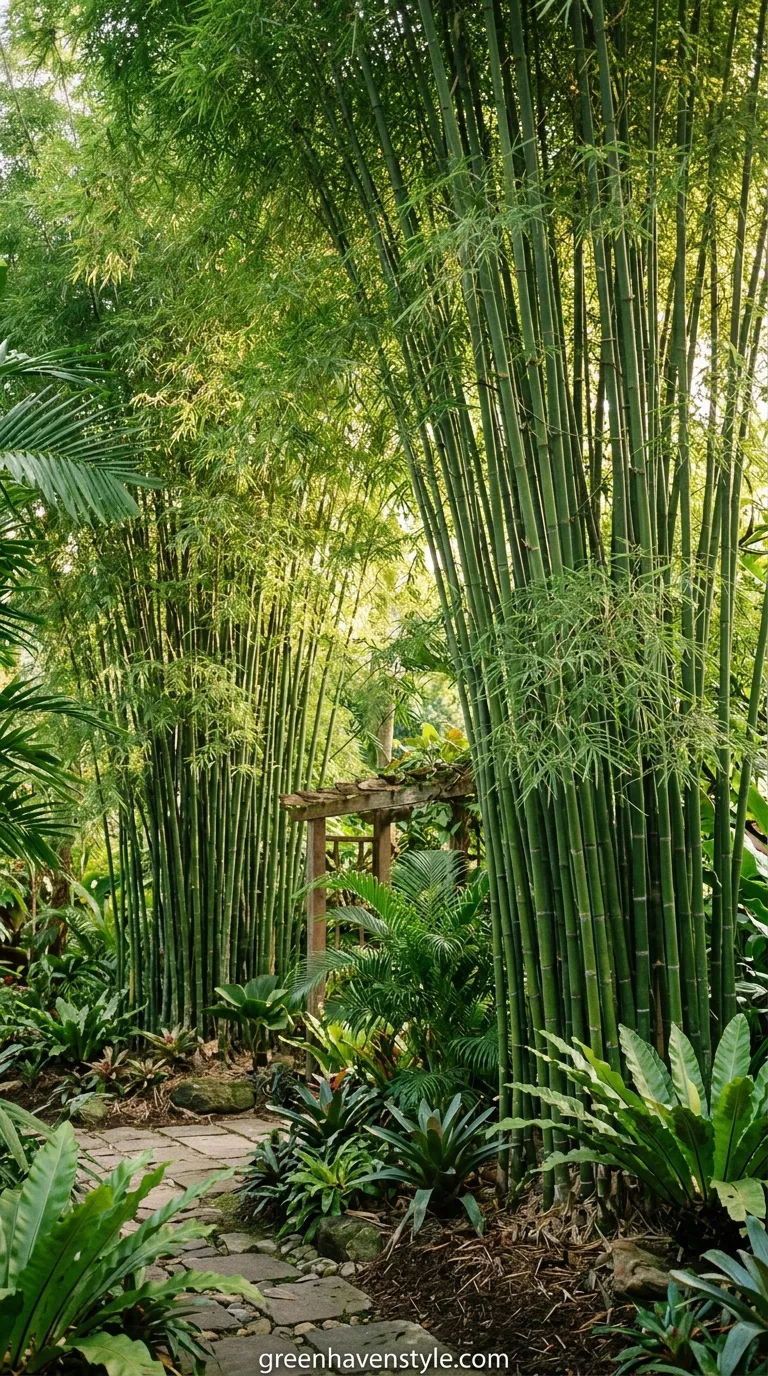
Living bamboo creates privacy screens with authentic tropical character. The vertical stalks and rustling leaves establish Asian-tropical fusion aesthetics while the fast growth quickly blocks unwanted views, transforming exposed yards into secluded retreats surrounded by living green walls.
Clumping varieties avoid the invasive spreading issues that give bamboo bad reputations. I learned the importance of researching specific cultivars before planting, as running types absolutely require deep barriers while clumpers stay contained naturally without constant vigilance.
14. Hanging Orchid Displays
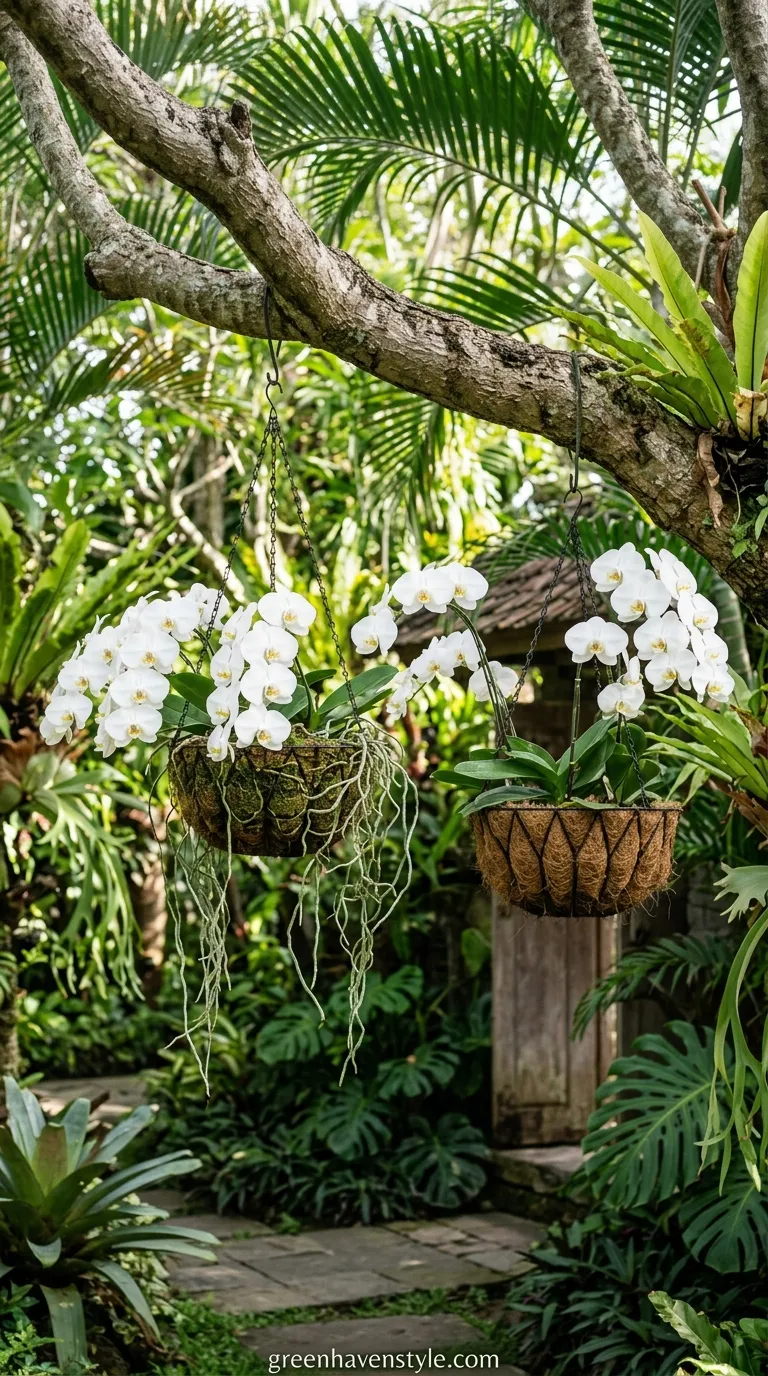
Orchids mounted on trees or displayed in hanging baskets add exotic blooms at eye level. The aerial roots and dramatic flowers epitomize tropical elegance while the elevated positioning prevents ground-dwelling pests and showcases blooms perfectly for admiration and photography.
Many orchids require less care than their delicate appearance suggests. I’ve experimented with various genera, finding that phalaenopsis and dendrobiums forgive beginner mistakes while still delivering impressive blooms that make you look like an experienced orchid expert to impressed visitors.
15. Bold Coleus Foliage
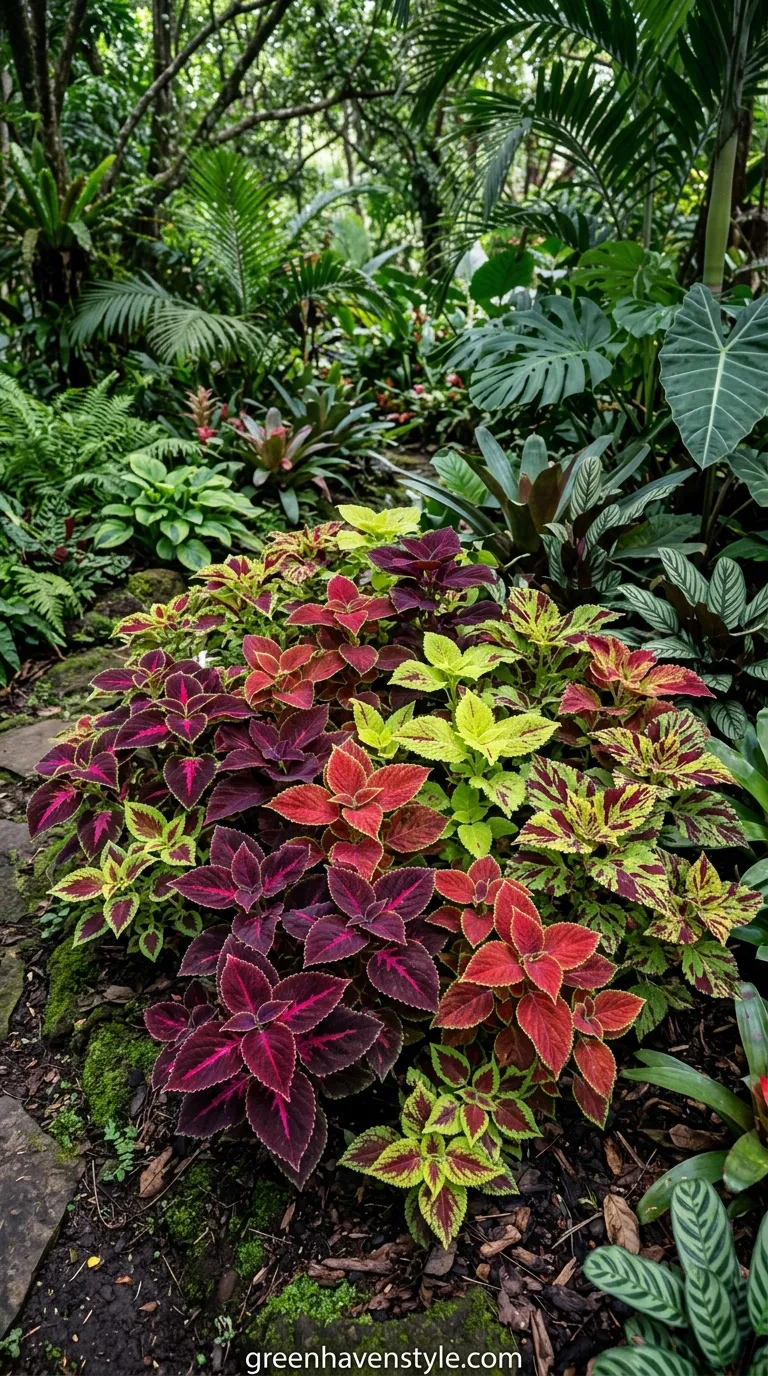
Colorful coleus plants provide tropical leaf patterns in sun or shade. The painted foliage in purples, reds, greens, and yellows creates vibrant tapestries without flowers, proving that tropical garden color comes from leaves just as effectively as blooms throughout seasons.
These fast-growing plants fill gaps quickly and economically. I’ve noticed that pinching growing tips regularly creates bushier plants with denser foliage, preventing the leggy appearance that diminishes their impact and makes them look neglected rather than intentionally lush.
16. Tropical Hardwood Furniture
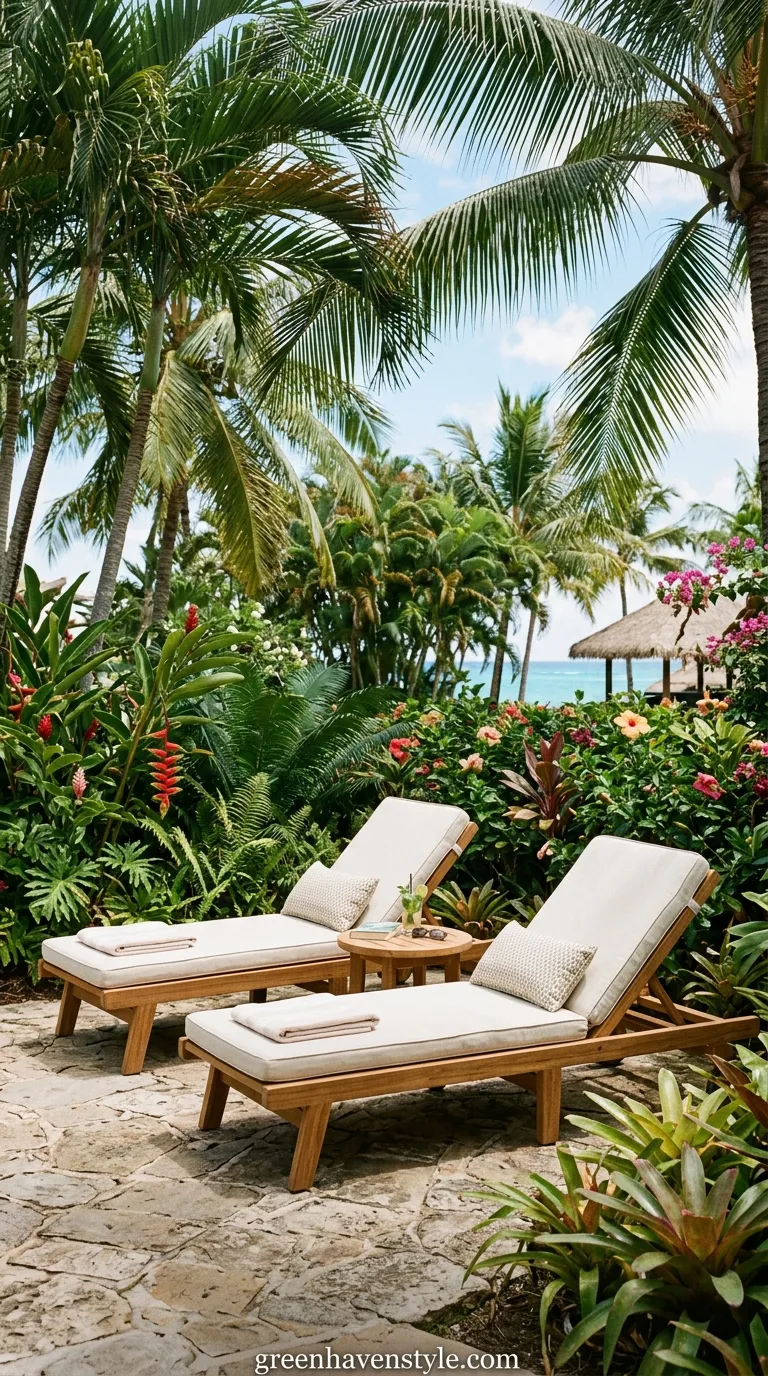
Teak or eucalyptus outdoor furniture reinforces the island resort aesthetic. The natural wood tones complement lush greenery while the weather-resistant properties handle moisture and humidity, aging gracefully into silvery patinas that enhance rather than detract from tropical garden appeal.
Comfortable seating encourages actually using your tropical retreat regularly. From what I’ve seen, positioning furniture in partially shaded spots beneath palms or pergolas creates more inviting sitting areas than placing pieces in full sun where heat makes them unusable during peak hours.
17. Ginger Plant Groupings
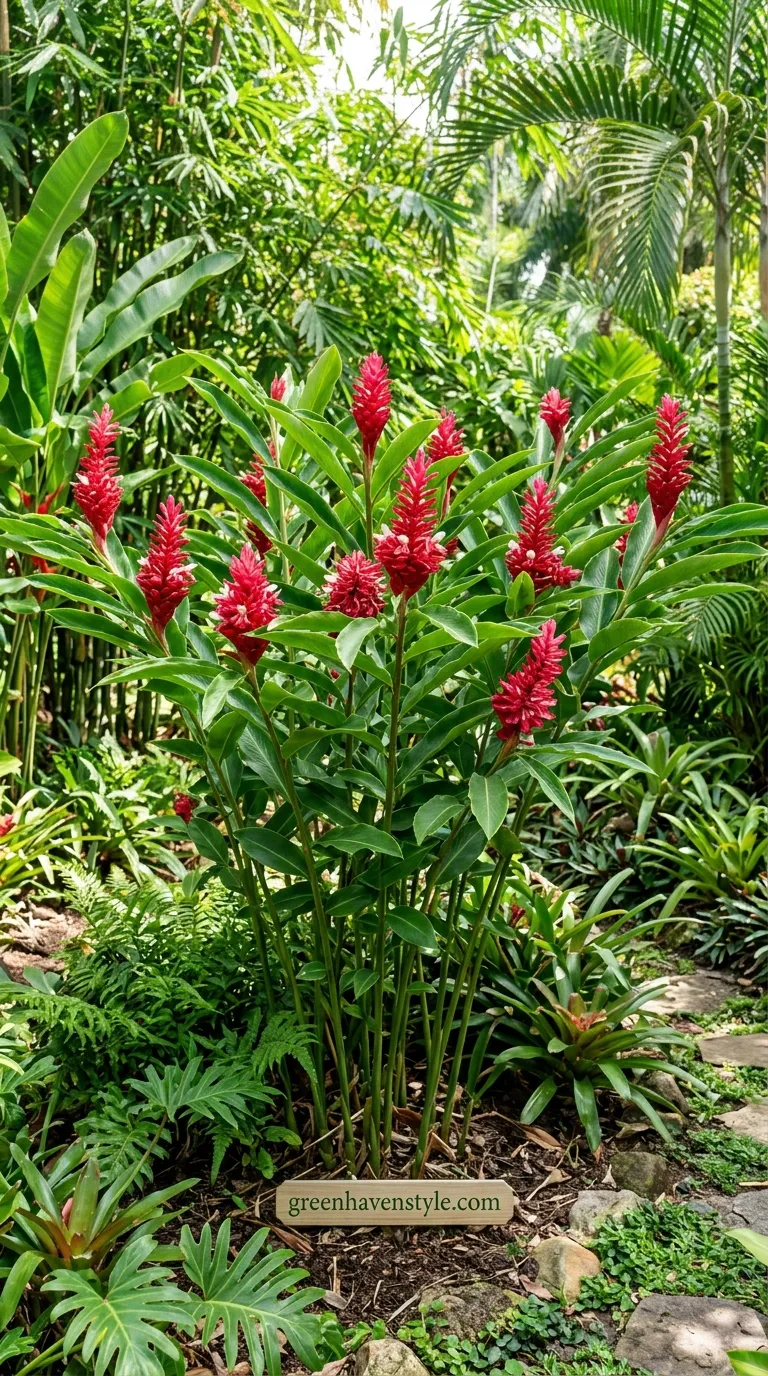
Flowering ginger varieties contribute fragrance and exotic blooms. The lush foliage resembles bamboo while the unique flower structures in reds, pinks, and whites add vertical interest, creating sensory experiences where your tropical paradise delights noses and eyes simultaneously.
Many gingers tolerate surprising cold when mulched heavily in winter. I’ve tried both ornamental and edible varieties, discovering that even culinary gingers produce beautiful foliage and flowers while providing harvestable rhizomes, making them wonderfully multi-functional additions to productive tropical landscapes.
Conclusion
Creating your own tropical garden design transforms ordinary outdoor spaces into lush retreats that transport you mentally even when travel isn’t possible. These elements work together or individually, letting you start small with a few bold-leafed plants and build toward complete paradise as budget and confidence grow.
I’ve seen how even incorporating just several tropical elements, dramatic palms, colorful foliage, water features, completely changes a yard’s atmosphere and emotional impact. The key lies in embracing abundance over restraint, letting plants grow generously rather than keeping everything rigidly controlled.
Choose ideas that excite you most, then watch your garden develop into that vacation-worthy sanctuary you’ve imagined. Save these inspirations to Pinterest, share them with friends dreaming of tropical escapes, and start building your personal paradise one bold plant at a time.


