
14 Beautiful Cottage Garden Design Ideas for a Lush, Timeless Look
There’s something magical about gardens that look like they grew themselves, where flowers spill over pathways and colors blend without rigid rules. Cottage garden design captures this enchanting, informal beauty that makes you want to linger outdoors with tea in hand, surrounded by fragrance and buzzing bees.
Creating this look isn’t about perfection or expensive landscaping. It’s about abundance, mixing plants generously, and embracing the slightly wild aesthetic that feels both intentional and effortlessly natural at the same time.
14 Beautiful Cottage Garden Design Ideas for a Lush, Timeless Look
I’ve noticed that people often think cottage gardens require huge yards or countryside settings. The truth is these romantic spaces work beautifully in urban backyards, side yards, and even front gardens where neighbors stop to admire the overflowing blooms.
These ideas will help you create that dreamy, storybook garden atmosphere regardless of your space size or gardening experience. From classic rose arbors to meandering gravel paths, each element adds layers of charm that build into something truly special.
1. Picket Fence Borders 
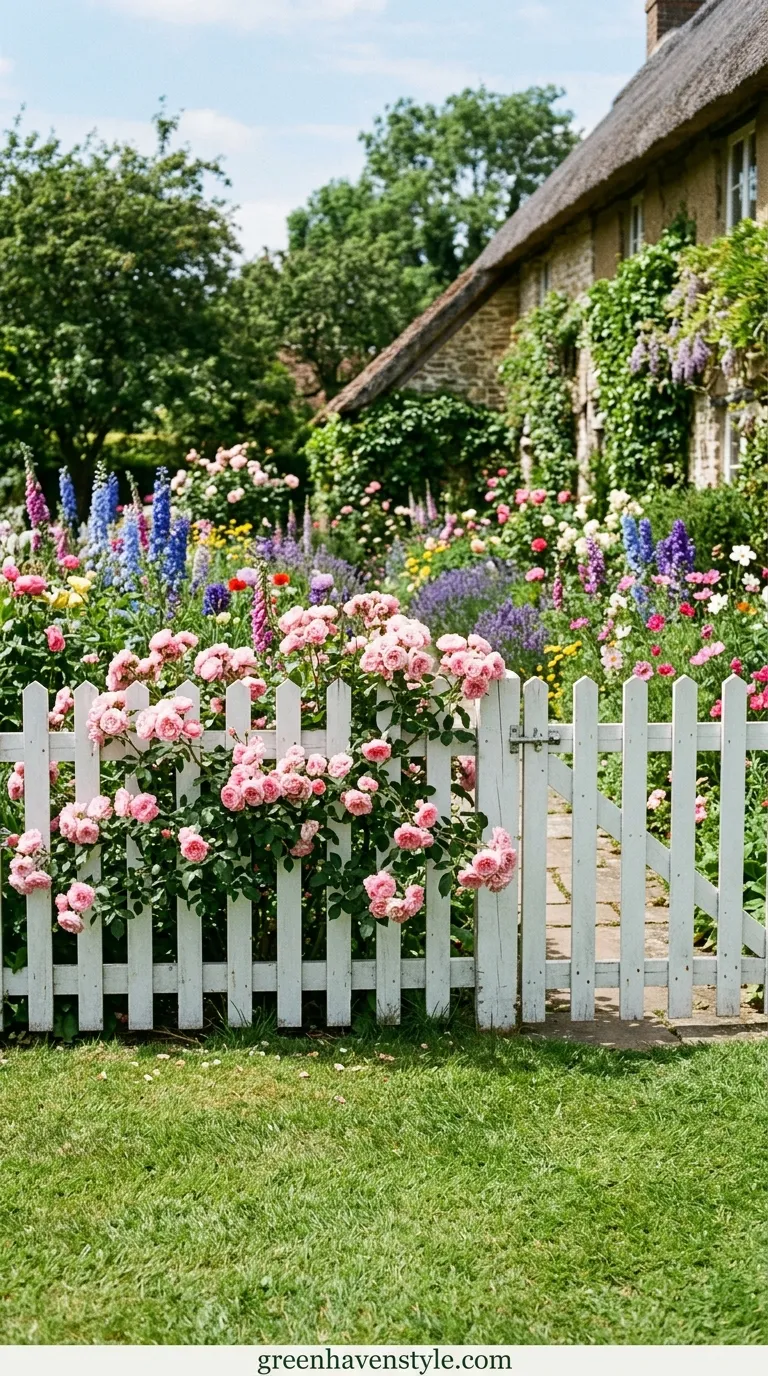
A white picket fence frames the garden perimeter with classic cottage charm. The painted wood provides structure while remaining open enough to showcase blooms spilling through the slats, creating that perfect balance between defined boundaries and romantic overflow.
The fence height typically stays low, around three to four feet, maintaining welcoming views rather than blocking sightlines. I’ve found that allowing climbing roses or clematis to weave through pickets softens the structure beautifully, blending architecture with nature in ways that feel organic rather than forced or overly manicured.
2. Winding Gravel Pathways
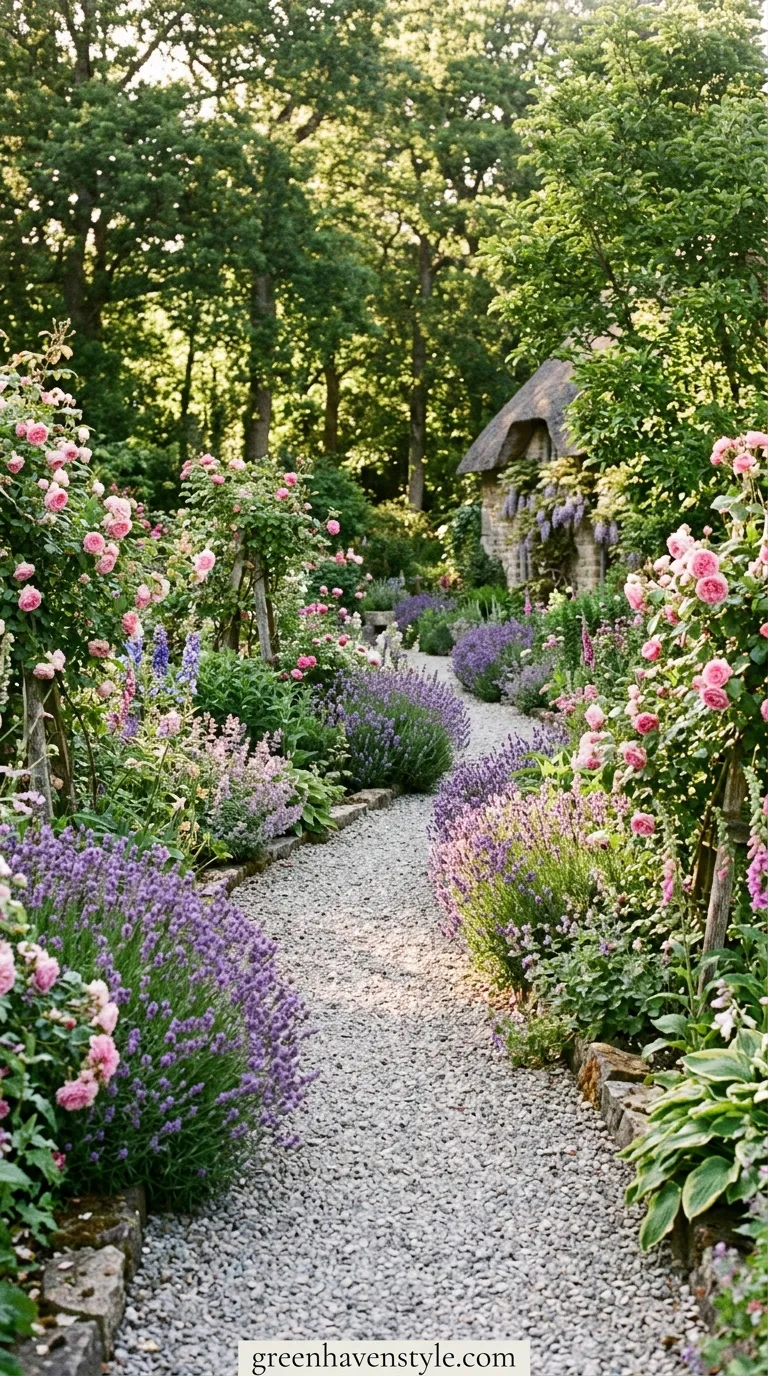
Curved gravel paths meander through planting beds instead of cutting straight lines. The crunching sound underfoot adds sensory appeal while the informal route invites exploration, making even small gardens feel more expansive and mysterious as you discover new views around each gentle bend.
Gravel also provides excellent drainage and prevents muddy spots during rain. From what I’ve seen, edging paths with low-growing herbs like thyme or chamomile releases fragrance when brushed, creating multisensory experiences that make simple garden walks feel genuinely special and restorative.
3. Mixed Perennial Borders
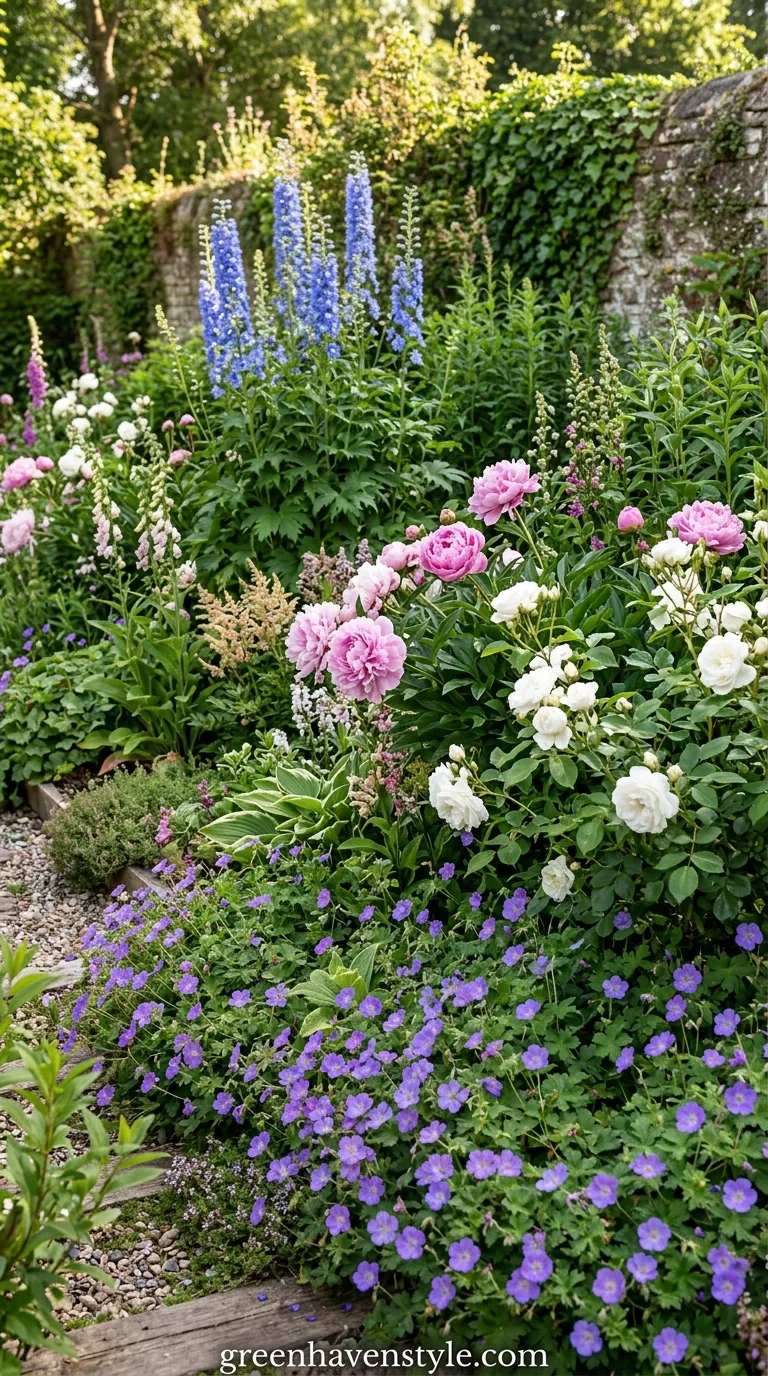
Layered flower beds combine perennials of varying heights and bloom times. Tall delphiniums and foxgloves create backdrops for mid-height roses and peonies, while ground-hugging geraniums fill front edges, ensuring continuous color and eliminating bare soil that disrupts the abundant garden aesthetic.
This tiered approach maximizes visual impact throughout growing seasons. I’ve observed that mixing flower forms, round blooms beside spiky ones, daisy shapes near bell-shaped flowers, creates more interesting compositions than planting single varieties in blocks, which often feels too controlled for cottage style.
4. Climbing Rose Arbor
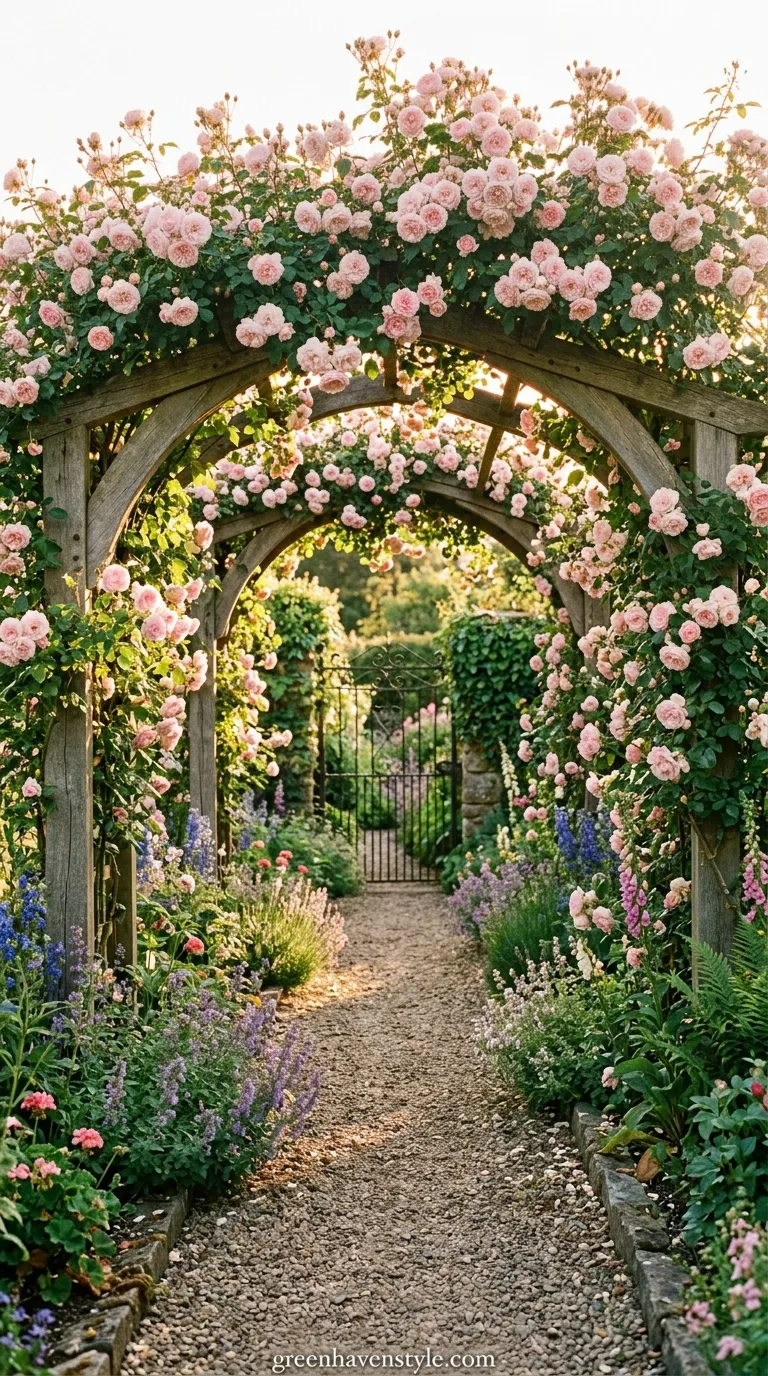
An arched structure covered in climbing roses marks garden entrances or transitions between spaces. The overhead blooms create romantic passages that smell incredible during peak season, transforming simple walkways into fragrant tunnels that feel straight from storybooks or period films.
Wooden or metal arbors both work beautifully depending on your style preferences. In my experience, training roses takes patience initially, but once established, they return reliably each year with minimal effort, rewarding that early investment with decades of breathtaking blooms and structure.
5. Weathered Garden Bench
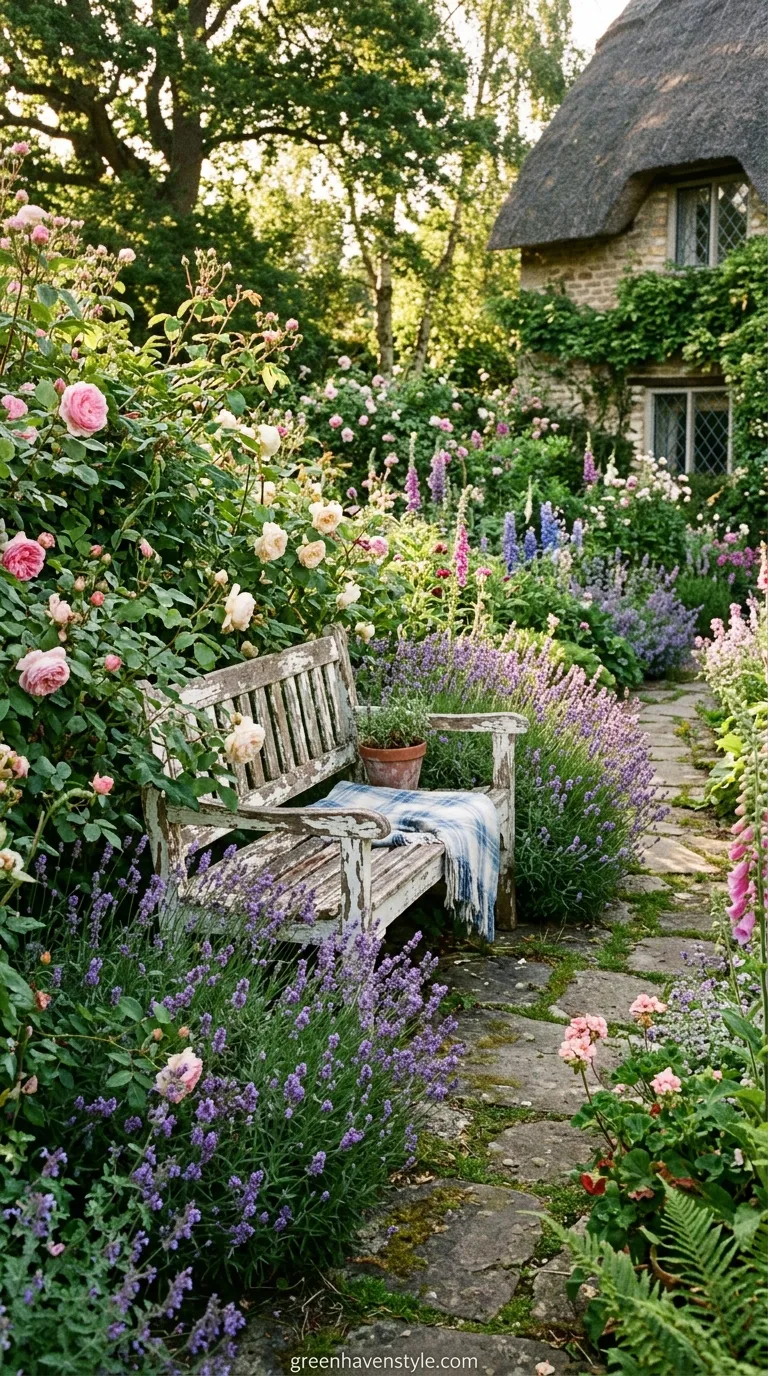
A wooden bench with peeling paint sits among plantings rather than on manicured lawns. The aged appearance adds character while providing restful spots to enjoy your garden, making the space feel lived-in and loved rather than purely ornamental or untouchable.
Positioning benches near fragrant plants like lavender or roses enhances relaxation moments. I’ve noticed that benches partially hidden by plants feel more inviting than those placed conspicuously in open areas, creating cozy retreats that encourage actual use rather than remaining decorative props.
6. Self-Seeding Annuals
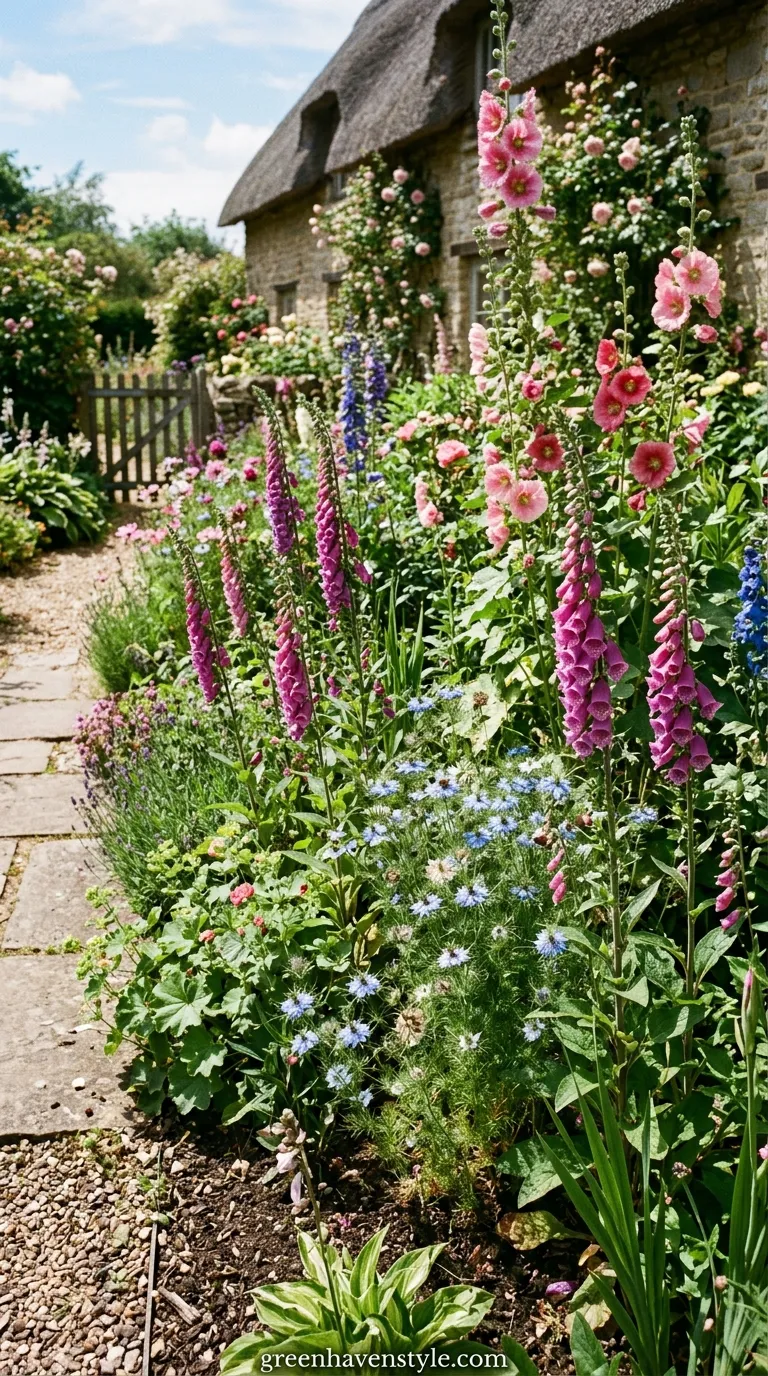
Plants like foxgloves, hollyhocks, and nigella scatter their own seeds naturally. This self-perpetuating cycle creates spontaneous color clusters that change slightly each year, maintaining the informal, unplanned appearance that defines authentic cottage-style gardens without constant replanting effort.
The random placement looks intentionally casual rather than chaotic. I’ve experimented with both controlling and allowing self-seeders, finding that gentle editing, removing seedlings from unwanted spots while letting others flourish, strikes the best balance between abundance and maintaining pathways.
7. Traditional Garden Gate
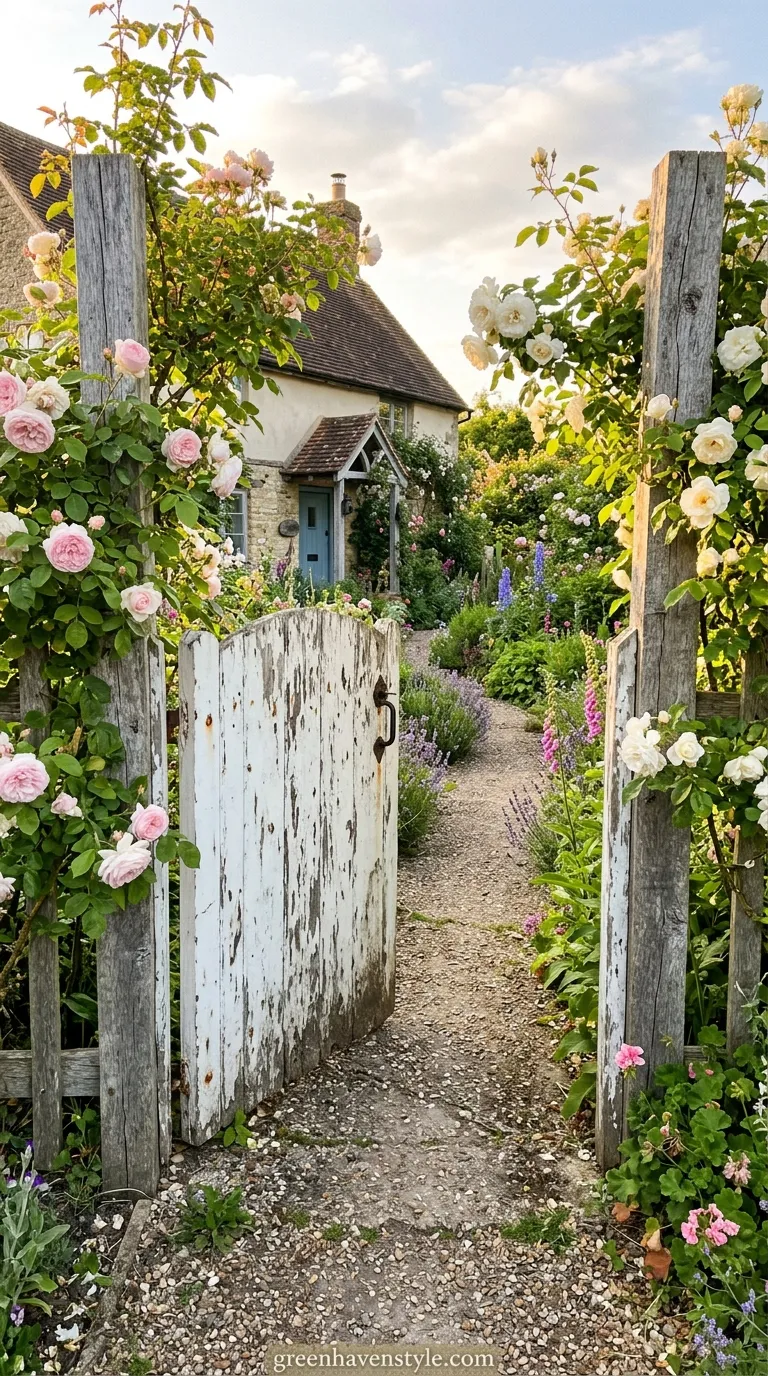
A wooden gate with simple latch hardware marks the entrance with welcoming charm. Whether painted or left natural, the gate signals transition from outside world to private sanctuary, creating psychological separation that makes your garden feel like a true escape.
Gates don’t require full fencing to be effective and beautiful. From what I’ve seen, even standalone gates flanked by hedges or tall perennials establish that cottage garden entrance feeling, especially when framed by climbing vines that soften hard edges beautifully.
8. Herb and Flower Mix
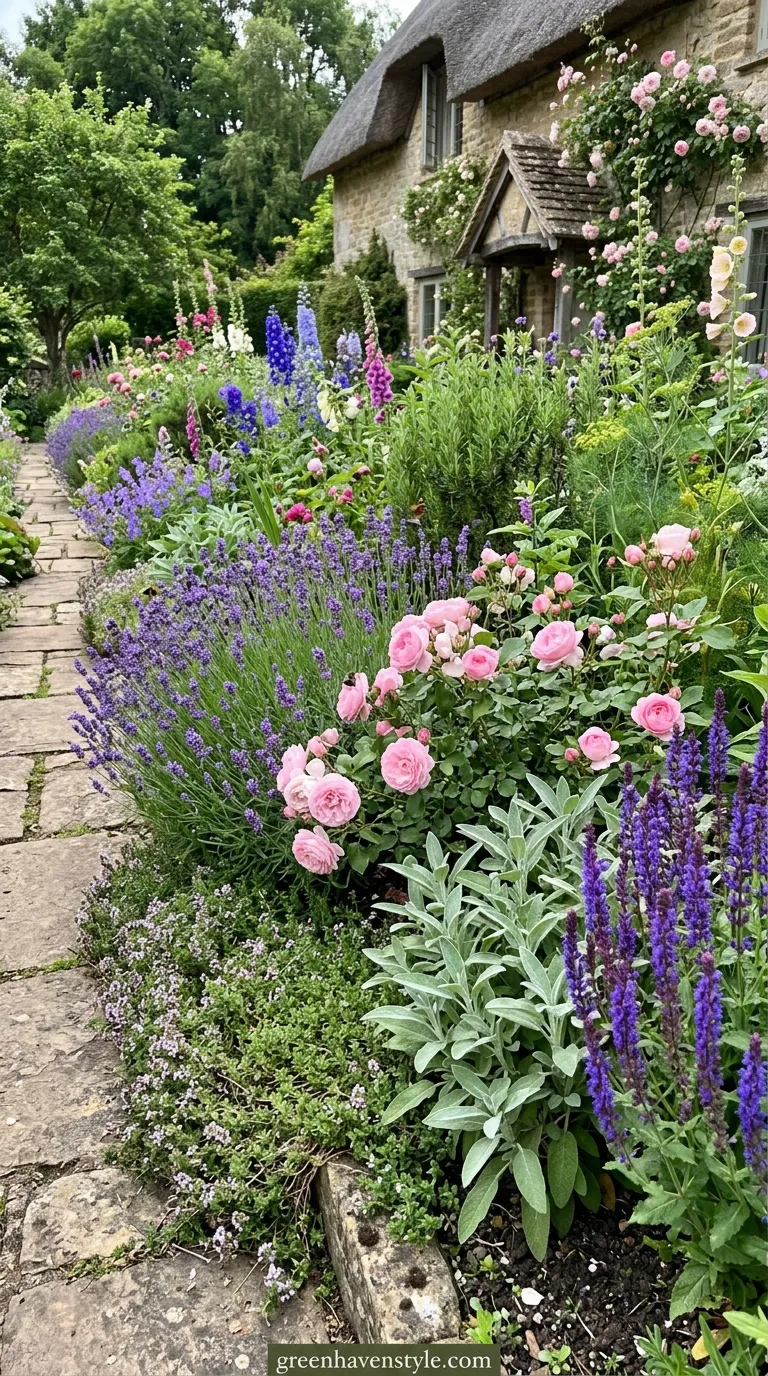
Culinary herbs intermingle with ornamental flowers throughout beds. Lavender borders roses, sage grows beside salvia, and thyme creeps along path edges, proving that productive and beautiful aren’t mutually exclusive in garden planning focused on abundance over categorization.
This integration provides harvesting convenience while the varied foliage textures add visual interest. I’ve found that herbs often require less water than many ornamentals, making them excellent companions that improve overall bed resilience during dry spells without complicated irrigation systems.
9. Stone-Edged Planting Beds
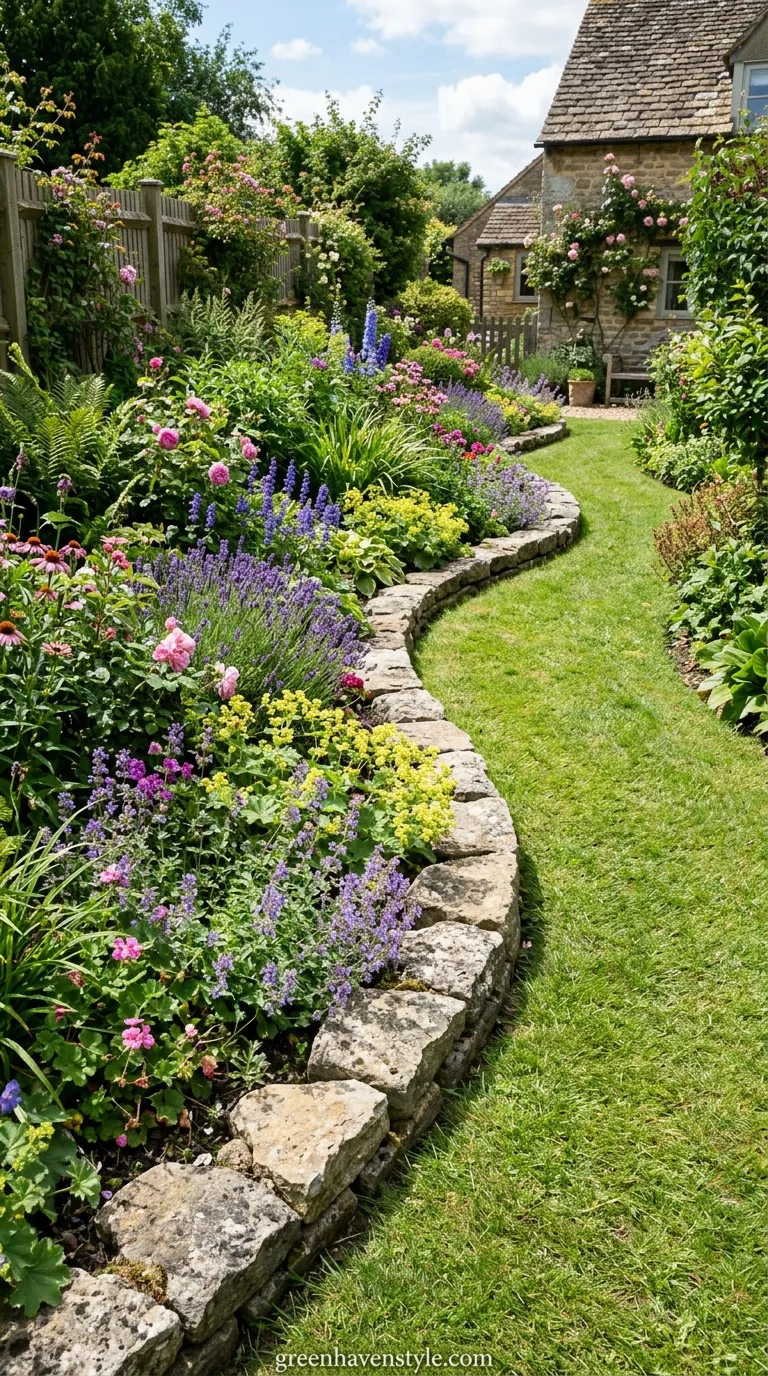
Natural stone borders define planting areas with organic, irregular edges. The rocks provide visual weight and permanence while their informal placement maintains the relaxed aesthetic, avoiding the rigid lines of brick or manufactured edging that feels too formal.
Stones also retain soil heat and provide habitat for beneficial insects. In my experience, the tricky part is achieving natural-looking placement, which usually means avoiding perfectly uniform spacing and letting some stones sit slightly higher or lower than others for authentic appearance.
10. Bird Bath Focal Point
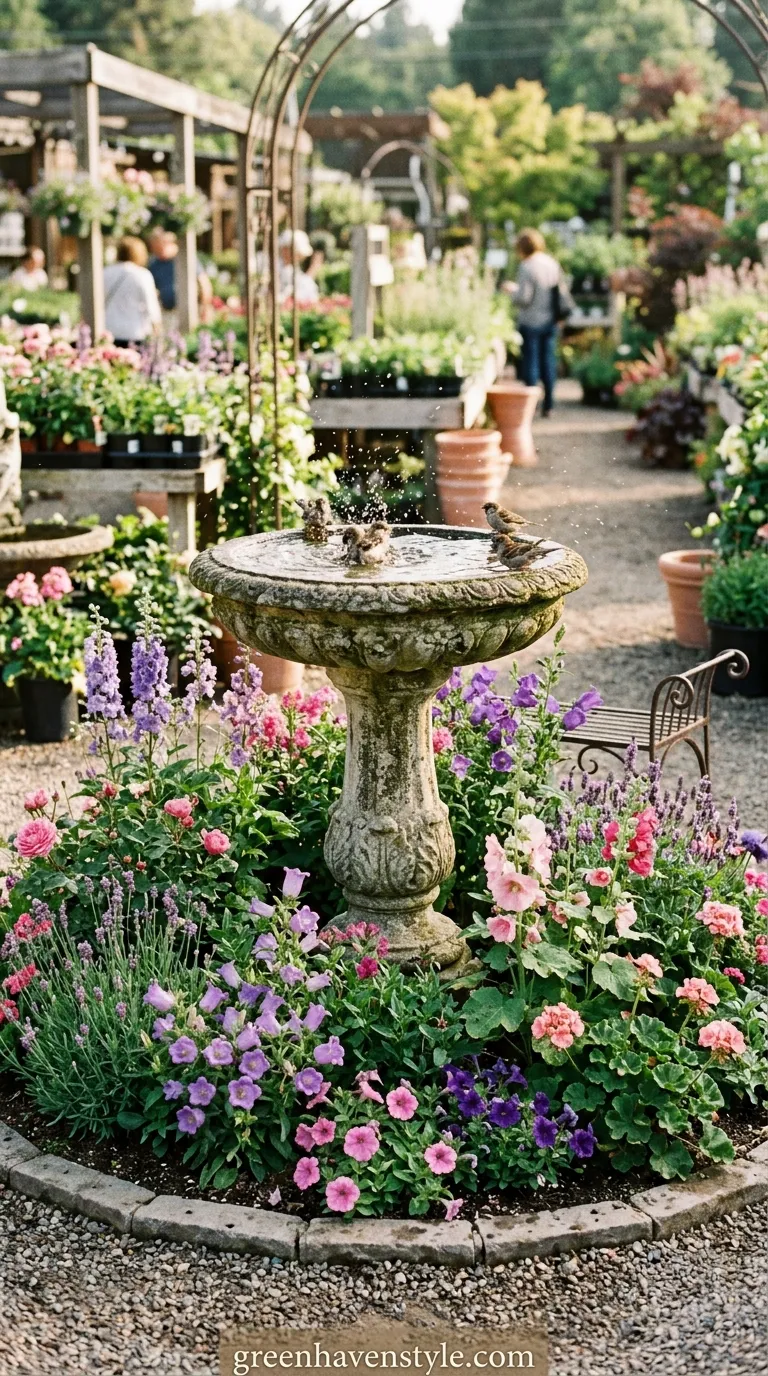
A weathered stone or ceramic bird bath anchors garden views while serving wildlife. The vertical element provides height variation among plantings, and watching birds splash adds movement and life that makes gardens feel vibrant even when you’re viewing from windows inside.
Positioning bird baths where you can see them from favorite indoor spots extends enjoyment. I’ve observed that models with shallow basins attract more species than deep ones, and adding a solar fountain creates gentle water sounds that enhance the peaceful atmosphere.
11. Lavender-Lined Walkways
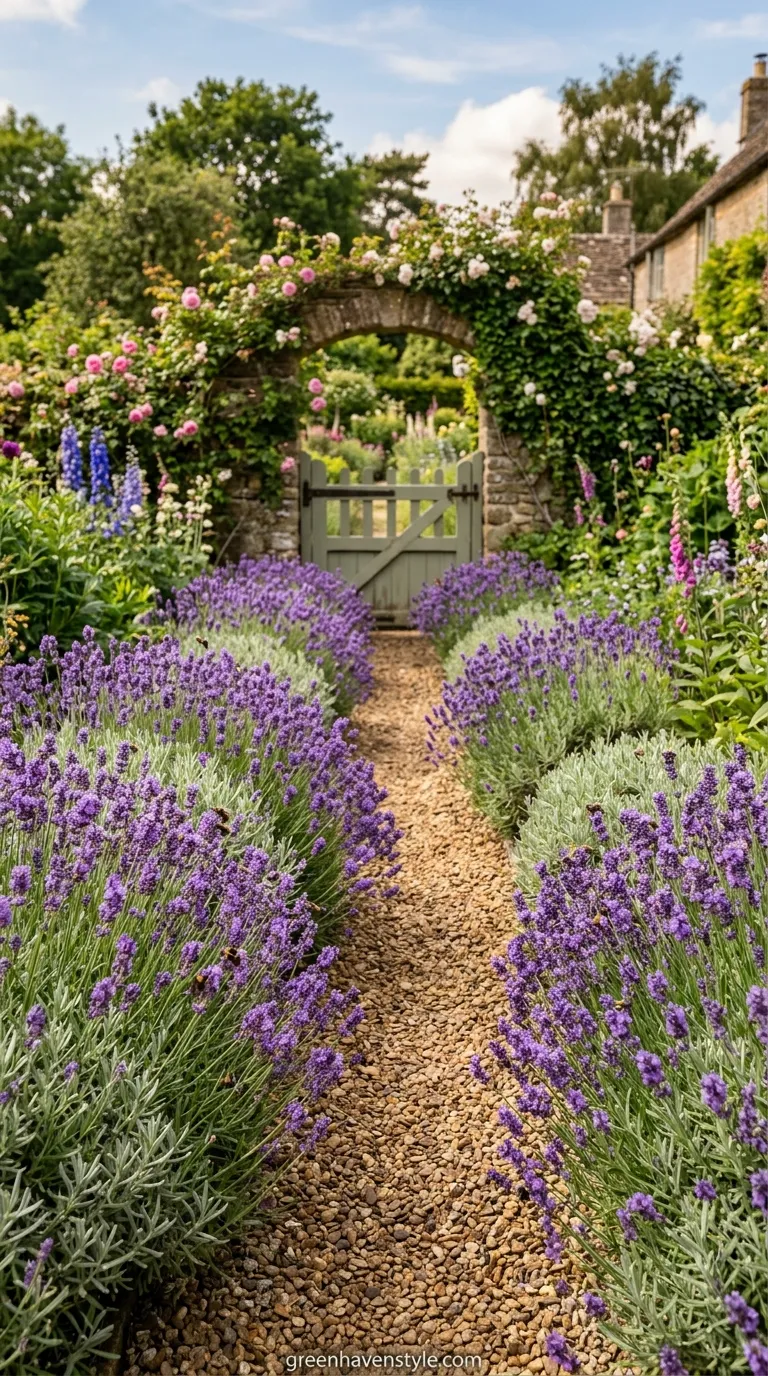
Purple lavender plants edge both sides of paths with fragrance and color. The silvery foliage contrasts beautifully with green perennials while the aromatic blooms attract pollinators, creating sensory-rich passages that make simple garden strolls feel genuinely therapeutic and restorative.
Lavender also thrives with minimal water once established. I’ve tried both English and French varieties, finding that English types handle colder winters better while French lavender blooms earlier, so choosing depends heavily on your climate zone and desired flowering schedule.
12. Vintage Garden Accessories
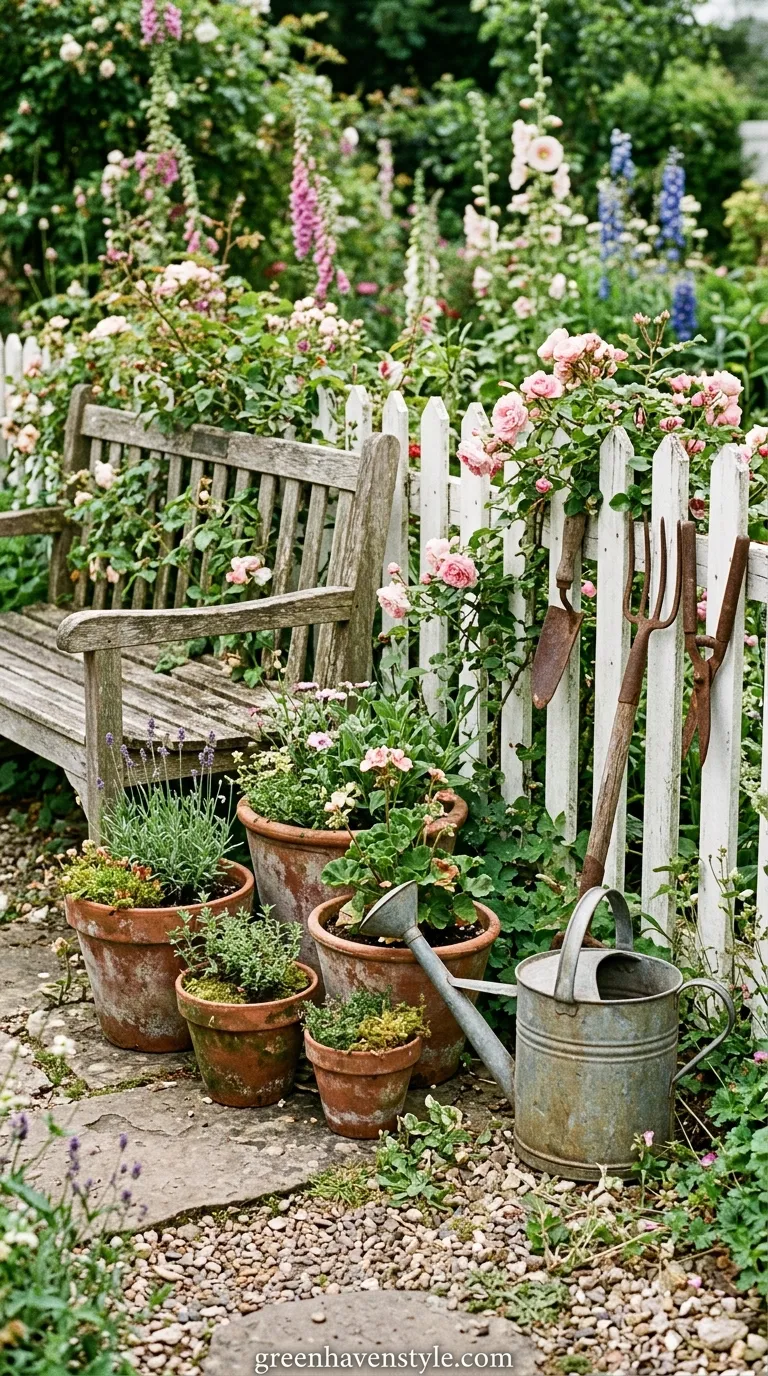
Old watering cans, terracotta pots, and weathered tools become decorative elements. These aged items add nostalgic character while reinforcing the timeless, collected-over-years aesthetic that makes cottage gardens feel genuinely lived-in rather than recently installed by landscape contractors.
Authentic vintage pieces or convincing reproductions both work beautifully. I’ve seen how strategically placing these accessories, leaning a rusted rake against fencing or clustering old pots near benches, creates vignettes that photograph beautifully while adding depth to overall garden composition.
13. Informal Hedge Backdrops
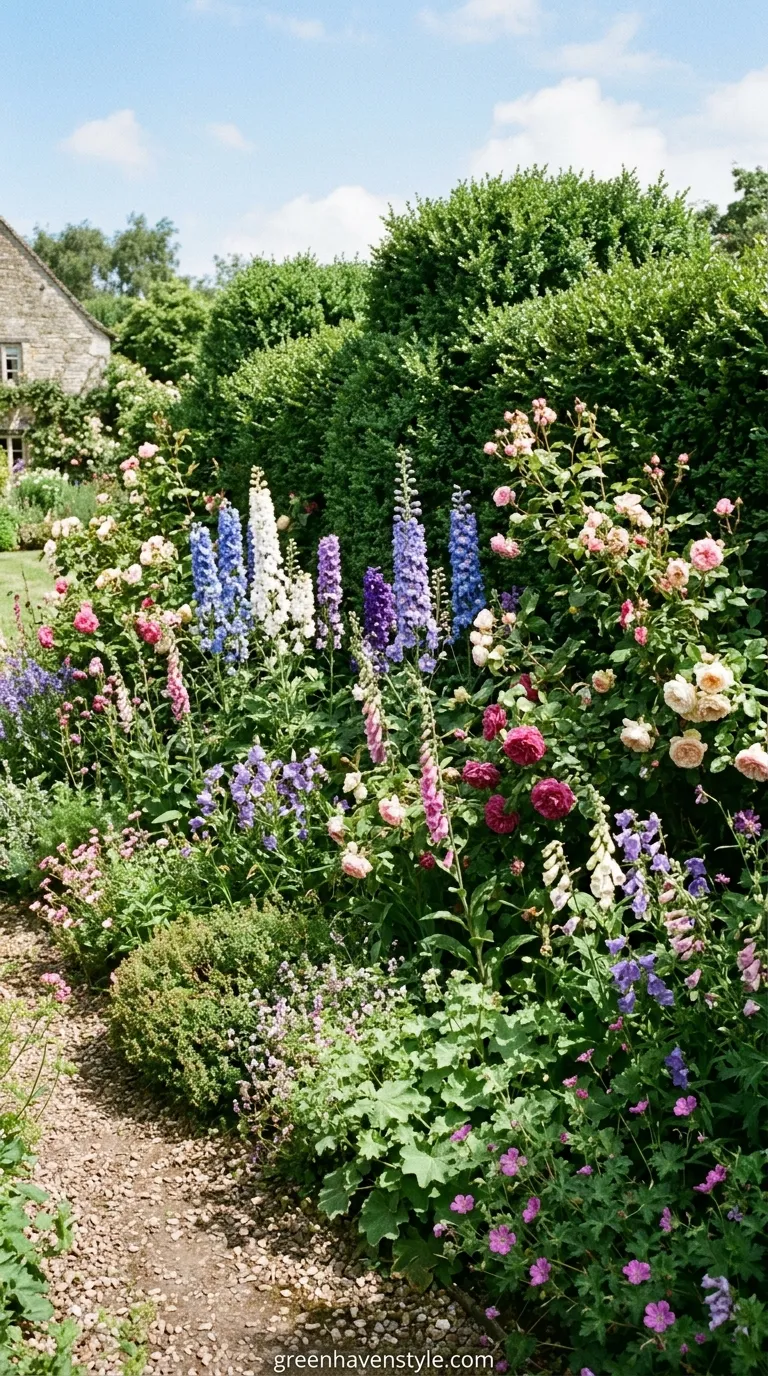
Loose, unpruned hedges provide green backdrops for colorful borders. Unlike formal clipped hedges, these naturalistic plantings maintain some wildness that complements rather than contrasts with billowing flower beds, creating cohesive scenes where structure and softness coexist harmoniously.
Boxwood, yew, or privet all create effective backdrops depending on preferences. I learned the hard way that shearing hedges into geometric shapes fights against cottage garden principles, while allowing natural form with occasional light shaping maintains appropriate informality.
14. Overflowing Window Boxes
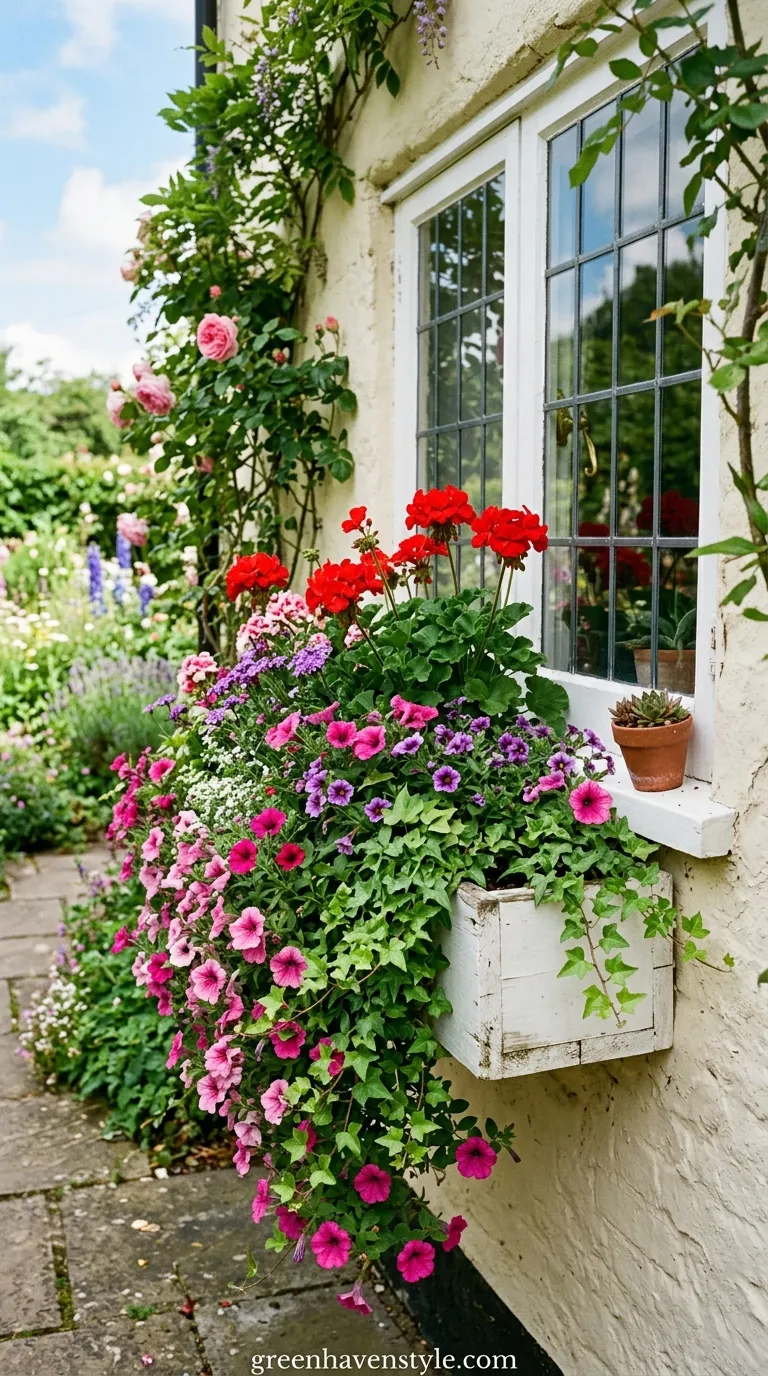
Planters beneath cottage windows spill with trailing flowers and foliage. Petunias, lobelia, and ivy cascade over edges while upright geraniums provide height, connecting house architecture to garden plantings and blurring the lines between indoor and outdoor living spaces.
This integration makes homes feel nestled within gardens rather than separate. From what I’ve seen, window boxes succeed best with regular deadheading and feeding, but the small space makes maintenance manageable while delivering substantial visual impact that enhances both interior and exterior views.
Conclusion
Creating your dream cottage garden design transforms outdoor spaces into romantic retreats that feel both abundant and welcoming. These elements work together or individually, letting you start small with a picket fence or gravel path, then build layers as confidence and plant collections grow.
I’ve seen how even incorporating just a few cottage elements, self-seeding flowers, a weathered bench, climbing roses, dramatically changes a yard’s entire character and emotional resonance. The beauty lies in imperfection and generosity rather than rigid control or manicured precision.
Choose elements that resonate with your vision and space, then let your garden develop its own personality over seasons. Save these ideas to Pinterest, share them with fellow garden enthusiasts, and start creating your own cottage-style sanctuary that welcomes you home.


