
15 English Garden Ideas to Create a Timeless and Elegant Landscape
Picture stepping through a garden gate into a world of blooming roses, winding pathways, and perfectly manicured hedges. English gardens have captivated gardeners for centuries with their timeless beauty, romantic charm, and effortless elegance. If you’re dreaming of creating your own slice of English countryside, you’re in for a treat because English garden ideas can work beautifully in any climate, any space, and at any skill level.
15 English Garden Ideas to Create a Timeless and Elegant Landscape
What makes English garden designs so special is their blend of structure and wildness, formality and relaxation. They celebrate nature’s abundance while maintaining thoughtful organization, creating spaces that feel both cultivated and naturally enchanting. Whether you have a sprawling estate or a modest urban plot, the principles of English garden style adapt perfectly to your unique space.
In this guide, we’re sharing 15 inspiring English garden ideas that will help you create a garden bursting with charm, color, and personality. Let’s discover how to bring that quintessential English elegance into your own backyard.
1. Rose Garden Sanctuary 
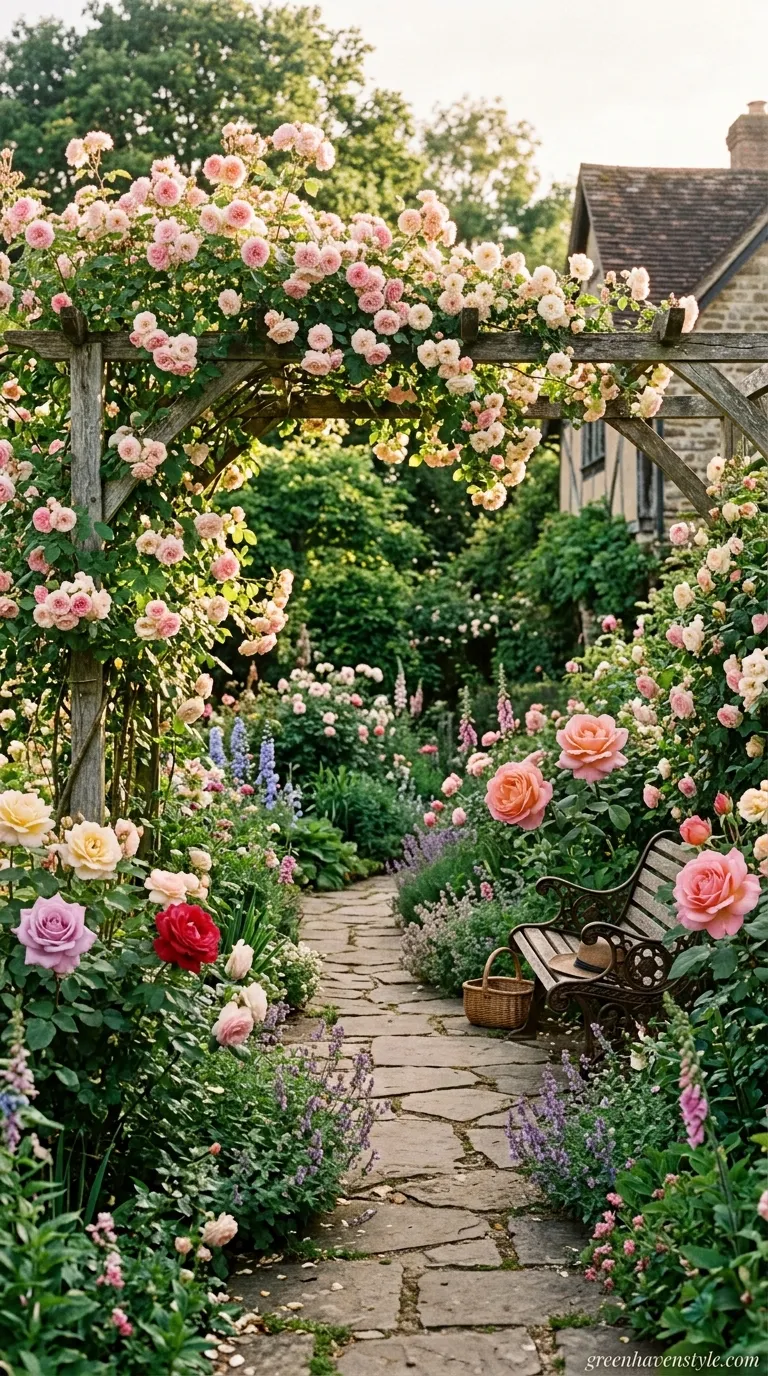
Timeless beauty blooms in abundance, with climbing roses draping over wooden trellises, hybrid tea roses in soft pastels, lush green foliage backdrop, romantic cottage garden aesthetic, natural sunlight filtering through blooms, stone pathways, vintage garden bench, warm color palette of pinks and creams, peaceful serene atmosphere. greenhavenstyle.com
A rose garden is the heart of any authentic English space. These iconic flowers symbolize romance and elegance, and growing them traditionally creates an instantly charming atmosphere. I’ve noticed that rose gardens naturally draw people in—guests gravitate toward the fragrance and beauty without hesitation, making it the perfect centerpiece for your garden design.
Combine climbing varieties with heritage roses and modern hybrids to ensure continuous blooms throughout the season. Add a vintage bench, stone pathways, and complementary perennials to create layers of color and texture that evolve throughout the year.
2. Cottage Garden Mix
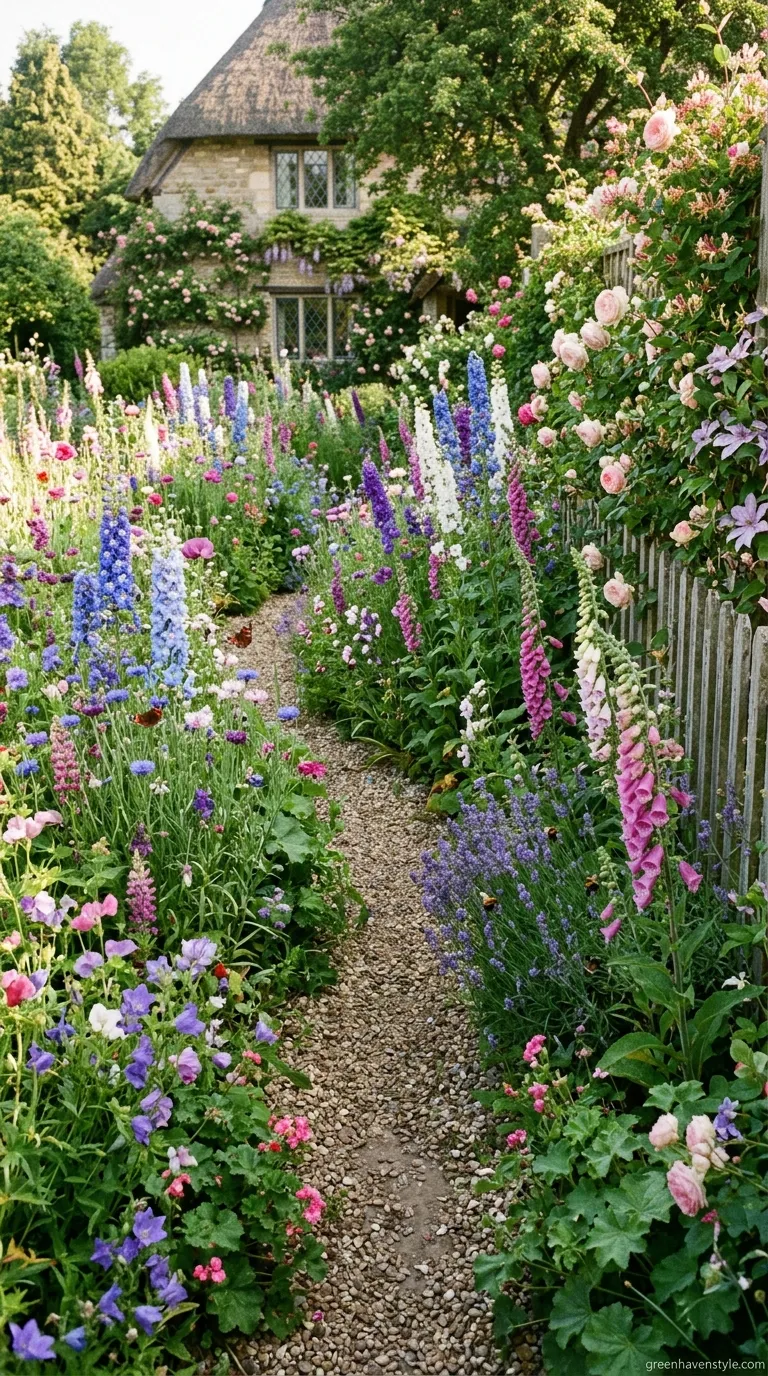
Densely planted garden beds overflowing with wildflowers, delphiniums, and foxgloves, informal cottage style layout, meandering gravel pathways, weathered wooden fencing, morning light illuminating blooms, mixed color palette of purples, pinks, and blues, natural abundant aesthetic, honey bees and butterflies present. greenhavenstyle.com
The cottage garden approach celebrates abundance and diversity rather than rigid planning. This style layers plants of varying heights, colors, and textures to create an enchantingly full, natural-looking garden that feels generous and inviting. In my experience, cottage gardens require less maintenance once established because the dense planting suppresses weeds naturally.
Mix perennials, annuals, and self-seeding plants to create an ever-evolving tapestry of color. The key is embracing a somewhat wild, organic feel while ensuring your favorite plants have room to thrive and mature beautifully.
3. Formal Hedge Boundaries
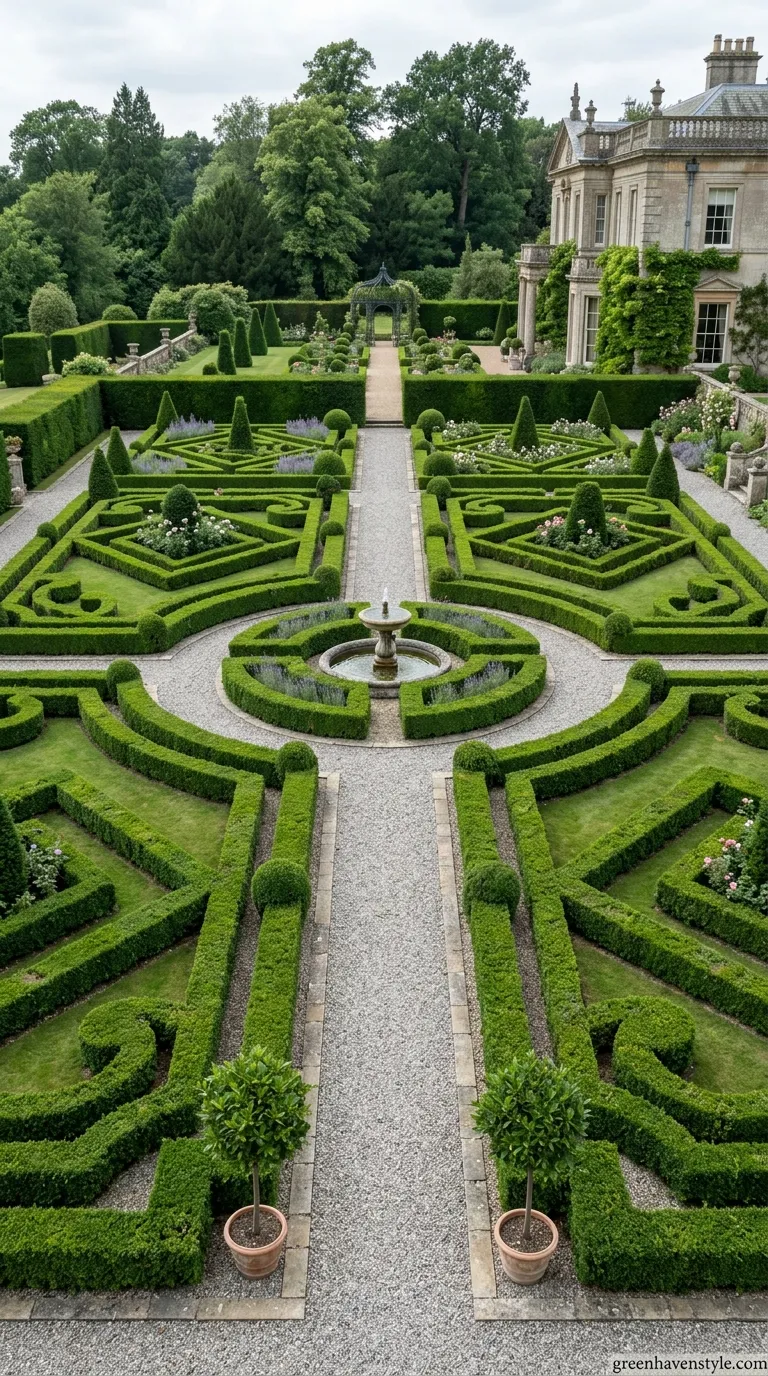
Precisely clipped box hedges forming geometric patterns and garden rooms, formal parterre design, structured layout with symmetry, dark green foliage creating definition, gravel or stone pathways, classical garden structure, manicured aesthetic, soft diffused light, heritage garden style, architectural plant forms. greenhavenstyle.com
Formal hedges create structure, definition, and that distinctly English sense of order. Box hedging, privet, and yew can be shaped into geometric patterns, parterres, and defined garden rooms that provide visual interest while establishing clear boundaries. I’ve found that formal hedges add sophistication and help organize larger spaces beautifully.
These living walls divide your garden into intimate spaces, frame focal points, and create a timeless, classic appearance. They require patience to establish but develop character and presence over years, becoming increasingly valuable assets to your garden design.
4. Wildflower Meadow
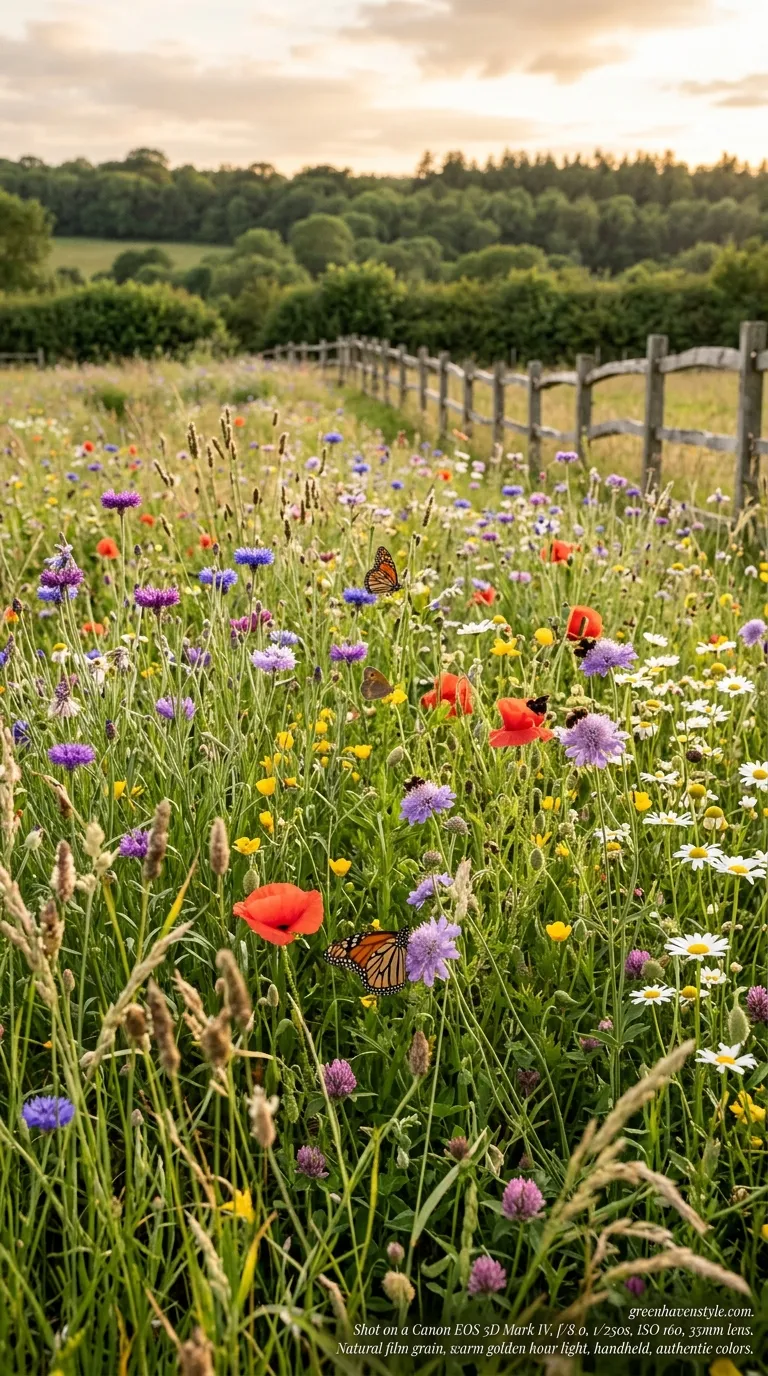
Naturalistic meadow bursting with wild native flowers, grasses, and seedheads, tall flowering plants like cornflowers and poppies, natural meadow aesthetic, butterflies and pollinators present, soft golden light, rustic wooden fence backdrop, peaceful wild nature feel, no formal structure. greenhavenstyle.com
A wildflower meadow brings natural beauty and ecological value to your garden space. This approach celebrates native plants, supports pollinators, and requires minimal maintenance once established. From what I’ve seen, wildflower areas create incredibly vibrant ecosystems while looking effortlessly beautiful and romantic.
Simply prepare the soil, sow native seed mixes, and let nature take over with minimal intervention. The result is a dynamic, ever-changing landscape that supports local wildlife while delivering stunning visual interest throughout the seasons.
5. Stone Pathway Design
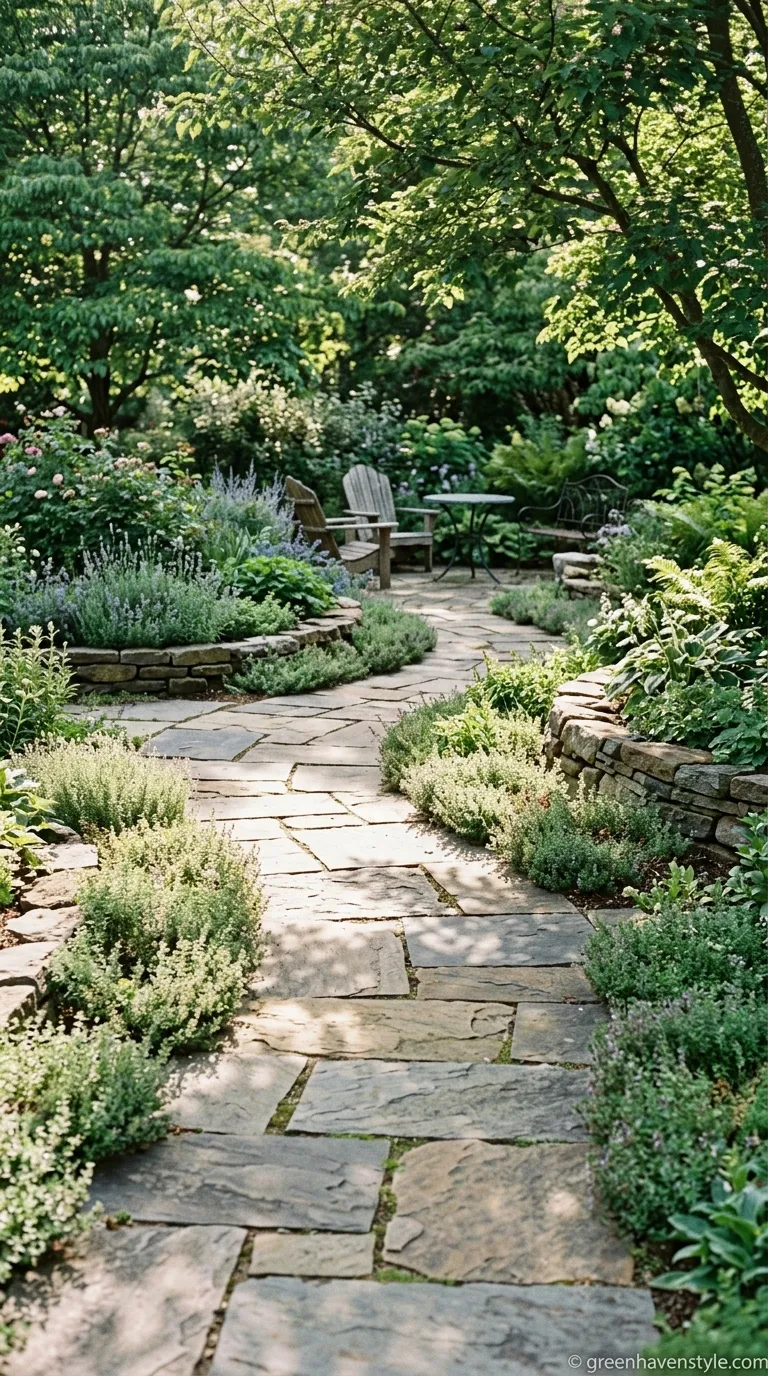
Winding stone pathways creating visual flow, natural flagstone or slate materials, edges lined with low-growing plants and thyme, dappled shade from overhead trees, garden furniture visible in distance, rustic textures, inviting walkway design, soft warm lighting, traditional garden circulation. greenhavenstyle.com
Thoughtfully designed pathways are the arteries of an English garden, guiding visitors through different spaces while creating anticipation and discovery. Stone materials—flagstone, slate, or brick—provide authentic character while aging beautifully. I’ve observed that curved pathways feel more inviting and romantic than straight routes, encouraging leisurely exploration.
Edge pathways with low-growing plants like lavender, catmint, or creeping thyme to soften hard lines and add fragrance. Vary materials subtly between areas to create gentle transitions between different garden zones while maintaining cohesive elegance.
6. Perennial Border Beds
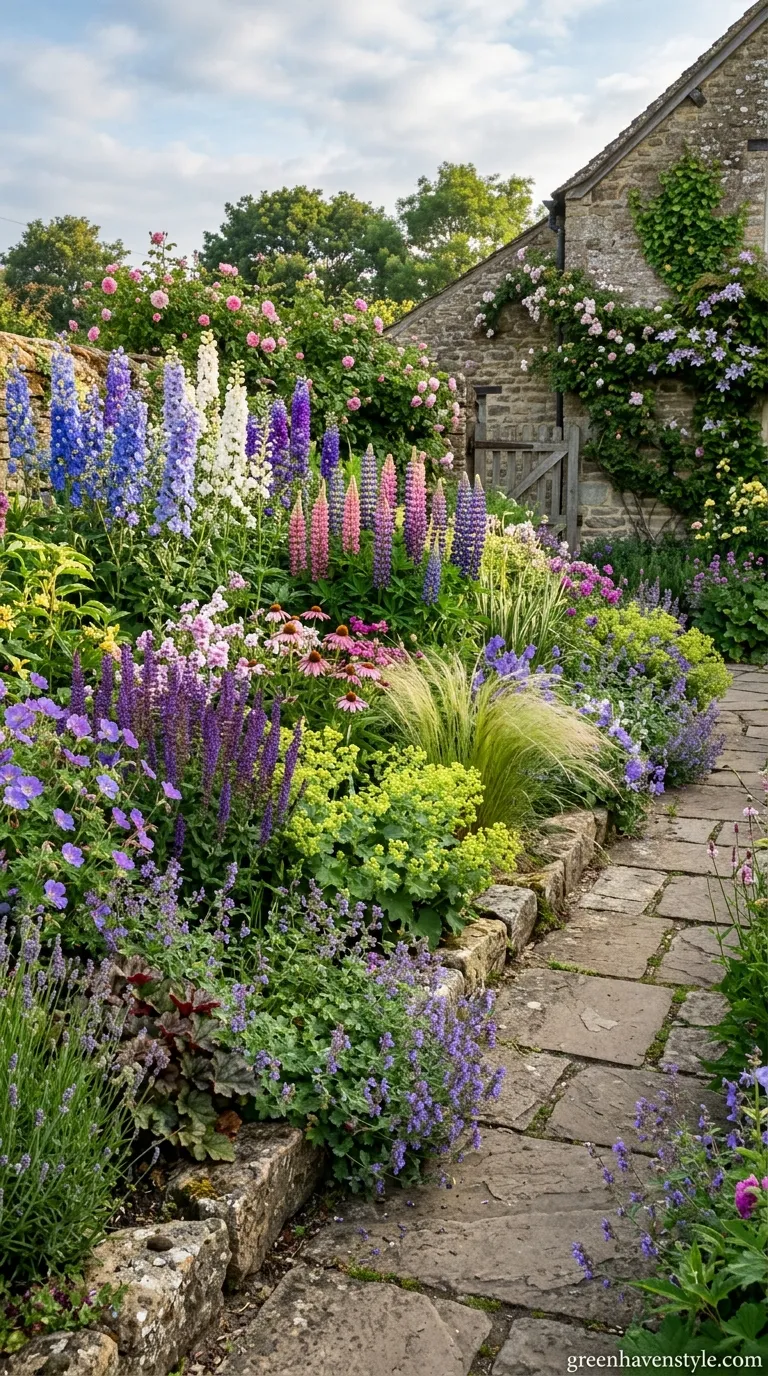
Layered perennial beds with varying heights, mixed textures and bloom times, delphiniums and lupines in background, ornamental grasses, cottage garden perennials, rich color palette, natural abundant planting, stone edging, soft morning light, garden in peak bloom season. greenhavenstyle.com
Perennial borders are the backbone of English garden design, offering color, structure, and reliable performance year after year. These carefully composed beds layer plants by height and bloom time to create continuous interest from spring through autumn. In my experience, well-designed perennial borders actually require less maintenance than annual plantings while delivering more impact.
Choose plants that thrive in your climate, arrange them by mature height, and group similar plants in odd numbers for natural-looking composition. Include ornamental grasses and structural plants to maintain visual interest even after flowers fade.
7. Fragrant Herb Garden
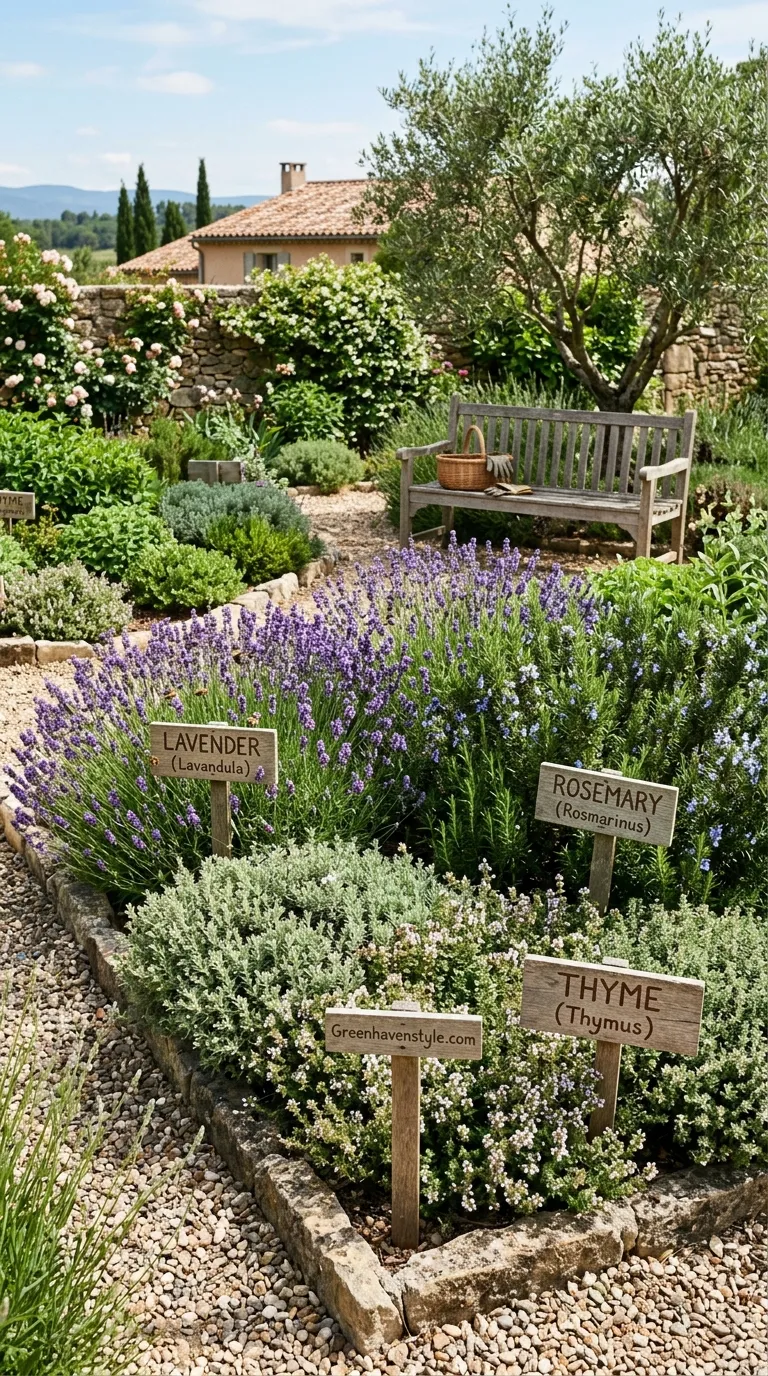
Culinary and aromatic herbs arranged in organized beds, lavender, rosemary, and thyme in full bloom, textured foliage in greens and grays, wooden herb markers or signs, natural sunlight, bees visiting flowers, garden bench nearby, practical beauty aesthetic, Mediterranean influenced. greenhavenstyle.com
An herb garden combines practical functionality with authentic beauty, fitting perfectly within traditional English design. Fragrant plants like lavender, rosemary, thyme, and sage create aromatic focal points while providing fresh ingredients for cooking. I’ve found that herb gardens engage all the senses—touch, smell, and taste—making them incredibly rewarding spaces.
Plant herbs in accessible locations with good drainage and sunlight. Group plants by water needs and growth habits, allowing them to mature into attractive forms that contribute to your garden’s overall composition and character.
8. Victorian Ornamental Gate
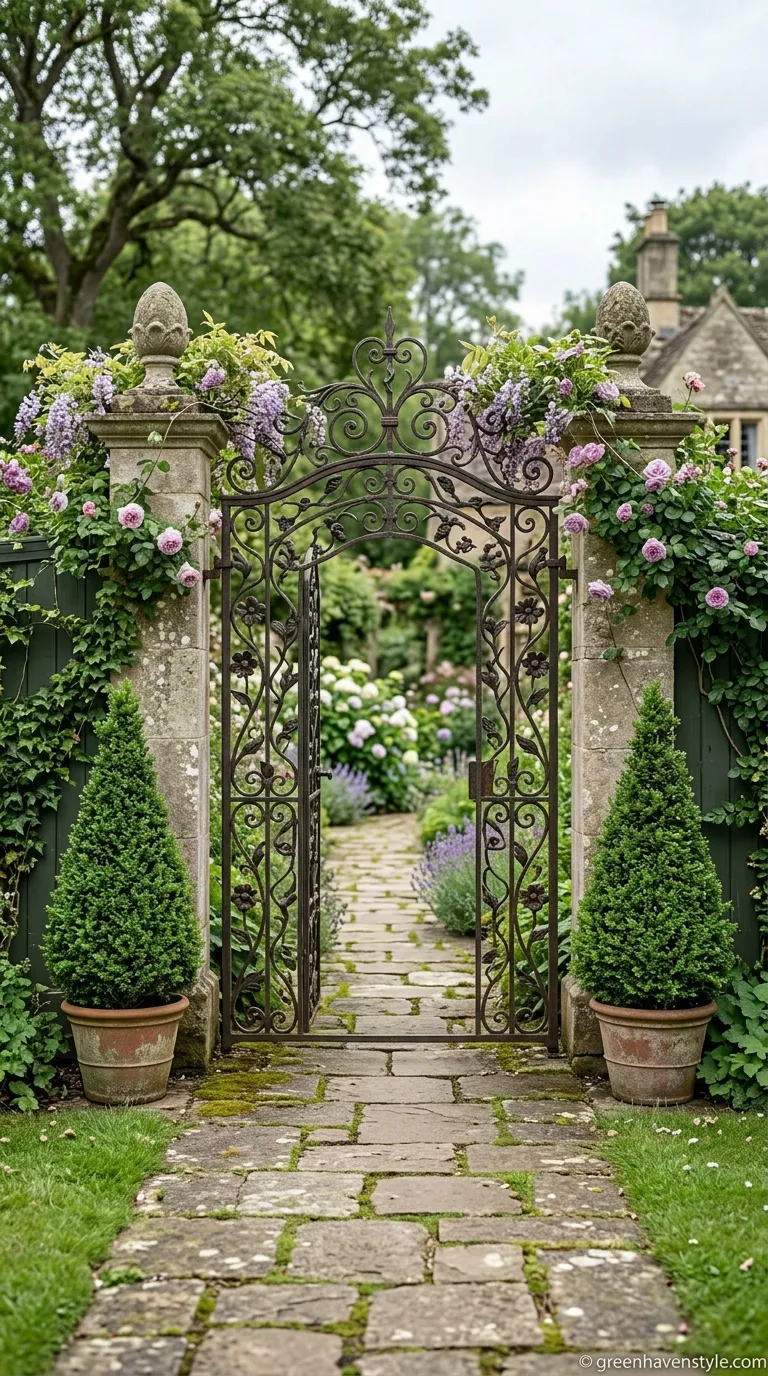
Ornate wrought iron or wooden garden gate, intricate detailing and craftsmanship, flanked by symmetrical plantings, climbing vines framing entrance, heritage style fencing, pathway leading through gate, architectural focal point, romantic entrance, soft natural light highlighting details. greenhavenstyle.com
A beautiful garden gate serves as both practical boundary and artistic statement, inviting visitors to enter your special space. Victorian-style gates with ornate ironwork create drama and elegance while establishing a clear transition between outside world and garden sanctuary. From what I’ve seen, investing in a quality gate elevates the entire garden’s perceived value and beauty.
Choose designs that complement your home’s architecture while framing views into the garden beyond. Plant climbing roses or clematis around gates to enhance their romantic appeal and integrate them seamlessly into the landscape.
9. Shaded Seating Nook
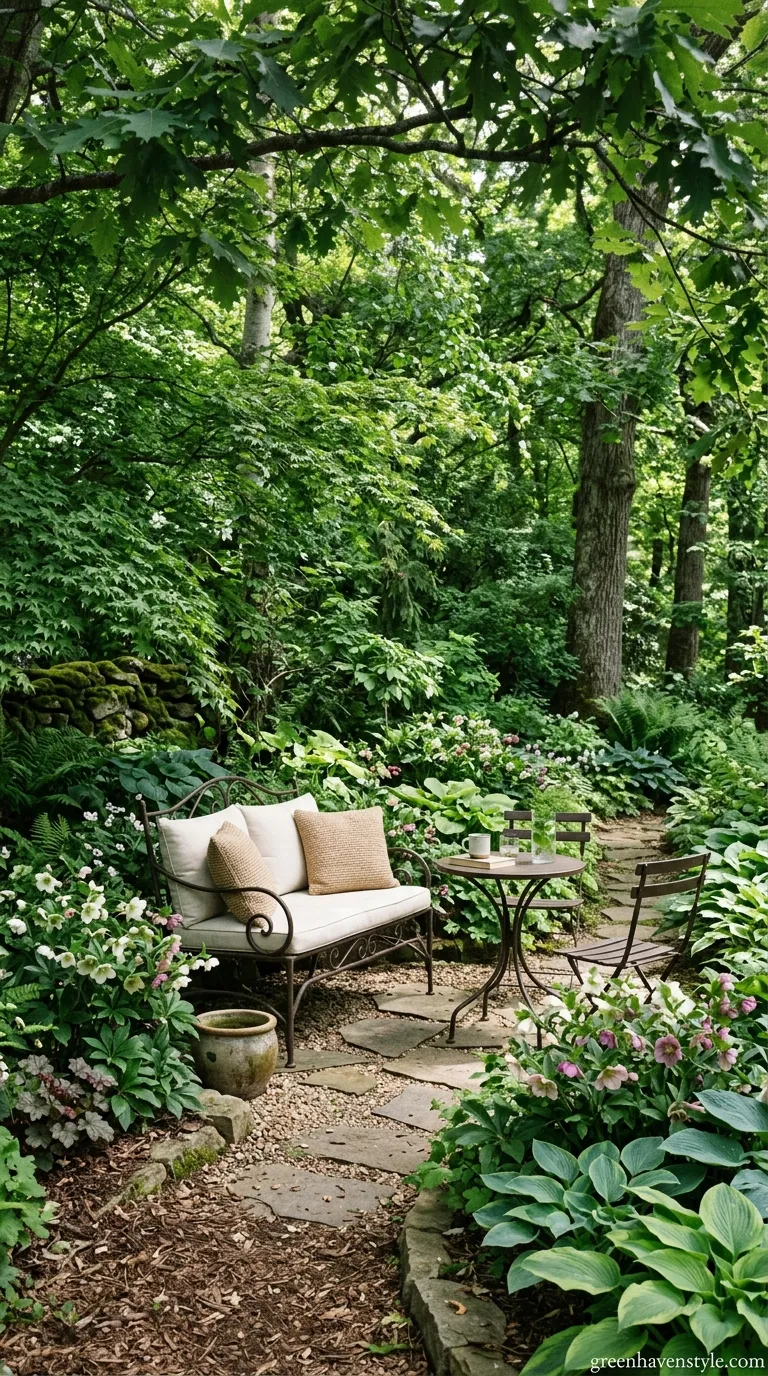
Peaceful seating area under mature tree canopy, dappled shade creating soft light patterns, comfortable garden bench or bistro seating, surrounding flowering shade plants like hostas and hellebores, woodland aesthetic, cool refreshing atmosphere, intimate garden room feeling. greenhavenstyle.com
Every garden needs a peaceful retreat, and a shaded seating nook provides the perfect escape for quiet moments and contemplation. Positioning seating beneath mature trees creates naturally cool spaces that offer respite during hot weather while supporting your mental wellbeing. I’ve noticed that people actually spend more time in gardens when comfortable seating is strategically placed throughout.
Select shade-tolerant plants that provide visual interest and texture around seating areas. Include overhead shade from trees or pergolas, add soft lighting for evening use, and ensure comfortable, quality furniture that invites lingering.
10. Water Feature Focal Point
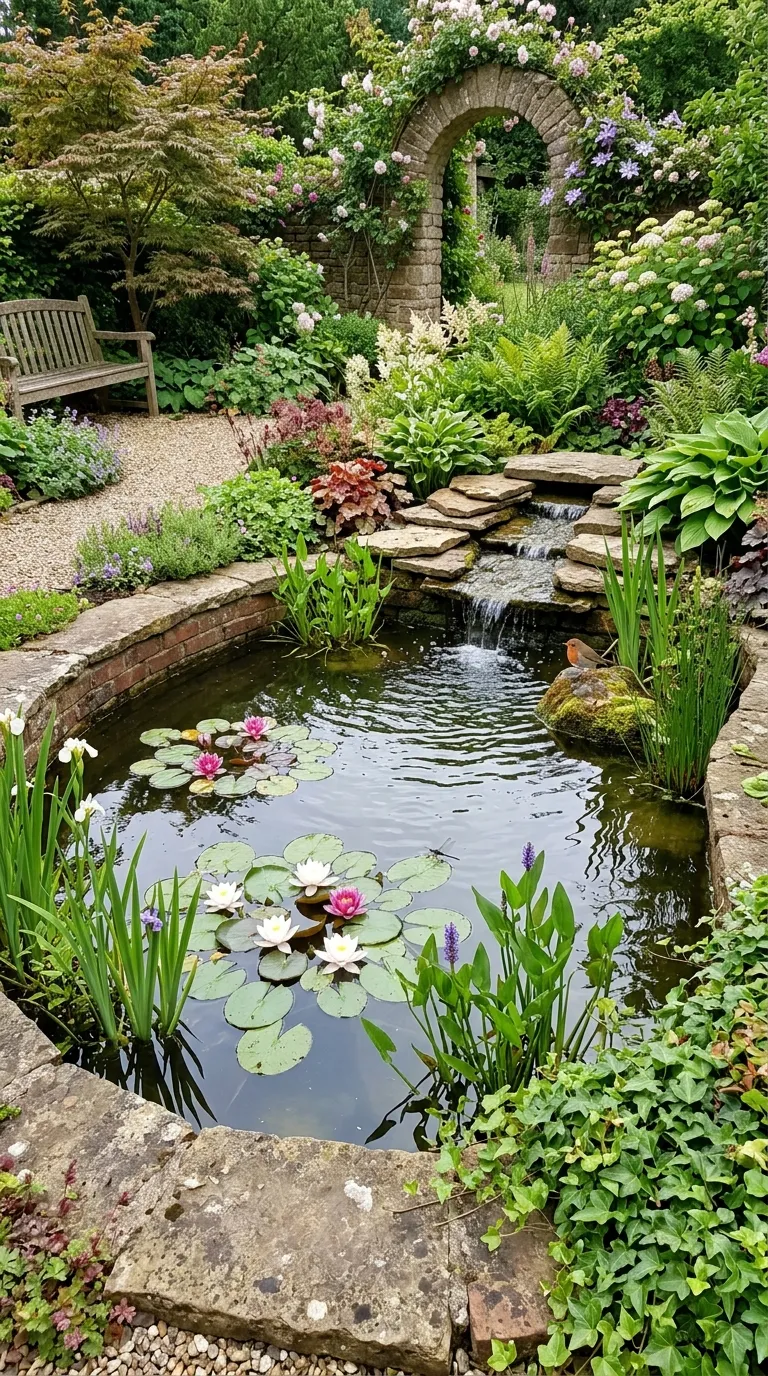
Ornamental pond or fountain as garden centerpiece, stone or brick construction, aquatic plants like water lilies, surrounding plantings creating reflective beauty, moving water creating sound and movement, formal or informal water design, wildlife attracted to water feature. greenhavenstyle.com
Water features add movement, reflection, and sensory richness to any garden design. A simple fountain, bird bath, or small pond becomes a natural focal point that draws the eye while creating soothing sounds. In my experience, gardens with water elements feel more complete and sophisticated, even at modest scales.
Choose water features that match your garden’s style and your maintenance preferences. Position them where their visual and auditory impact can be fully appreciated from seating areas and main viewing points throughout the space.
11. Climbing Vine Walls
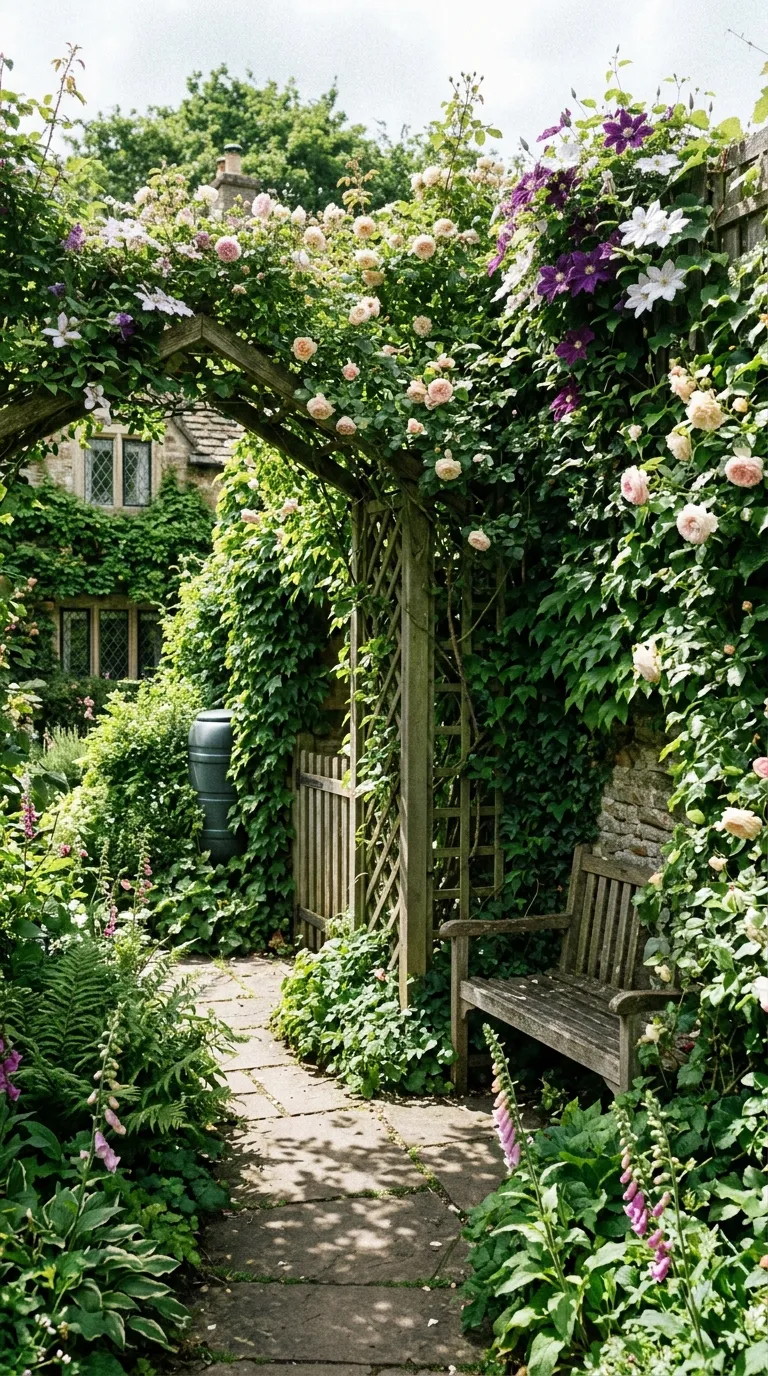
Walls and fences draped with climbing vines, clematis and climbing roses covering structures, lush green coverage, softening hard architectural lines, natural camouflage for utility areas, romantic overgrown aesthetic, dappled shade underneath, textured plant coverage. greenhavenstyle.com
Climbing vines transform bare walls and fences into living tapestries of color and texture. These vertical gardens maximize space, create privacy, and soften harsh architectural lines while adding layers of romantic beauty. I’ve found that vertical planting is particularly valuable in smaller gardens where ground space is limited.
Select vigorous climbers suited to your light conditions, provide sturdy support structures, and allow them room to mature. Mix different varieties to extend bloom time and create varied textures throughout the seasons.
12. Spring Bulb Spectacle
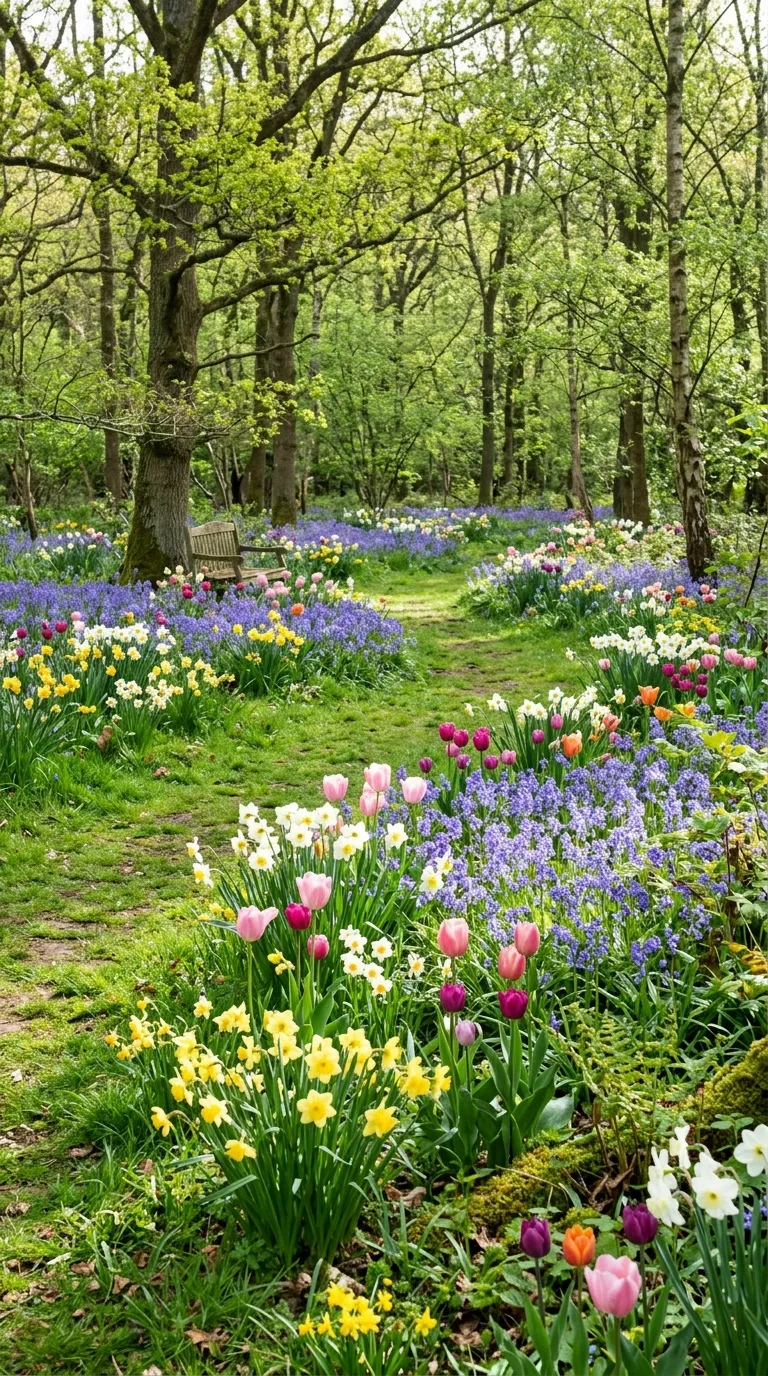
Naturalized bulb drifts of tulips, daffodils, and bluebells in full bloom, masses of color carpeting garden beds and lawns, spring morning light illuminating blooms, woodland bulbs under deciduous trees, bright cheerful color palette. greenhavenstyle.com
Spring bulbs deliver reliable, spectacular color after winter’s darkness, making them essential to English garden design. Planting bulbs in naturalized drifts—large groupings that appear to have planted themselves—creates stunning visual impact. From what I’ve seen, spring bulbs transform ordinary spaces into breathtaking displays with minimal effort.
Plant bulbs in autumn in groups of odd numbers for natural appearance. Layer different varieties and bloom times to create extended color from early spring through late spring. Allow foliage to mature before removing so plants can store energy for next year’s blooms.
13. Cottage Garden Porch
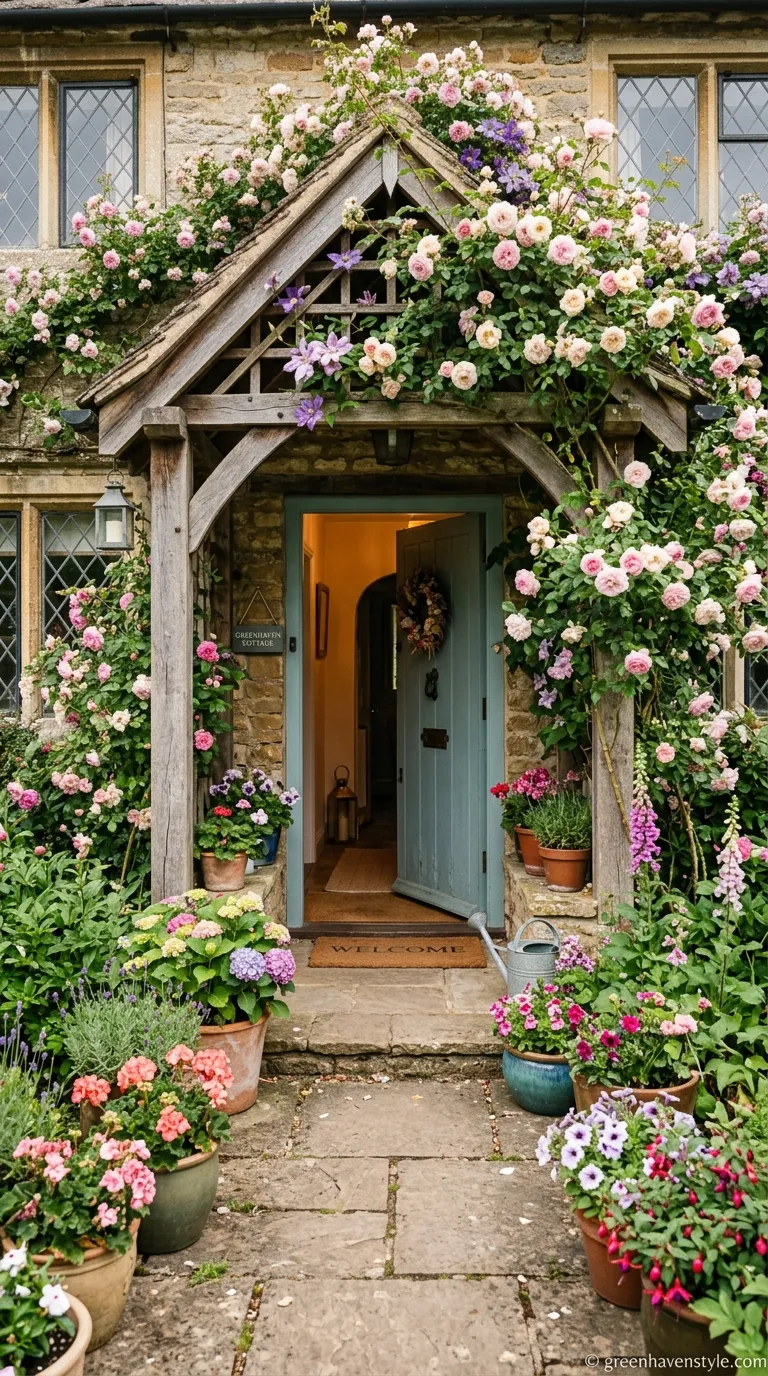
Entrance porch area densely planted with climbing roses and clematis, flowering containers, welcoming entrance design, soft natural light, romantic garden entry, traditional cottage aesthetic, abundant blooming plants framing doorway. greenhavenstyle.com
The porch garden creates an immediate sense of welcome and sets the tone for your entire space. Densely planted entrances with flowering vines, climbing roses, and complementary perennials create an enchanting first impression. I’ve observed that beautifully planted entryways make guests feel special and cared for before they’ve even entered the house.
Layer plants of varying heights around entrance areas, use containers for flexibility, and choose plants that bloom during seasons when you frequently use your entrance. This creates a perpetually welcoming atmosphere that reflects your garden’s unique personality.
14. Manicured Lawn Carpet
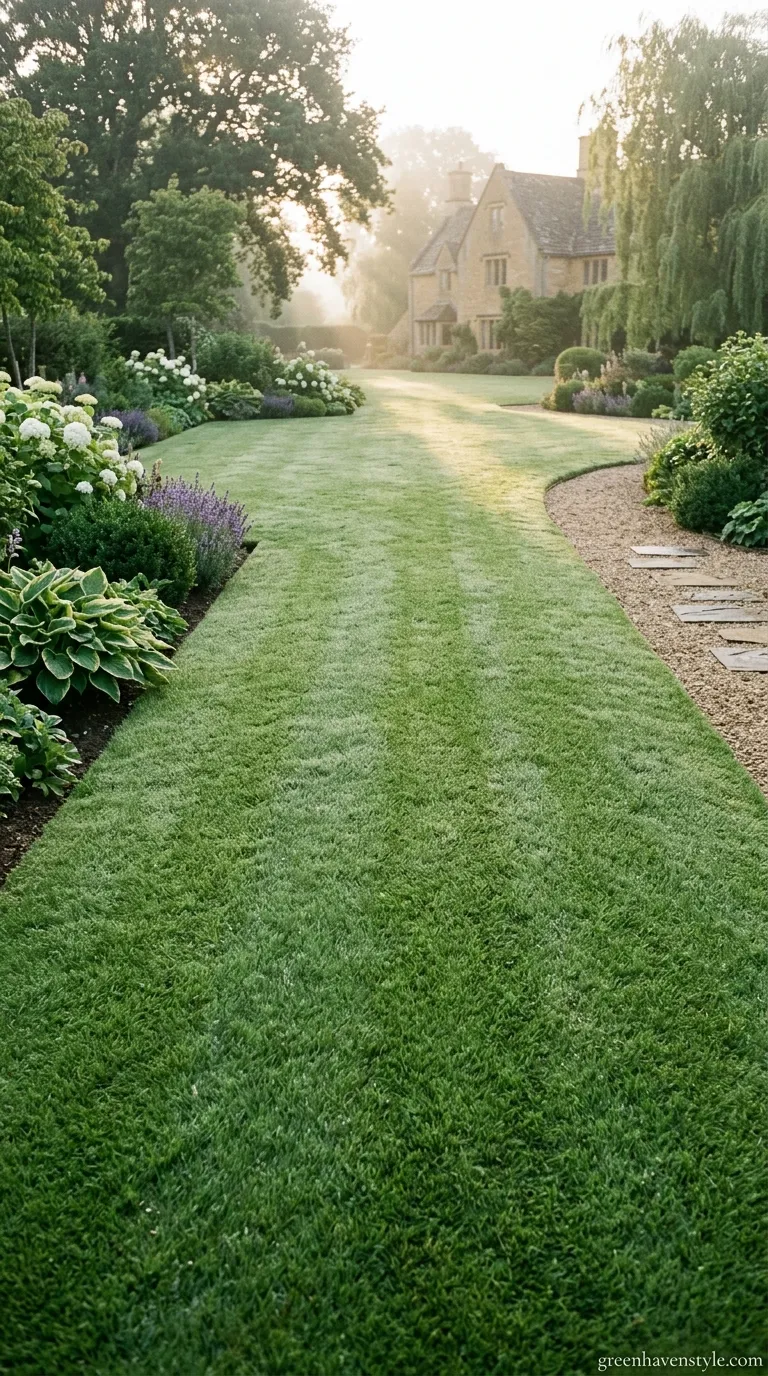
Pristine green lawn as garden foundation, soft manicured grass surface, clean edging along beds, serving as visual rest between planted areas, formal landscape role, morning dew on grass, peaceful green backdrop. greenhavenstyle.com
A well-maintained lawn serves as the canvas upon which garden design elements shine. Clean, healthy grass provides visual rest, creates space for entertaining, and grounds the entire composition. In my experience, lawns are as much about what they represent—care, order, and beauty—as their practical functionality.
Invest in proper lawn care basics: good soil preparation, regular feeding, appropriate watering, and consistent edging. A beautiful lawn makes surrounding plantings appear more vibrant while providing the peaceful green backdrop that’s central to English garden aesthetics.
15. Garden Arbor Entryway
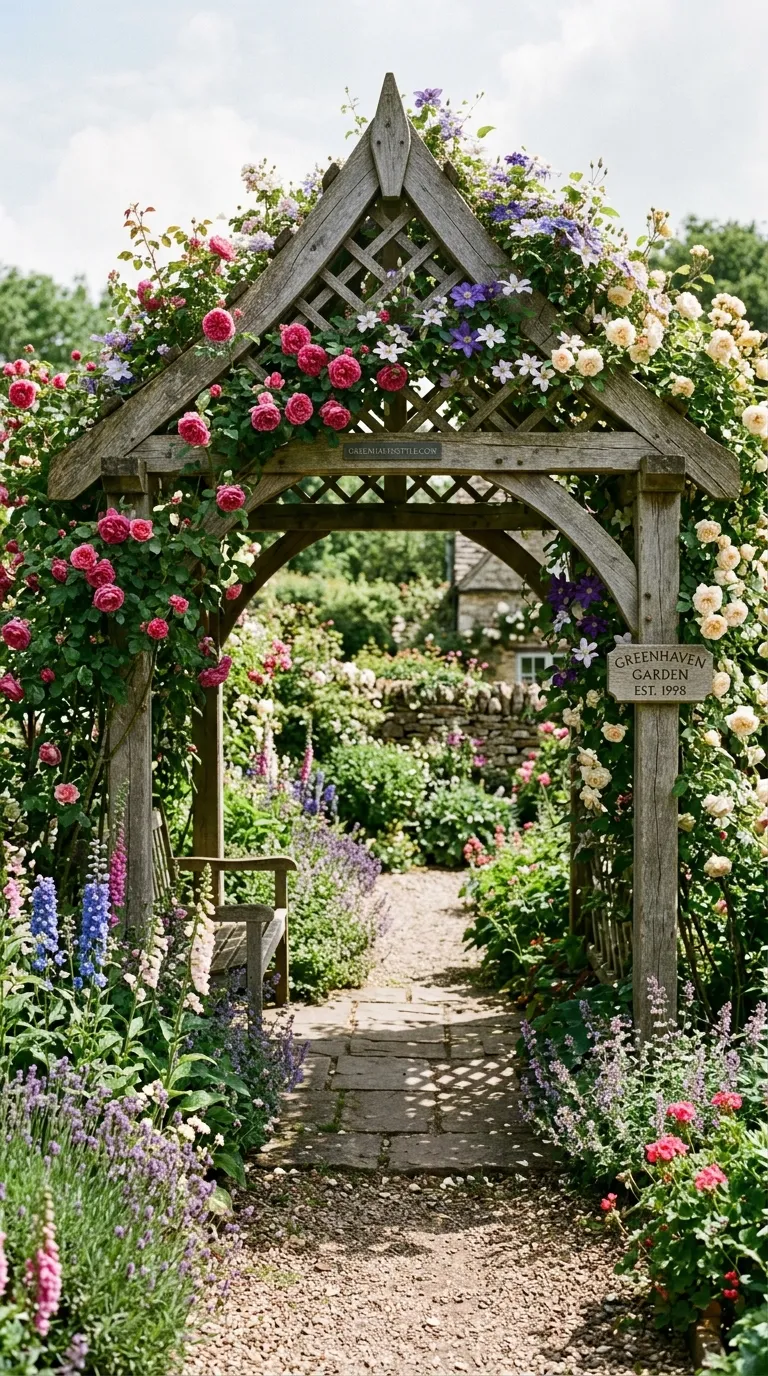
Wooden garden arbor with climbing plants, romantic archway creating garden entrance, roses and clematis covered structure, peaked roof design, dappled shade underneath, pastoral garden setting, welcoming passage between garden zones, traditional heritage style. greenhavenstyle.com
A garden arbor creates an irresistible focal point while dividing space into distinct garden rooms. This architectural feature frames views beautifully while supporting climbing plants that add color and fragrance. From what I’ve seen, arbors instantly elevate garden aesthetics by adding height, structure, and romantic charm.
Choose sturdy construction that will support mature climbing plants. Cover with fragrant climbers like roses, jasmine, or honeysuckle to create an enchanting passage that engages all the senses as visitors move through your garden.
CONCLUSION
Creating authentic English garden designs is about embracing timeless principles—romance, abundance, structure, and natural beauty working in harmony. Each idea in this guide offers a pathway toward transforming your outdoor space into a serene, beautiful sanctuary that feels classic yet completely personal to your unique vision.
I’ve seen how small touches like adding a rose arch, establishing perennial borders, or creating a peaceful seating nook can completely transform how people experience their gardens. The beauty of English garden style is its flexibility and adaptability to different climates, spaces, and budgets. You can embrace every principle or cherry-pick elements that resonate most deeply with you.
Start with one or two ideas that excite you most, build gradually, and let your garden evolve naturally over time. Save this post on Pinterest, share it with fellow garden lovers, and begin planning your own English garden transformation. Your dream garden is absolutely within reach, and the joy it brings will reward every effort you invest.


